
Your Seattle office is clean on the surface, but something smells off. That lingering odor isn’t a sign of poor cleaning-it’s a sign that surface-level work missed the real problem.
We at Bumble Bee Cleaning Services know that commercial odor control requires more than a quick vacuum and air freshener. The culprits hiding in your HVAC system, deep carpet fibers, and bathroom corners need targeted deep cleaning to disappear for good.
Where Office Odors Actually Hide
HVAC Systems Spread Odors Throughout Your Office
Your HVAC system circulates air throughout your entire office multiple times daily, but it also traps odors where you can’t see them. Humidity above 60% creates the perfect breeding ground for mold and bacteria in ductwork and filters. These microbes produce volatile organic compounds called MVOCs-gases like geosmin that smell earthy and musty-and your ventilation system spreads them throughout every room. The problem intensifies in Seattle’s climate, where spring humidity and moisture from rain make year-round humidity control essential. Most standard cleaning ignores ductwork entirely, which means odors simply recirculate after your cleaners leave.
Biofilms Transform Carpets into Odor Factories
Carpet padding and porous flooring account for a significant portion of persistent odor problems, yet standard cleaning rarely treats them. Biofilms transform carpets into odor factories-protective layers of bacteria living deep in carpet fibers and padding where vacuums and surface scrubbing never reach. These biofilms trap moisture and nutrients, allowing microbes to survive and regenerate quickly after cleaning, which is why odors bounce back within hours. Standard vacuuming removes visible dirt but leaves the bacterial colonies intact underneath.
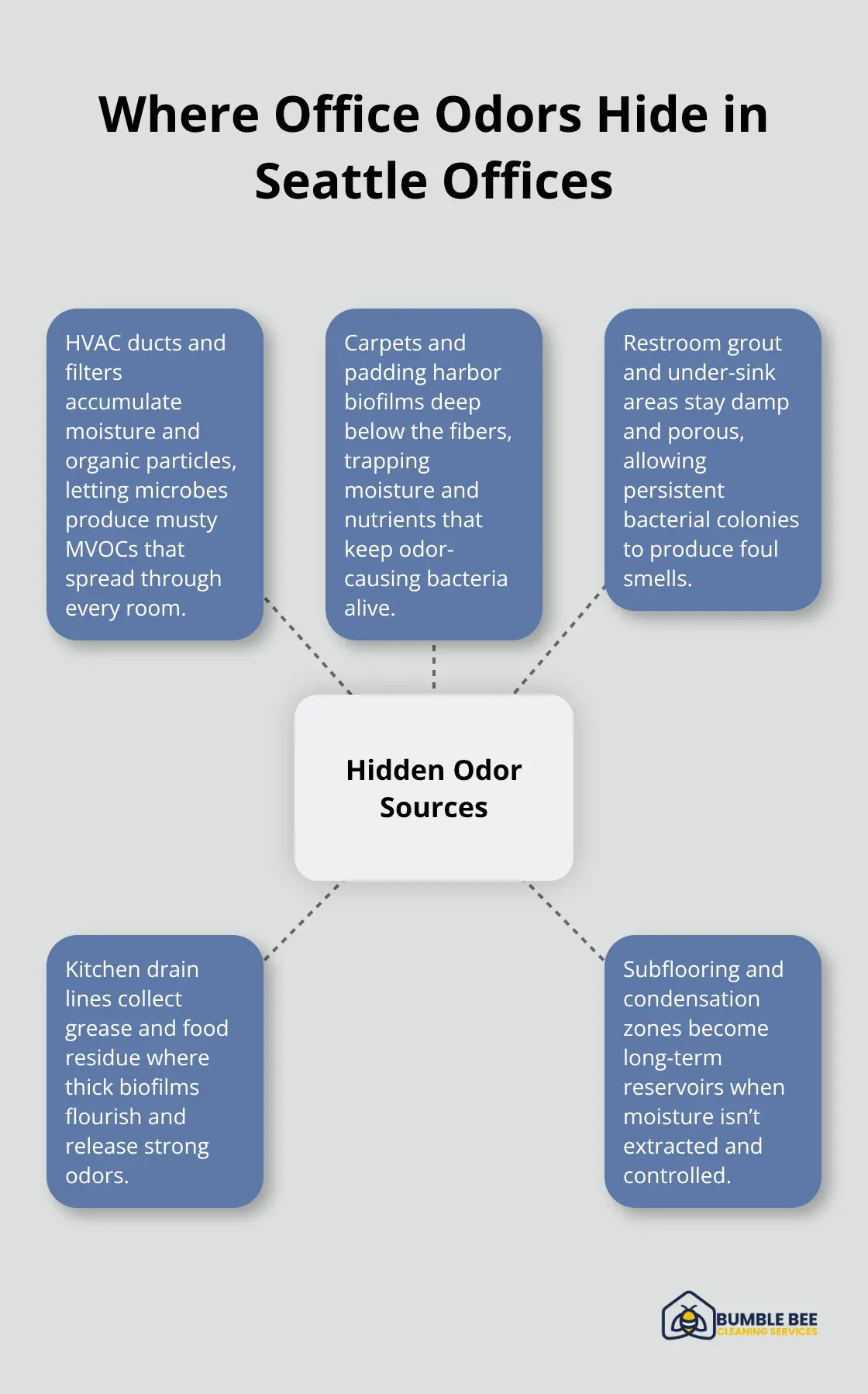
Your office’s carpets essentially harbor millions of odor-producing microbes that conventional cleaning methods cannot touch.
Restrooms and Kitchens Harbor Persistent Bacterial Colonies
Bathrooms and break rooms present unique challenges because moisture, organic matter, and bacteria create ideal conditions for biofilm formation on grout, under sinks, and in hidden corners. Urine and food residue don’t just sit on surfaces-they penetrate porous materials and feed bacterial growth that produces foul-smelling compounds. Quick cleaning with standard products masks these odors temporarily but fails to eliminate the bacteria themselves, allowing the smell to return stronger as microbes multiply. These high-risk areas demand targeted deep cleaning with EPA-registered disinfectants and moisture control, not surface-level wipe-downs that leave contamination behind. Understanding where odors hide is only half the battle-knowing what cleaning mistakes allow them to persist is what separates temporary fixes from permanent solutions.
Why Standard Cleaning Products Miss the Root Problem
Surface-Level Disinfectants Cannot Penetrate Biofilms
Most office cleaning services rely on general-purpose disinfectants and surface scrubbing, which work fine for visible dirt but fail catastrophically against biofilms. Approximately 70% of persistent indoor odors originate from bacteria that create biofilms in porous materials like carpets and padding-places where standard cleaning products never penetrate. These biofilms form protective barriers that trap nutrients and moisture, allowing bacteria to survive and multiply even after disinfectant contact. When a cleaning crew applies a hospital-grade disinfectant on carpet surfaces, they kill microbes on top but leave the colonies underneath completely untouched. The bacteria regenerate within hours, which is why odors return so quickly.
EPA-registered disinfectants kill 99.9% of germs on hard surfaces, but carpets require deep cleaning methods that actually extract moisture and break apart biofilm structures. Standard mop-and-spray approaches cannot accomplish this. Your Seattle office needs targeted solutions matched to specific problem areas-a bleach-based cleaner works differently on grout than an enzyme-based treatment works on carpet padding, yet most commercial cleaning contracts use the same products everywhere.
HVAC Systems Remain Untouched During Standard Cleaning
Ventilation system maintenance represents the second massive blind spot in typical cleaning programs. Most cleaning services vacuum and disinfect visible spaces, then completely ignore HVAC ductwork, filters, and condensation areas where mold thrives in Seattle’s humid environment. Bacteria such as Staphylococcus and Bacillus live in air handling systems and continuously circulate through your office.
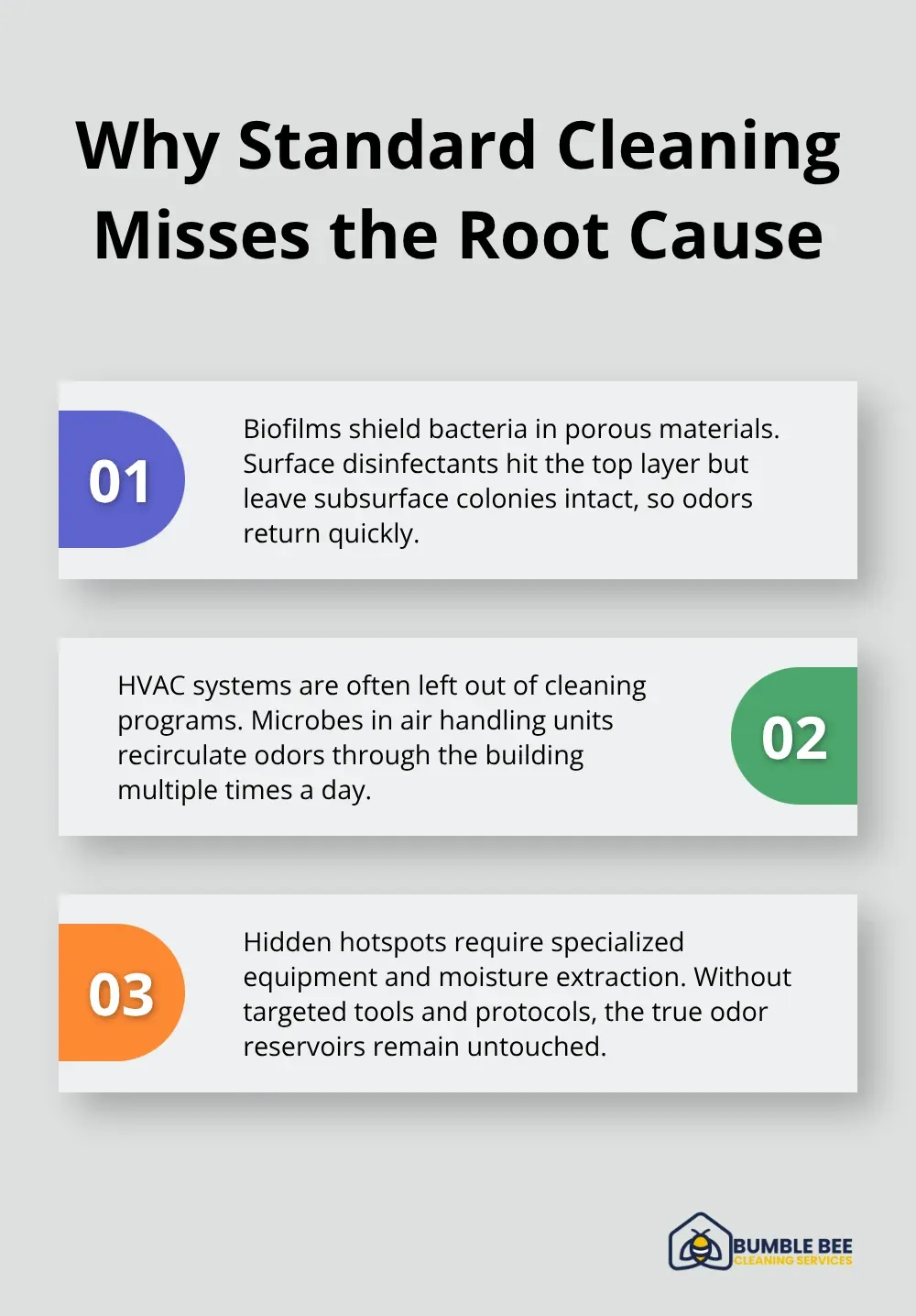
A standard cleaning crew leaves your HVAC system untouched, which means odor-producing microbes keep spreading through every room multiple times daily.
Hidden Hotspots Require Specialized Equipment
Humidity control below 60% prevents mold growth in ductwork, yet most cleaning contracts have zero humidity monitoring or maintenance protocols. Additionally, cleaning services often skip the hard-to-reach areas where odors truly hide: carpet padding underneath visible surfaces, subflooring where moisture accumulates, and kitchen drain lines where bacteria form thick biofilms. These hidden hotspots require specialized deep cleaning equipment and moisture extraction tools that standard janitorial crews simply don’t deploy. One-time deep cleaning combined with ongoing humidity management and targeted HVAC maintenance stops odors permanently rather than masking them temporarily-which means your office needs a cleaning partner who understands that eliminating persistent odors demands far more than standard disinfection protocols.
Permanent Odor Elimination Requires Deep Treatment, Not Surface Work
Deep Cleaning Extracts Moisture and Eliminates Biofilm structures
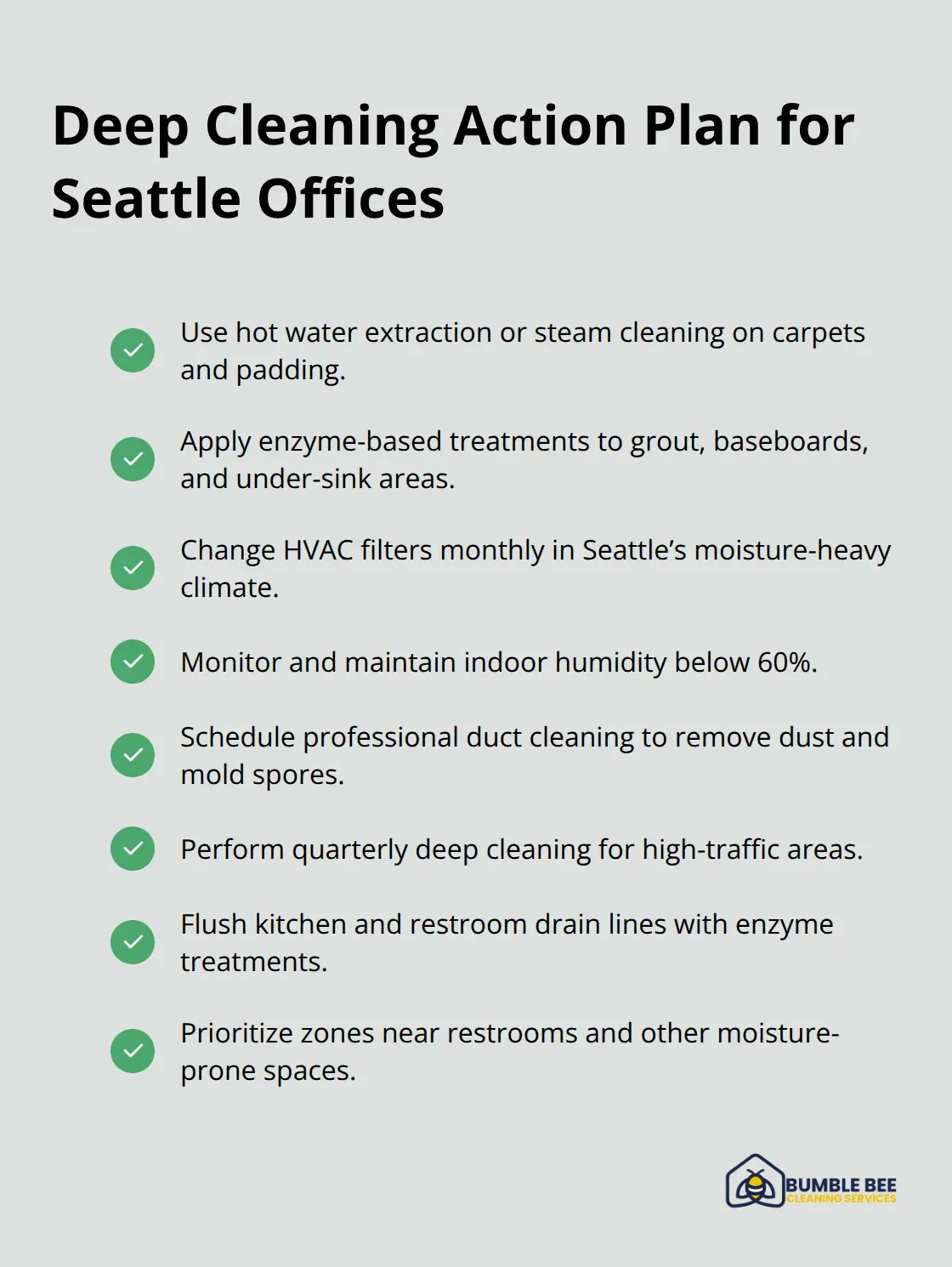
Deep cleaning carpets and hard surfaces demands extraction methods that actually remove moisture and break apart biofilm structures where standard vacuuming fails. Your Seattle office needs hot water extraction or steam cleaning that penetrates carpet padding and forces out the bacterial colonies living underneath surface fibers. A single deep cleaning session eliminates the biofilm reservoirs that standard cleaning leaves behind, which is why odors stop returning within hours. Schedule this deep treatment for all carpeted areas, paying special attention to high-traffic zones and spaces near restrooms where moisture and organic matter accumulate fastest.
Targeted Treatments Address Specific Surface Types
Hard surfaces like tile grout, baseboards, and under-sink areas require enzyme-based treatments that break down the proteins biofilms use to anchor themselves, not just bleach spray that kills surface bacteria while leaving subsurface colonies intact. Most Seattle offices need deep cleaning at least quarterly to prevent biofilms from rebuilding, though spaces with heavy foot traffic or humidity issues benefit from semi-monthly treatments. The investment in deep cleaning paired with ongoing maintenance costs far less than replacing carpets or managing constant odor complaints from employees and clients.
HVAC Maintenance Stops Odors from Recirculating
HVAC system maintenance prevents odors from circulating throughout your entire office after you eliminate them from carpets and restrooms. Change filters monthly rather than quarterly, since Seattle’s moisture-heavy climate clogs filters faster and creates ideal conditions for mold growth in ductwork. Professional duct cleaning removes accumulated dust and mold spores where bacteria hide, and humidity monitoring below 60% stops new microbial growth before it starts.
Restrooms and Kitchens Demand Aggressive Biofilm Treatment
Restrooms and kitchens demand the most aggressive approach because urine, food residue, and grease create biofilms that standard disinfectants cannot penetrate. Treat grout lines with enzyme cleaners rather than bleach, since enzymes break down organic matter that feeds bacteria while bleach only kills surface microbes. Drain lines require professional flushing with enzyme treatments to eliminate the thick biofilm layers where odor-producing bacteria thrive. These targeted solutions address the specific environments where each odor source lives, which is why one-size-fits-all cleaning products fail so dramatically. Your office needs a customized approach that treats carpets differently than restrooms, HVAC systems differently than kitchen surfaces, because persistent odors hide in completely different environments that demand completely different elimination strategies.
Final Thoughts
Professional deep cleaning solves persistent odor problems because it targets the biofilms and moisture that standard cleaning leaves behind. When we at Bumble Bee Cleaning Services perform deep cleaning on carpets, restrooms, and HVAC systems, we eliminate the bacterial colonies living in places surface-level work never reaches. This is why odors stop returning within hours instead of bouncing back the next day. Commercial odor control requires extraction methods, enzyme treatments, and moisture management that general-purpose disinfectants simply cannot provide.
Regular maintenance prevents odors from returning and costs far less than emergency deep cleaning or carpet replacement. Monthly HVAC filter changes, quarterly deep cleaning for high-traffic areas, and humidity monitoring below 60% create conditions where odor-producing bacteria cannot thrive. Your Seattle office benefits from consistent treatment because biofilms rebuild slowly when moisture and organic matter are controlled, and employees notice the difference immediately when your workspace actually smells fresh rather than temporarily masked.
We at Bumble Bee Cleaning Services offer comprehensive deep cleaning solutions designed for commercial environments, with certified technicians trained to eliminate biofilms from carpets, restrooms, and ventilation systems. Our team creates customized maintenance plans that keep odors from returning, so your office stays fresh without constant emergency treatments.
For more information about our cleaning services in Seattle and Atlanta, or to request a cleaning quote, call or text us at 425-786-1360 or email us at info@qbclean.com
