
Construction dust doesn’t just disappear after the final nail is hammered. It settles into your home’s air, carpets, and ventilation system, potentially triggering allergies and respiratory issues for months.
At Bumble Bee Cleaning Services, we’ve seen Seattle homeowners struggle with post-construction air quality problems that standard cleaning misses. Allergen testing and professional assessment reveal what your eyes can’t see, protecting your family’s health from invisible construction residue.
What Post-Construction Air Quality Testing Actually Measures
Post-construction air quality testing identifies specific contaminants that linger after renovation work ends. The EPA found that volatile organic compounds can reach 1,000 times higher than outdoor levels during activities like paint stripping.
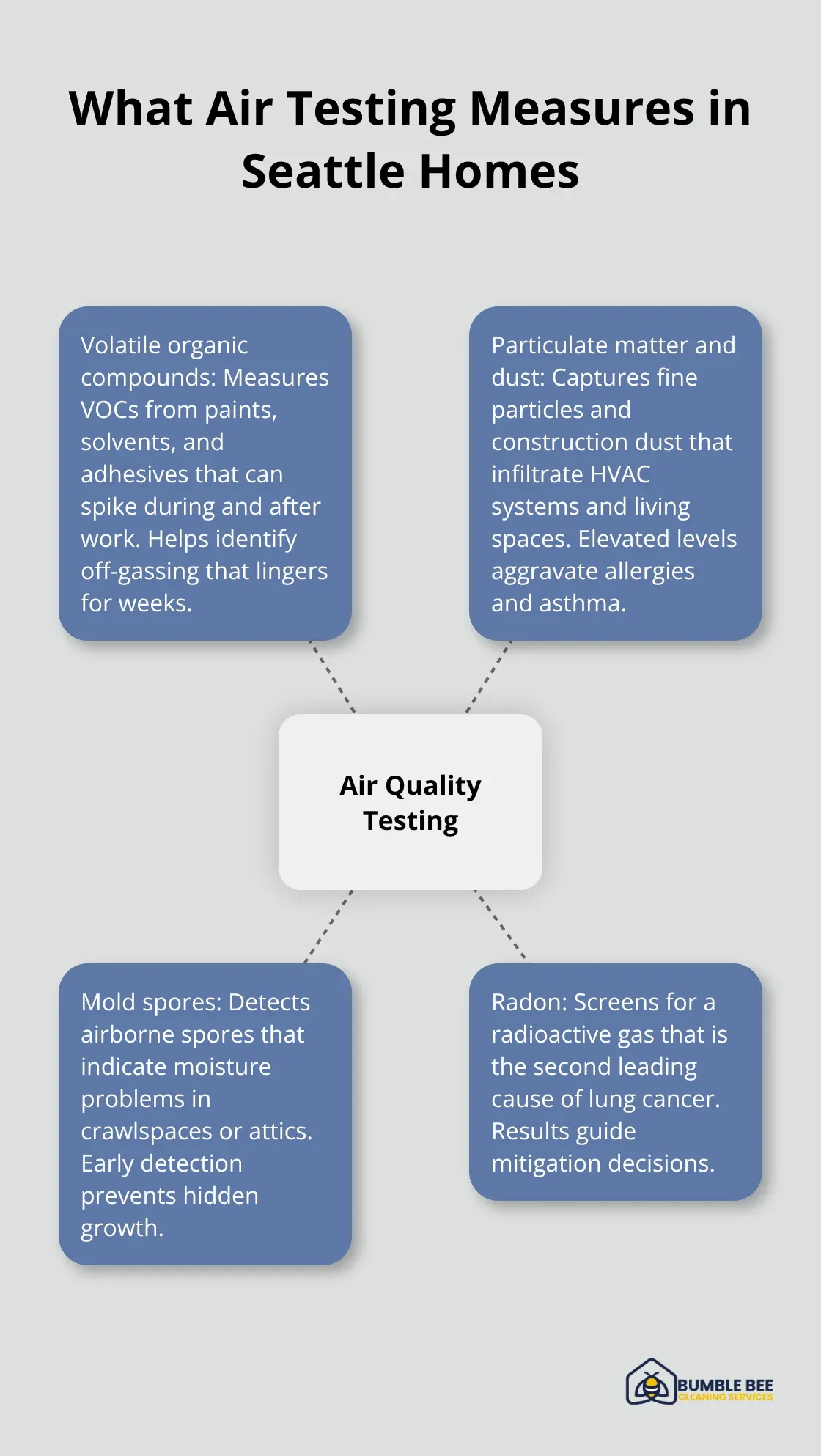
Testing measures volatile organic compounds from paints, solvents, and adhesives; particulate matter and construction dust that settle into your HVAC system; mold spores indicating moisture problems in crawlspaces or attics; and radon, which the EPA identifies as the second leading cause of lung cancer after smoking.
Seattle’s moisture climate creates hidden mold risks
Seattle’s wet climate with approximately 37 inches of annual rainfall creates conditions where crawlspaces become especially vulnerable. Many lack vapor barriers or adequate ventilation, allowing moisture to migrate upward into wood framing where mold grows unseen. Air quality testing reveals what standard home inspections miss-hidden mold behind walls, elevated spore counts from moisture damage, and off-gassing from new materials that continue releasing chemicals weeks after construction ends.
Construction dust damages your respiratory system
Construction dust isn’t inert debris. It contains silica particles, lead (if your Seattle home was built before 1978), asbestos fibers from disturbed materials, and microorganisms from moisture-damaged areas. The EPA confirms that health effects from indoor air pollutants include irritation of eyes, nose, and throat; headaches; dizziness; and respiratory and heart diseases. Asthma symptoms trigger from dust mites, mold, and particulates that construction work stirs into your home’s air.
Testing creates a documented baseline for your home
Testing after construction documents your home’s condition at a specific point in time, providing baseline data if health problems emerge later and supporting negotiations if you’re purchasing a property with recent renovation work. This documentation proves invaluable when you need evidence of air quality conditions. Understanding what contaminants remain in your home sets the stage for determining whether professional cleaning can address them or if additional remediation steps are necessary.
When to Test Your Seattle Home After Construction
Timing Your Test Based on Construction Scope
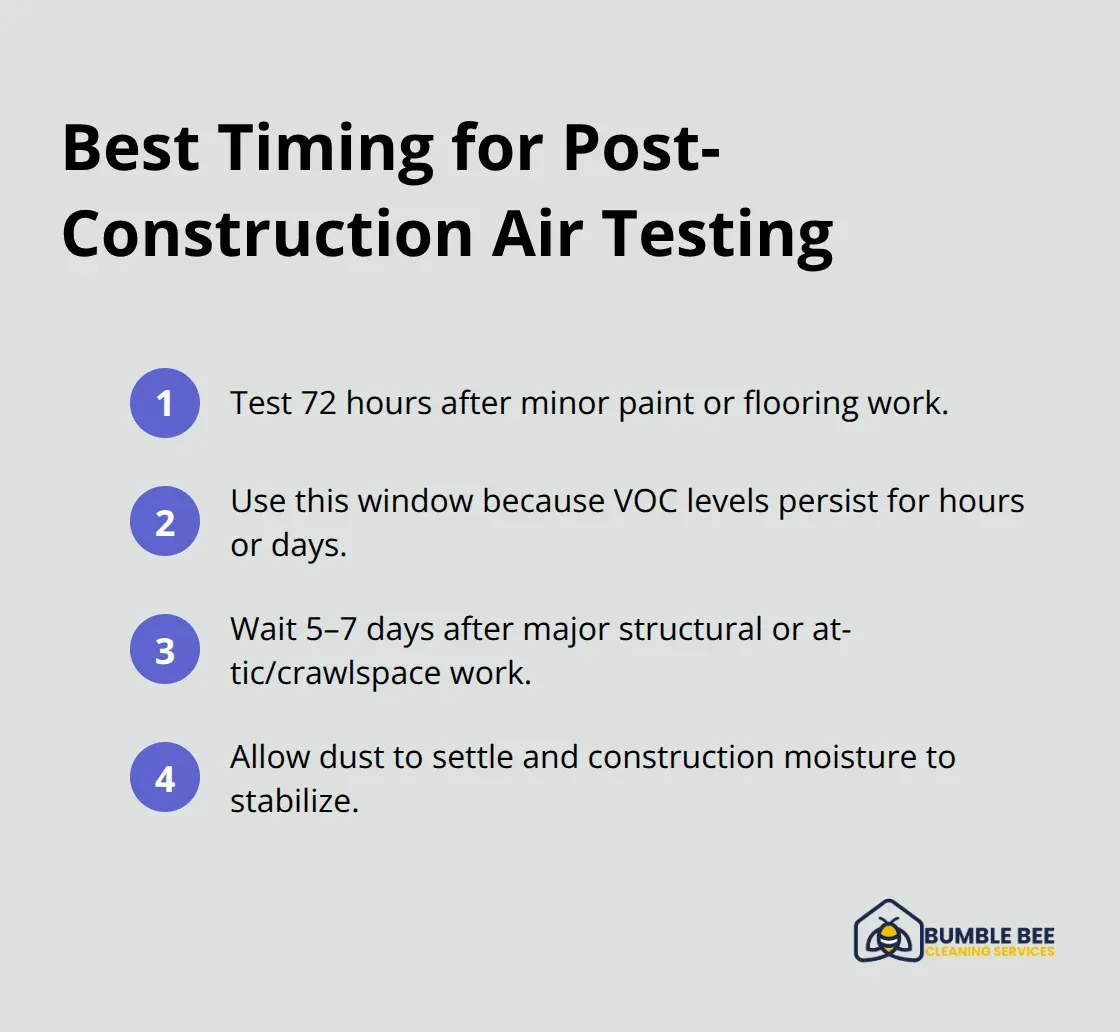
Testing timing depends on construction scope and your home’s condition. For minor renovations involving paint or new flooring, schedule testing 72 hours after work completion, once volatile organic compounds peaks and begins declining. The EPA notes that VOC exposures persist for hours or days after activities stop, making this window critical for accurate measurement. For major renovations involving structural work, crawlspace access, or attic modifications, wait 5–7 days to allow dust to fully settle through your HVAC system and moisture from construction water use to stabilize.
Seattle’s damp climate means moisture problems develop quickly, so waiting longer than a week defeats the purpose-mold colonies establish within 24–48 hours on wet materials. Schedule testing before you move furniture back or occupy the space heavily, since occupant activity stirs dust and skews results. If your home was built before 1978, testing becomes mandatory if renovation disturbed paint or materials, since lead-safe practices require verification and documentation.
Warning Signs That Demand Immediate Testing
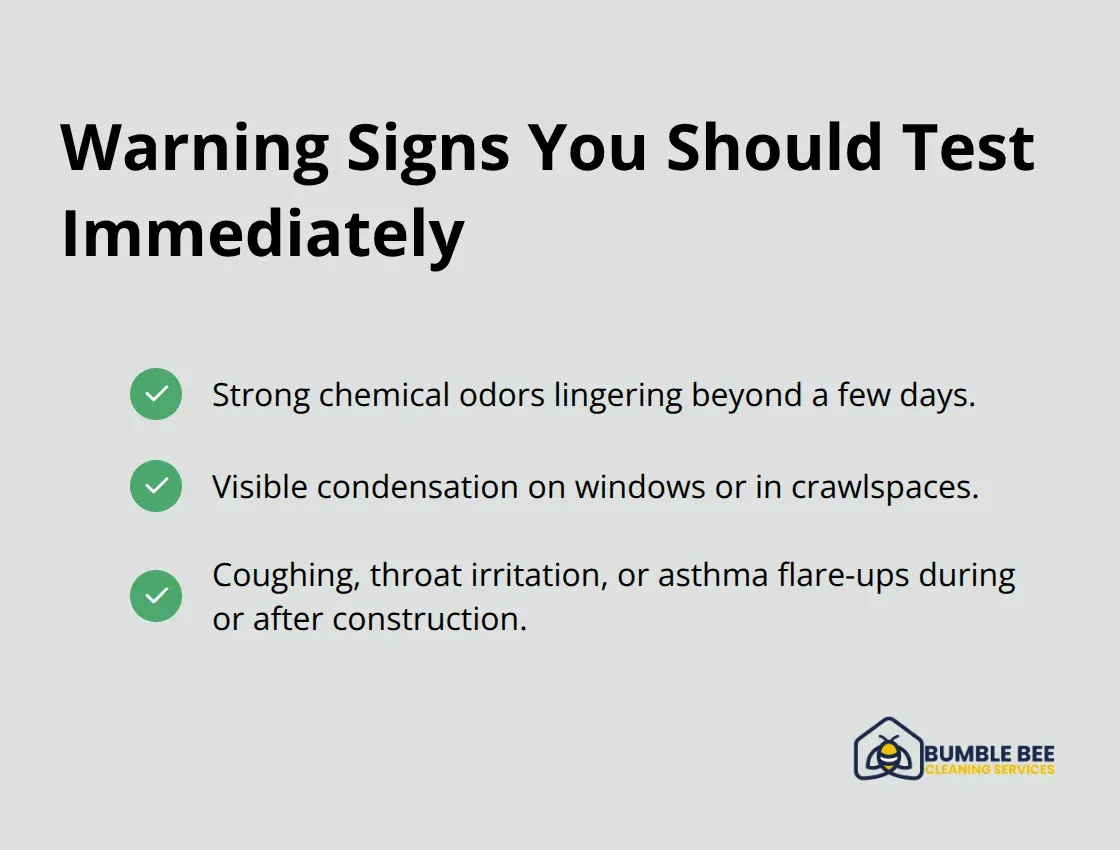
Strong chemical odors persisting beyond a few days signal excessive VOC off-gassing, particularly from paints containing methylene chloride or benzene. Visible condensation on windows or in crawlspaces indicates moisture problems that will grow mold within days. Respiratory symptoms in household members-coughing, throat irritation, or asthma flare-ups-during or immediately after construction point to airborne contaminants that testing should identify.
Seattle’s Building Code Requirements
Seattle building permits require post-construction inspections for permitted work, but standard inspections don’t include air quality testing, leaving gaps in what gets verified. Testing costs typically range from a few hundred dollars depending on sample scope, while remediation for hidden mold or VOC problems discovered later costs thousands. Document everything-testing results, cleaning invoices, and any remediation work-for your records and for future property transactions in Seattle’s moisture-prone real estate market.
Pairing Testing With Professional Cleaning
Post-construction cleaning removes visible dust, but air quality testing identifies what cleaning alone cannot address. Dust removal won’t eliminate volatile organic compounds or mold spores already settled into your HVAC system and ductwork. Professional post-construction cleaning combined with air quality testing creates a comprehensive approach to protecting your home’s indoor environment.
Once you understand your home’s air quality status, the next step involves taking action to improve conditions and prevent future problems.
How to Fix Air Quality Problems After Construction
Professional post-construction cleaning removes surface dust, but it won’t eliminate volatile organic compound concentrations trapped in your HVAC system or mold spores settling into ductwork. We at Bumble Bee Cleaning Services specialize in post-construction cleaning to address what standard cleaning misses-dust embedded in vents, residue on hard-to-reach surfaces, and particles clinging to your furnace filter. The EPA recommends maintaining maximum ventilation during and for at least 72 hours after finishing work, which means running your HVAC system continuously while opening windows. However, this approach only works if your system isn’t already clogged with construction debris.
HVAC System Inspection and Filter Replacement
Have an HVAC professional inspect your ductwork and replace filters before and after construction, since a single clogged filter reduces airflow and allows contaminants to recirculate for weeks. Seattle’s crawlspaces present a particular challenge because construction moisture combined with poor ventilation creates ideal mold conditions within 24 to 48 hours. If your renovation touched crawlspace areas, inspect for standing water or dampness and address moisture sources immediately-this single step prevents thousands in remediation costs later.
Cross-Ventilation and Air Movement Strategies
Ventilation remains your most powerful tool after construction ends. Open windows on opposite sides of your home to create cross-ventilation, pushing contaminated air outside rather than recirculating it. Box-fan exhaust ventilation can rapidly remove pollutants by securing a fan in a window to pull air out, though you must ensure makeup air enters from another location to prevent depressurization that could backdraft dangerous combustion products from appliances into your home. Aggressive ventilation remains essential for the first week post-construction to manage indoor air quality effectively.
Material Removal and Proper Disposal
If your contractor stored paints, solvents, or adhesives indoors during work, those materials off-gas continuously and can linger for months if not properly removed and disposed of according to local regulations. For homes built before 1978, lead dust from disturbed paint represents an ongoing hazard until professional lead-safe cleaning occurs-standard vacuums actually spread lead particles further, so specialized HEPA-filter equipment becomes mandatory.
Understanding Air Purification Limitations
Indoor air purification devices marketed as solutions rarely address construction-specific problems. HEPA filters capture particulate matter but won’t eliminate volatile organic compounds or radon, and they create a false sense of security while contamination persists in your HVAC system and building materials.
Final Thoughts
Post-construction air quality testing reveals what your eyes cannot see and what standard cleaning cannot reach. Construction dust, volatile organic compounds, mold spores, and other contaminants settle into your HVAC system, ductwork, and building materials where they remain active for weeks or months. Allergen testing combined with professional assessment identifies these hidden problems before they trigger respiratory issues or damage your home’s structural integrity.
Seattle homeowners face unique challenges because your wet climate accelerates mold growth in crawlspaces and attics within 24 to 48 hours of moisture exposure. Testing documents your home’s air quality baseline, protects your family’s health, and provides critical evidence for real estate transactions or insurance claims. Without testing, you make decisions about your home’s safety based on guesswork rather than data.
Schedule air quality testing 72 hours to one week after construction completion, then address any moisture sources or contamination identified in your test results before they worsen. We at Bumble Bee Cleaning Services specialize in post-construction cleaning that removes embedded dust, residue, and particles from surfaces, vents, and ductwork where standard cleaning fails. Contact Bumble Bee Cleaning Services to schedule post-construction cleaning and take control of your home’s air quality.
For more information about our cleaning services in Seattle and Atlanta, or to request a cleaning quote, call or text us at 425-786-1360 or email us at info@qbclean.com
