
Construction projects leave behind more than just new spaces-they leave behind dust, chemicals, and particles that linger in your home’s air. If you’ve recently completed renovation work in Seattle, allergen testing and air quality assessment should be your next priority.
We at Bumble Bee Cleaning Services know that visible dust is just the beginning. The real concern is what you can’t see: volatile organic compounds, construction debris, and other contaminants that affect your family’s health and comfort.
What to Watch For After Construction
Visible Dust and Particulate Matter
Dust settling on surfaces marks the most obvious sign, but Seattle’s wet climate creates a more serious problem. Construction debris doesn’t just sit on your shelves-it circulates through your HVAC system, gets trapped in ductwork, and settles into fabrics where you can’t see it. An eight-hour exposure in a typical home means you breathe roughly 3,000 liters of air, according to WorkSafe data. If construction dust remains in circulation, that volume multiplies the amount of particulates entering your lungs daily.
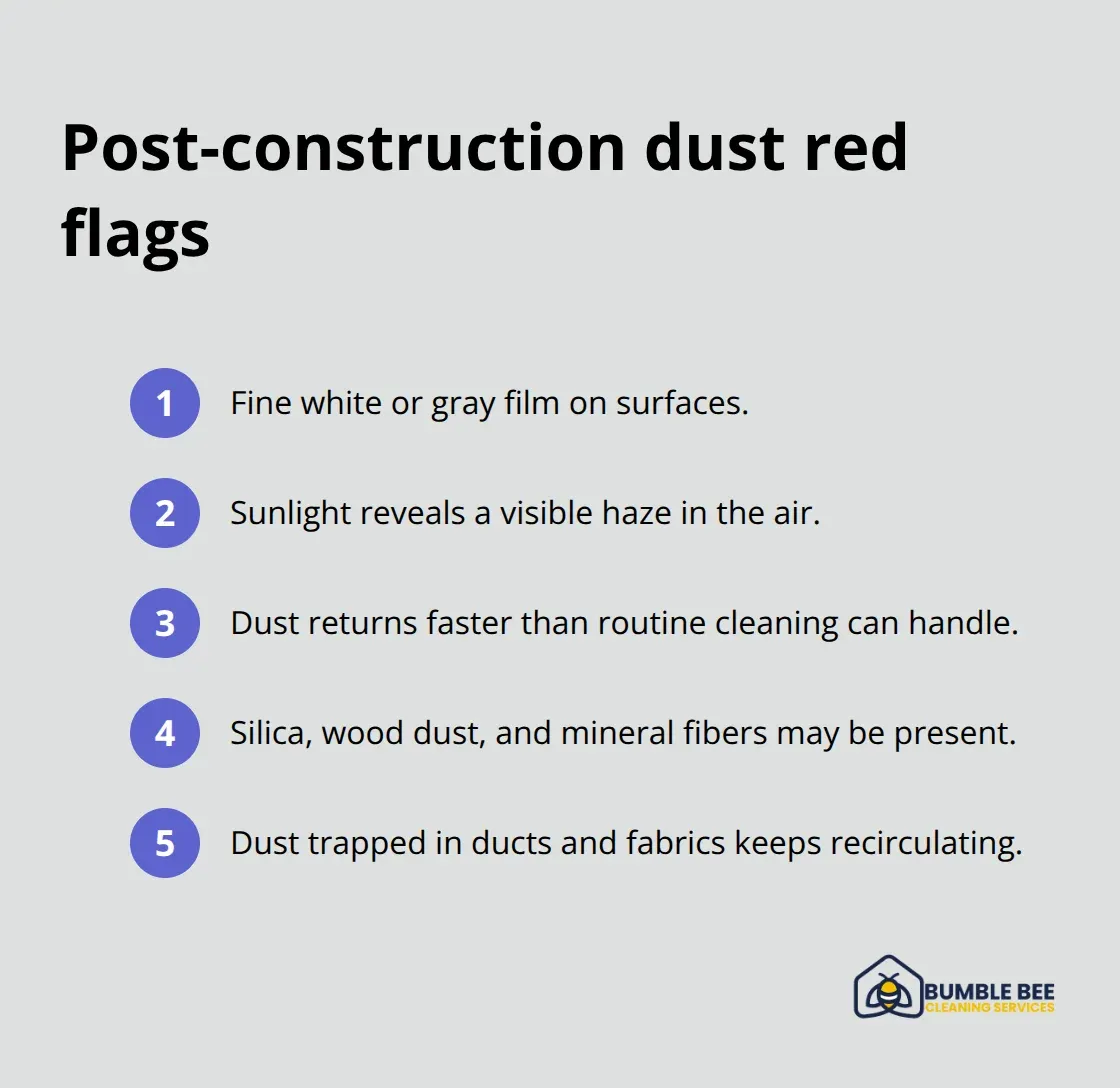
Look specifically for a fine white or gray coating on surfaces, visible haze when sunlight streams through windows, or dust accumulating faster than normal cleaning can manage. This isn’t just an aesthetic problem-construction dust contains silica particles from concrete and brick cutting, wood dust from framing, and mineral fibers that cause respiratory damage. Silicosis, a progressive lung disease from silica exposure, can take years to develop but becomes irreversible once it starts.
Odors That Signal Chemical Contamination
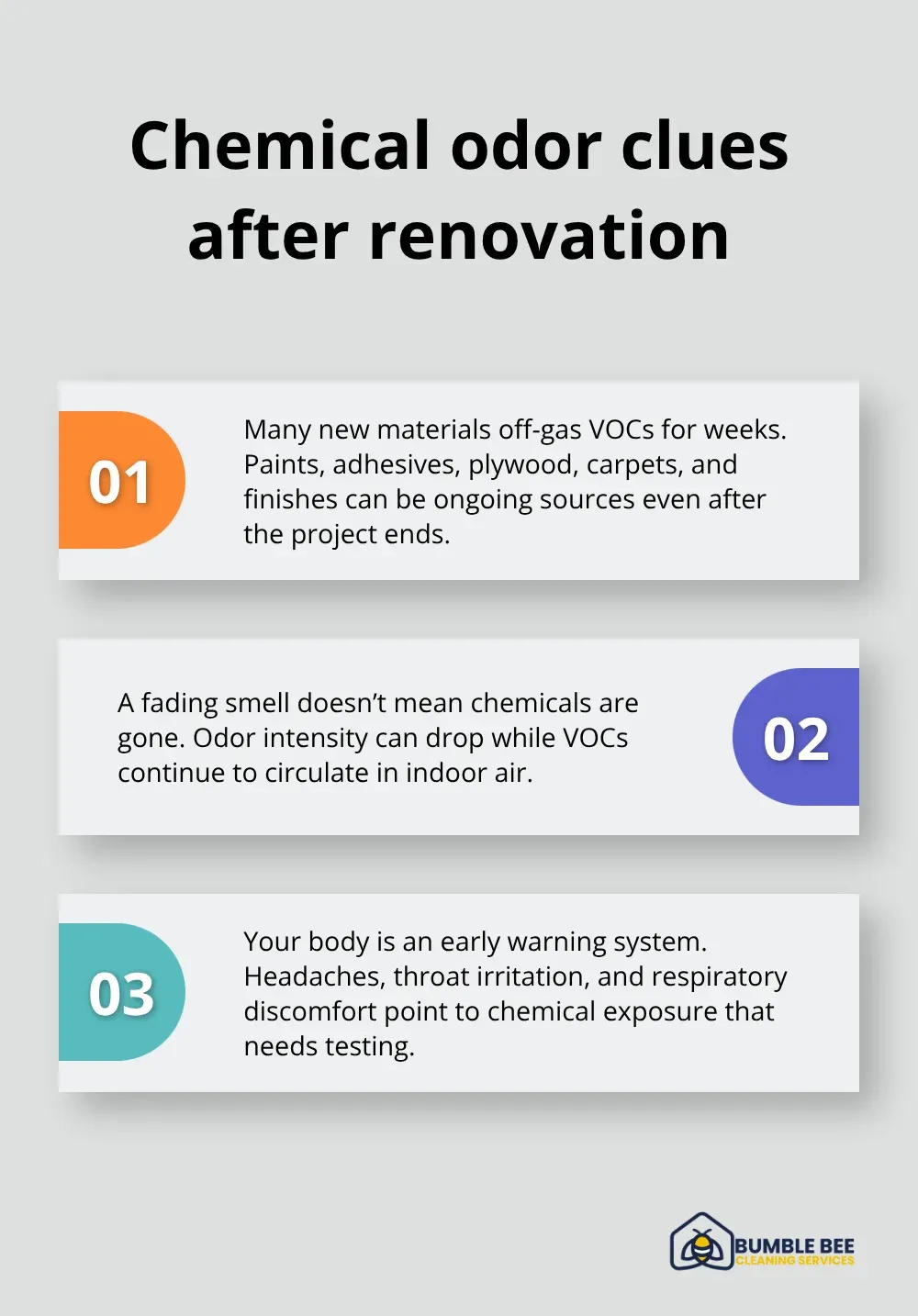
Strong paint or solvent smells lingering weeks after construction completion indicate volatile organic compounds still off-gassing from new materials. Carpets, adhesives, plywood, and finishes release VOCs continuously, and while the smell eventually fades, the chemicals continue circulating. Respiratory irritation, headaches, and throat irritation from these odors aren’t coincidental-they signal your body responding to chemical exposure.
A musty smell carries equal importance and suggests moisture trapped in walls, under flooring, or inside HVAC ducts. Seattle’s annual rainfall of 38 inches makes moisture problems common in new construction, and hidden moisture drives mold growth in spaces you can’t inspect visually. If you smell anything unusual three or more weeks after construction ends, professional air testing should happen immediately rather than waiting for symptoms to develop.
Health Symptoms Appearing After Work Completion
Unexplained headaches, persistent coughing, or worsening asthma in household members after construction work points directly to indoor air contamination. Allergy symptoms intensifying indoors-itchy eyes, nasal congestion, or skin irritation-often correlate with dust, mold spores, or chemical irritants from construction. Children and elderly household members show symptoms first because their respiratory systems are more vulnerable to particulates and VOCs.
Testing through an IICRC-certified professional using their S530 standard for mold assessment and moisture mapping identifies hidden contamination before long-term health effects develop. Post-construction air quality testing should happen before symptoms become chronic rather than waiting for medical problems to confirm what’s already circulating in your home. Once you identify these warning signs, understanding what standards govern air quality in Seattle homes helps you determine whether testing is necessary.
Understanding Air Quality Standards for Post-Construction Homes
EPA Guidelines and Washington State Requirements
The EPA provides general recommendations for indoor air quality, but these guidelines don’t function as enforceable standards for residential homes. Washington State’s building code requires moisture management during construction and proper HVAC commissioning, yet enforcement occurs at the permit stage rather than after you move in. Once construction finishes, you become responsible for verifying that air quality meets livable standards. The real protection comes from understanding which contaminants to test for and what the IICRC S530 standard for mold assessment and moisture mapping defines as best practices for identifying hidden problems in newly constructed spaces.
Contaminants Vary by Construction Type
Construction dust isn’t uniform-what you test for depends on what happened during your project. If concrete cutting or drilling occurred, silica dust becomes the primary concern because it causes silicosis, an incurable occupational lung disease that progresses even after exposure stops. Welding work introduces metal fumes that are carcinogenic to humans, making welding fume testing non-negotiable if your project involved any welding. VOCs from paints, adhesives, and flooring materials linger for weeks and cause respiratory irritation, throat irritation, and headaches during the off-gassing period.
Why Moisture Testing Matters in Seattle
Moisture testing matters critically in Seattle because hidden moisture in walls, under flooring, or inside HVAC ducts triggers mold growth within weeks if not addressed. Professional testing through an IICRC-certified provider ensures you get moisture mapping, targeted sampling of likely problem areas, and laboratory analysis identifying specific mold types and contaminant levels rather than quick surface checks that miss concealed problems.
When you select a testing provider, the methodology they use determines whether they catch hidden contamination or miss problems that develop months later.
How to Get Professional Air Testing in Seattle
What Happens During a Professional Assessment
A professional air quality assessment starts with a thorough visual inspection before any equipment deploys. The certified technician examines your HVAC system, ductwork, walls for moisture signs, and surfaces for dust accumulation patterns. This inspection phase identifies where hidden contamination likely exists, which then determines where sampling equipment should be placed for accurate readings. Moisture mapping follows if water damage or construction-related moisture is suspected, using equipment to detect moisture in walls, under flooring, and inside ducts that visual inspection alone cannot reveal. The IICRC S530 standard requires this layered approach rather than quick 10 to 15 minute surface checks that miss concealed problems developing inside your home’s envelope.
After the physical inspection, air quality testing equipment measures particulates, VOCs, mold spores, and other contaminants while samples travel to an AIHA-certified laboratory for analysis. Laboratory testing identifies specific mold types, quantifies VOC concentrations, and measures dust particle sizes that determine health risk levels. A comprehensive report documents the testing methodology, findings compared to baseline standards, and clear next steps including whether remediation is necessary. If your project involved welding, concrete cutting, or extensive solvent use, request targeted testing for metal fumes, silica dust, and volatile organic compounds rather than generic air quality screening.
Selecting a Certified Testing Provider
Selecting the right testing provider matters far more than finding the cheapest option because methodology determines results. Look specifically for providers holding IICRC certification and access to an AIHA-certified laboratory network, which ensures credible analysis and consistent results across testing cycles. Certified Industrial Hygienists with CIH credentials bring expertise in identifying hidden contamination sources and developing remediation protocols that prevent future problems.
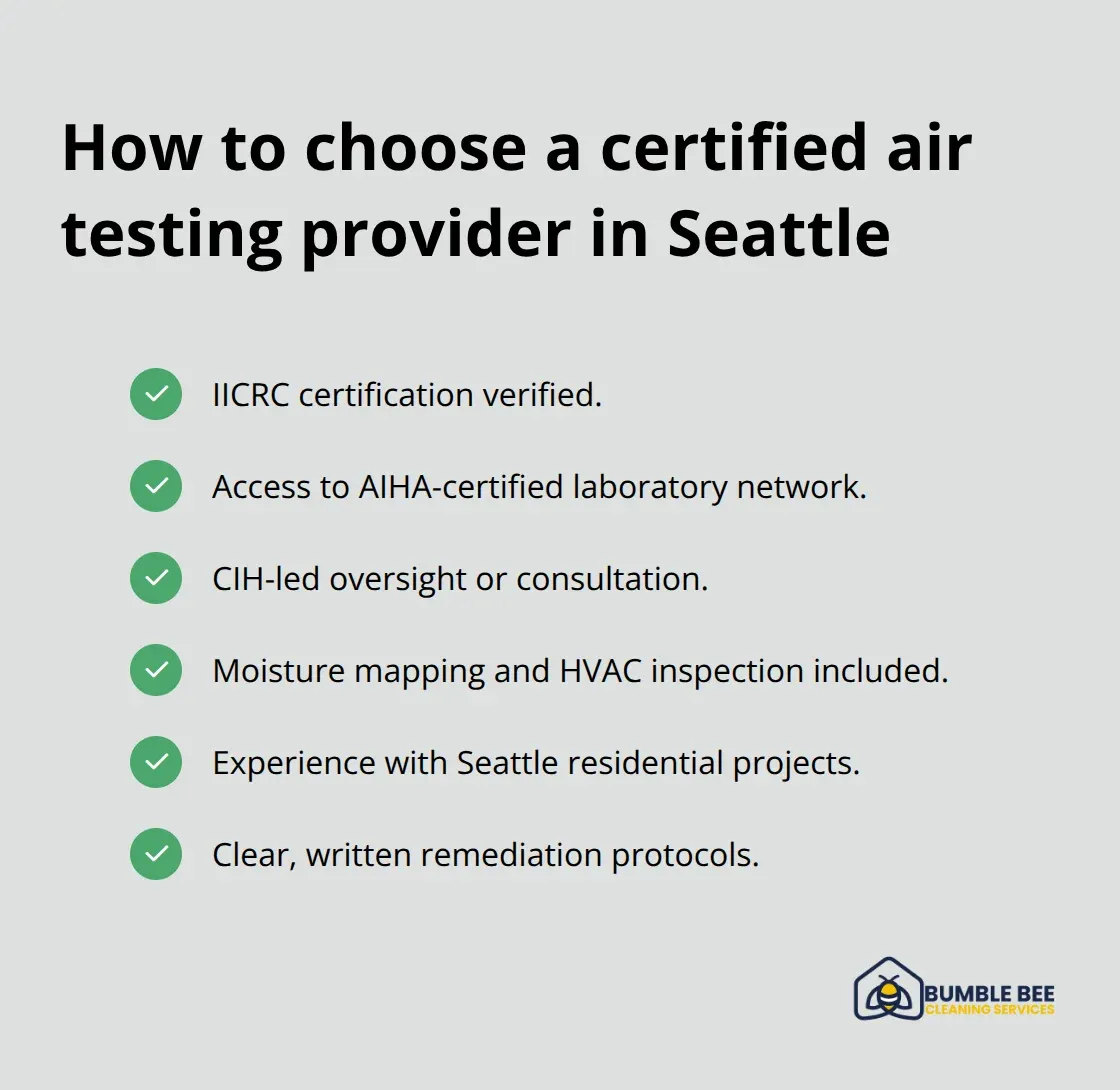
Ask whether the provider offers moisture mapping and HVAC system inspection as standard components rather than upsells, since concealed moisture in Seattle’s climate drives most post-construction mold problems. Providers with broad residential experience in Seattle understand local climate challenges and common construction defects specific to the Pacific Northwest.
Interpreting Your Test Results
Once testing completes and results arrive, the laboratory report should clearly identify contaminant types, measured concentrations, and whether levels exceed safe exposure limits. Compare results against EPA guidelines and Washington State building code requirements to understand what the numbers mean for your family’s health. If results show elevated VOCs or mold spores, ask the testing provider whether they offer post-remediation clearance testing to verify that cleanup efforts actually reduced contamination to acceptable levels. This follow-up testing (conducted after any remediation work) confirms that your home now meets safe air quality standards rather than assuming that cleanup alone solved the problem.
Final Thoughts
Post-construction air quality testing identifies real health risks before they become chronic problems for your family. The three warning signs-visible dust, lingering chemical odors, and unexplained health symptoms-all point to contamination that allergen testing and professional air assessment can quantify and address. Testing through an IICRC-certified provider using moisture mapping and laboratory analysis catches hidden mold and VOCs that surface inspections miss, particularly critical in Seattle’s wet climate where moisture problems develop rapidly inside walls and ductwork.
If your test results show elevated contaminant levels, remediation becomes the next priority. This might involve HVAC system cleaning, moisture removal, or targeted mold treatment depending on what testing reveals. Post-remediation clearance testing then verifies that cleanup efforts actually reduced contamination to safe levels rather than assuming the work solved the problem.
After remediation completes, professional cleaning removes construction residue from surfaces, fabrics, and HVAC components that continue circulating dust and particles long after visible cleanup ends. We at Bumble Bee Cleaning Services specialize in post-construction cleaning with IICRC certification, addressing the dust and chemical residue that standard cleaning misses. Our team removes contamination from ductwork, vents, and surfaces where construction debris accumulates, restoring your home’s air quality after testing identifies problem areas.
For more information about our cleaning services in Seattle and Atlanta, or to request a cleaning quote, call or text us at 425-786-1360 or email us at info@qbclean.com
