
Construction toxins don’t disappear when the work is done. Paint fumes, dust, and chemical residues settle into your Seattle home’s surfaces, air, and materials, creating invisible hazards for your family.
We at Bumble Bee Cleaning Services know that standard cleaning won’t remove these stubborn contaminants. This guide walks you through identifying what’s lurking in your home, testing for it, and removing it safely.
What Chemicals Does Construction Leave Behind
Primary Chemical Culprits
Paint thinners, solvents, adhesives, and sealants are the primary culprits in post-construction homes. Volatile organic compounds, or VOCs, off-gas from these materials for weeks to months after work ends, according to the American Lung Association. Drywall dust contains gypsum and silica particles that settle into carpets, furniture, and HVAC systems. If your home was built before 1978, lead dust from old paint or materials poses a serious threat, especially for children and pregnant women.
Airborne and Embedded Particles
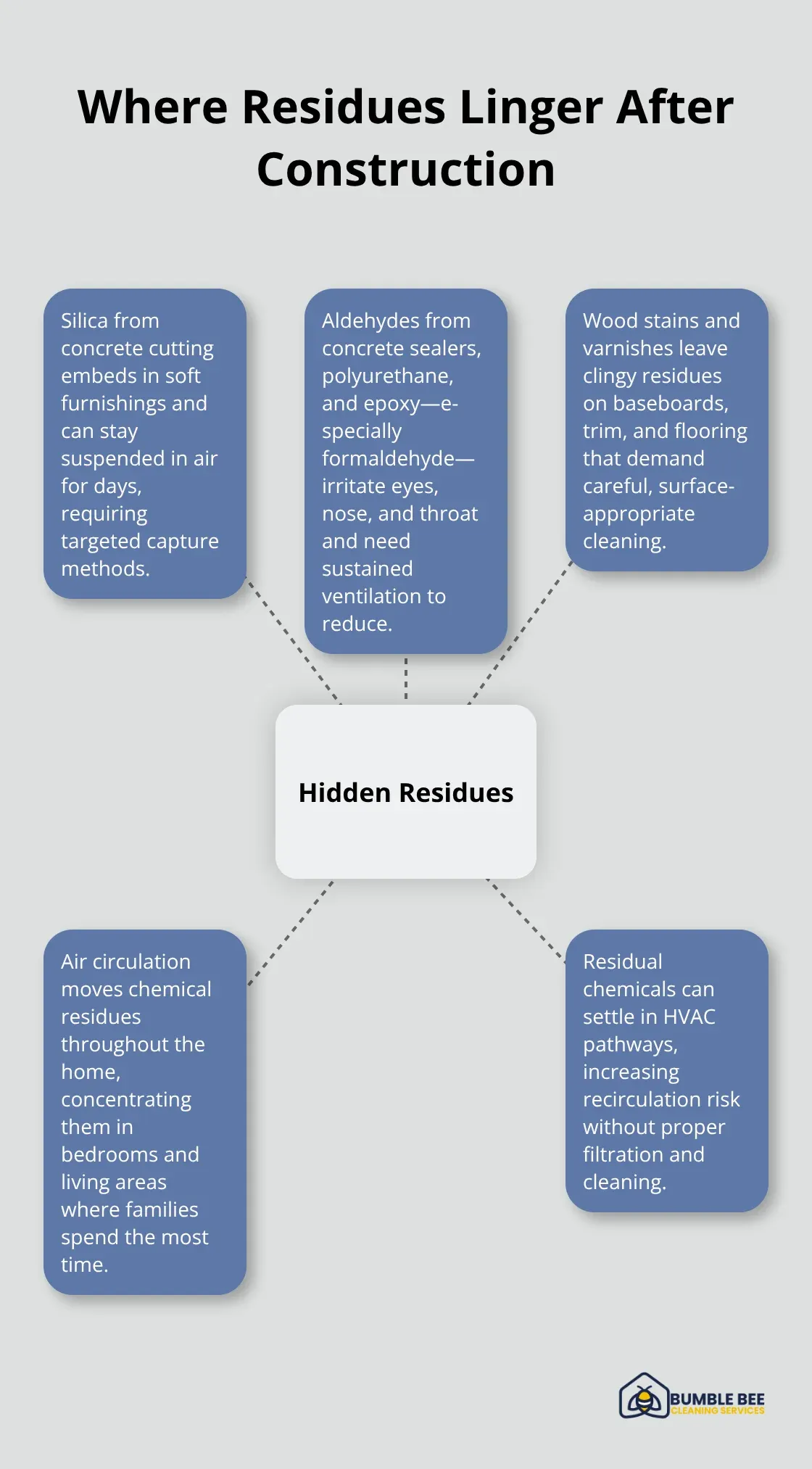
Concrete cutting and drilling generate respirable crystalline silica, a fine particle that embeds itself in soft furnishings and can remain suspended in air for days. Concrete sealers, polyurethane coatings, and epoxy finishes release formaldehyde and other aldehydes that irritate eyes, nose, and throat. Wood stain and varnish residues cling to baseboards, trim, and flooring. Chemical residues migrate through your home’s air circulation, accumulating in bedrooms and living areas where your family spends the most time.
How Quickly Health Effects Appear
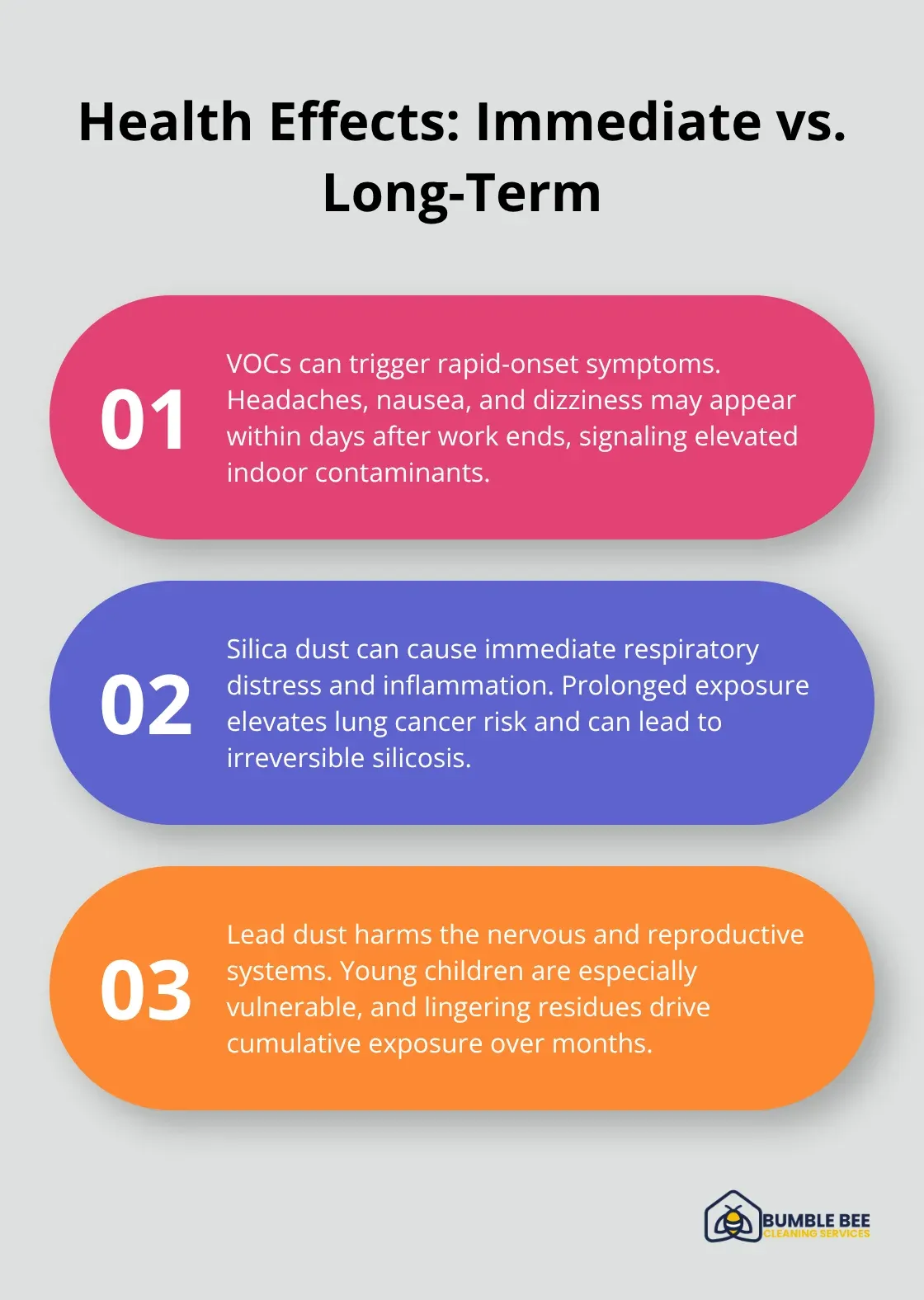
Health effects from these chemicals appear quickly or develop over years. The EPA reports that indoor air can be two to five times more polluted than outdoor air following construction work. Exposure to VOCs causes headaches, nausea, and dizziness within days of construction completion. Silica dust inhalation triggers immediate respiratory distress and inflammation; prolonged exposure increases lung cancer risk and causes silicosis, a permanent lung disease documented by OSHA. Lead dust affects the nervous system and reproductive health, with effects most severe in young children.
Chemical residues that linger for months create cumulative exposure, meaning your family’s risk increases the longer these contaminants remain.
Why Standard Cleaning Falls Short
Professional post-construction cleaning with HEPA filtration removes 99.97% of particles as small as 0.3 microns, far exceeding what DIY methods capture. Standard vacuums and surface wiping leave behind the fine particles that pose the greatest health risk. This is where testing and professional assessment become necessary to identify what remains hidden in your home.
How to Identify Hidden Chemical Residue in Your Home
Professional Testing Reveals What You Cannot See
You cannot see VOCs or silica particles floating through your living room, but several testing methods reveal what actually exists in your air and on your surfaces. Professional air quality testing uses specialized equipment to measure VOC concentrations, particulate matter, and formaldehyde levels in real-time. Third-party certified labs collect samples from your home and analyze them for specific chemicals, providing a detailed breakdown of what contaminants remain after construction. IICRC-certified professionals follow standardized protocols during inspection, documenting findings that guide your remediation strategy.
Lead Dust Demands Immediate Attention in Older Homes
If your home was built before 1978, lead dust testing is non-negotiable. Certified lead inspectors use XRF analyzers to detect lead on surfaces. Lead particles affect the nervous system and reproductive health, with effects most severe in young children. This single test protects your family from a hazard that standard post-construction cleaning cannot address without specialized protocols.
Why Your Senses Mislead You
Many Seattle homeowners skip professional testing and rely on their senses, which is a mistake. You cannot smell formaldehyde at safe levels, and silica dust remains invisible to the naked eye. DIY air quality monitors measure particulate matter but lack the precision to identify specific chemical compounds or their concentrations. Odor alone tells you almost nothing-some of the most dangerous chemicals are odorless. Paint smell fading does not mean VOCs have dissipated; the EPA confirms that off-gassing continues long after odors disappear. This gap between perception and reality leaves families exposed to genuine health hazards.
Timing Your Test Determines What You Discover
Testing immediately after construction ends captures the peak contamination period, when VOC concentrations are highest and before particles settle deep into fabrics and HVAC systems. Wait more than two weeks and you miss the acute exposure window when intervention is most effective. If you notice persistent headaches, throat irritation, or respiratory symptoms after construction, testing becomes urgent rather than preventive. Professional testing before you move back into a newly constructed or heavily renovated space protects your family, particularly if children or elderly members will live there. The investment in testing provides concrete data that eliminates guesswork and ensures your post-construction cleaning targets the actual contaminants present. Without testing, you clean blind, hoping standard methods remove everything harmful. With testing results in hand, you know exactly what remediation strategies your home requires-and that knowledge determines whether standard cleaning suffices or whether you need specialized removal techniques.
How to Remove Hidden Chemical Residue From Your Seattle Home
Testing identifies what’s in your home, but removal requires a methodical approach that matches the contamination severity. Standard post-construction cleaning works for mild cases, while severe chemical exposure demands professional remediation. We at Bumble Bee Cleaning Services recommend starting with HEPA-filtered vacuuming followed by wet cleaning, then assessing whether additional intervention is necessary based on your test results.
The IICRC S400 Standard Cleaning Protocol
The IICRC S400 standard for professional cleaning of the built environment specifies vacuuming with HEPA filtration first, then wet cleaning with microfiber cloths and pH-neutral cleaners on hard surfaces, working from top to bottom. This sequence prevents re-suspension of fine particles into the air. For homes with moderate VOC off-gassing, open windows continuously for the first week after construction ends and run HEPA air purifiers without interruption for several days following professional cleaning. The American Lung Association confirms that chemical off-gassing continues even after odors fade, so extended ventilation addresses what your nose cannot detect.
Protecting Original Wood and Surfaces
Seattle’s damp climate complicates recovery because moisture clings to dust particles and promotes mold growth, making thorough drying essential after wet cleaning. Never use heavy water application on original wood trim or baseboards, as moisture can damage patina and seams. Instead, use damp microfiber cloths that release minimal moisture while removing surface residue. This careful approach preserves your home’s character while eliminating chemical contaminants.
When Professional Remediation Becomes Necessary
Chemical residues embedded in HVAC systems, ductwork, and insulation require professional assessment and removal that exceeds standard cleaning scope. If your test results show formaldehyde concentrations above 0.1 parts per million or VOC levels significantly elevated after two weeks of ventilation, professional remediation specialists should evaluate whether source removal or encapsulation is appropriate. Lead dust in homes built before 1978 demands certified lead remediation professionals who follow EPA protocols for safe containment and disposal.
Industrial-Grade Equipment for Severe Contamination
Severe silica dust accumulation from concrete cutting or drilling may require industrial-grade air scrubbing equipment that captures particles smaller than 0.3 microns, removing what standard HEPA vacuums alone cannot fully address. Professional remediation also documents completion through post-cleaning testing, verifying that contaminant levels have returned to acceptable ranges before your family reoccupies the space. This documentation protects your health and provides proof of due diligence if health issues emerge later. For comprehensive treatment tailored to actual contamination levels rather than generic cleanup, coordinate with certified professionals to ensure your home receives proper assessment and remediation planning.
Final Thoughts
Construction toxins remain in your home for weeks or months after work ends, even though you cannot see them. Testing within two weeks of construction completion reveals VOC concentrations, particulate matter, and lead levels that standard cleaning cannot address. Professional remediation ensures your family avoids the respiratory damage, neurological effects, and long-term health risks that hidden chemical residue creates.
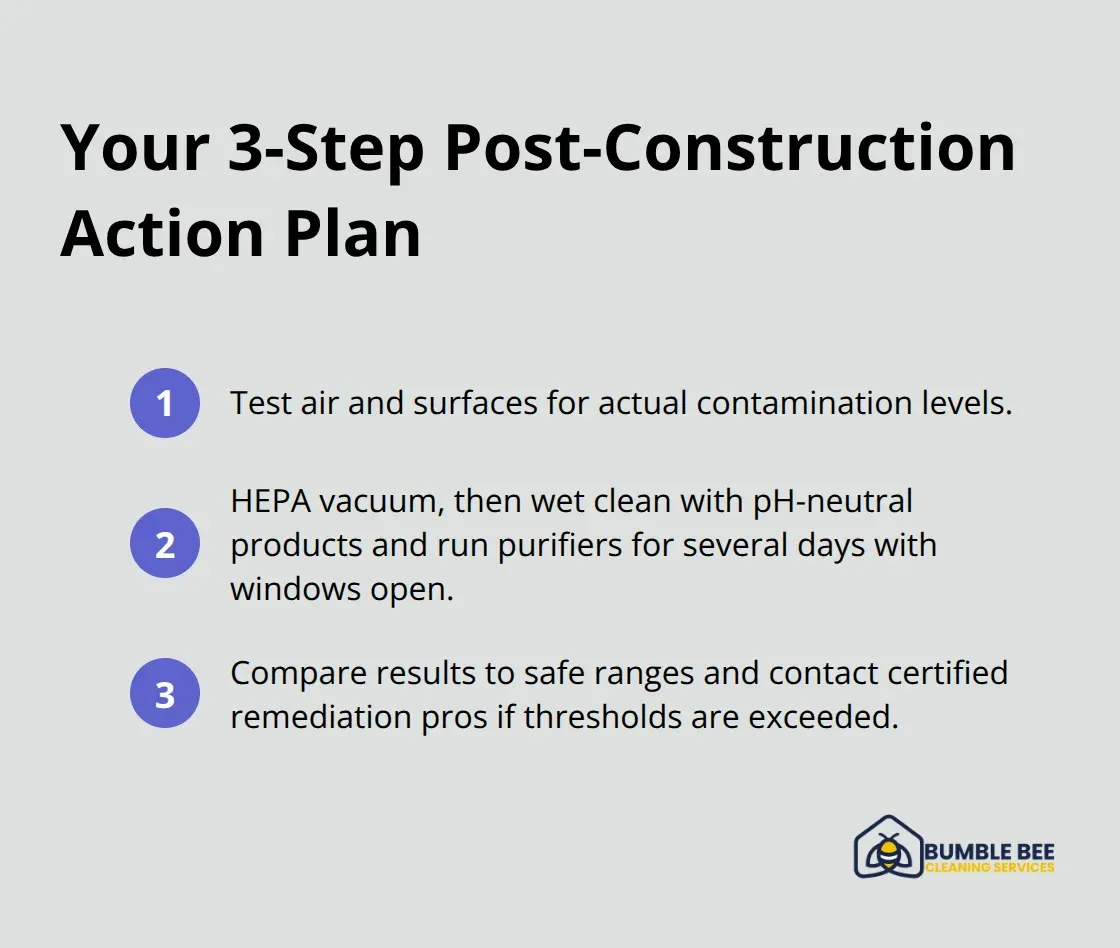
Three concrete steps protect your home. First, test your air and surfaces to measure actual contamination levels. Second, implement HEPA-filtered vacuuming followed by wet cleaning with pH-neutral products, then run air purifiers continuously for several days while maintaining open windows. Third, compare your results against acceptable ranges and contact certified remediation professionals if contamination exceeds safe thresholds.
We at Bumble Bee Cleaning Services follow IICRC protocols that remove construction toxins without damaging your home’s original surfaces or character. Our team knows Seattle’s climate challenges and the specific contamination patterns that affect older homes with radiators, original wood, and moisture-prone basements. Your newly renovated or constructed home should feel like a fresh start, not a health hazard.
For more information about our cleaning services in Seattle and Atlanta, or to request a cleaning quote, call or text us at 425-786-1360 or email us at info@qbclean.com
