
Your Seattle home renovation is complete, but the renovation aftermath presents new challenges. Construction dust settles on every surface while paint fumes linger in the air.
We at Bumble Bee Cleaning Services know that post-remodel recovery requires strategic planning and proper techniques. This guide walks you through the essential steps to transform your construction zone back into a healthy, livable space.
What Cleaning Tasks Come First After Your Remodel
Construction dust infiltrates every corner of your home and settles on surfaces you never imagined it could reach. The Environmental Protection Agency reported that 600 million tons of construction and demolition debris were generated in the U.S. in 2018, and your Seattle home carries its share of this aftermath.
Start with a systematic top-to-bottom approach that uses HEPA-filter vacuums, which capture fine particles better than standard vacuums. Focus first on light fixtures and ceiling fans, then work downward to prevent dust from resettling on cleaned surfaces.
HVAC System Recovery and Air Filter Management
Your heating and cooling system becomes a dust distribution network during renovation. The Indoor Air Quality Association recommends that homeowners clean HVAC systems post-construction to prevent dust circulation throughout your home.
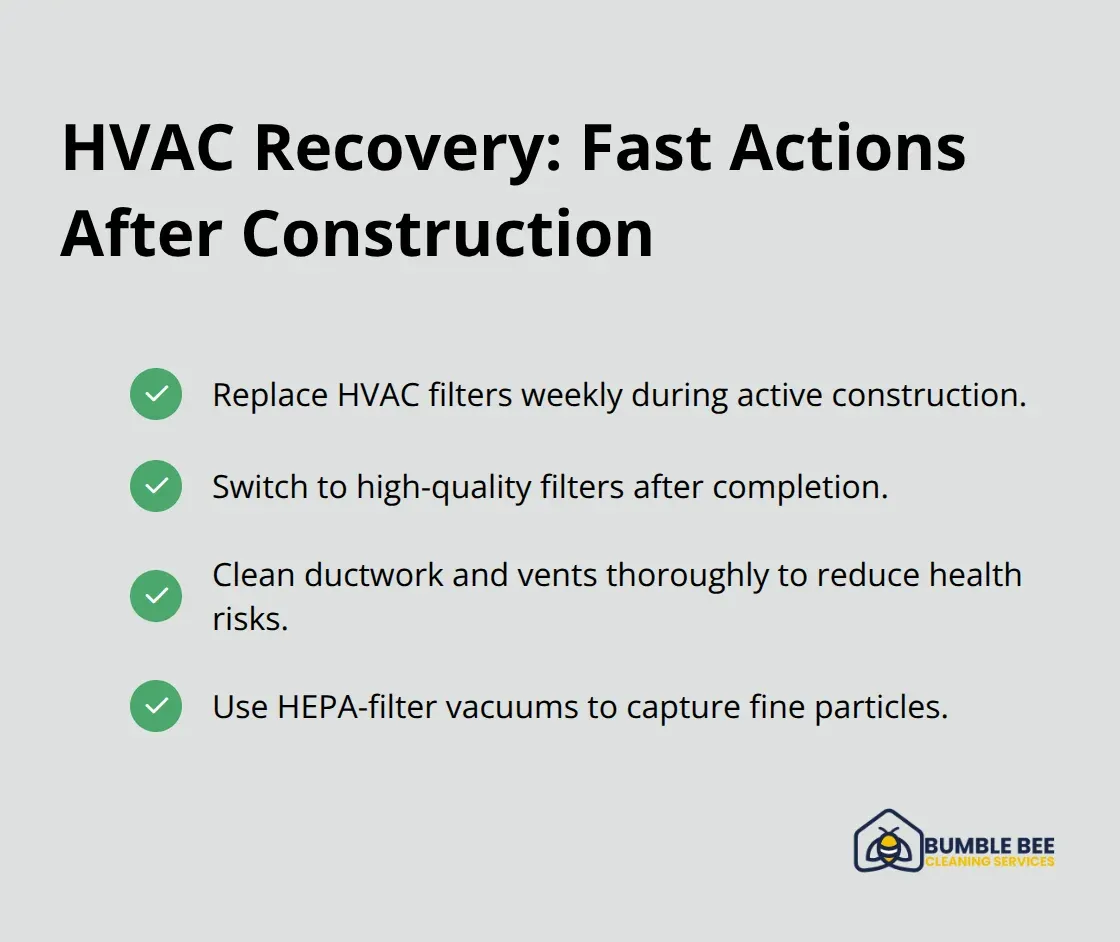
Replace air filters weekly during active construction phases, then switch to high-quality filters after completion. Clean all ductwork and vents thoroughly, as construction dust contains harmful substances that pose health risks according to the Occupational Safety and Health Administration (OSHA).
Chemical Residue and Paint Fume Elimination
Freshly applied paints and primers emit volatile organic compounds that require immediate attention. Open windows and run exhaust fans continuously for the first 72 hours after paint application.
Commercial-grade air scrubbers enhance air circulation and filter chemical particles more effectively than standard ventilation. Focus on areas with the heaviest chemical exposure first, including newly painted rooms and spaces where adhesives were used.
Surface Cleaning and Debris Removal
High-traffic areas such as bathrooms and kitchens require special sanitization due to their potential to harbor bacteria. Use warm water and mild detergent for most materials (specialty products may be needed for tougher stains).
For hardwood floors, vacuum carefully and sand if necessary to remove embedded construction dust. Professional cleaning services often utilize industrial-grade equipment specifically designed to handle heavy debris and fine construction dust safely.
The scope of these initial tasks determines whether you tackle the work yourself or hire professionals-a decision that involves weighing time, safety, and cost factors.
Should You Clean Post-Construction Yourself or Hire Professionals
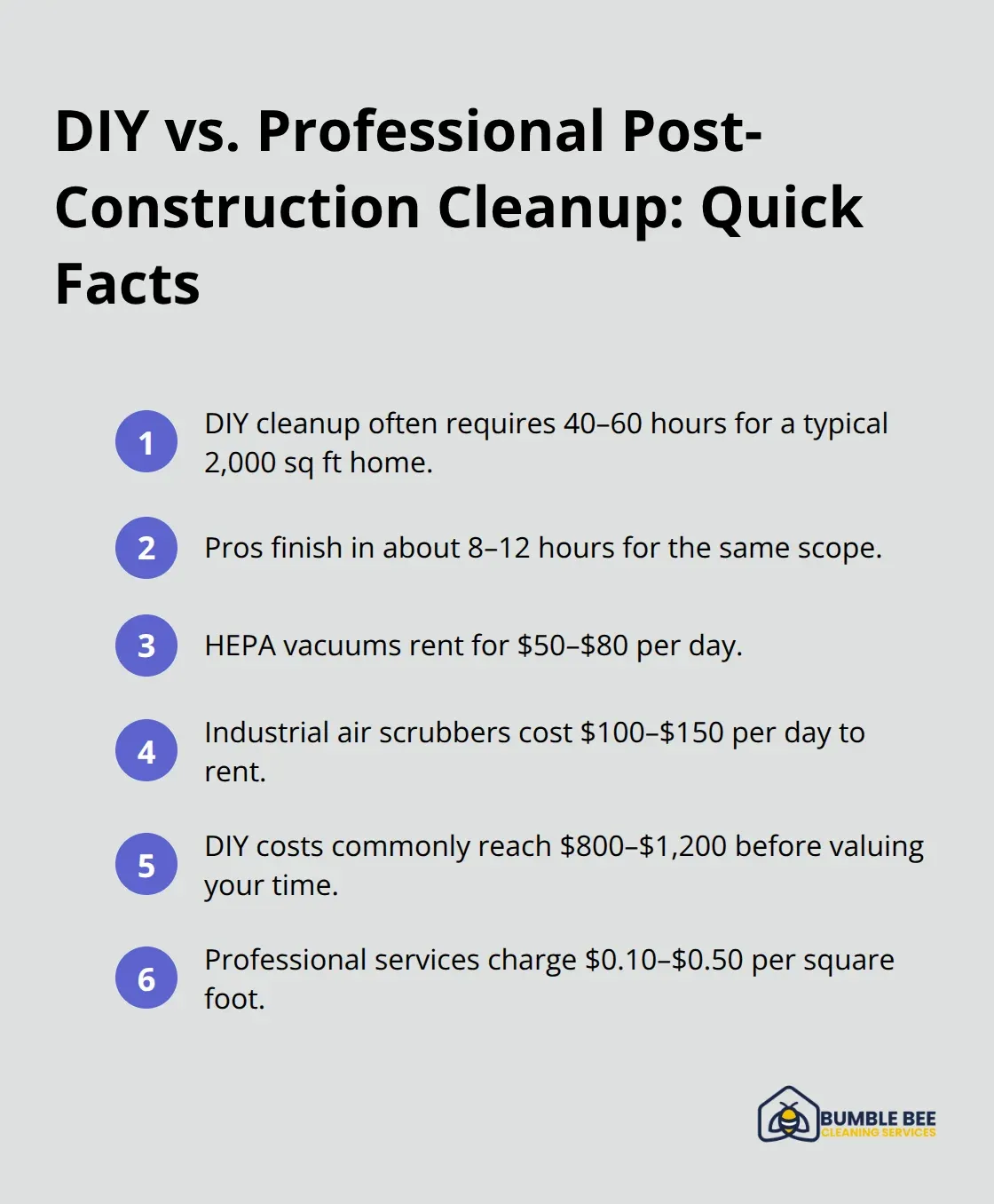
Post-construction cleanup requires 40-60 hours of intensive labor for a typical 2,000-square-foot Seattle home, according to local cleaning contractors. DIY cleanup appears cost-effective initially, but hidden costs of equipment rental, specialized supplies, and time investment quickly accumulate. Professional-grade HEPA vacuums rent for $50-80 daily, while industrial air scrubbers cost $100-150 per day. Factor in protective gear, specialized products, and disposal fees, and DIY costs reach $800-1,200 before you account for your time.
Safety Risks Make Professional Services the Smart Choice
Construction dust contains silica, asbestos fibers (in older homes), and chemical residues that pose serious health risks without proper handling. Prolonged exposure to construction dust can cause chronic respiratory issues, including bronchitis and potentially even lung cancer. OSHA regulations require specific respiratory protection and containment procedures that most homeowners lack. Professional teams arrive with certified safety equipment and training to handle hazardous materials safely.
Professional services typically charge based on square footage, with residential cleaning costing $0.10-$0.50 per square foot, delivering thorough results while protecting your health. This investment protects you from exposure to harmful particles that standard household equipment cannot capture effectively.
Time and Expertise Create Clear Value
Professional teams complete post-construction cleanup in 8-12 hours versus the 40-60 hours required for DIY approaches. Professionals know which surfaces need specialty treatments and can identify potential problems like inadequate debris removal or air quality issues.
Most homeowners miss areas like HVAC ductwork, light fixtures, and baseboards where construction dust accumulates heavily. Professional services include proper disposal of construction debris, something that costs additional fees when handled independently through waste management companies.
Equipment and Technique Differences
Industrial-grade equipment removes fine particles that household vacuums cannot capture. Professional teams use specialized tools designed for post-construction environments, including commercial air scrubbers and HEPA filtration systems.
Standard household equipment struggles with the volume and type of debris present after construction. Professional equipment handles both heavy debris and microscopic particles that affect air quality long after visible cleanup appears complete.
These factors influence your timeline for full recovery, which varies significantly based on your chosen approach and the scope of your renovation project.
What Recovery Timeline Should You Expect
Your recovery timeline starts immediately after construction ends with three distinct phases that determine your home’s livability and safety. Week one demands immediate attention to air quality and surface contamination, while month one focuses on system verification and hidden dust removal. Long-term monitoring extends 6-12 months as construction materials continue off-gassing and settling occurs throughout your home.
Week One Safety and Air Quality Priorities
Replace HVAC filters daily during the first week, as construction dust continues to circulate through your system even after visible cleanup appears complete. Run air purifiers with HEPA filters continuously in bedrooms and main living areas, targeting 5-6 air changes per hour according to American Lung Association standards.
Test indoor air quality with professional-grade monitors that measure PM2.5 particles, volatile organic compounds, and formaldehyde levels. Seattle remodeling projects require careful planning, but recovery extends far beyond construction completion.
Open windows during daylight hours when outdoor air quality permits. Maintain cross-ventilation to accelerate chemical off-gassing from new materials.
Month One System Checks and Deep Cleaning
Schedule professional duct cleaning during week 3-4 when initial dust settlement slows but before particles embed permanently in your HVAC system. Inspect and clean all light fixtures, ceiling fans, and high surfaces where construction dust accumulates but standard cleaning misses.
Test all electrical systems, plumbing fixtures, and newly installed appliances for proper function, as construction dust can interfere with mechanical components. Professional post-construction cleaning services report that 30% of homeowners experience ongoing air quality issues without proper month-one interventions.
Replace water filters in refrigerators, faucets, and whole-house systems (construction activities introduce sediment and particles into water lines).
Long-Term Air Quality and Maintenance Monitoring
Monitor air quality monthly for the first year with calibrated instruments that track particle counts and chemical concentrations. New paint, flooring adhesives, and building materials continue to release volatile organic compounds for 6-12 months after installation.
Schedule semi-annual HVAC maintenance with extra attention to filter replacement and duct inspection, as construction dust creates long-term system stress. Document any persistent odors, respiratory symptoms, or air quality concerns with dated photographs and measurements for warranty claims or contractor follow-up.
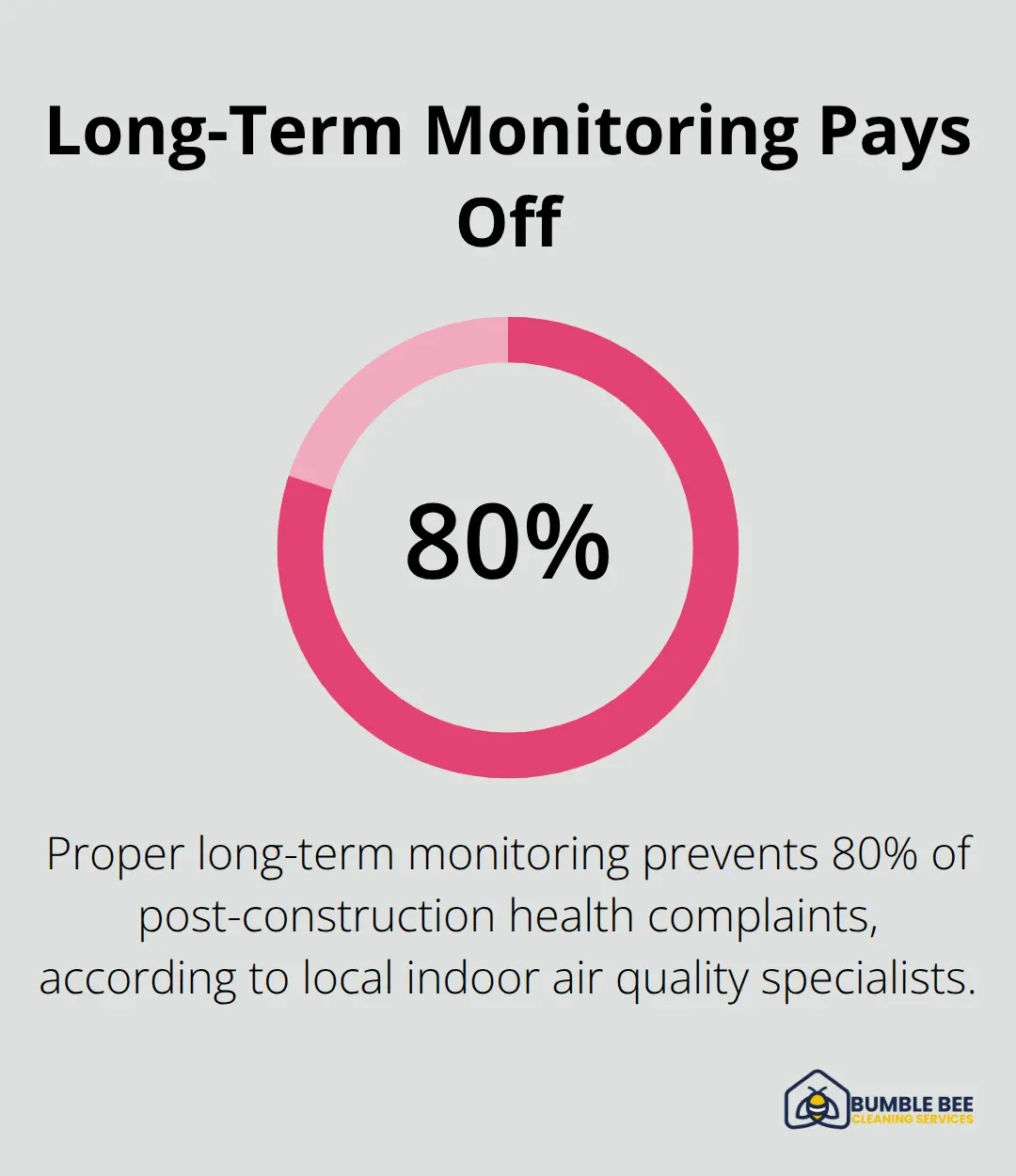
Seattle homeowners report that proper long-term monitoring prevents 80% of post-construction health complaints according to local indoor air quality specialists.
Final Thoughts
Your Seattle home renovation aftermath demands systematic attention to air quality, surface contamination, and long-term monitoring. The three-phase recovery process protects your family’s health while it preserves your investment in your newly remodeled space. Professional post-construction cleanup services deliver measurable advantages over DIY approaches.
We at Bumble Bee Cleaning Services bring industrial-grade equipment and certified safety protocols that transform construction zones into healthy environments. Our team handles hazardous materials safely while it completes thorough cleanup in 8-12 hours versus the 40-60 hours that DIY efforts require. The timeline matters significantly for your recovery success (week one air quality interventions prevent long-term health issues while month one system checks protect your HVAC investment).
Your renovated Seattle home represents a substantial investment that deserves professional protection. Bumble Bee Cleaning Services provides comprehensive post-construction cleanup with flat-rate pricing. We understand the complexities of post-remodel recovery and deliver results that protect both your health and your home’s value.
