
Paint overspray, dust clouds, and stubborn residue are just the beginning of what happens after a Seattle renovation. Professional crews have the tools and expertise to handle this cleanup safely and efficiently.
We at Bumble Bee Cleaning Services know that post-renovation paint removal isn’t a DIY job. This guide walks you through the methods professionals use and why hiring experienced teams saves you time, money, and headaches.
What Methods Do Professional Crews Use to Remove Paint
Professional paint removal requires selecting the right technique based on paint type, surface material, and how many layers exist. Chemical strippers work best for stubborn, multi-layer paint that won’t respond to mechanical methods. Eco-friendly options like Soy-Gel Professional Paint Remover encapsulate lead-based paint, which matters in older Seattle homes where lead paint is common. These low-VOC formulas minimize respiratory irritation and reduce indoor air pollution during the removal process. The product works on oil, latex, enamel coatings, shellacs, urethanes, and varnishes, making it versatile across different renovation scenarios.
Chemical Stripping Techniques
Application of chemical strippers involves spreading the remover, waiting 15 to 30 minutes depending on paint thickness, then scraping away the softened layers with a putty knife. For lighter paint coatings, sanding and mechanical grinding offer a faster path forward and reduce reliance on chemical products altogether.
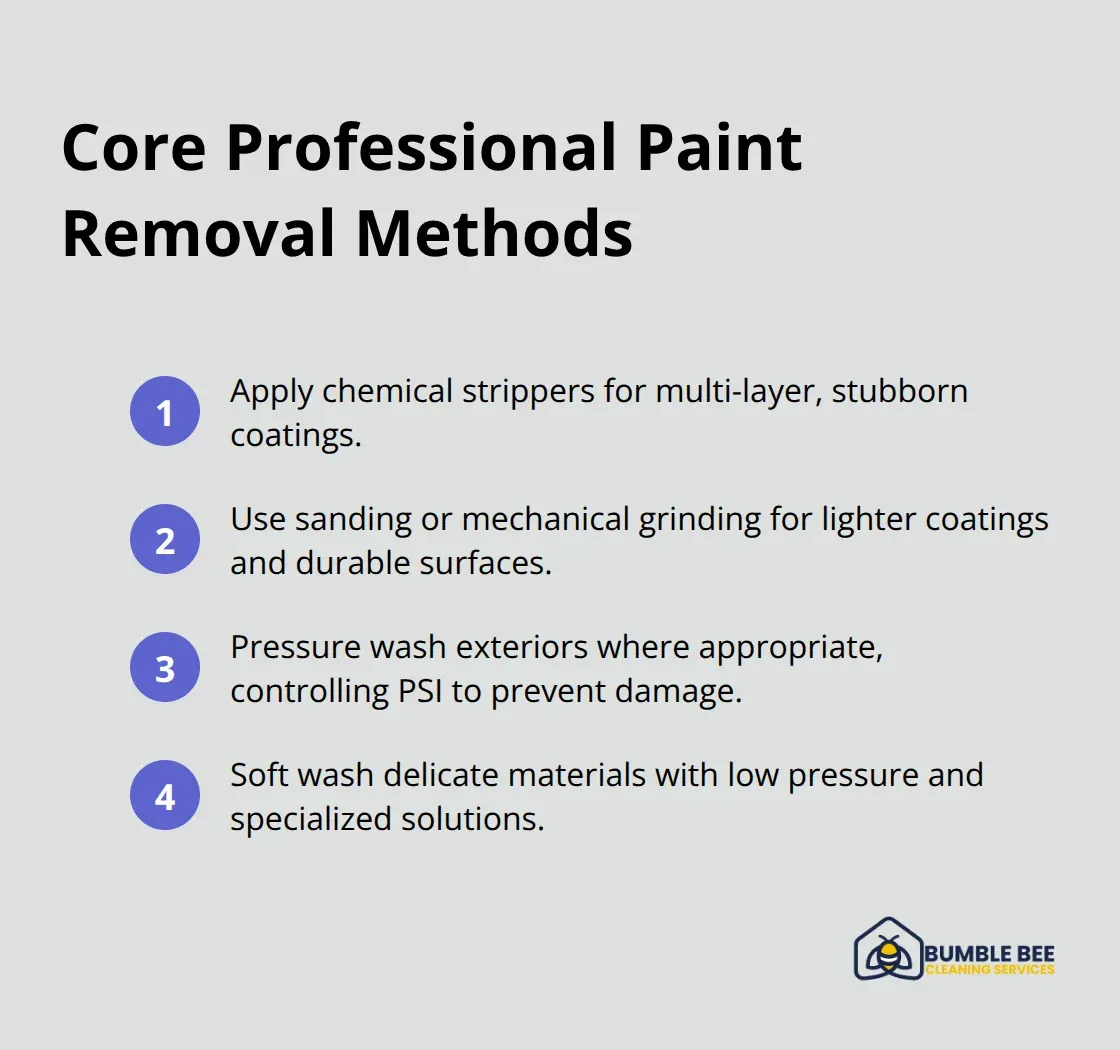
Mechanical methods work particularly well on metal hardware, wooden trim, and concrete surfaces where multiple paint layers have accumulated over decades.
Pressure and Soft Washing for Exterior Surfaces
Pressure washing strips paint from exterior walls and concrete slabs effectively, though water pressure must stay controlled to avoid damaging underlying surfaces. Soft washing uses lower pressure combined with specialized cleaning solutions, making it safer for delicate materials like stucco or aged wood siding.
Dust Control and Surface Inspection
After any paint removal method, dust control becomes non-negotiable in Seattle’s humid climate. Professional crews deploy HEPA-filter vacuums to capture fine particles that regular vacuums miss, protecting indoor air quality and preventing dust from settling on newly painted surfaces. The EPA warns that if wet or damp materials are not dried within 24 to 48 hours after a leak or spill, mold growth can occur. Surface inspection follows removal to identify damage, scratches, or imperfections that need filling or smoothing before new paint application. Proper preparation prevents paint failure and ensures the final finish looks professional and lasts longer. Once surfaces are clean and inspected, the next phase addresses why professional crews matter for this work.
Why Professional Paint Removal Matters
Health Hazards of DIY Paint Removal
DIY paint removal exposes homeowners to serious health risks that most don’t anticipate. Lead paint, common in Seattle homes built before 1978, releases toxic dust when scraped or sanded without proper containment. The EPA classifies lead exposure as a major health hazard, particularly for children and pregnant women, where even small amounts can cause developmental delays and neurological damage. Chemical strippers contain volatile organic compounds that irritate respiratory systems, and improper ventilation traps fumes indoors for hours. Pressure washers operated without training can damage wood siding, concrete, and trim, creating costly repairs before new paint even goes on.
Professional Standards and Safety Protocols
Professional crews follow established safety protocols for containment and hazard management during paint removal. These standards require proper containment, PPE, and moisture monitoring-documentation that homeowners cannot replicate with rental equipment and online tutorials. At Bumble Bee Cleaning Services, our certified team applies rigorous standards to every project, protecting both occupants and the property itself.
Speed and Efficiency Advantages
Professional crews complete paint removal in a fraction of the time DIY attempts take. A team removes paint from a 2,000-square-foot home in 2 to 3 days, while homeowners typically spend weeks on the same project, working nights and weekends. This speed matters because extended timelines increase moisture exposure and mold risk, especially in Seattle’s wet climate.
Proper Hazardous Waste Disposal
Hazardous waste disposal adds another layer of complexity that professionals handle correctly. Used chemical strippers, lead-contaminated dust, and paint chips require disposal at licensed facilities, not household trash or storm drains. The professional approach ensures contaminated materials get contained, documented, and disposed according to environmental regulations, protecting both the property and surrounding ecosystem. Professional teams carry liability insurance covering accidents, surface damage, and health incidents, whereas DIY mishaps leave homeowners financially responsible for injuries or property damage. Once paint removal is complete and surfaces are clean, the next phase focuses on preparing those surfaces for new finishes and managing any remaining debris.
What Happens to Surfaces After Paint Removal
Assessing Moisture and Structural Damage
Surface inspection after paint removal reveals what the previous layers were hiding. Underneath old paint, wood swells from moisture exposure, concrete shows hairline cracks that weaken adhesion for new coatings, and metal hardware often displays rust or corrosion that chemical strippers did not fully address.
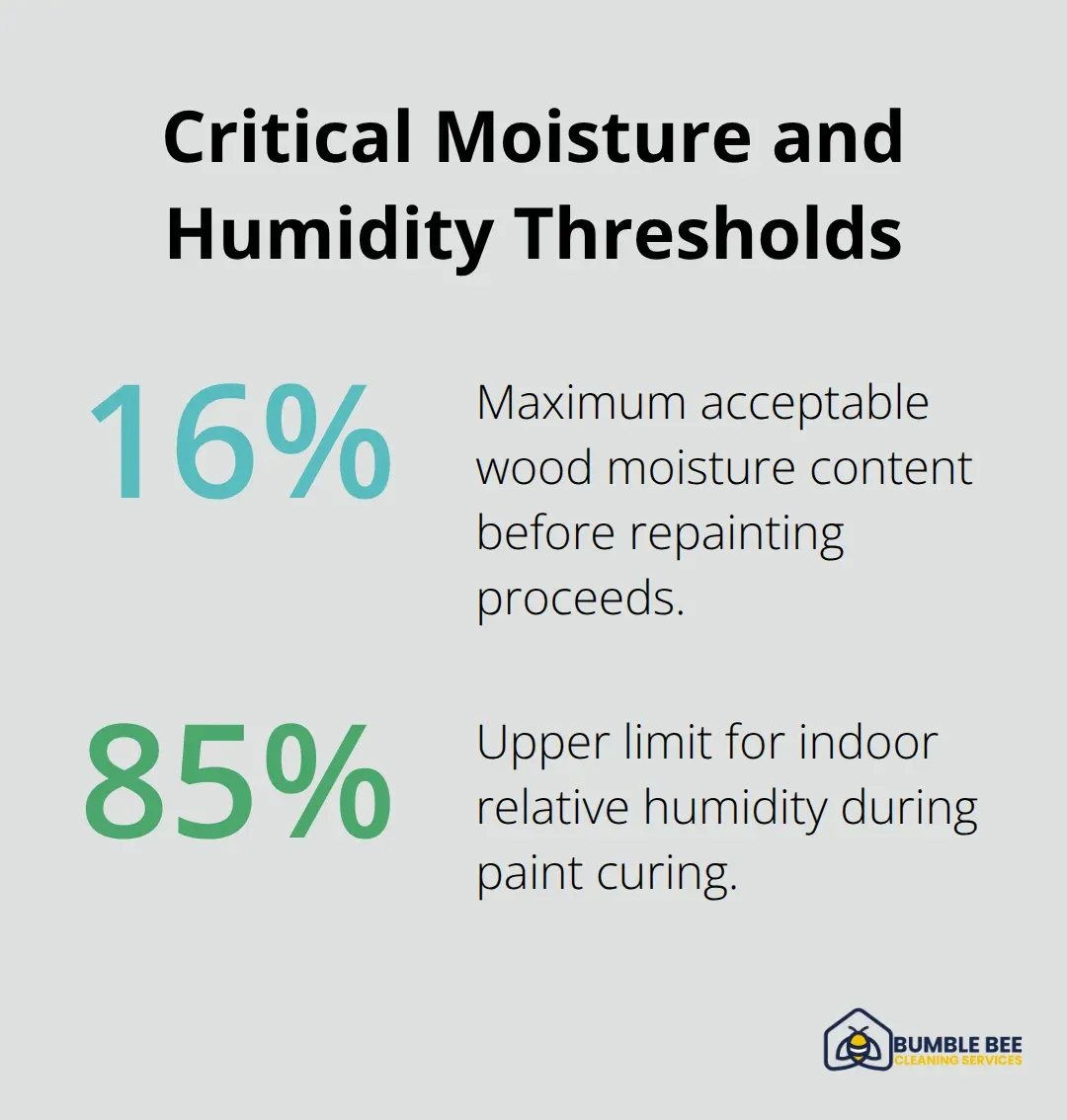
Professional crews use straightedges and moisture meters to assess these conditions before any new paint touches the substrate. A moisture reading above 16 percent on wood surfaces signals that drying must continue, because paint applied over damp material will blister and peel within months, wasting both materials and labor. Concrete floors and walls need similar scrutiny; the IICRC S500 water damage restoration standard requires that damp materials dry within 24 to 48 hours to prevent mold colonization, which becomes trapped beneath fresh coatings if overlooked.
Eliminating Dust and Fine Particles
Dust and fine particles settle into every crevice after paint removal, and standard vacuuming leaves residue that compromises paint adhesion. Professional crews deploy HEPA-filter vacuums multiple times during the final stages, capturing particles as small as 0.3 microns that regular equipment misses entirely.
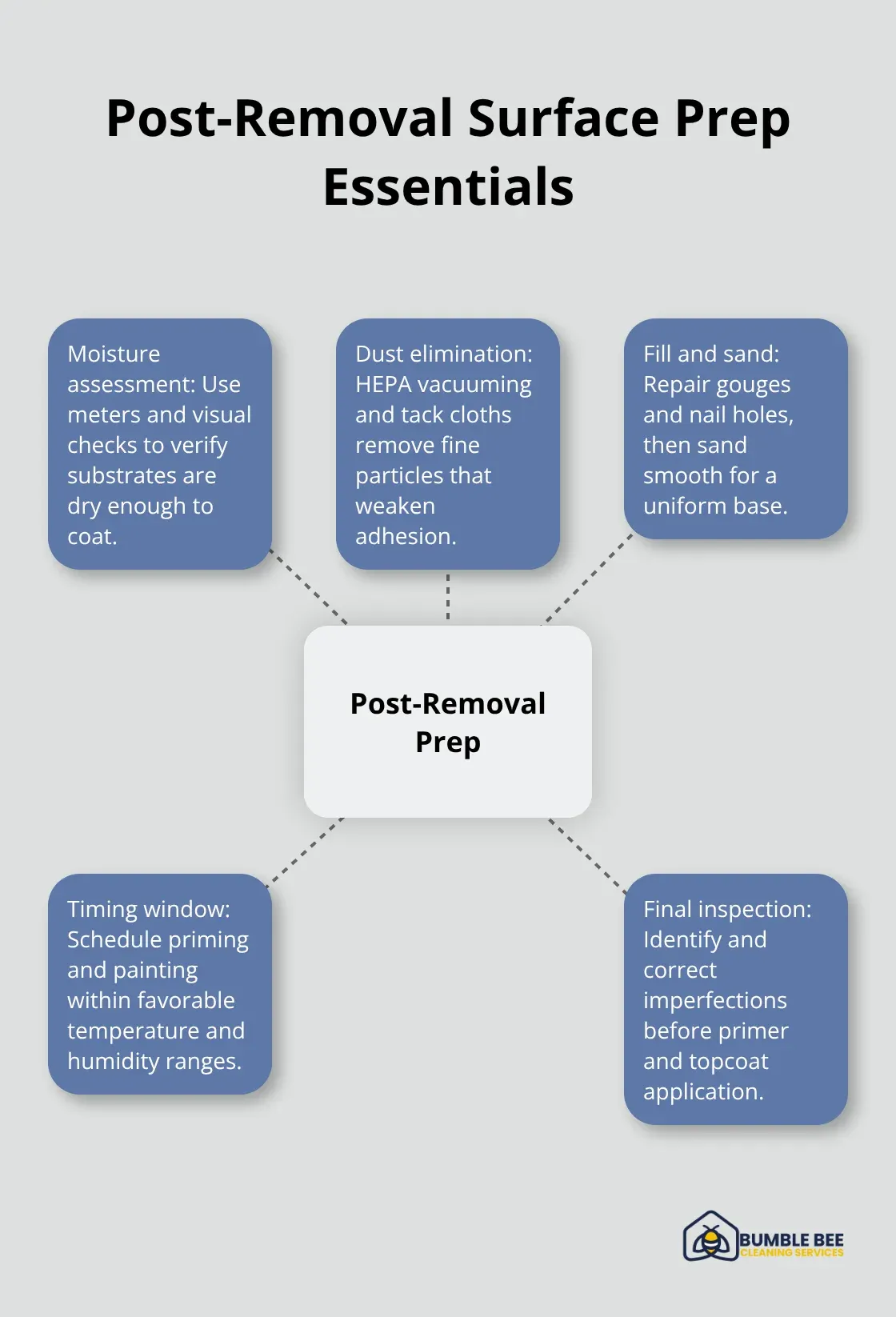
Tack cloths remove the last traces of dust from horizontal surfaces, and damp wiping of vertical surfaces prevents particles from floating back down during paint application. This attention to detail separates mediocre finishes from professional results.
Filling and Smoothing Imperfections
Small imperfections like gouges, nail holes, or uneven spots require filling with appropriate spackling compounds. Once the filler dries, crews sand it smooth and inspect under bright lighting to catch flaws before primer application. Surface preparation directly determines whether the new finish lasts five years or fifteen.
Timing Paint Application for Optimal Conditions
Temperature and humidity affect paint curing significantly. Most paint manufacturers recommend applying coatings when indoor conditions stay between 50 and 85 degrees Fahrenheit with humidity below 85 percent, conditions that Seattle’s spring and early summer typically provide but fall and winter rarely do. Timing the final preparation phase to coincide with favorable weather windows prevents costly delays and ensures optimal curing for the new finish.
Final Thoughts
Professional paint removal after Seattle renovations protects your home, your family, and your investment in ways that DIY approaches cannot match. Chemical stripping, mechanical grinding, pressure washing, and meticulous dust control address paint overspray and stubborn residue while managing lead paint safely and containing hazardous materials according to established safety standards. Professional crews complete the job in days rather than weeks, which reduces moisture exposure and mold risk in Seattle’s humid climate while inspecting surfaces for hidden damage and eliminating fine particles that compromise paint adhesion.
We at Bumble Bee Cleaning Services bring experience and IICRC certification to every post-renovation project, handling paint removal, surface preparation, and final cleanup with the same rigor we apply to all our residential and commercial cleaning services. We use eco-friendly products and deliver quality results so your newly painted surfaces look professional and perform reliably. Contact Bumble Bee Cleaning Services for a consultation on your Seattle renovation project, and we will assess your specific needs, recommend the right removal method, and handle the entire process from paint stripping through final surface preparation.
For more information about our cleaning services in Seattle and Atlanta, or to request a cleaning quote, call or text us at 425-786-1360 or email us at info@qbclean.com
