
Your construction project is finally finished. Now comes the messy part: cleaning up the dust, debris, and hazards left behind.
Post construction cleaning services aren’t like regular house cleaning. We at Bumble Bee Cleaning Services know that construction sites leave behind materials that require specialized equipment, trained crews, and strict safety protocols to handle properly.
Why Construction Cleanup Requires Professional Expertise
Three Categories of Debris Demand Specialized Handling
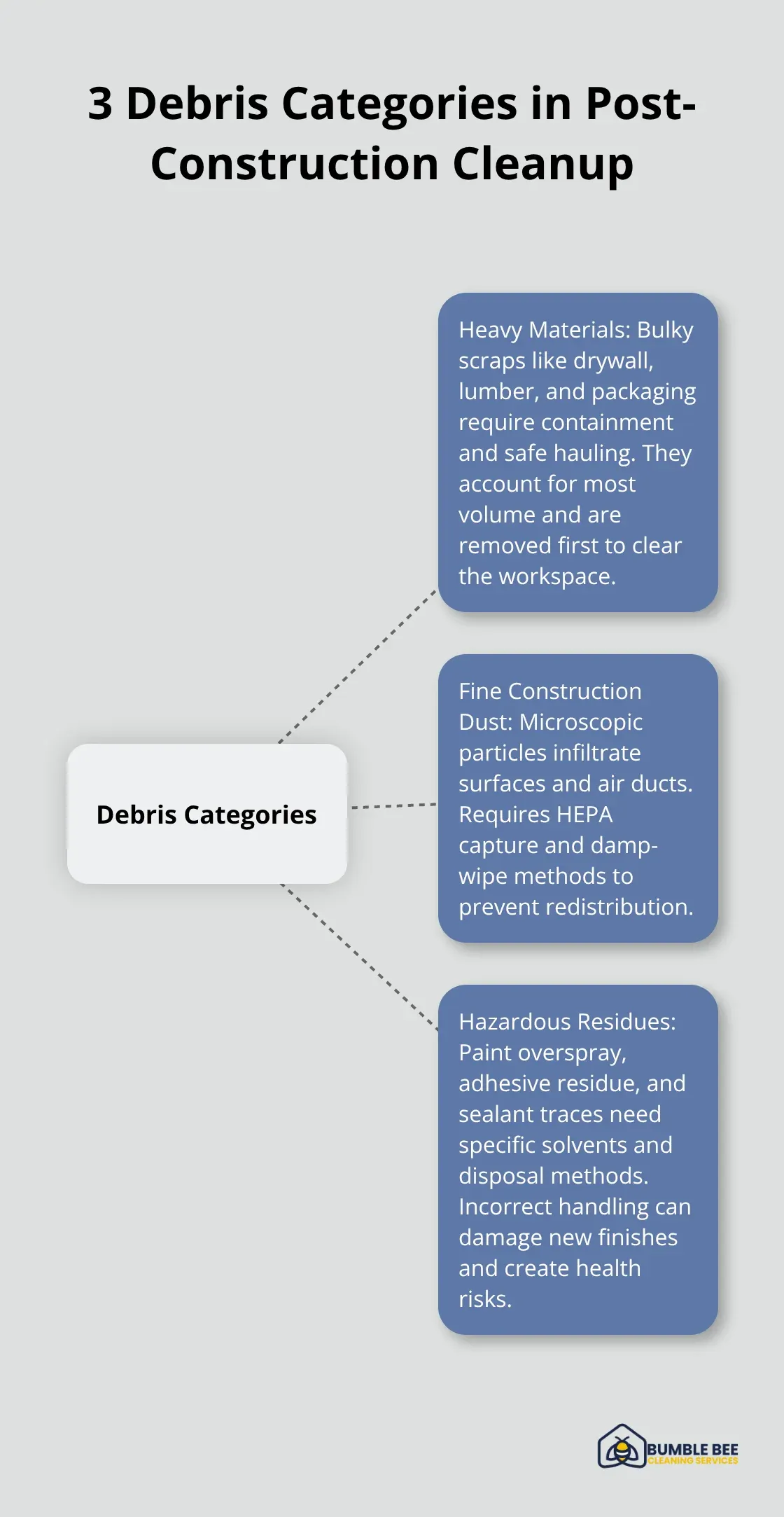
Construction sites produce three distinct debris categories that require different removal and containment strategies. Heavy materials like drywall scraps, lumber offcuts, and packaging represent the bulk volume, while fine construction dust infiltrates every surface, air duct, and crevice in the building. Hazardous residues including paint overspray, adhesive residue, caulk drips, and chemical sealant traces require specific cleaning agents and disposal methods to avoid damaging new finishes or creating health risks.
The IICRC S400 standard for commercial built environment cleaning establishes that post-construction cleanup must follow a documented inspection and containment plan before any cleaning work begins. This protects both the structure and occupants from cross-contamination.
Equipment That DIY Approaches Cannot Match
Professional crews bring specialized equipment that standard household tools simply cannot replicate. HEPA-filter vacuums with sealed systems capture airborne particles before they spread, dramatically improving indoor air quality during removal-a critical distinction because standard household vacuums actually spread fine particles further. Professionals use microfiber systems and damp-wiping techniques to capture dust rather than redistribute it, pressure washers for exterior surfaces where applicable, and commercial-grade floor scrubbers designed to handle multiple floor types without damaging new installations.
Technical Knowledge Protects Your Investment
Trained technicians understand substrate-specific cleaning methods, hazard communication protocols for chemical safety, and the physical inspection requirements outlined in IICRC standards S220 and S230 to assess whether underlying flooring or substrates sustained damage during construction. Attempting post-construction cleanup without this expertise typically results in missed areas, damaged finishes, or incomplete dust removal that settles into HVAC systems weeks later.
Professional teams conduct thorough site assessments before mobilizing equipment, ensuring the cleaning approach matches the specific construction type and debris profile rather than applying a one-size-fits-all method. This systematic evaluation determines which surfaces need specialized attention and which cleaning agents work best for your particular project. Understanding these distinctions separates a thorough cleanup from one that leaves problems hidden until weeks after occupancy.
How the Post-Construction Cleaning Process Actually Works
Site Assessment Sets the Foundation
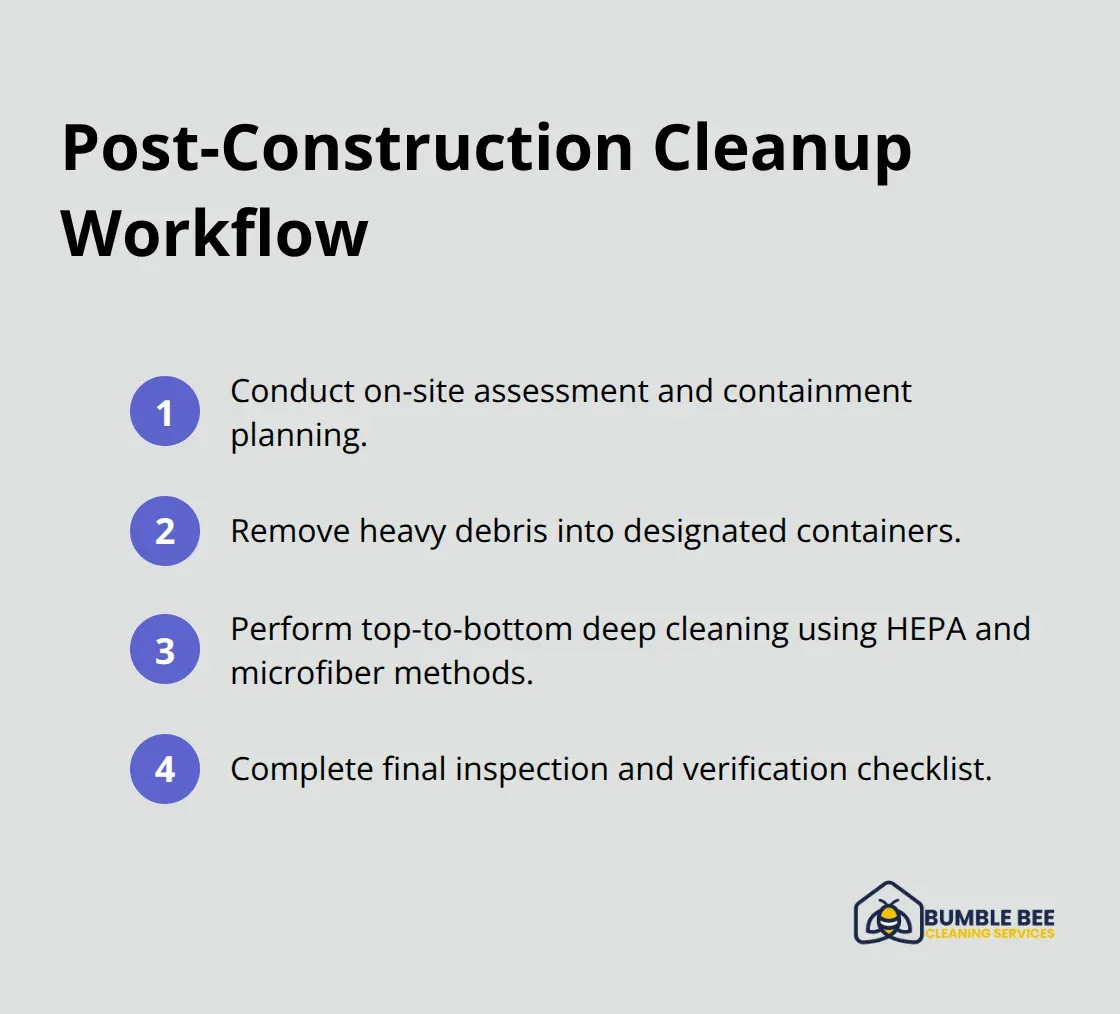
A proper post-construction cleanup starts with an on-site assessment where trained technicians document the construction type, identify debris categories, inspect substrates per IICRC S220 and S230 standards, and develop a containment plan before touching a single surface. This inspection determines which cleaning agents work safely on your specific finishes, whether underlying flooring sustained damage, and which areas demand specialized attention. A thorough assessment typically takes 30 to 60 minutes and reveals hidden problems that generic cleanup approaches miss entirely, such as adhesive residue on delicate flooring or paint overspray on new fixtures.
Heavy Debris Removal Clears the Space
Heavy debris removal happens first because it clears the space for systematic cleaning work. Professional crews remove drywall scraps, lumber offcuts, packaging materials, and construction waste into designated containers, preventing dust from spreading during the debris-hauling phase. Once bulk materials are gone, the team can focus on deep cleaning without obstacles or contamination from loose materials.
Deep Cleaning Follows a Top-to-Bottom Sequence
Deep cleaning begins from ceiling fixtures, vents, and high surfaces where dust settles heaviest, then moves to walls, cabinets, and shelving before tackling floors last. Technicians use HEPA-filter vacuums on carpeted areas and sealed microfiber systems on hard surfaces to capture dust rather than redistribute it. They address paint overspray and adhesive residue with appropriate solvents that won’t damage finishes, sanitize bathrooms and kitchens with hospital-grade disinfection protocols, and polish fixtures to remove fingerprints and installation debris.
Final Inspection Confirms Readiness
The final phase involves a detailed inspection checklist covering grout lines, cabinet interiors, air vents with fresh filter replacement, window tracks, door frames, and light switches-areas where construction dust hides and causes problems weeks after occupancy. A documented final walkthrough confirms that all specified areas meet cleanliness standards before the space moves forward. This verification step separates thorough post-construction cleaning from incomplete work that creates liability issues down the road.
Why Professional Post-Construction Cleaning Protects Your Bottom Line
Incomplete Cleanup Creates Hidden Costs
Construction projects that sit uncleaned drain money through delayed occupancy, failed inspections, and health code violations. Every day the space remains contaminated costs your project real money. Embedded dust in HVAC systems causes failures after handoff, while tenant complaints about allergies and respiratory issues from contaminated air create liability exposure that extends far beyond the initial cleanup phase. Professional crews mobilize immediately after construction ends and remove hazardous residues, replace air filters, and document completion through final inspection checklists that satisfy regulatory requirements upfront-eliminating these hidden costs entirely.
Chemical Safety Compliance Transfers Liability
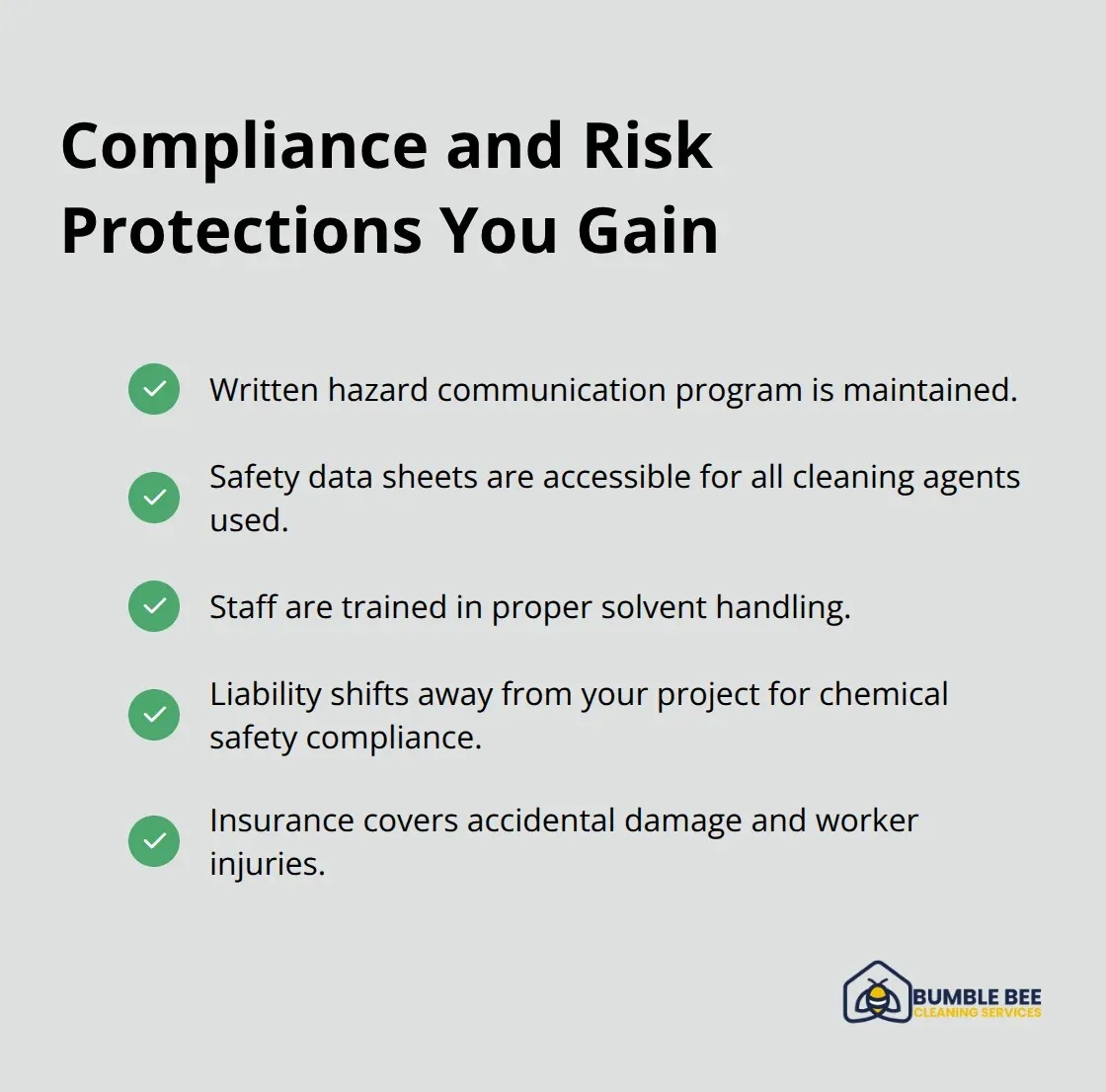
OSHA’s Hazard Communication Standard requires documented protocols for chemical safety during post-construction cleaning work. Professional teams maintain written hazard communication programs, keep safety data sheets accessible for all cleaning agents used, and train staff on proper handling of solvents needed to remove paint overspray and adhesive residue without damaging new finishes or creating worker exposure risks. When your crew handles cleanup internally, you assume liability for chemical safety compliance, worker training documentation, and potential injuries from improper equipment use or hazardous material exposure. Professional post-construction cleaners carry insurance coverage that protects against accidental damage to new installations, substrate damage from incorrect cleaning methods, and worker injuries-transferring that liability away from your project entirely.
Specialized Equipment Accelerates Project Timelines
Time savings compound dramatically on commercial projects where every day of delayed occupancy represents lost rental income or tenant productivity. Professional crews complete comprehensive post-construction cleanup in days rather than weeks because they deploy specialized equipment, coordinate multi-person teams, and work systematically from site assessment through final inspection without the learning curve that internal teams experience. IICRC standards establish that proper post-construction cleaning requires substrate inspection per S220 and S230 standards, HEPA filtration protocols, hospital-grade disinfection in bathrooms and kitchens, and documented final verification-procedures that demand trained technicians rather than general maintenance staff improvising solutions. In-house cleanup attempts typically extend project timelines, miss regulatory compliance steps, and create liability exposure that costs far more than professional services would have charged initially.
Final Thoughts
Selecting the right post-construction cleaning services partner requires checking for IICRC certification, which confirms that technicians understand substrate-specific cleaning methods and hazard communication protocols outlined in standards S220, S230, and S400. Verify that the company carries liability insurance protecting against accidental damage to new finishes and maintains written hazard communication programs for chemical safety. Request references from recent commercial or residential projects similar to yours, and confirm that the company provides documented final inspection checklists rather than verbal assurances of completion.
We at Bumble Bee Cleaning Services combine specialized equipment with trained crews who understand substrate protection and regulatory compliance. Our team conducts thorough site assessments, deploys HEPA-filter systems and microfiber techniques to eliminate dust infiltration, and provides documented final verification that satisfies inspection requirements. With flat-rate pricing and a quality service guarantee, we eliminate the uncertainty from post-construction cleanup timelines and costs.
Contact us today to schedule your post-construction cleaning assessment and move your project forward without delays or hidden expenses. Our team stands ready to transform your construction site into a move-in-ready space that passes inspections and protects occupant health. Reach out now to discuss your specific project needs with our experienced crew.
For more information about our cleaning services in Seattle and Atlanta, or to request a cleaning quote, call or text us at 425-786-1360 or email us at info@qbclean.com
