
Home renovations create a mess-and not just the visible kind. Construction work forces ventilation dust and debris deep into your ductwork, where it stays long after the contractors leave.
We at Bumble Bee Cleaning Services know that Seattle homeowners often overlook this hidden problem. Your ventilation system needs professional cleaning after renovation work, or you’ll be breathing contaminated air for months.
How Renovation Dust Infiltrates Your Ventilation System
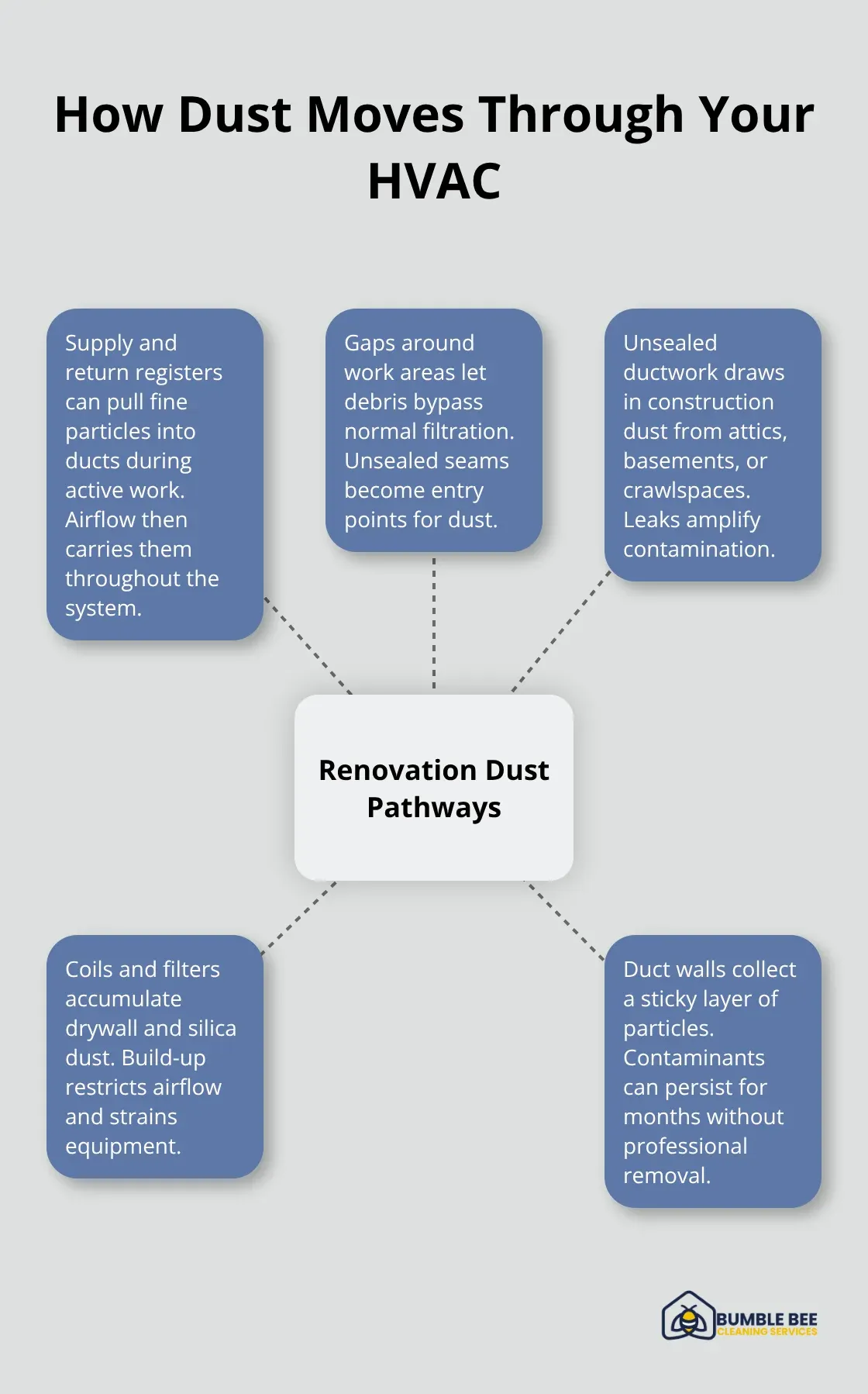
Construction dust doesn’t stay on floors and surfaces where you can see it. During renovations, fine particulate matter enters your ventilation system through supply and return registers, gaps around work areas, and unsealed ductwork. Once inside, this dust travels through your entire HVAC network, coating duct walls, settling on coils, and accumulating in filters. The EPA notes that during renovation or construction that generates dust, you must seal supply and return registers and avoid running the system until cleanup is complete-yet most Seattle homeowners skip this precaution. Particulate matter ranging from drywall dust to silica particles from cutting concrete reduces airflow efficiency and forces your system to work harder. A compromised ventilation system circulates these contaminants throughout your home for months after work ends, exposing your family to respiratory irritants and allergens that shouldn’t be there.
Why Post-Renovation Dust Stays in Your Ducts
Fine construction dust doesn’t settle quickly or easily. Particles smaller than 10 microns remain suspended in air currents and travel deep into your ductwork where they stick to moist duct surfaces and insulation. Seattle’s damp climate makes this worse-moisture in your ducts creates an ideal environment for dust to adhere and for mold spores to germinate. The EPA confirms that a normal level of dust in return ducts doesn’t necessarily indicate heavy contamination, but post-renovation buildup is different. You’re dealing with concentrated construction debris, not typical household dust. Without professional removal, this accumulation restricts airflow, reduces system efficiency, and transforms your ventilation into a contaminant delivery system rather than a protection mechanism. The longer you wait to address it, the deeper the dust embeds itself and the harder it becomes to remove completely.
What Happens When You Run Your System During Renovation
Your HVAC system spreads dust throughout every room in your home when you run it while construction work continues. Each cycle pulls contaminated air from work zones and distributes it through supply ducts into living spaces. This circulation doesn’t stop when work ends for the day-dust continues to circulate and settle on furniture, bedding, and in hard-to-reach corners. The EPA’s guidance is explicit: avoid running the system until cleanup is complete. If you must operate it, seal registers in active work areas first. After work finishes, vacuum with a high-efficiency HEPA vacuum and remove dust from all surfaces before you resume normal system operation.
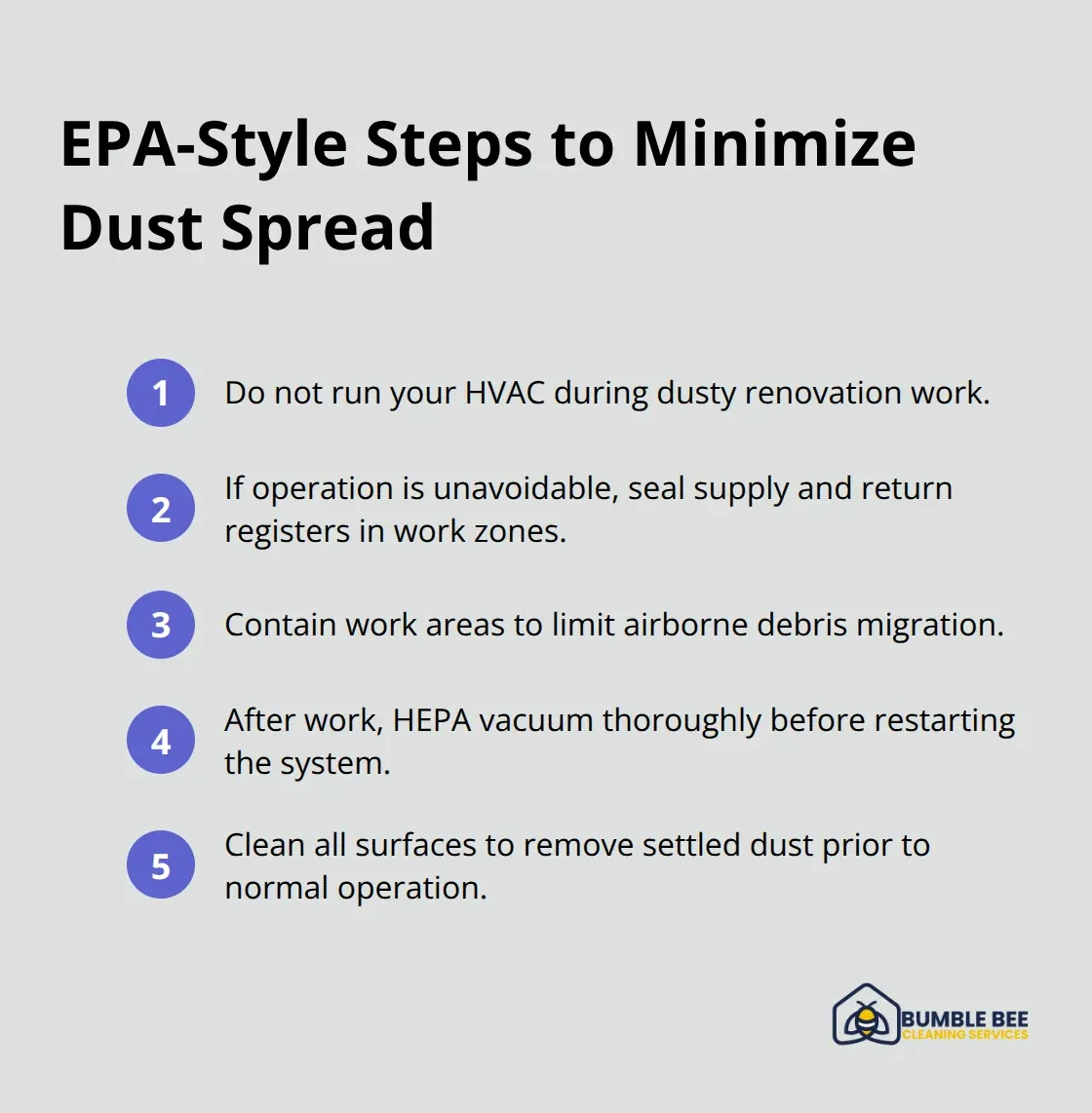
Many Seattle homeowners skip this step entirely, thinking surface cleaning is enough. It isn’t. Dust inside your ducts continues to pose health and efficiency problems long after visible renovation mess disappears, which is why professional cleanup becomes necessary.
How Unclean Ventilation Systems Damage Your Health After Renovation
Silica and Construction Particles Penetrate Your Lungs
Dust-laden ventilation systems don’t just reduce efficiency-they actively harm your respiratory health. When construction debris circulates through your home’s HVAC system, you breathe particles that shouldn’t be there. Fine silica dust from concrete cutting, drywall particles, and wood dust travel deep into your lungs where they trigger immediate irritation and inflammation. NIOSH research shows that respirable silica exposure causes silicosis, a lung disease caused by inhaling excessive amounts of respirable crystalline silica that is not reversible but is preventable. You won’t feel sick immediately, but each breath pulls microscopic particles deeper into your respiratory system.
Mold Colonizes Dust-Coated Ductwork
Allergens and mold spores spread far more easily through compromised ventilation because dust provides the perfect surface for mold to colonize. Once mold establishes itself in your ducts, your system becomes a spore distribution network that reaches every room simultaneously. Seattle’s wet climate accelerates this problem dramatically-moisture from rain and humidity creates ideal conditions for mold germination in dust-coated ductwork. The EPA confirms that fiberglass duct insulation traps moisture and becomes a mold breeding ground. Once mold establishes itself, cleaning alone cannot restore contaminated insulation; it must be replaced entirely.
Vulnerable Populations Face Elevated Health Risks
Children, elderly residents, and anyone with pre-existing asthma or COPD experience elevated health risks from unclean ventilation systems. These populations suffer more severe respiratory symptoms and longer recovery times from dust exposure. Your system runs 24 hours daily, meaning contaminated air cycles through your home continuously. The IICRC S590 standard addresses HVAC assessment following renovation work, recognizing that ventilation contamination represents a critical post-construction health concern demanding professional attention.
Professional ventilation cleaning after renovation stops the circulation of harmful particles before they embed deeper into your lungs or create permanent mold damage. Understanding what professional cleaning actually involves-and how it differs from surface-level approaches-determines whether your family truly recovers from renovation exposure.
Professional Post-Renovation Ventilation Cleaning
Professional ventilation cleaning after renovation follows industry standards that exist for one reason: construction debris causes serious damage if left inside your ducts. The National Air Duct Cleaners Association (NADCA) explicitly recommends cleaning HVAC systems after major construction or renovation work because dust does not magically disappear on its own. When contractors finish their work, your ventilation system contains silica particles, drywall fragments, and other debris embedded throughout ductwork, coils, and filters.
What Professional Equipment Actually Removes
Professional cleaners use high-powered equipment specifically designed to dislodge and extract construction material from places you cannot reach with a vacuum. They access your system from multiple points, using rotary brushes and negative pressure systems to pull debris out rather than push it deeper into your ducts. This process takes several hours for a typical Seattle home and costs between $800 and $2,000 depending on system size and contamination level.
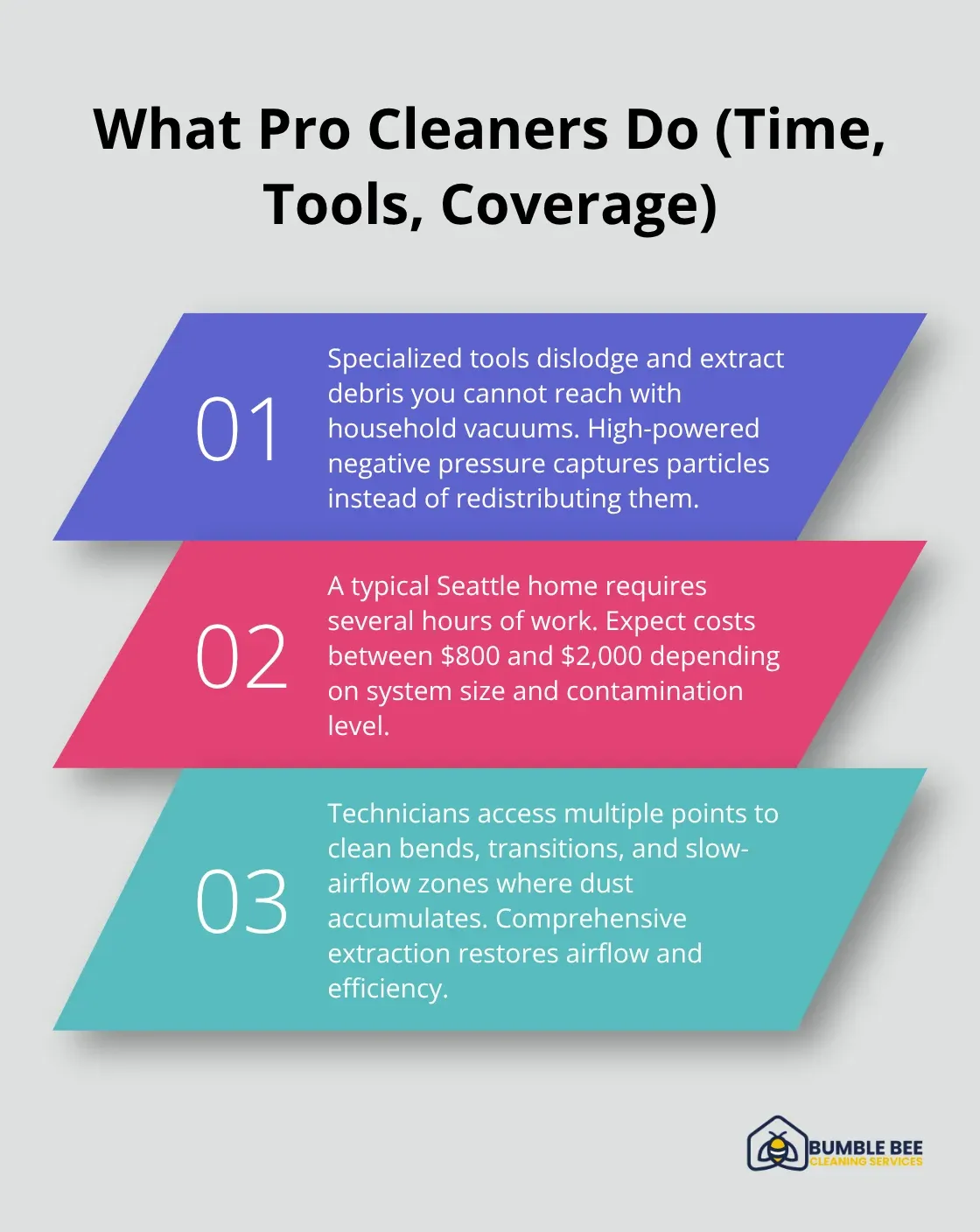
The equipment creates suction that removes particles from every section of your ductwork, including areas where dust settles most heavily (typically near bends and transitions where airflow slows).
IICRC Standards Demand Professional Assessment
The IICRC S590 standard addresses HVAC assessment following water, fire, or mold damage events and also applies to post-renovation cleaning because construction creates similar contamination patterns that demand professional assessment and remediation. This industry-recognized standard ensures that technicians follow consistent protocols regardless of the contamination source. Professional cleaners certified to IICRC standards understand how to identify damage, assess health risks, and restore your system to safe operating condition.
Identifying Physical Damage Your System Sustained
Your ventilation system likely sustained physical damage during renovation work, even if you cannot see it. Contractors may have disturbed insulation, loosened ductwork connections, or created gaps around work areas that now leak unfiltered air into your system. Professional inspections identify these problems before they cause long-term efficiency losses and indoor air quality degradation. A certified technician will examine accessible ductwork, test airflow, check for moisture accumulation, and verify that your system operates at proper efficiency.
When Ductwork Insulation Requires Replacement
If your ductwork contains fiberglass insulation that has absorbed moisture or dust, replacement becomes necessary because cleaning alone cannot restore contaminated insulation to safe condition. Seattle’s climate means moisture problems develop quickly after renovation-any gaps or loose connections allow humid air to enter your ducts where it promotes mold growth on dust-coated surfaces. Professional cleaning paired with proper inspection gives you concrete information about whether your system needs repairs, replacement sections, or simply thorough cleaning to return to pre-renovation performance.
Final Thoughts
Your Seattle home’s ventilation system cannot recover from renovation dust on its own. Construction debris embeds itself deep in your ductwork, and without professional removal, it continues circulating contaminated air through every room for months. The health risks are real-silica particles damage your lungs, mold colonizes dust-coated surfaces, and vulnerable family members suffer the most severe consequences.
Post-renovation cleanup extends far beyond sweeping floors and wiping surfaces. Your ventilation system demands specialized attention from technicians who know how to identify contamination, remove embedded debris, and assess whether your ductwork sustained physical damage during construction work. We at Bumble Bee Cleaning Services follow industry protocols designed specifically for post-construction environments and restore your system to pre-renovation performance.
The cost of professional ventilation cleaning after renovation is modest compared to the long-term health consequences of breathing contaminated air or the expense of replacing damaged ductwork and insulation. Schedule your post-renovation ventilation assessment with Bumble Bee Cleaning Services to protect your family’s respiratory health and your home’s air quality.
For more information about our cleaning services in Seattle and Atlanta, or to request a cleaning quote, call or text us at 425-786-1360 or email us at info@qbclean.com
