
Construction projects leave behind more than just a finished building. Renovation debris removal in Seattle requires specialized knowledge that standard cleaning simply can’t handle.
We at Bumble Bee Cleaning Services know that post-construction cleanup involves hazardous materials, heavy equipment, and strict safety protocols. This guide walks you through what makes this work different and how to get your property ready for occupancy.
Why Post-Construction Cleanup Demands Specialized Attention
Post-construction sites contain debris that goes far beyond typical household waste. Drywall dust, concrete chunks, metal scraps, nails, adhesive residue, and paint flecks create health hazards that regular vacuums and mops cannot address. The IICRC S400 Standard for Professional Cleaning of the Built Environment establishes protocols specifically for construction sites because standard cleaning methods fail to meet safety and compliance requirements. Dust particles from construction settle into HVAC systems, behind baseboards, and inside cabinets-areas a regular cleaning crew won’t reach. HEPA-filter vacuums capture particles as small as 0.3 microns, which standard household vacuums miss entirely. The volume alone makes this work different: a typical residential renovation generates between 5 to 10 tons of debris, depending on project scope. Attempting to handle this with regular cleaning supplies and methods leaves behind ultrafine dust and construction residue that creates respiratory risks and fails inspection standards.
Hazards Beyond Visible Debris
Construction projects introduce hazardous materials that require proper identification and disposal. Paint splatters contain volatile organic compounds (VOCs) that off-gas into living spaces. Caulk, adhesive, and sealant residues contain chemicals that demand professional-grade cleaners and ventilation protocols. Silica dust from cutting concrete or drywall poses serious lung health risks and falls under OSHA standards for occupational exposure.
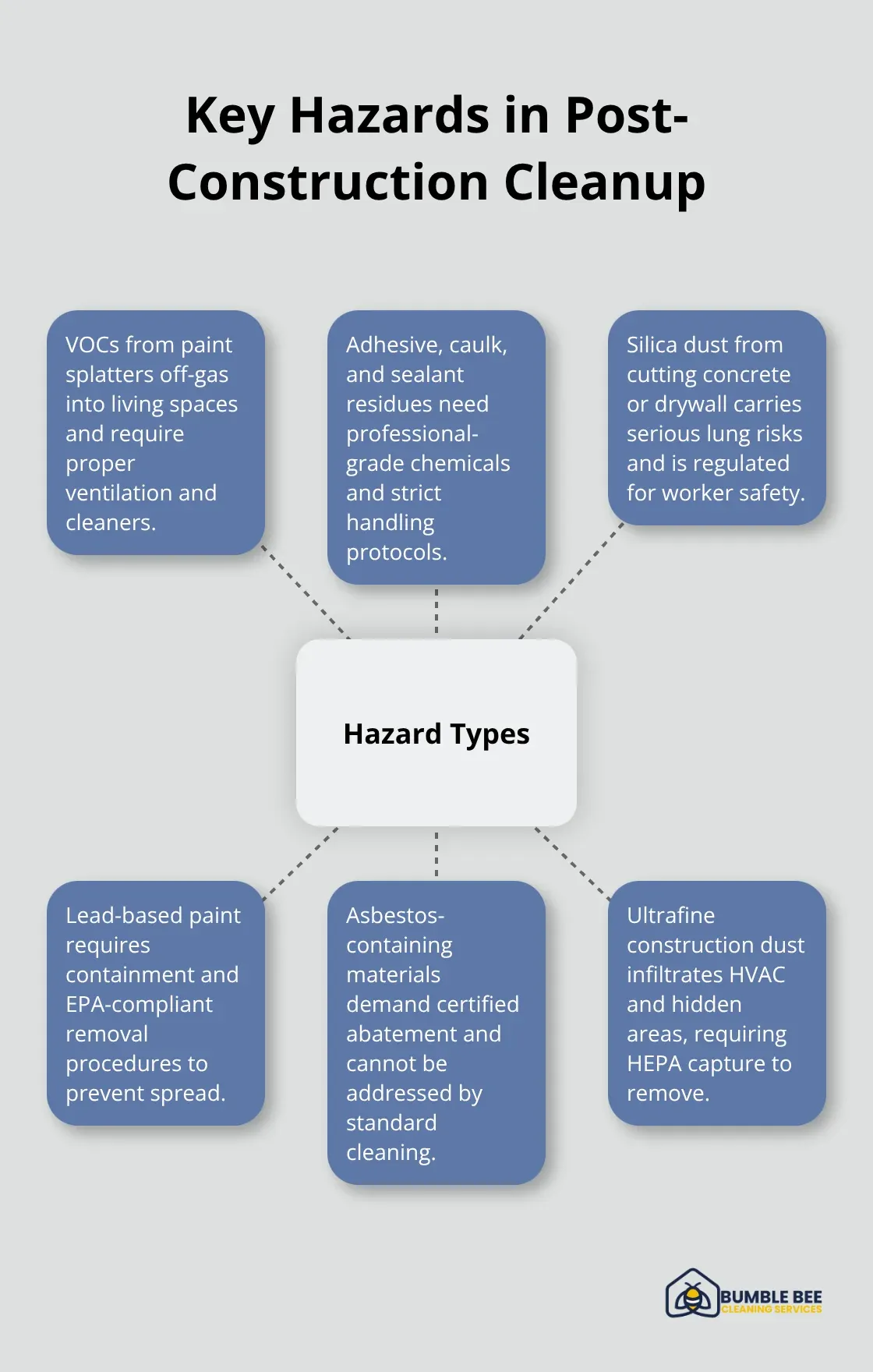
Lead-based paint in older Seattle homes requires containment and specialized removal procedures under EPA regulations. Asbestos-containing materials, common in pre-1980s construction, cannot be cleaned-certified abatement professionals must handle them. A professional post-construction cleanup crew identifies these hazards before they spread throughout your property. Standard cleaners lack the training to recognize or safely handle these materials, which is why DIY cleanup after renovation work puts occupants at genuine risk.
Why Standard Equipment Falls Short
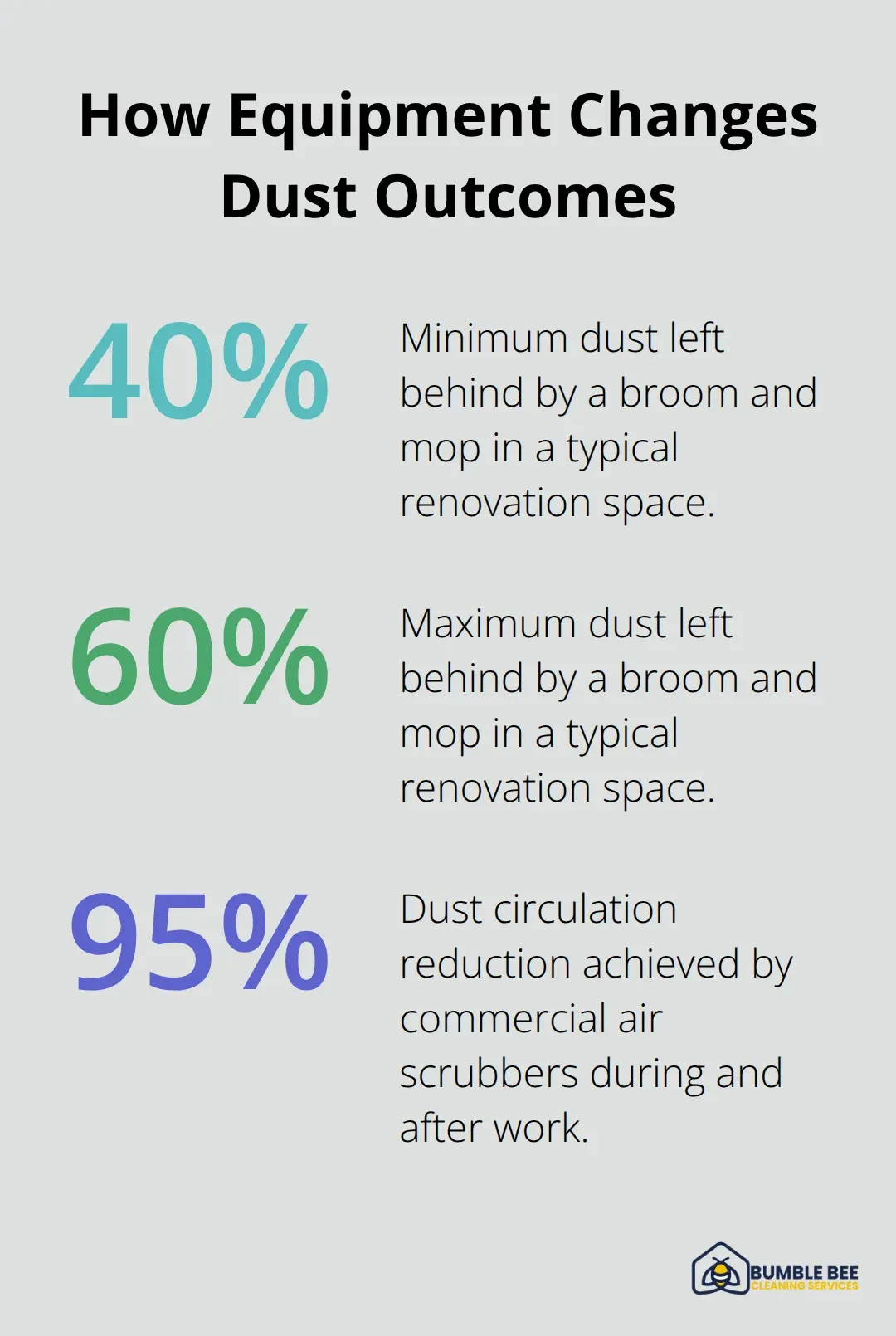
A broom and mop leave behind 40 to 60 percent of construction dust in a typical renovation space. Commercial air scrubbers remove airborne particles during and after work, reducing dust circulation by up to 95 percent. HEPA vacuums trap fine particles that regular vacuums release back into the air.
Pressure washers remove concrete dust, paint drips, and adhesive from hard surfaces that hand-cleaning cannot address. Specialized microfiber systems capture particles without spreading dust to adjacent areas. Professional crews also understand containment-sealing renovation zones with heavy-duty tarps prevents contamination of completed areas. A typical residential deep clean costs around $500 for a 2,000-square-foot home, but this investment prevents far costlier remediation if dust infiltrates HVAC systems or settles into finishes. The right equipment combined with proper technique delivers move-in-ready results that meet inspection standards and protect your family’s health.
What Happens Next in Your Cleanup Timeline
Once you understand why post-construction cleanup differs from standard cleaning, the next step involves planning your actual cleanup process. The systematic approach to debris removal and material sorting determines whether your property passes final inspection or requires costly rework.
How to Execute Post-Construction Cleanup Properly
The Three-Phase Cleanup Approach
A successful post-construction cleanup follows three distinct phases that work together to eliminate debris and restore your property to occupancy standards. The first phase begins the moment construction wraps-before dust settles into unreachable spaces. Your cleanup crew removes bulk debris, sweeps ceilings and walls, and vacuums all flooring with HEPA equipment during this rough clean stage. This phase typically takes one to three days depending on project size.
The second phase addresses what the rough clean misses: deep dusting of all surfaces including baseboards, door frames, light fixtures, and inside cabinets where construction dust accumulates. Kitchen and bathroom surfaces require sanitization to remove adhesive residue, paint splatters, and caulk flecks. Window interiors and glass surfaces need washing to remove construction grime and tape residue. A professional crew applies this systematic approach room-by-room using a detailed checklist that covers general areas, cabinets, closets, bathrooms, kitchens, and windows.
The final phase involves a complete inspection against your project specifications and local building codes. Many Seattle properties require final inspections before occupancy permits are issued, and inspectors specifically look for dust in HVAC systems, residual debris behind fixtures, and uncleaned surfaces. If your inspection fails because of inadequate cleanup, you face expensive remediation or project delays.
Contractor Coordination and Expectations
Coordination with your general contractor matters far more than most property owners realize. Discuss containment protocols before work begins-establish whether your contractor will maintain daily cleanup or if a professional crew handles everything post-construction. Some contractors include basic broom-swept cleanup in their contract; others don’t. Clarify this expectation in writing to avoid surprises when the final invoice arrives.
Professional post-construction cleaning requires trained crews, specialized equipment, and documented protocols. A typical residential deep clean following renovation costs around $500 for a 2,000-square-foot home, though commercial projects and larger renovations scale accordingly based on debris volume and surface complexity.
The Real Cost of Overlooked Dust
Professional cleanup prevents costly mistakes-overlooked dust in HVAC systems can reduce efficiency by 15 to 25 percent and compromise indoor air quality for months after occupancy. The investment in proper post-construction cleanup protects your property’s long-term condition and ensures your space meets health and safety standards from day one. Once your property passes final inspection and cleanup verification, the next critical step involves understanding the actual costs and timeline that shape your entire post-construction project.
What Post-Construction Cleanup Really Costs
Labor, Equipment, and Material Expenses
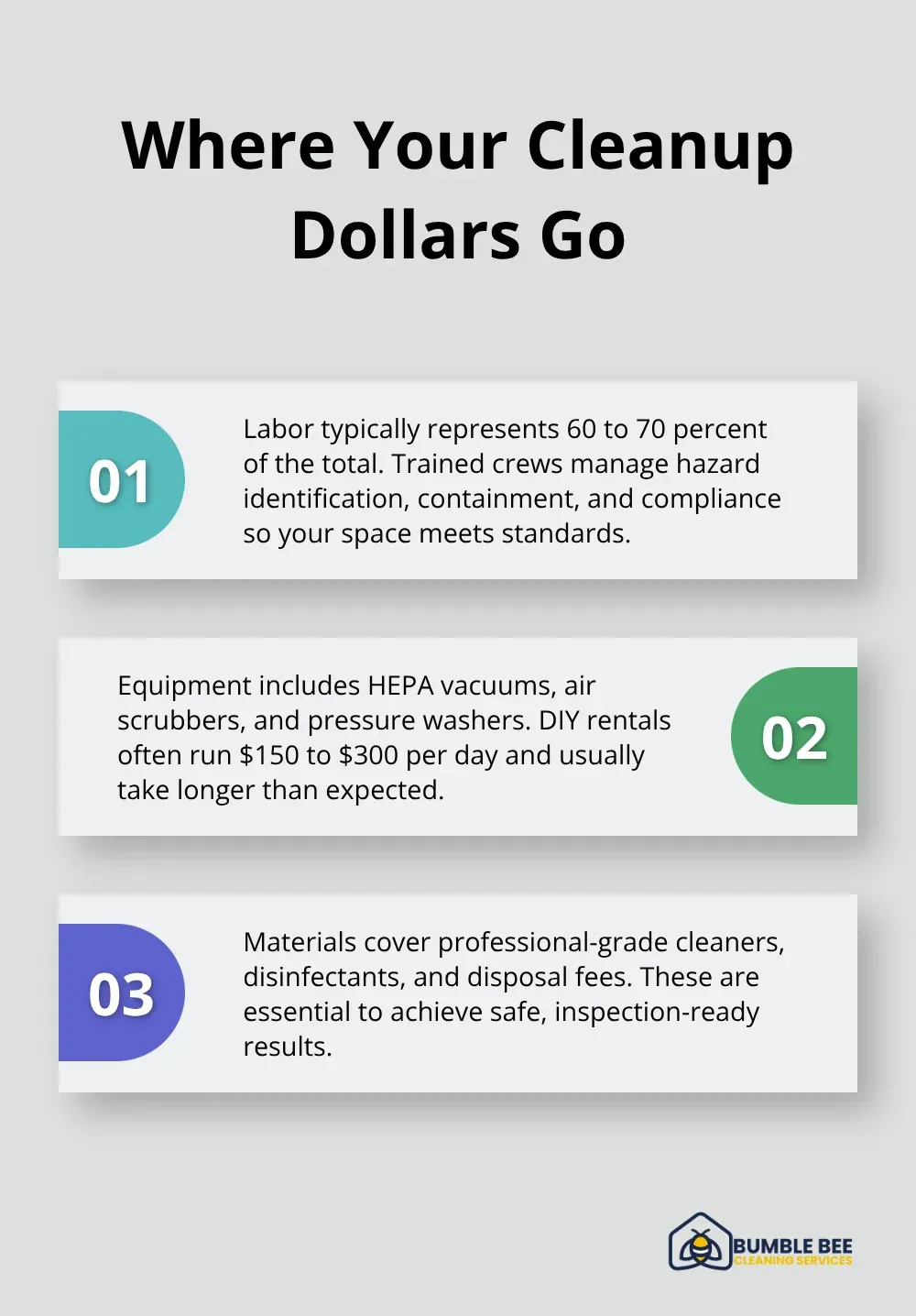
Post-construction cleanup expenses break into three main categories: labor, equipment, and materials. Labor typically represents 60 to 70 percent of your total cleanup bill because this work demands trained crews who understand hazard identification, containment protocols, and IICRC standards. A typical residential deep clean costs around $500 for a 2,000-square-foot home, though this baseline shifts significantly based on debris volume and surface complexity. Equipment costs add another layer-HEPA vacuums, commercial air scrubbers, pressure washers, and specialized microfiber systems represent substantial investments that professional crews spread across multiple projects. If you attempt DIY cleanup, renting this equipment separately costs $150 to $300 per day, and most homeowners underestimate how many days they actually need. Material costs for professional-grade cleaners, disinfectants, and disposal fees round out the expenses.
The critical insight here is that skimping on cleanup upfront creates far costlier problems later. Overlooked dust in HVAC systems reduces efficiency and compromises indoor air quality for months, which means higher utility bills and potential health impacts that dwarf your initial cleanup savings.
How Project Size Shapes Your Final Bill
Project size and complexity determine whether your cleanup costs $400 or $4,000. A kitchen remodel produces less debris than a full home gut-out, and a residential project differs dramatically from commercial renovation work. Scheduling coordination with your general contractor directly impacts your final bill-if your contractor maintains daily cleanup during construction, your post-project expenses drop significantly compared to scenarios where all debris accumulates until the end. Discuss this expectation in writing before work begins.
Many Seattle contractors include only basic broom-swept cleanup in their contract, leaving you responsible for the deep clean that actually meets inspection standards. This distinction matters enormously when you receive your final invoice.
Timeline and Scheduling Impact on Costs
Timeline matters equally because rushing cleanup work costs more. A crew that completes your project in three days charges less than one stretched across two weeks, yet many property owners delay scheduling until after construction finishes, which creates bottlenecks and premium pricing. The smarter approach involves booking your cleanup crew before construction wraps so they can start immediately when final inspections pass.
Inspection Requirements and Rework Costs
Final inspection requirements vary by Seattle neighborhood and project type, but inspectors specifically examine HVAC systems for dust, check baseboards and fixtures for debris, and verify that all surfaces meet occupancy standards. A failed inspection forces costly rework and delays your move-in date, making professional cleanup not an expense but an insurance policy against far worse outcomes.
Final Thoughts
Post-construction cleanup transforms construction sites into move-in-ready spaces, and the difference between passing inspection on the first attempt and facing costly rework depends entirely on treating cleanup as a critical project phase rather than an afterthought. Renovation debris removal in Seattle demands professional attention because construction dust, hazardous materials, and safety protocols exceed what standard cleaning can address. Your property’s long-term condition depends on eliminating ultrafine particles from HVAC systems, removing adhesive and paint residue, and meeting local building code requirements before occupancy.
The investment in professional post-construction cleanup protects your health, prevents HVAC efficiency losses of 15 to 25 percent, and stops indoor air quality problems before they start. A typical residential deep clean costs around $500 for a 2,000-square-foot home-far less than addressing air quality issues or failed inspections later. This upfront investment prevents expensive remediation and ensures your Seattle property meets every safety and quality standard from day one.
Contact Bumble Bee Cleaning Services to schedule your post-construction cleanup and move forward with confidence. Our team handles the specialized equipment, hazard identification, and systematic protocols that renovation debris removal in Seattle requires. We offer flat-rate pricing and easy online booking, making professional cleanup accessible without surprises or hidden costs.
For more information about our cleaning services in Seattle and Atlanta, or to request a cleaning quote, call or text us at 425-786-1360 or email us at info@qbclean.com
