
Moving out of your Seattle home? Your security deposit depends on how clean you leave it. Landlords inspect everything from baseboards to behind appliances, and missed spots can cost you hundreds of dollars.
We at Bumble Bee Cleaning Services have helped countless Seattle renters recover their full deposits by tackling the areas that matter most. This guide covers the move out tips Seattle landlords actually check for, plus the mistakes that drain your wallet.
Your Move-Out Cleaning Roadmap
A thorough move-out clean requires strategy, not just elbow grease. Start with the kitchen since landlords spend the most time inspecting it. Pull the refrigerator away from the wall and clean behind it, then remove shelves and scrub the interior thoroughly. Clean the oven by removing racks and soaking them while you wipe down the interior with a degreaser. Wipe down all cabinet exteriors and interiors, paying special attention to drawer tracks where dust accumulates.
Bathrooms Demand Immediate Attention
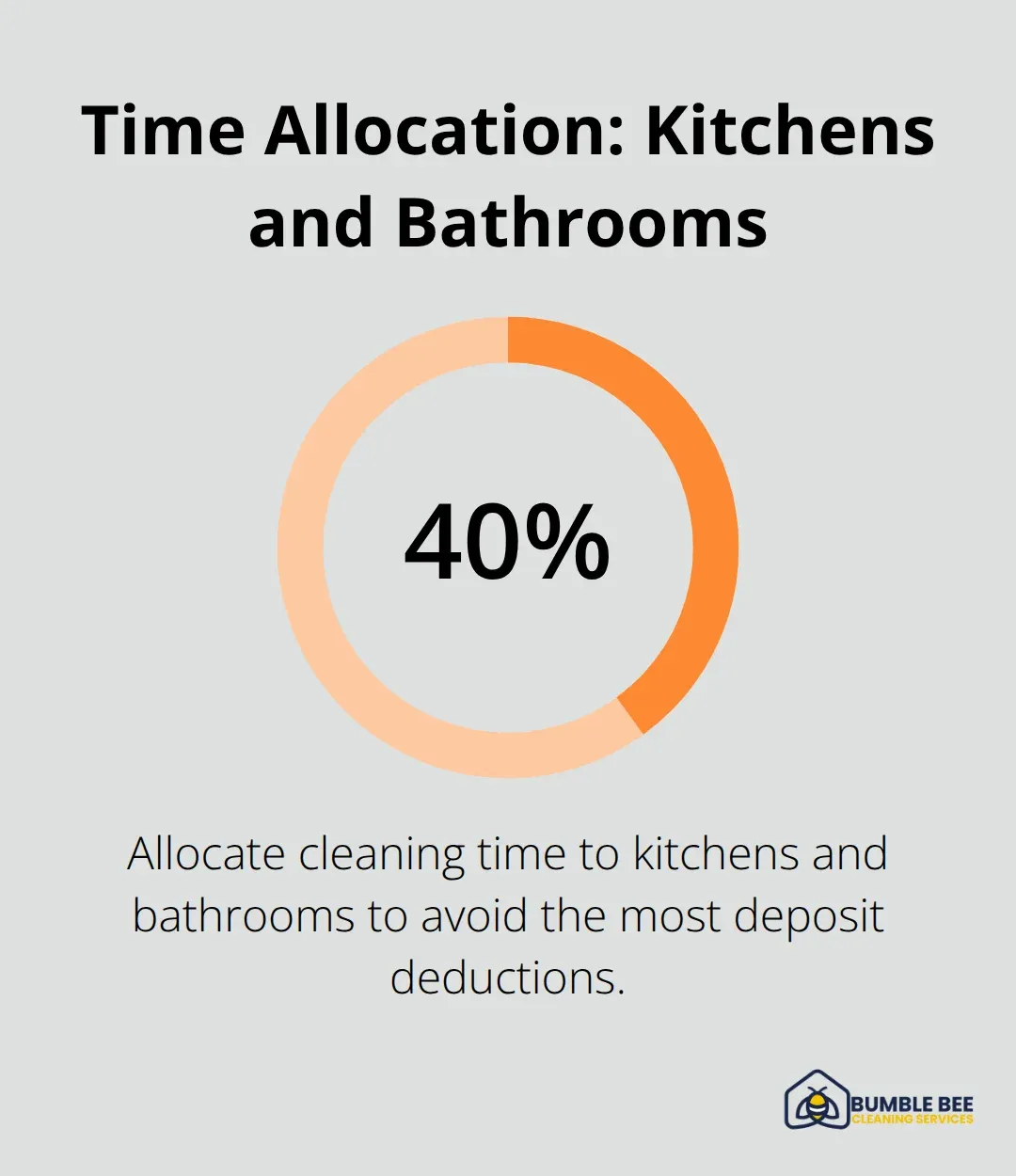
Move to the bathroom next and tackle mold and mildew immediately using bleach solution. Scrub grout lines with a toothbrush and apply baking soda paste for stubborn stains. Clean the exhaust fan cover, which landlords frequently check but renters often miss. These two rooms (kitchens and bathrooms) trigger the most deposit deductions, so allocate roughly 40 percent of your cleaning time to them.
Bedrooms, Living Areas, and Detail Work
Work through bedrooms and living areas by dusting ceiling fans, light fixtures, and baseboards with a microfiber cloth that traps dust rather than spreading it. Vacuum carpets thoroughly and consider professional steam cleaning for heavily soiled areas. The National Association of Residential Property Managers found that DIY move-out cleaning takes about 12 hours compared to 3–4 hours for professionals using industrial-grade equipment.
Timeline That Actually Works
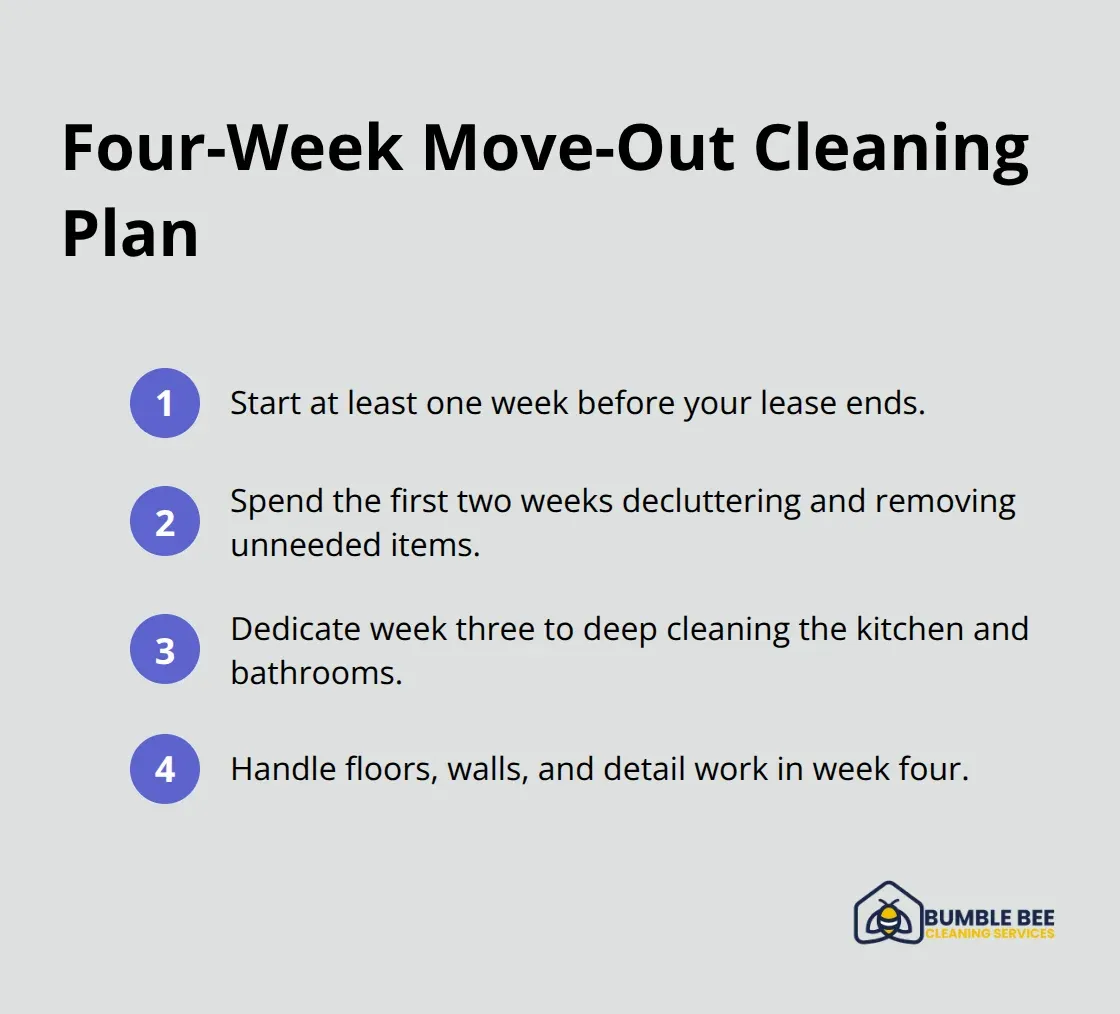
Start your move-out clean at least one week before your lease ends, not the day before. Spend the first two weeks decluttering and removing items you don’t need, which reduces the visual chaos and lets you see what actually needs cleaning. Dedicate week three to deep cleaning the kitchen and bathrooms. In week four, handle floors, walls, and detail work like cleaning light switch plates and patching wall holes with spackle. This phased approach prevents burnout and catches missed spots before move-out day arrives.
Cost and Time Comparison
Professional move-out cleaning in Seattle typically costs between $200 and $400 and finishes a standard apartment in 3–4 hours, offering significant time savings compared to the $207 in labor costs at Seattle’s minimum wage of $17.27 per hour for DIY work. Document everything with timestamped before-and-after photos to protect yourself during the deposit dispute process if needed. These photos become your evidence when landlords scrutinize high-impact areas like kitchen appliances and bathroom fixtures.
Where Landlords Look Hardest-And What It Takes to Pass
The kitchen and bathroom inspections determine whether you walk away with your full deposit or face deductions that eat hundreds of dollars. Landlords spend the most time scrutinizing these two rooms because they reveal neglect faster than anywhere else in the unit. Targeting the specific areas that matter most makes the difference between passing and failing inspection.
Kitchen Surfaces That Cost You Money
The inside of your refrigerator matters more than most renters realize. Remove all shelves and drawers, then wipe the interior walls, seals, and the ceiling with a degreaser. Landlords check inside because food residue and mold growth signal poor maintenance. The oven interior demands equal attention-soak the racks separately while you scrub the interior with a commercial-grade degreaser, paying special attention to the bottom where grease accumulates. Wipe the stovetop, range hood filters, and the space behind the stove where dust settles. For cabinets, clean both exterior and interior surfaces, including drawer tracks and the undersides of shelves where dust hides. The sink requires mineral deposit removal using white vinegar or a commercial descaler, then polish all fixtures until they shine.
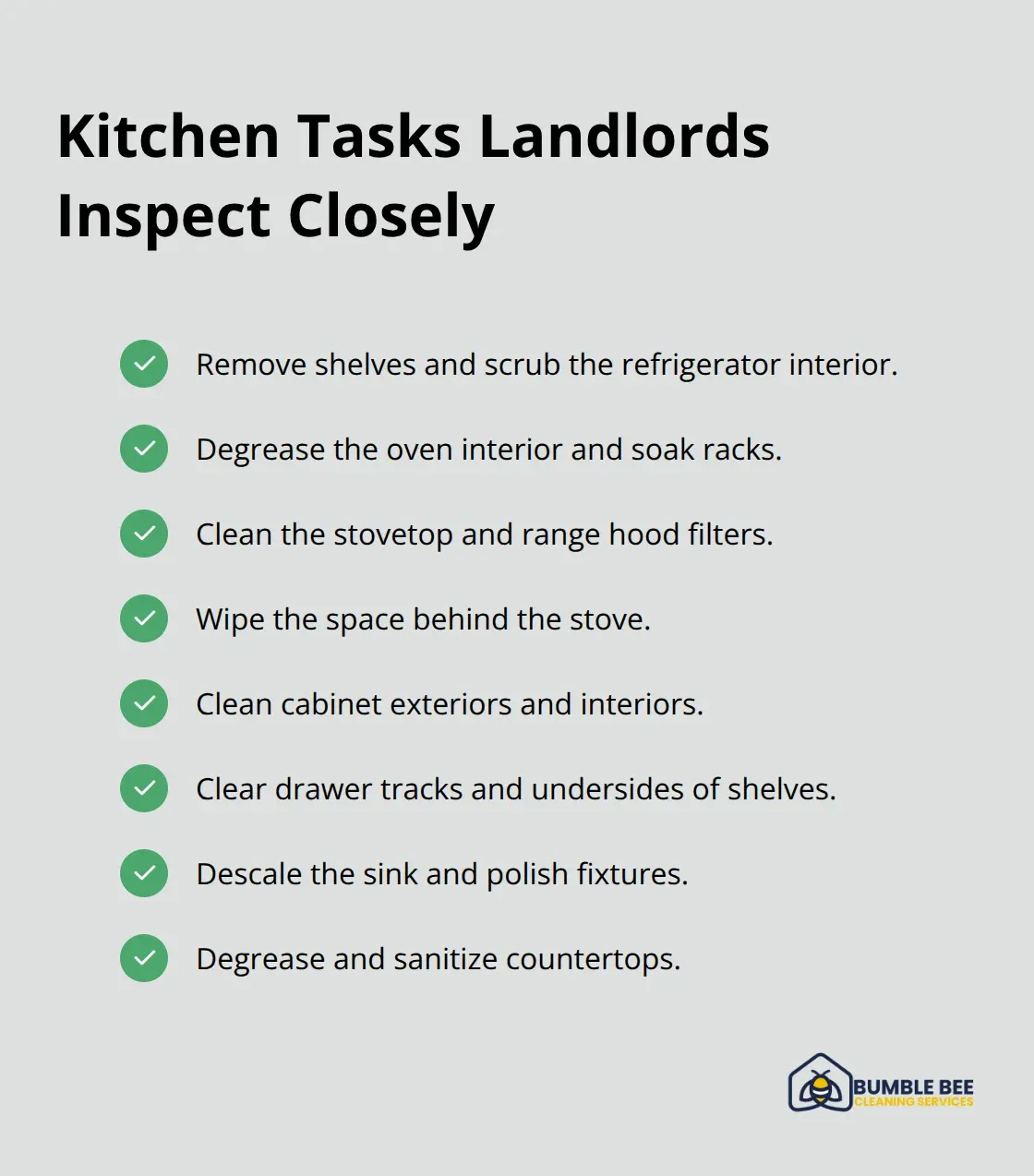
Countertops need degreasing and sanitizing, not just wiping. Professional cleaners complete these kitchen tasks in roughly 45 minutes to an hour, while DIY efforts often take two to three hours because renters miss these hidden spots.
Bathrooms Require Grout and Fixture Attention
Tile grout holds dirt and mildew that visual inspection catches immediately. Use a toothbrush with a baking soda paste or commercial grout cleaner to scrub every line, not just the visible areas. The toilet bowl interior needs a toilet brush and a commercial toilet bowl cleaner left to sit for five to ten minutes before scrubbing. The exhaust fan cover collects dust that landlords specifically check because renters frequently overlook it-remove it and wipe the blades and motor housing. Shower doors and tub surrounds require a squeegee after cleaning to prevent water spots and mineral buildup. Polish chrome and stainless steel fixtures with a microfiber cloth to remove fingerprints and water marks. Caulk along the tub and shower should stay white and free of mold; if it shows discoloration, use a mold-killing spray and allow it to dry completely before move-out day. Flooring in bathrooms often traps moisture, so mop with a damp cloth rather than soaking the floor, then dry it thoroughly. The space under the sink deserves attention-wipe down the interior cabinet and pipes, as landlords check this area for water damage and mold.
Flooring Demands Strategic Treatment
Hardwood and vinyl floors need sweeping first to remove all debris, then mopping with a pH-neutral cleaner to avoid streaking or damage. Carpet cleaning is where most tenants lose deposits because landlords expect carpet to be professionally steam cleaned unless your lease explicitly states otherwise. Professional carpet cleaning in Seattle ranges from $150 to $300 for a standard apartment, yet skipping it commonly results in deposit deductions for stains and odors. Focus on high-traffic areas like hallways and entryways, which show wear faster and receive the most landlord scrutiny. Stains require immediate attention-treat fresh stains with a carpet stain remover and allow it to dry completely before the final inspection. For pet stains or odors, enzymatic cleaners break down the organic compounds that regular cleaning misses, which is why landlords often require professional cleaning if pets occupied the unit. The corners and edges of rooms collect dust and debris that vacuums miss, so use a small handheld brush or vacuum attachment to clean along baseboards and in closet corners. Timestamped photos of cleaned carpets and floors provide evidence during deposit disputes, especially if you handled cleaning yourself and want to demonstrate the condition you left the unit in.
These high-impact areas form the foundation of a deposit-protecting move-out clean, but landlords also scrutinize the spaces most renters overlook entirely-the ones that separate a passing inspection from costly deductions.
Mistakes That Drain Your Deposit
Dust in Corners Costs More Than You Think
Dust accumulation in corners and edges represents one of the costliest oversights renters make during move-out cleaning. Landlords specifically inspect these areas because dust buildup signals inadequate preparation, and it triggers deposit deductions faster than almost any other issue. Standard vacuums fail to reach corners effectively, which is why professional cleaners use handheld attachments and small brushes to extract debris along baseboards, in closet corners, and where walls meet floors. The space behind doors, under radiators, and along window sills collects dust that becomes visible under natural light during landlord inspections. One pass with a vacuum proves insufficient-corners require a second pass with a crevice tool or handheld brush to ensure no dust remains. If you skip this step, expect a $50 to $150 deduction for inadequate cleaning, depending on how visible the dust is across multiple rooms.
Wall Scuffs and Marks Signal Poor Maintenance
Wall scuffs and marks present a similar problem because landlords cannot overlook them during inspection. Landlords photograph wall damage as evidence for deposit deductions, and scuffs from furniture, doorknobs, or general contact accumulate throughout your tenancy. Magic erasers remove some scuffs, but they can reduce shine on high-gloss surfaces and affect paint on matte finishes-test a small area first to avoid creating a dull patch. For marks that resist erasers, light sanding with fine-grit sandpaper followed by touch-up paint matching your wall color becomes necessary. Small holes from picture hangers require spackle, sanding, and paint to restore the wall to move-in condition. The cost of professional wall repair runs $100 to $300 per room if landlords demand it, yet spending 30 minutes with a magic eraser and touch-up paint prevents these charges entirely.
Entryways and Outdoor Spaces Determine First Impressions
Outdoor spaces and entryways receive minimal attention from most renters, yet landlords inspect them thoroughly because they’re the first impression of how tenants maintained the unit. The front entry, porch, or balcony accumulates dirt, leaves, and debris that renters assume don’t matter-they do. Sweep and mop entryways to remove tracked-in dirt, then wipe down door frames and handles where fingerprints and dust concentrate. If your lease includes outdoor space like a patio or deck, landlords expect it swept clean and free of plant debris or stored items. Interior entryways matter equally-the area between your front door and the main living space collects more foot traffic dirt than other rooms, so mop it thoroughly and ensure baseboards are dust-free. Light fixtures in entryways often get overlooked because renters focus on main living areas, but landlords check these immediately upon entry. Wipe down light fixtures, switch plates, and door frames with a microfiber cloth to remove dust and fingerprints. If you rent a unit with a garage or storage area, these spaces must be cleaned as well-sweep out debris, wipe down shelves if included, and leave the space empty and clean. The difference between passing and failing inspection often comes down to whether you treated entryways and outdoor spaces as part of the move-out clean or dismissed them as unimportant. Renters who invest 45 minutes cleaning these transitional spaces recover their full deposits significantly more often than those who skip them entirely.
Final Thoughts
Your security deposit recovers when you treat move-out cleaning as a strategic priority rather than a last-minute task. The move-out tips Seattle landlords enforce focus on three areas: kitchens and bathrooms where most deductions happen, dust and wall marks that signal poor maintenance, and entryways that shape first impressions. A four-week phased schedule outperforms cramming everything into one exhausting day, and the $207 in labor costs for DIY work often fails to match what professionals achieve in 3–4 hours.
Professional move-out cleaning protects your deposit far more effectively than DIY efforts. We at Bumble Bee Cleaning Services complete move-out cleans with industrial-grade equipment and eco-friendly products that reach deeper than standard household tools, and our ARCSI and IICRC certifications mean we know exactly which areas landlords inspect hardest. The $200–$400 investment in professional cleaning typically protects your full deposit, whereas DIY oversights commonly cost $300–$500 in deductions-making professional service the smarter financial choice when you factor in time saved.
Start your move-out process now by creating a detailed cleaning checklist and scheduling your clean at least one week before lease end. If DIY cleaning feels overwhelming or time is tight, contact Bumble Bee Cleaning Services to handle the heavy lifting with a 100% quality guarantee. Document everything with timestamped photos, keep all receipts, and mail your landlord a detailed move-out condition report within 30 days to protect yourself during deposit disputes.
For more information about our cleaning services in Seattle and Atlanta, or to request a cleaning quote, call or text us at 425-786-1360 or email us at info@qbclean.com
