
Construction dust doesn’t just settle on surfaces-it gets pulled into your HVAC system and circulates through your office for months. We at Bumble Bee Cleaning Services have seen firsthand how post-renovation duct contamination affects Seattle offices.
Your team breathes this air every day. Without proper duct sanitization and HVAC maintenance after renovation, you’re exposing employees to construction residue that triggers allergies, reduces focus, and strains your heating and cooling equipment.
Why Your Seattle Office Needs Post-Renovation Duct Sanitization
Construction dust doesn’t stay on surfaces where you can see it. Drywall sanding, cutting materials, and demolition create fine particles that get pulled directly into your HVAC return air pathways and circulate through your entire ductwork. During renovation, if your air conditioning system runs while construction happens, dust enters through gaps, returns, and overlooked areas that most people don’t even realize exist. Once inside, this debris settles in low points of your ducts where it accumulates over weeks and months. The composition of construction dust is serious-it commonly includes silica, wood particles, cement, and metals like lead and cadmium that pose genuine respiratory risks when inhaled repeatedly.
How Construction Contamination Damages Your HVAC System
Dust buildup on your AC coils acts as an insulating layer that blocks heat transfer, forcing your system to work harder and driving up energy costs. Your equipment runs longer to maintain the same temperature, shortening its lifespan significantly. Clogged filters and dusty coils reduce airflow and system efficiency, increasing the risk of equipment failure when your team needs cooling or heating most.
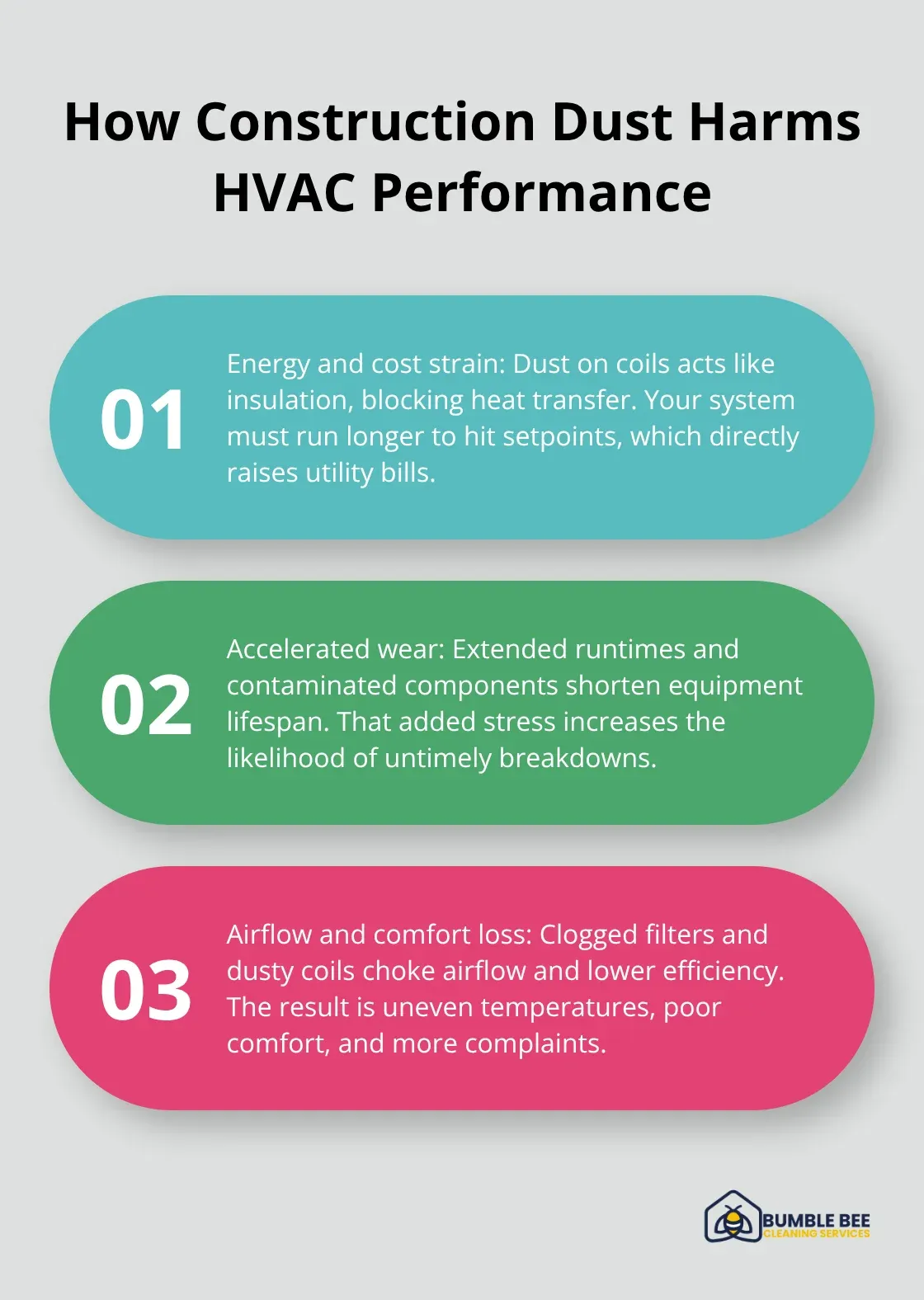
When humidity is high during Seattle’s rainy seasons, dust particles become cement-like and worsen buildup on surfaces inside your ducts. If drywall dust and construction debris remain in your ducts uncleaned, they restrict airflow and circulate fine particles that degrade indoor air quality for months after your project finishes.
Why Your Employees Face Real Health Risks
Your office staff breathes this contaminated air every single day, and the health impact is real. Exposure to construction dust causes respiratory problems including bronchitis and asthma. Even employees without pre-existing conditions develop increased allergy symptoms, persistent coughing, and difficulty concentrating when breathing contaminated air. Persistent dust circulating weeks after renovation completion signals that your ducts need professional inspection and likely sanitization.
What Happens When You Wait Too Long
The longer contaminated air circulates through your office, the more damage accumulates. Your HVAC system works overtime, your energy bills climb, and your team’s health suffers. Professional post-construction duct assessment identifies whether your specific situation requires sanitization or if surface dust can be managed through standard cleaning and filtration. An inspection-first approach helps you avoid unnecessary spending while protecting your investment and your employees’ wellbeing.
Signs Your Office Ducts Need Sanitization After Renovation
Visible Dust and Particles at Your Vents
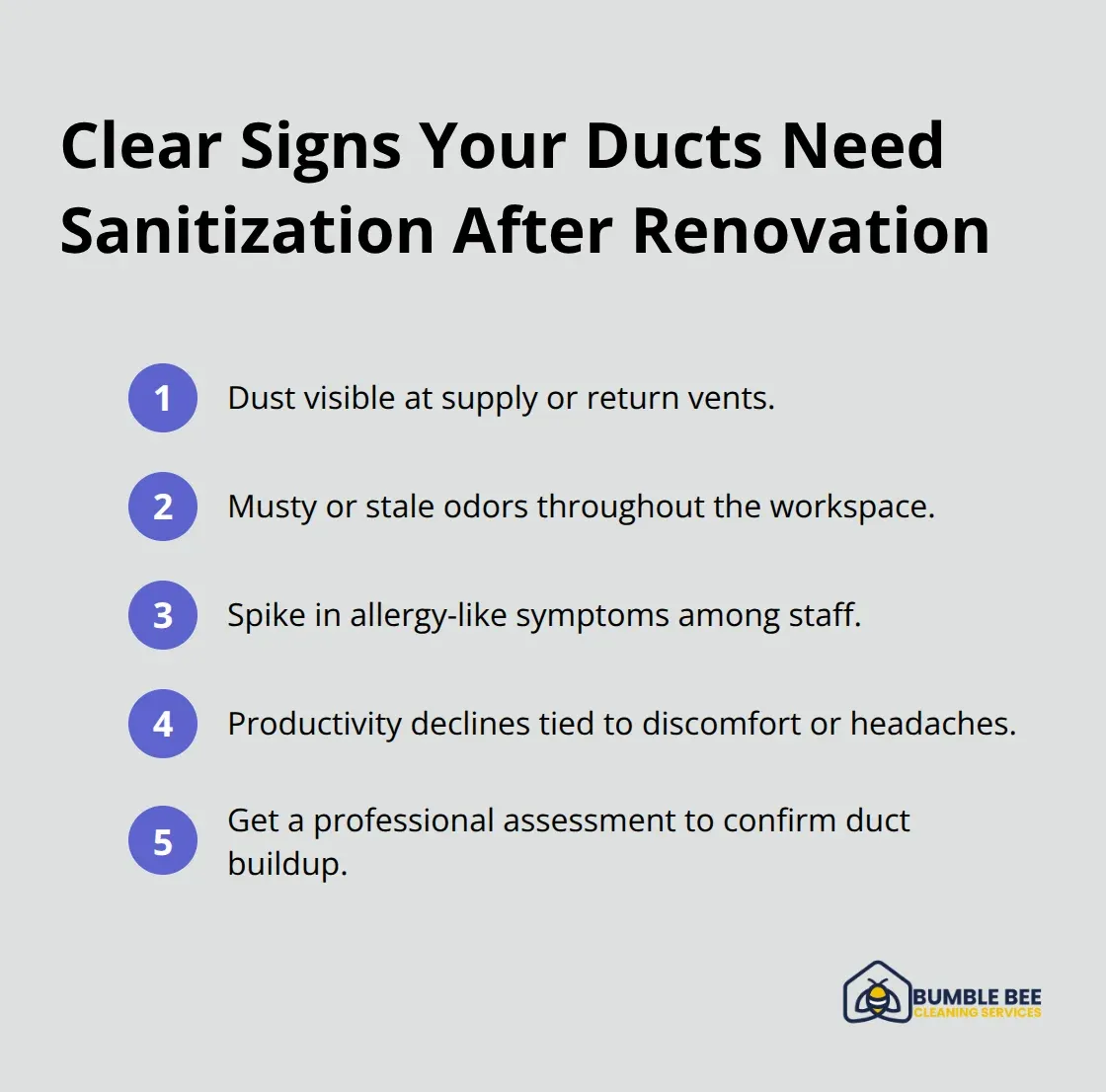
Dust visible at air vents or registers signals your first warning that construction residue circulates through your office. If you spot particles coming from vents weeks after construction ends, debris has settled inside your ductwork and requires removal. Check your supply and return vents closely; visible dust accumulation means your HVAC system actively circulates contamination throughout your workspace. This dust doesn’t disappear on its own-it continues to spread through your office until professional sanitization removes it from the duct system.
Musty Odors That Linger in Your Workspace
Musty or stale odors spreading through your office indicate bacterial growth or mold developing on dust-laden surfaces inside your ducts, a condition that standard air filters cannot address. These smells intensify in Seattle’s humid climate where moisture trapped with construction dust creates an environment for microbial growth. Your staff will report these odors before you notice them, so take employee complaints seriously rather than dismissing them as temporary post-renovation issues.
The presence of odors means your ductwork needs professional inspection to assess whether sanitization is necessary.
Health Changes Among Your Team Members
Employee health changes offer the most telling indicator of contaminated ducts. If allergy symptoms spike among your team members after renovation-increased sneezing, watery eyes, congestion, or persistent coughing-contaminated air is the culprit. Staff members with asthma or respiratory sensitivities feel the effects immediately, but even healthy employees develop symptoms when breathing construction dust continuously. Track whether these symptoms cluster in specific office areas or affect your entire staff; widespread symptoms across your workspace signal ductwork contamination rather than localized issues.
Productivity Decline and Performance Impact
Productivity drops noticeably when employees struggle to focus due to respiratory irritation or allergy discomfort, and this decline compounds over weeks if contamination persists. Workers battling headaches, fatigue, and breathing difficulties cannot perform at their best, affecting your bottom line directly. Dust in ducts represents one possible source of indoor air quality problems, so persistent health symptoms after renovation warrant professional duct inspection to determine if sanitization is necessary. An inspection identifies actual buildup inside your ducts rather than relying on surface dust alone, which prevents unnecessary spending on cleaning when simpler solutions like filter changes and vacuuming address your situation.
Getting a Professional Assessment
An inspection-based approach protects your investment and your employees’ wellbeing without wasting money on unnecessary services. Professional assessment determines whether your specific situation requires full duct sanitization or if targeted maintenance resolves the problem. Once you understand what’s actually happening inside your ducts, you can make an informed decision about the next steps to restore safe air quality in your office.
How Professional Duct Sanitization Protects Your Office
Professional post-construction duct sanitization targets the specific contaminants your HVAC system pulled in during renovation, not just surface dust. HEPA vacuums and rotary brushes extract drywall dust, sawdust, and fine particles that settled in your ductwork, accessing areas standard equipment cannot reach. Drywall sanding alone generates particles so fine they bypass standard filters and accumulate in low points throughout your duct system where they remain for months without professional removal.
Comprehensive Cleaning Prevents Recontamination
NADCA standards, developed through rigorous industry consensus, require cleaning all components of your system to prevent recontamination. This means a thorough job addresses your furnace, cooling coils, fans, and heat exchangers alongside ductwork. Incomplete cleaning leaves contamination sources active, allowing particles to recirculate and undermine the entire sanitization effort.
Restoring System Efficiency After Construction
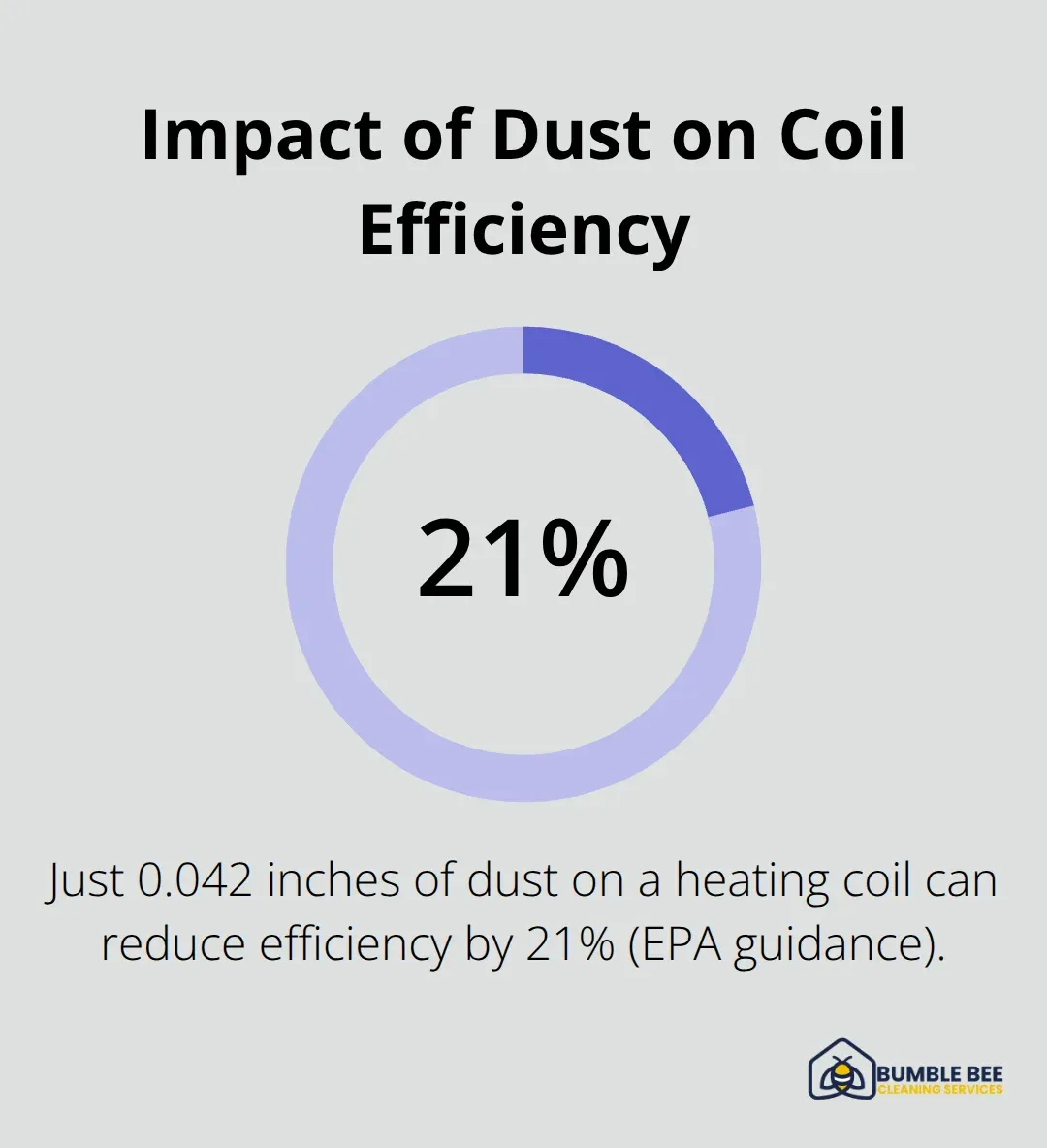
Dust coating your AC coils reduces heat transfer efficiency significantly, forcing your equipment to run longer and consume more energy to maintain temperature. According to EPA guidance, just 0.042 inches of dust buildup on a heating coil can decrease efficiency by 21%. When drywall dust and construction particles clog your system, your HVAC works harder depending on accumulation severity, directly raising your energy bills month after month.
Professional sanitization removes this insulating layer of contamination, restoring your system’s ability to transfer heat effectively and reducing operational strain on equipment components. Your equipment lasts longer when it operates under normal conditions rather than fighting through dust restrictions, potentially extending HVAC lifespan by years and avoiding premature replacement costs that reach $5,000-$10,000 for commercial systems.
Eco-Friendly Sanitizers Eliminate Odors and Bacteria
After removal of physical debris, professional teams apply eco-friendly sanitizers to duct interiors, eliminating bacteria and neutralizing odors that construction dust harbors. This step prevents microbial growth in the moist environment your ducts create, particularly critical in Seattle’s humid climate where moisture trapped with construction residue accelerates bacterial colonization. The sanitization process kills odor-causing organisms without introducing harsh chemicals that off-gas into your workspace, protecting both your air quality and your team’s health during and after treatment.
Post-renovation air quality testing confirms that hidden pollutants invisible to the eye no longer contaminate your environment, providing documentation that your office meets safe indoor air standards for employee occupancy.
Final Thoughts
Construction dust circulating through your Seattle office creates real problems that extend far beyond the renovation timeline. Contaminated ducts force your HVAC system to work harder, drive up energy costs, and expose your team to respiratory irritation that impacts both health and productivity. The inspection-first approach identifies whether your specific situation requires professional sanitization or if targeted maintenance resolves the issue, preventing unnecessary spending while protecting your investment.
Professional post-construction duct sanitization removes the construction residue your system pulled in during renovation and restores your HVAC maintenance to proper working order. This comprehensive cleaning addresses all system components, preventing recontamination and ensuring your equipment operates efficiently for years to come. Your employees return to a safe working environment where they can focus on their jobs without battling respiratory symptoms or allergy flare-ups.
We at Bumble Bee Cleaning Services understand the specific challenges Seattle offices face after renovation. Contact us today to schedule your professional duct assessment and sanitization, and let our team handle the post-construction cleaning your office needs.
For more information about our cleaning services in Seattle and Atlanta, or to request a cleaning quote, call or text us at 425-786-1360 or email us at info@qbclean.com
