
Seattle restaurant owners often push grease trap maintenance to the bottom of their priority list. But ignoring this responsibility creates expensive problems that could have been prevented with regular grease trap cleaning.
We at Bumble Bee Cleaning Services see the consequences firsthand. This post covers why maintenance gets overlooked, what it costs when you skip it, and how to build a schedule that actually works.
Why Grease Trap Maintenance Slips Down the Priority List
Restaurant owners in Seattle face relentless daily pressures. Staff scheduling, food costs, customer service, and compliance with health codes compete for attention every single day. Grease trap maintenance feels like it can wait because it happens behind the scenes and doesn’t immediately affect revenue or customer experience. The trap sits out of sight, so many owners assume it stays out of mind until something breaks. This mindset is dangerously wrong. When a grease trap backs up, it doesn’t wait for a convenient time-it disrupts kitchen operations, forces closure, and costs thousands in emergency repairs. Most restaurant owners have never experienced a full grease trap failure, so they underestimate the severity. Without that firsthand shock, maintenance stays deprioritized against immediate operational demands.
The Knowledge Gap About Real Consequences
Many Seattle restaurant owners simply don’t understand what happens when grease traps are neglected. They know the trap exists, but they don’t connect infrequent pumping to the cascade of problems that follow. Health code violations for grease trap neglect can result in significant fines for non-compliance, yet most owners think violations are minor inconveniences. Health inspectors take grease management seriously because fats, oils, and grease cause sewer backups that affect entire neighborhoods and local waterways. When grease enters Seattle’s sewer system without proper trap maintenance, it solidifies in pipes and creates blockages that extend far beyond a single restaurant. This environmental damage carries liability exposure that most owners never consider until a city inspector arrives or a backup occurs. The disconnect between neglect and consequences is enormous, and owners won’t prioritize maintenance until they fully understand what’s at stake.
Confusion About How Often Pumping Actually Needs to Happen
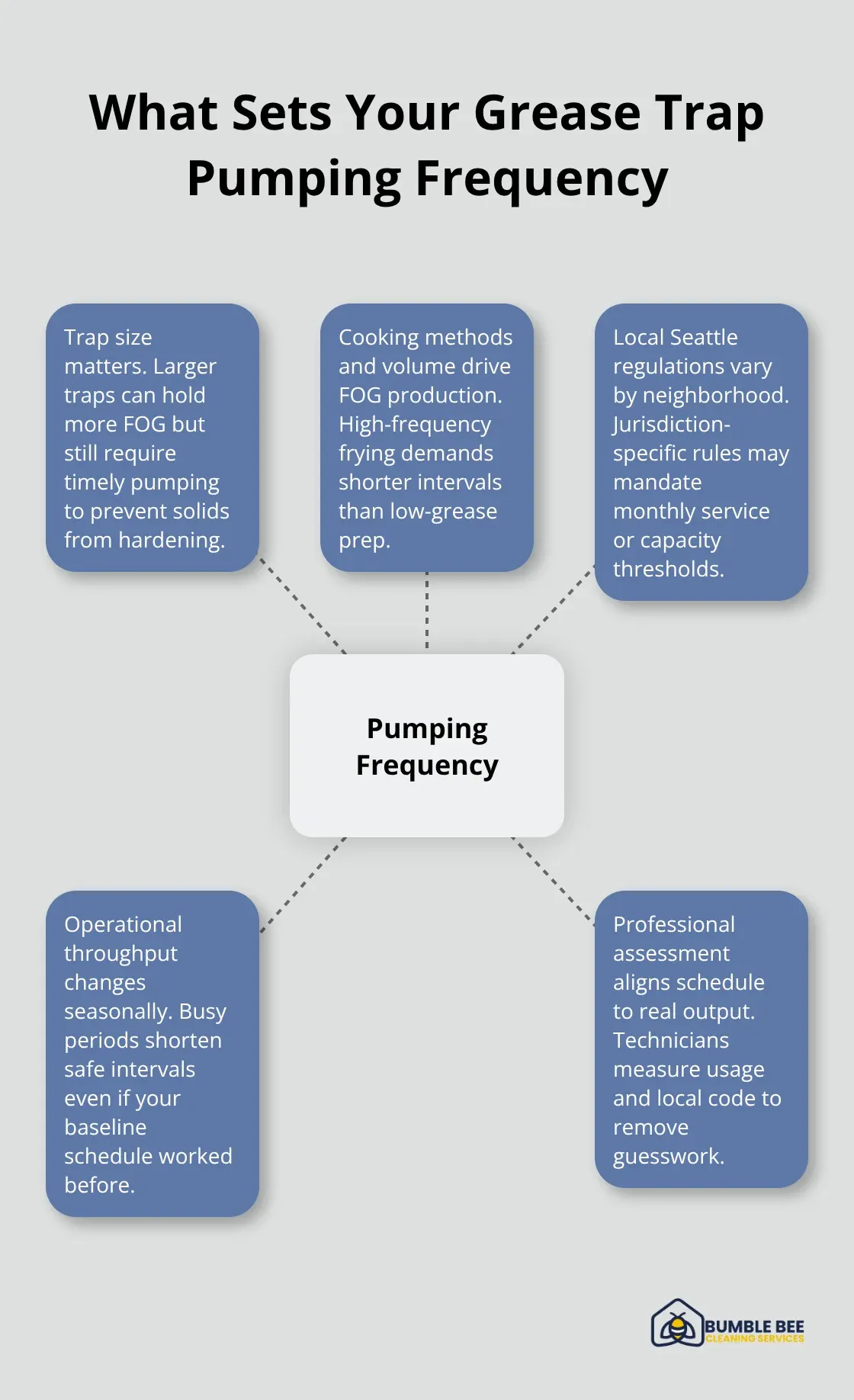
Restaurant owners hear conflicting advice about grease trap maintenance frequency. Some are told to pump when the trap reaches 25% capacity, others hear monthly schedules, and some think quarterly is sufficient. Local Seattle regulations vary by neighborhood, and many owners don’t take time to check their specific city’s requirements. This confusion creates decision paralysis-when you’re unsure of the right answer, it’s easy to do nothing. High-volume kitchens that fry foods constantly need pumping every month, while lower-volume operations might extend to six weeks. The size of your trap, the type of cooking you do, and your specific city’s health codes all determine the correct schedule. Without professional guidance, owners guess wrong and either overspend on unnecessary pumping or wait too long and risk backups.
What Professional Assessment Actually Reveals
Professional cleaning services can assess your kitchen’s actual grease production and set a schedule that matches your operation (removing this guesswork entirely). A trained technician evaluates your trap size, cooking volume, and local regulations to establish a maintenance plan that protects your operation. This assessment prevents both unnecessary costs and dangerous delays. Once you understand your actual maintenance needs, the next step involves building a realistic schedule that fits your restaurant’s workflow and budget.
What Actually Happens When Grease Traps Fail
Emergency Shutdowns and Skyrocketing Repair Costs
Neglected grease traps don’t fail quietly. When fats, oils, and grease accumulate beyond capacity, they solidify in pipes and create blockages that shut down kitchen operations within hours. A backed-up grease trap forces you to close the kitchen, turn away customers, and call an emergency plumber at premium rates. Emergency plumbing calls for grease backups typically cost $2,000 to $5,000 for a single service visit, and that’s before you address the underlying trap that caused the problem.
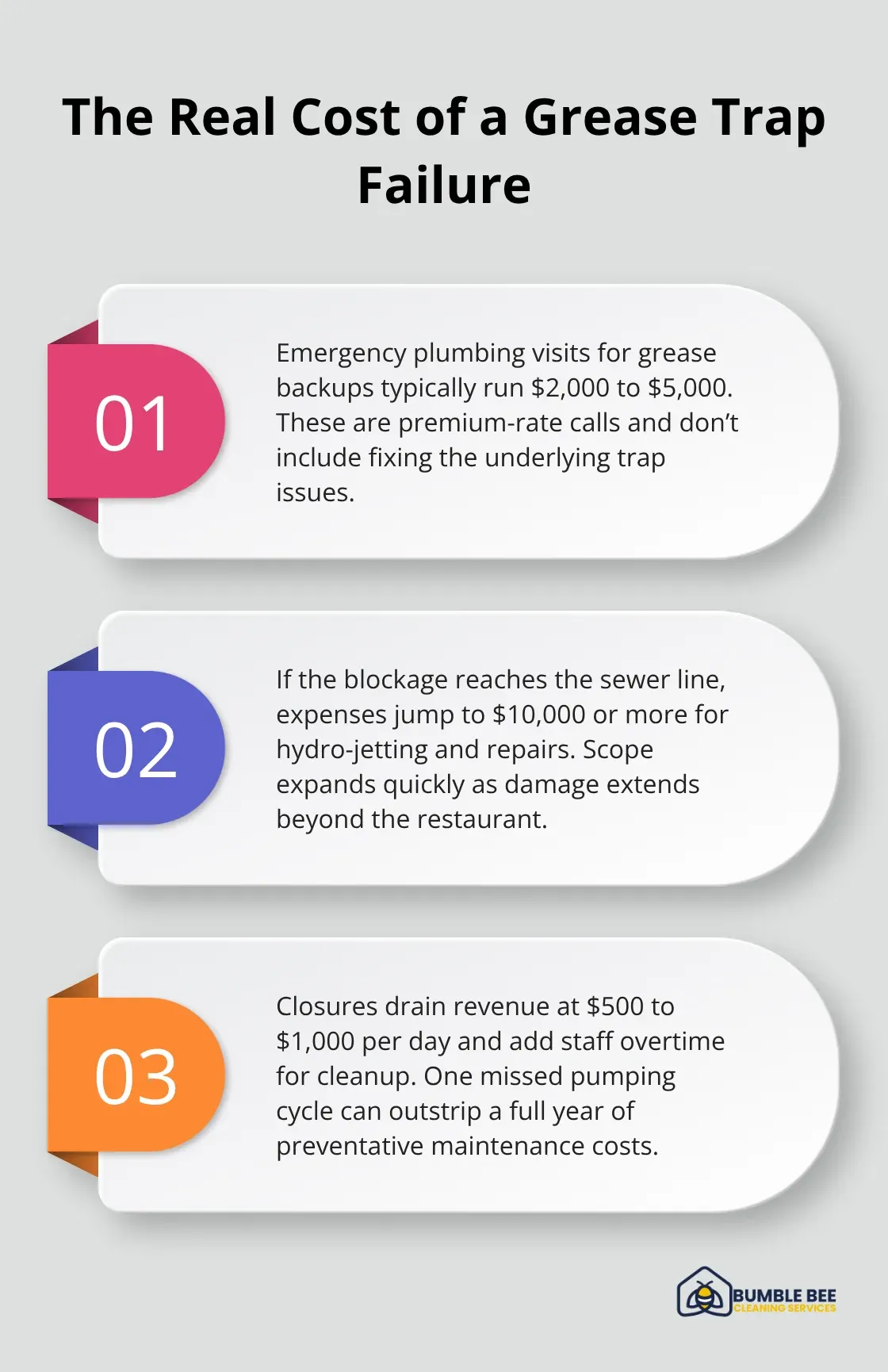
If the backup extends into the sewer line, costs escalate to $10,000 or more for hydro-jetting and line repairs. Seattle restaurants that ignored maintenance and faced emergency repairs report losing $500 to $1,000 in daily revenue during closure, plus staff overtime to clean up the mess afterward. One missed pumping cycle can trigger a failure that costs more than a year’s worth of preventive maintenance.
The financial damage extends beyond the repair bill. Customers who experience a closed kitchen lose trust, and negative reviews on social media damage reputation far longer than the physical problem lasted. A single closure creates lasting harm to your brand that no amount of money can fully repair.
Health Code Violations and Escalating Fines
Health inspectors in Seattle take grease trap violations seriously because they represent a direct threat to public health and environmental safety. A single violation for improper grease management results in fines ranging from $500 to $5,000 depending on the severity and your city’s specific code. Repeated violations or failure to correct issues within the inspector’s timeline escalates penalties dramatically and can lead to temporary closure orders. Restaurants with chronic grease trap violations faced significant fines when violations accumulated over multiple inspection cycles.
Beyond financial penalties, health code violations create a permanent record that damages your restaurant’s reputation with customers, suppliers, and potential investors. If a health inspection uncovers a grease trap failure, the inspector documents it in the public health database, and many Seattle neighborhoods publish inspection results online. A violation stays on your record and influences future inspections, meaning one neglected trap can trigger years of increased scrutiny.
Environmental Liability and Legal Exposure
Environmental damage from escaped grease carries additional liability exposure that most restaurant owners never anticipate. If your restaurant’s grease enters the city sewer system and causes neighborhood backups or contaminates local waterways, you could face liability claims from affected property owners or environmental agencies. This liability exists whether or not you’re technically responsible under local law, and defending against claims costs tens of thousands in legal fees alone. The combination of repair costs, fines, lost revenue, and potential legal action transforms a simple maintenance task into an existential threat to your business. Understanding these real consequences makes the case for preventive action clear, but knowing the risks isn’t enough-you need a practical system to actually implement maintenance before failure strikes.
Building Your Grease Trap Maintenance Schedule
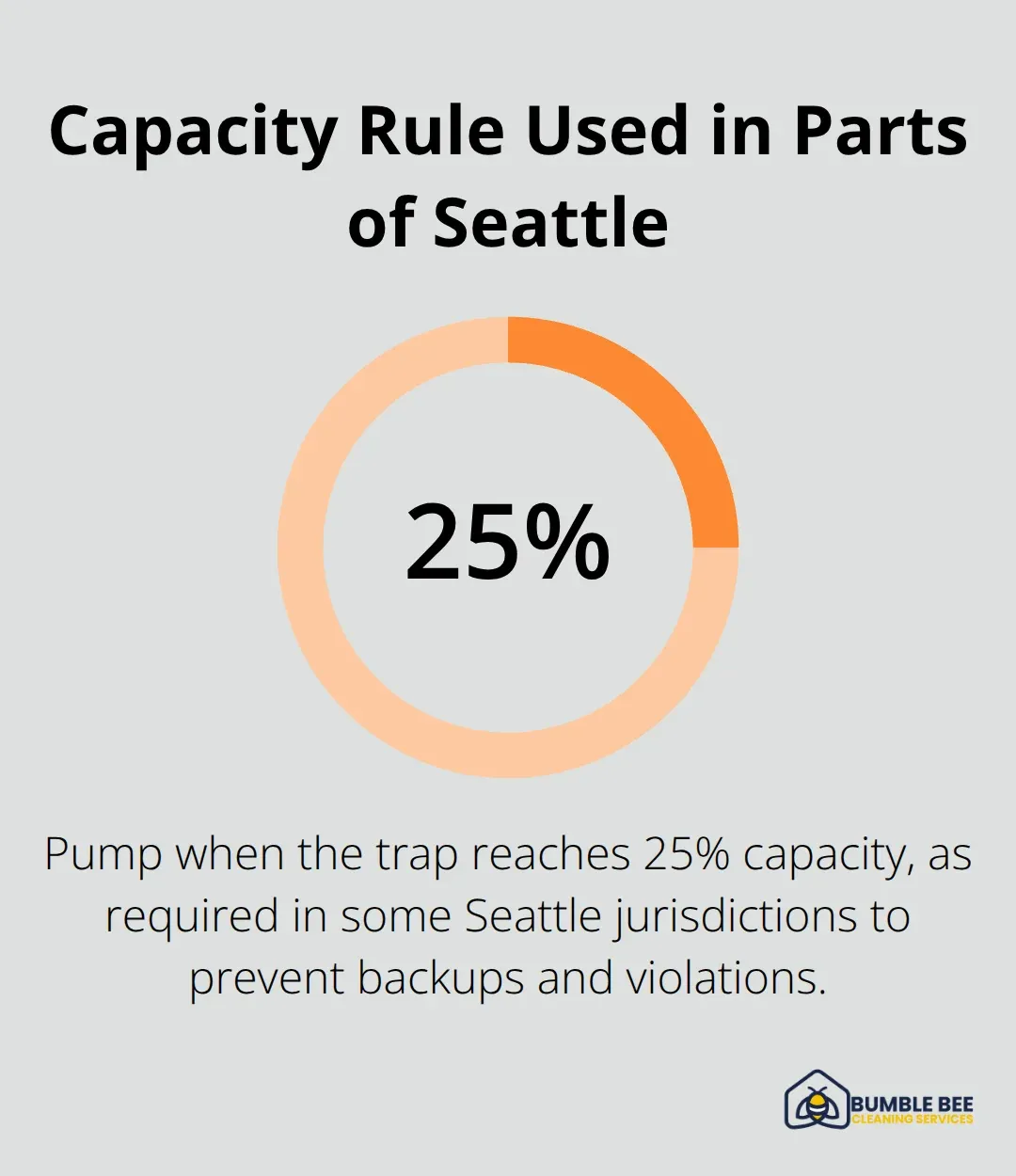
Your Seattle restaurant operates under specific health codes that dictate exactly how often your grease trap must be pumped, yet most owners never bother to look up their city’s actual requirements. Seattle’s Department of Construction and Inspections requires grease trap inspections during routine health visits, and violations result in documented citations. However, the frequency requirement depends on which Seattle neighborhood you operate in, since different city jurisdictions within the greater Seattle area impose different standards. Some areas require pumping when the trap reaches 25% capacity, while others mandate monthly service regardless of trap size. The first step involves contacting your local health department or reviewing the specific city code for your restaurant’s location, not relying on generic advice from other restaurant owners. Once you know your legal requirement, add one week to that timeline as a safety buffer to avoid violations from unexpected grease production spikes during high-volume cooking periods.
Assess Your Kitchen’s Actual Grease Production
Professional grease trap services assess your actual kitchen operations to establish the right pumping frequency rather than forcing you to guess. A technician evaluates your trap size, the volume of food you prepare daily, your cooking methods, and your specific city’s regulations to create a customized schedule that protects your operation. This assessment typically takes 30 minutes and costs $150 to $300, but it eliminates the guesswork that leads owners to either overspend or dangerously delay service. The technician identifies whether your trap needs monthly pumping or can safely extend to every 30 to 90 days based on your specific operation.
Set Up Automated Reminders and Documentation
Once your schedule is established, set automated reminders 10 days before each scheduled pumping so maintenance never slips through the cracks during busy service periods. Document every pumping visit with photos and receipts to demonstrate compliance during health inspections, protecting your restaurant from accusations of neglect. This documentation creates a clear record that proves you maintained your trap according to local requirements (a critical advantage if an inspector questions your compliance history). Digital calendars or maintenance software can track your schedule automatically, removing the burden from your staff’s memory.
Choose a Professional Service Provider
A reliable grease trap service provider handles the logistics so you focus on running your restaurant. The provider schedules appointments around your kitchen’s peak hours, completes the work efficiently, and manages proper disposal of waste materials according to environmental regulations. Professional services also inspect your trap for damage or deterioration that might require repairs before a catastrophic failure occurs. This preventive approach catches problems early and extends your trap’s lifespan significantly.
Final Thoughts
Neglected grease trap cleaning creates a domino effect of problems that restaurant owners cannot afford to ignore. The costs of emergency repairs, health code violations, and environmental liability far exceed the price of regular maintenance. A single backup forces your kitchen to close, damages your reputation, and drains thousands from your bottom line.
Contact your local Seattle health department to confirm your specific pumping requirements, then schedule an assessment with a professional service provider to establish your customized maintenance schedule. Set automated reminders so pumping appointments never slip through the cracks during busy service periods. Document every service visit to prove compliance during health inspections.
We at Bumble Bee Cleaning Services recognize that cleanliness and proper maintenance form the foundation of a successful restaurant operation. Start today by identifying your local requirements and scheduling your first professional assessment. The small investment in maintenance now prevents the massive costs and operational disruption that neglect guarantees later.
For more information about our cleaning services in Seattle and Atlanta, or to request a cleaning quote, call or text us at 425-786-1360 or email us at info@qbclean.com
