
Moving out of your Seattle rental doesn’t mean leaving environmental responsibility behind. An eco-friendly moveout protects your security deposit, respects your community, and sets a standard for sustainable living.
We at Bumble Bee Cleaning Services help tenants and landlords handle move-outs the right way. This guide walks you through every step, from choosing non-toxic cleaners to disposing of waste responsibly.
Preparing Your Rental for Move-Out
Start Your Move-Out With a Clear Property Assessment
Before you touch a single cleaning product, walk through your Seattle rental with fresh eyes and document what you’re working with. Seattle Public Utilities requires solid waste plans for multifamily buildings, and understanding your property’s waste infrastructure matters for your exit strategy. Take photos of each room, noting existing damage, stains, and areas that need attention. This protects you from unfair deductions on your security deposit and prevents you from cleaning issues that were already present when you moved in. Focus on high-traffic zones like entryways, kitchens, and bathrooms where wear shows most. Check for water stains, carpet discoloration, and wall marks. If your rental has carpet, understand that normal wear differs from damage you’re responsible for fixing. Document everything with timestamps and clear angles so you have evidence if disputes arise later.
Plan Your Cleaning Around Seattle’s Waste System
Seattle’s waste infrastructure works differently than most cities. According to Seattle Public Utilities, multifamily buildings typically handle garbage weekly, recycling every other week, and food and yard waste separately. Know your building’s collection schedule before move-out day so you can time your cleaning and disposal properly. If you’re moving out of a multifamily building with chute systems, understand that these require regular maintenance and ventilation, meaning residual odors or contamination from previous tenants may linger.
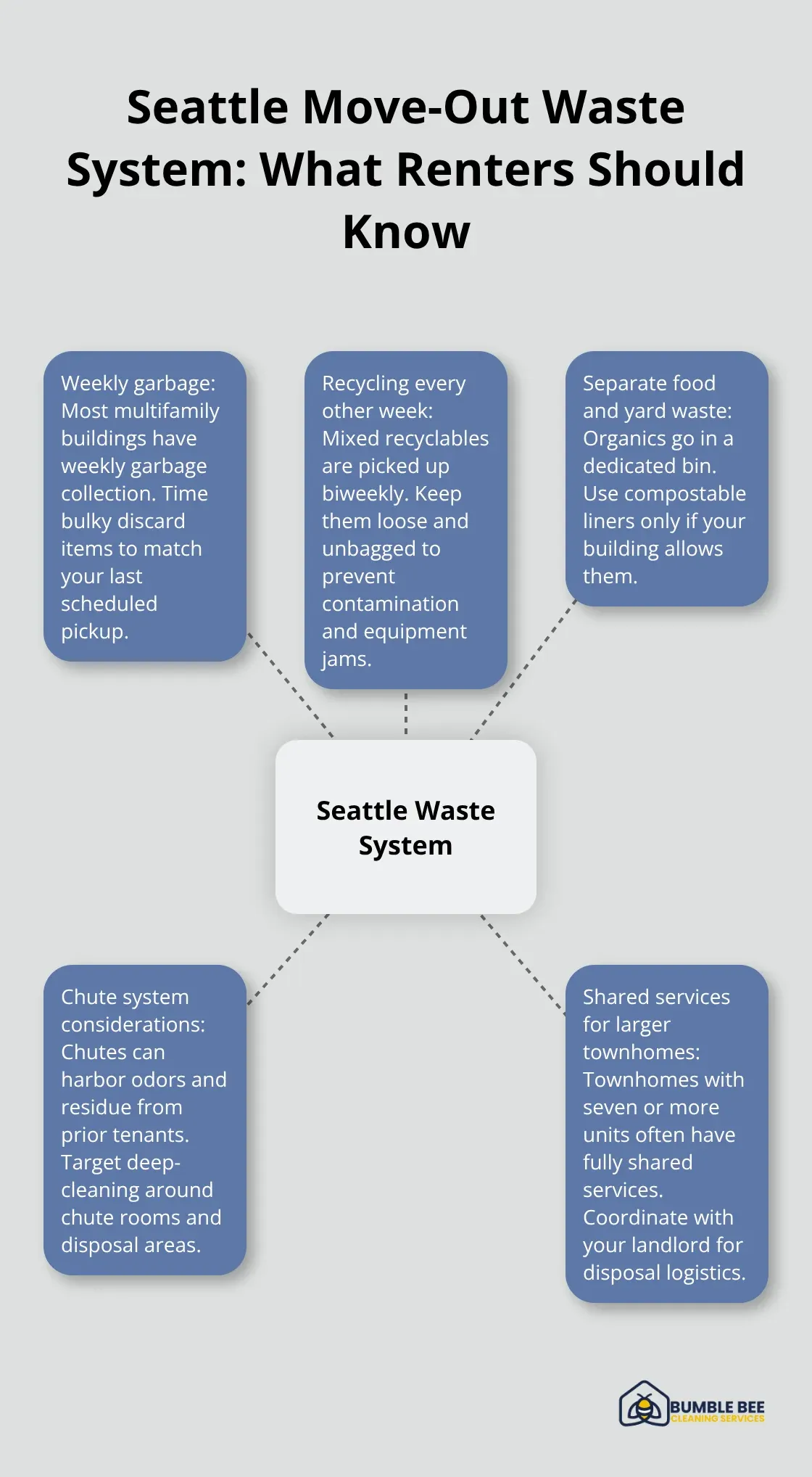
This knowledge helps you target specific areas during deep cleaning. For townhomes with seven or more units, Seattle Public Utilities recommends fully shared solid waste services, so coordinate with your landlord about disposal logistics. Create a cleaning timeline that works backward from your move-out date, accounting for drying time after wet cleaning and the actual waste pickup schedule. This prevents last-minute scrambling and ensures waste doesn’t sit in storage areas longer than necessary.
Stock Only Products You’ll Actually Use
Invest in a focused set of cleaners that handles your specific rental’s needs rather than purchasing a massive eco-friendly kit that wastes money and creates clutter. An all-purpose cleaner that cuts grease while staying safe for granite or stainless steel handles most surfaces without requiring multiple products. Add a broad-spectrum disinfectant spray for high-touch areas (doorknobs, light switches, and remotes). Include a streak-free glass cleaner for mirrors and windows, microfiber cloths for dusting without lint, toilet bowl cleaner and brush for bathrooms, and a lightweight vacuum with attachments for both carpets and hard floors. Stock multiple sizes of garbage bags so you can properly sort recyclables, compost, and trash according to Seattle’s three-stream system. If your unit has a washing machine, grab laundry detergent and stain remover for refreshing linens. Plant-based cleaners from brands certified by environmental standards work just as well as conventional products for move-out cleaning. Calculate what you need based on square footage and the number of rooms, then purchase slightly less than you think. Leftover cleaning products create disposal problems and contradict your eco-responsible approach.
With your property assessed and supplies ready, you can now move forward with the deep cleaning methods that actually protect Seattle’s environment while restoring your rental to move-out condition.
Deep Cleaning Methods That Protect the Environment
Plant-Based Cleaners Outperform Conventional Products
Plant-based cleaners work harder than most people assume, especially when you match the right product to the right surface. An all-purpose cleaner with plant-derived surfactants cuts through kitchen grease just as effectively as conventional ammonia-based products, and they break down in Seattle’s water treatment systems. The difference matters because Seattle Public Utilities processes wastewater through the West Point Treatment Plant, and non-toxic cleaners reduce the load on treatment infrastructure while protecting the Cedar River Watershed, which supplies some of Seattle’s drinking water.
When you clean bathrooms, swap harsh bleach for hydrogen peroxide or vinegar-based disinfectants that kill bacteria on toilets and tile without creating chlorine fumes in enclosed spaces. For mirrors and windows, a vinegar and water solution costs pennies and leaves no streaks when you use microfiber cloths. Disinfectant wipes labeled as plant-based or biodegradable handle high-touch areas like doorknobs and light switches without introducing persistent chemicals into your rental’s plumbing system.
Choose Certified Products to Verify Safety Standards
Skip products with VOCs (volatile organic compounds) above state and federal limits-check the ingredient label or look for GBAC STAR certified products, which signal commitment to health and safety standards during cleaning. Certification matters because it removes guesswork from product selection and confirms that manufacturers tested their formulas against rigorous environmental and health benchmarks.
Reduce Water Waste Through Strategic Cleaning Techniques
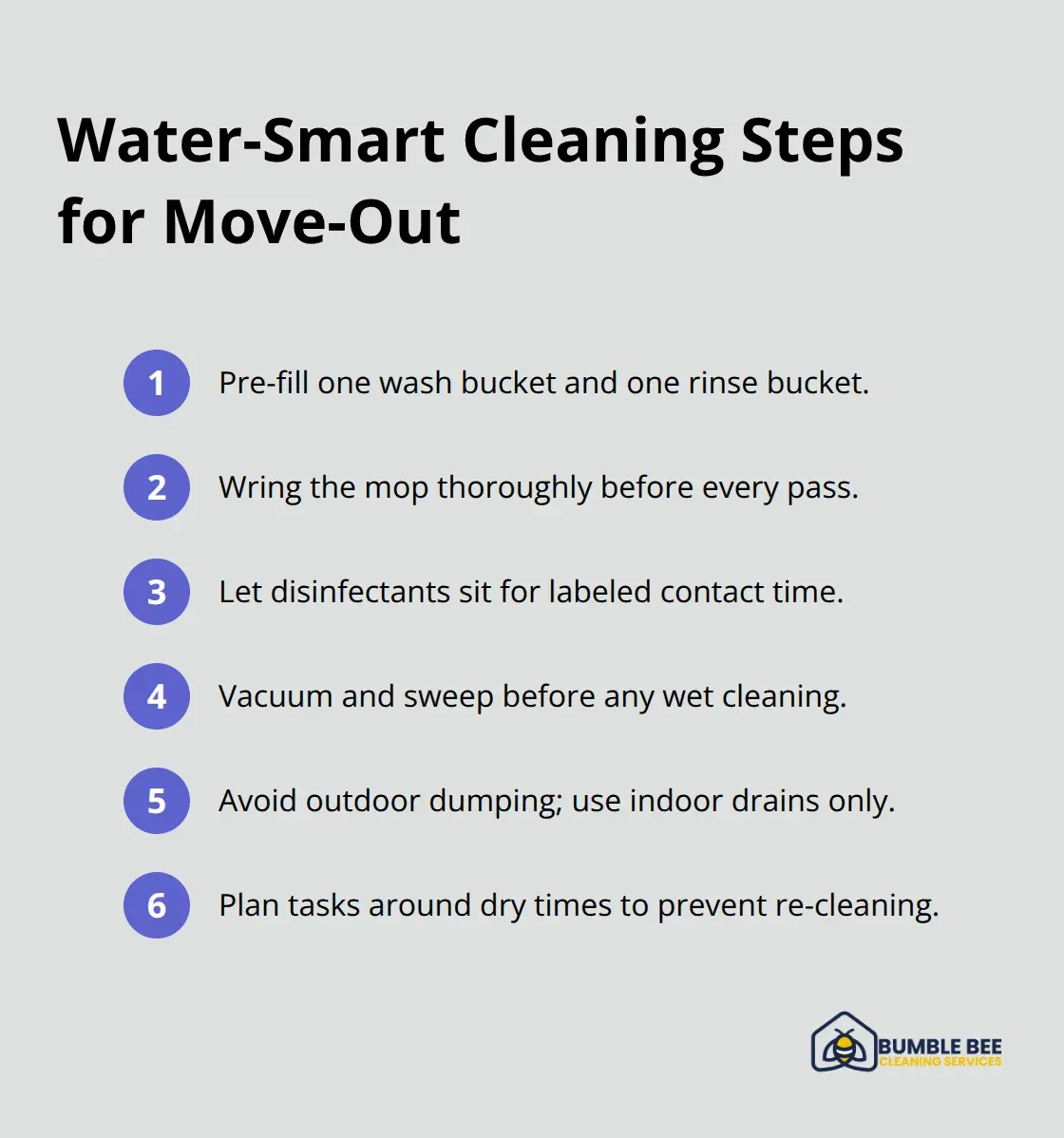
Water waste during move-out cleaning happens when you let taps run while scrubbing or refill mop buckets unnecessarily. Fill one bucket with soapy water and a second with rinse water, then wring your mop thoroughly before each pass so you’re not flooding floors and wasting water while they dry. For bathroom cleaning, spray disinfectant on surfaces and let it sit for the contact time listed on the label rather than immediately rinsing, which cuts water use in half.
Water-efficient products save both water and energy during your cleaning routine.
Vacuum carpets and sweep hard floors before wet cleaning removes dust and debris so you don’t need to repeat wet cleaning passes. When disposing of cleaning water, pour it down indoor drains rather than leaving buckets outside, where runoff carries soap into storm drains and affects local waterways. Seattle’s stormwater system connects directly to Puget Sound, so every gallon of soapy water you avoid dumping outside protects marine ecosystems.
Sort Waste Into Three Streams for Maximum Diversion
Sort your waste into three streams as Seattle Public Utilities recommends: garbage in one bin, recyclables in another, and food or yard waste in a third. Recyclables must stay loose and unbagged so material recovery facilities can process them efficiently-bagged recyclables jam sorting equipment and contaminate entire batches. Before move-out day, call Seattle Public Utilities at 206-684-3000 to confirm your building’s waste pickup schedule and any special instructions for your final collection, ensuring nothing sits in storage areas longer than necessary and attracting pests or odors.
With your deep cleaning complete and waste properly sorted, you can now address any remaining damage while maintaining your commitment to sustainable practices.
Addressing Damage While Minimizing Environmental Impact
Repair Minor Wall Damage Without Waste
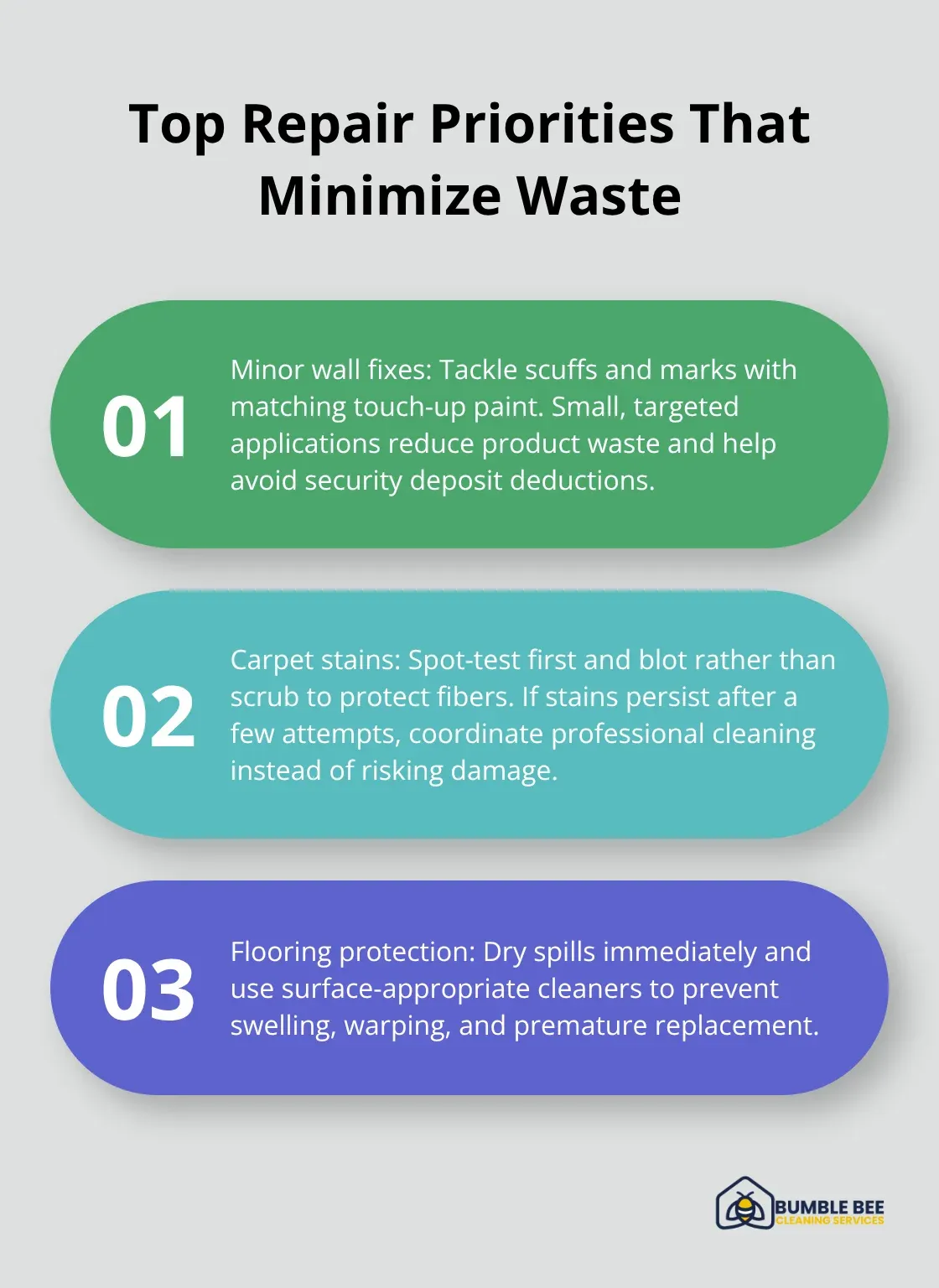
Minor wall marks and scuffs tempt renters to skip repairs and hope landlords ignore them. Seattle rental law distinguishes between normal wear and tenant-caused damage, so small fixes now prevent larger deductions later. For wall marks and minor scuffs, use touch-up paint that matches your rental’s existing color rather than repainting entire walls, which wastes product and creates disposal headaches. Most hardware stores in Seattle mix custom paint samples in small quantities, reducing waste compared to full quarts. Apply paint with a small brush or foam applicator rather than spray cans, which overspray and create airborne VOCs that contaminate indoor air quality. Let paint cure fully before move-out day so you don’t leave wet surfaces for your landlord to manage.
Handle Carpet Stains With Restraint
Carpet stains that resist cleaning tempt aggressive treatment, but harsh scrubbing damages fibers and requires more water to rinse. Test a stain remover on an inconspicuous area first, then apply it sparingly and let it sit for the recommended time before blotting with a damp cloth. If stains persist after three attempts, accept that professional deep cleaning may become necessary and coordinate with your landlord about responsibility rather than attempting aggressive treatments that worsen the damage. Seattle renters often assume they must replace damaged carpet, but most landlords prefer professional cleaning if the carpet structure remains intact.
Protect Flooring From Water Damage
Flooring and carpet deserve special attention because replacement costs dwarf repair expenses and create significant environmental waste. Water damage happens fast in Seattle’s humid environment, so immediately dry any wet areas with towels and run a fan to prevent swelling or warping. Scuffs on hard floors respond well to wood-specific cleaners or laminate polish applied with microfiber cloths rather than abrasive scrubbing pads. For hardwood or laminate surfaces, moisture control prevents the structural damage that leads to full replacement.
Address Paint Removal Safely and Responsibly
Paint removal from floors or trim requires careful technique because aggressive scraping damages underlying surfaces and creates hazardous dust if the building predates 1978 and contains lead paint. If your rental has lead paint, Seattle requires certified professionals to handle removal, so contact your landlord immediately rather than attempting DIY removal that spreads contamination. For non-lead paint, use a plastic scraper angled low to the surface, work slowly, and collect all paint chips in a sealed bag for disposal at Seattle’s hazardous waste facility on Airport Way South, which accepts paint and coatings free of charge from residents.
Final Thoughts
An eco-friendly moveout protects your security deposit, respects Seattle’s environment, and demonstrates that sustainable living extends beyond your daily habits. The practices outlined in this guide-assessing your rental carefully, choosing plant-based cleaners, minimizing water waste, and sorting waste into three streams-work together to reduce your environmental footprint while meeting landlord expectations for move-out condition. Landlords benefit when tenants approach move-outs responsibly, as properties that exit cleanly and sustainably attract quality renters and reduce turnover costs.
The Cedar River Watershed and Puget Sound depend on choices made by thousands of Seattle residents. Every gallon of water you conserve, every plant-based cleaner you use instead of harsh chemicals, and every item you donate rather than discard contributes to cleaner local waterways and healthier communities. Your eco-friendly moveout sets a standard that influences how others approach their own transitions.
If managing a move-out feels overwhelming, professional support can simplify the process. We at Bumble Bee Cleaning Services specialize in move-out cleaning with eco-friendly products and sustainable practices. Contact us today to schedule your move-out cleaning and leave your Seattle rental in pristine, sustainable condition.
For more information about our cleaning services in Seattle and Atlanta, or to request a cleaning quote, call or text us at 425-786-1360 or email us at info@qbclean.com
