
Construction sanitation isn’t optional on Seattle job sites-it’s a worker protection requirement. Contaminated equipment, poor air quality, and unclean surfaces spread illness faster than most project managers realize.
We at Bumble Bee Cleaning Services have seen firsthand how sanitization directly impacts crew health and project timelines. This post covers the real health risks, the productivity gains from prevention, and the sanitization practices that keep your team safe.
What Health Threats Hide on Dirty Construction Sites
Contaminated Equipment Spreads Illness Rapidly
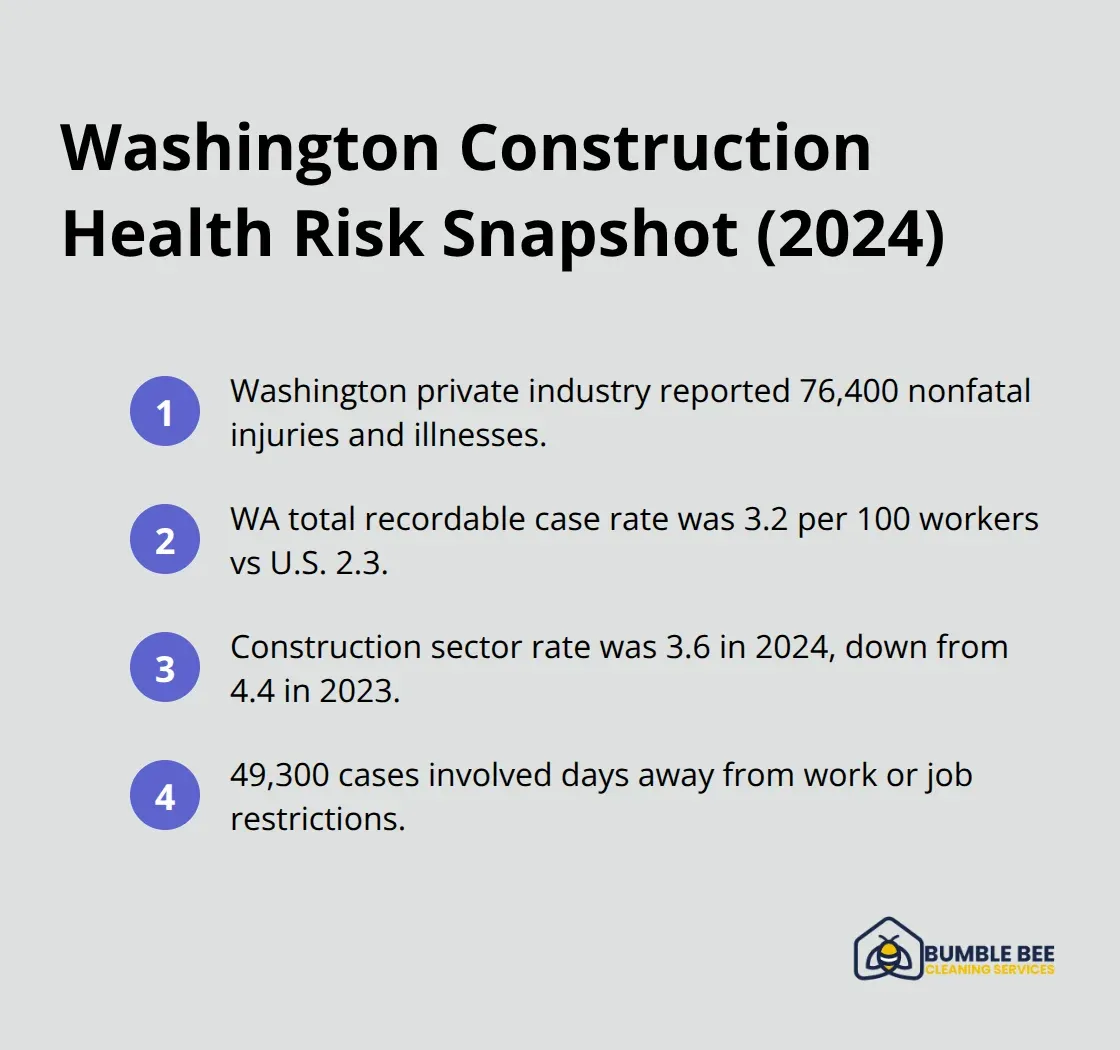
Contaminated equipment spreads illness rapidly. Construction sites concentrate workers in tight spaces with shared tools, equipment, and break areas, creating ideal conditions for pathogen transmission. According to the U.S. Bureau of Labor Statistics, Washington state’s private industry reported 76,400 nonfatal injuries and illnesses in 2024, with a total recordable case rate of 3.2 per 100 full-time workers-significantly higher than the national private-industry rate of 2.3. The Construction sector specifically had a rate of 3.6 in 2024, down from 4.4 in 2023, yet still representing substantial worker risk.
Hand tools, power equipment handles, door knobs, and shared work surfaces become vectors for bacterial and viral contamination when workers skip regular cleaning. Workers touch these surfaces and then transfer germs to their faces, eyes, and mouths throughout the day. The CDC identifies high-touch surfaces as critical transmission points, which is why daily cleaning of shared equipment matters on every job site.
Respiratory Hazards from Poor Air Quality
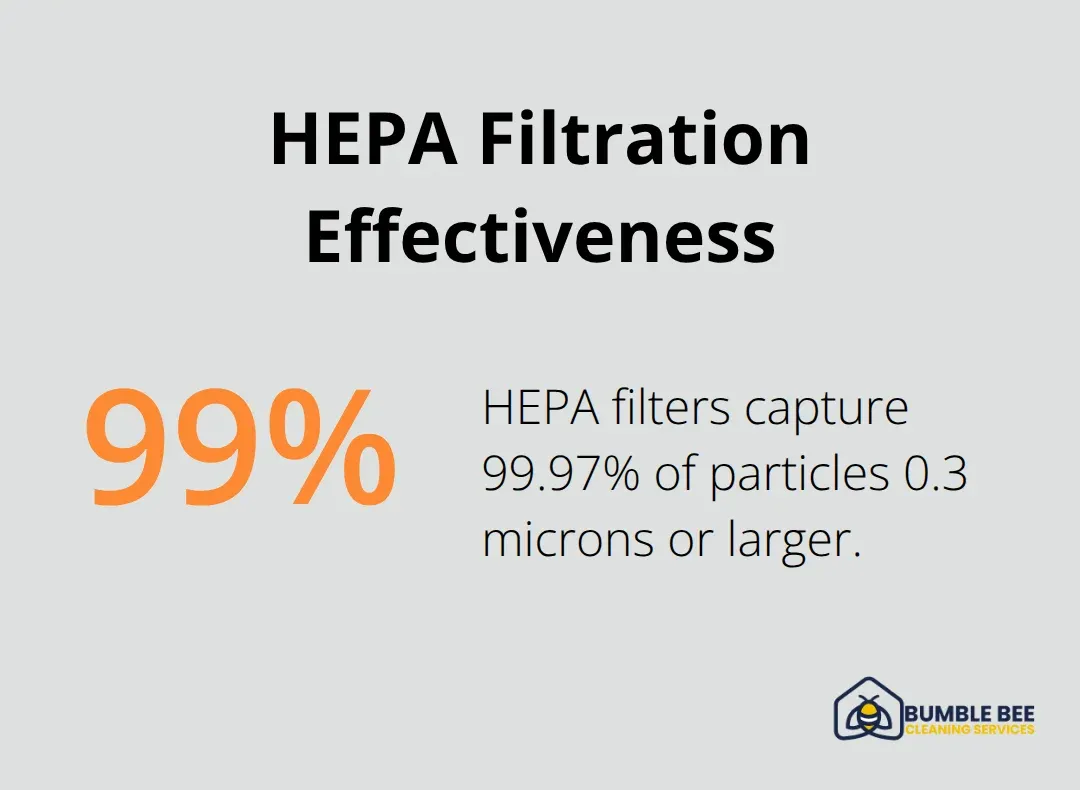
Construction dust contains silica particles that accumulate in workers’ lungs when ventilation falls short. Poor air quality causes immediate symptoms like coughing and shortness of breath, but prolonged exposure leads to chronic respiratory disease. The CDC and EPA recommend maintaining at least 5 air changes per hour in work zones and using HEPA filters that capture 99.97% of particles 0.3 microns or larger. Most construction sites fall far short of this standard, leaving crews vulnerable to both acute and long-term lung damage.
Skin Infections and Allergic Reactions from Unclean Surfaces
Unclean surfaces trigger skin infections and allergic reactions that sideline workers. Fungal infections thrive on sweaty, contaminated work surfaces and shared equipment. Bacterial skin infections spread through minor cuts and abrasions common on job sites. Dust and mold accumulation trigger allergic reactions and dermatitis in susceptible workers, reducing productivity and increasing absenteeism.
Washington state data shows that 49,300 cases involved days away from work or job restrictions in 2024-meaning workers were too sick or injured to perform their duties. Sites without systematic sanitization create health liabilities that directly impact crew availability and project schedules. Prevention through proper sanitization eliminates these health vectors before they affect your team. Understanding these risks sets the stage for exploring how sanitization practices actually reduce worker illness and keep projects on track.
How Sanitization Cuts Illness and Keeps Projects Moving
Daily Cleaning Stops Absenteeism Before It Starts
Sanitized sites have measurably lower absenteeism rates. When workers stay healthy, they show up. When they don’t, projects stall. Washington state data from 2024 shows that 49,300 private-industry cases involved days away from work or job restrictions-meaning nearly half of all recorded injuries and illnesses forced workers off the job. Construction sites without systematic sanitization contribute directly to this statistic. The CDC emphasizes that regular cleaning of high-touch surfaces reduces transmission risk substantially, yet most Seattle project managers treat sanitization as an afterthought rather than a core safety protocol. Daily cleaning of shared tools, equipment handles, and break areas prevents the bacterial and viral spread that forces crew absences.
Sites that implement daily sanitization of high-touch equipment report fewer illness-related gaps in crew availability, allowing schedules to stay on track and labor costs to remain predictable. This isn’t theoretical-it’s the difference between meeting deadlines and explaining delays to clients.
Healthy Workers Drive Measurable Productivity Gains
Healthy workers generate measurable productivity gains that directly reduce project costs. A worker sidelined by a respiratory infection or skin infection contributes zero output for days or weeks. Sites with proper air quality management and regular surface disinfection maintain crew efficiency because workers aren’t coughing through shifts or nursing infections that worsen under dusty conditions. The hierarchy of controls established by the CDC and OSHA prioritizes elimination and engineering controls like ventilation before relying on PPE-meaning proper air management prevents illness before it starts rather than managing it after exposure.
Lower Workers’ Compensation Claims Through Prevention
Workers’ compensation claims drop when sanitization prevents illness-related injuries and illnesses from occurring. Lower claim frequency means lower insurance premiums and reduced administrative burden on project managers. EPA-approved disinfectants used on a consistent schedule cost far less than the medical expenses, lost productivity, and claims processing that follow preventable illness outbreaks on job sites. The financial case for sanitization is straightforward: systematic cleaning prevents the worker absences, delayed timelines, and escalating workers’ compensation expenses that accumulate when sanitization is ignored.
Professional sanitization services understand that construction sites operate under tight margins-which is exactly why preventing worker illness through proper cleaning makes financial sense. The cost of systematic cleaning is negligible compared to the cost of crew downtime and mounting claims. Understanding these financial and health benefits clarifies why sanitization matters, but the real question becomes how to implement these practices effectively on your Seattle project.
How to Actually Sanitize a Seattle Construction Site
Target High-Touch Surfaces Multiple Times Per Shift
Sanitization on construction sites requires specific actions, not vague intentions. The CDC identifies high-touch surfaces as critical transmission points, which means your sanitization schedule must target equipment handles, door knobs, light switches, and shared tools multiple times per shift. Daily cleaning isn’t optional; it’s the baseline. Morning sanitization before crews arrive removes overnight contamination. Midday cleaning of high-touch equipment prevents accumulation during peak work hours. End-of-shift cleaning removes debris that attracts pathogens and settles onto surfaces overnight.
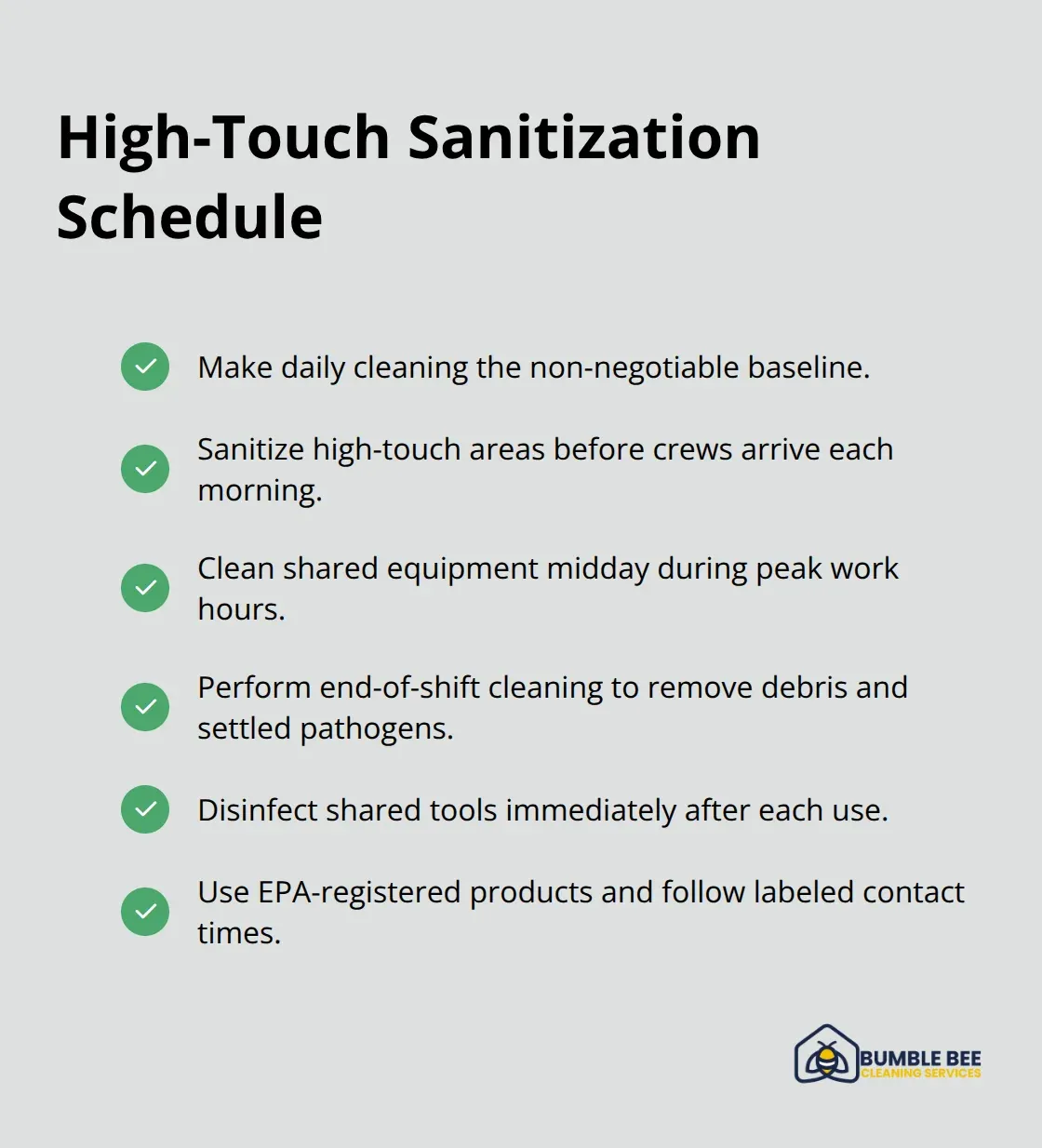
Equipment that rotates between workers requires immediate cleaning after each use-power tool handles, nail guns, measuring devices, and safety gear all transfer pathogens between hands throughout the day. Use EPA-registered disinfectants with documented contact times; the product label specifies how long surfaces must remain wet for the disinfectant to kill pathogens effectively. Most Seattle project managers underestimate contact time requirements, spraying surfaces and wiping them dry immediately, which leaves pathogens alive. Follow the label precisely.
Implement Proper Ventilation and Air Quality Controls
Ventilation directly impacts respiratory health on construction sites, and the CDC recommends at least 5 air changes per hour in work zones to reduce airborne dust and particles. Temporary construction sites typically rely on open windows, fans, and exhaust equipment, but dense construction areas with multiple workers generate dust faster than passive ventilation handles. HEPA filters capture 99.97% of particles as small as 0.3 microns, making them essential for equipment like dust collectors and air purification units deployed on job sites.
High-efficiency particulate air filters cost more upfront but prevent the respiratory infections and lost productivity that follow prolonged dust exposure. Respiratory protection becomes necessary only when engineering controls like ventilation fail, so prioritize air quality management over reliance on masks and respirators. Construction sites that implement these practices systematically see measurable reductions in respiratory complaints within weeks.
Select EPA-Approved Disinfectants That Protect Workers
EPA-approved disinfectants matter, but eco-friendly products matter equally for worker safety. Construction sites expose crews to harsh chemicals during application, so low-VOC and biodegradable disinfectants reduce respiratory irritation and skin sensitization. Verify that any disinfectant you select carries EPA registration for the specific pathogens your site faces; not all disinfectants kill all germs.
For construction sites, allocate dedicated crew time or hire professional services that understand jobsite-specific contamination patterns. The cost of systematic cleaning is negligible compared to the cost of crew downtime and mounting workers’ compensation claims that accumulate when sanitization is ignored.
Final Thoughts
Construction sanitation directly protects worker health and project profitability. Washington’s construction sector recorded a 3.6 total recordable case rate in 2024, and nearly half of all recorded injuries and illnesses forced workers away from the job. Systematic sanitization prevents the bacterial and viral contamination, respiratory hazards, and skin infections that drive these absences, keeping crews healthy and projects on schedule.
The financial argument proves equally compelling. Daily cleaning of high-touch equipment, proper ventilation systems, and EPA-approved disinfectants cost far less than workers’ compensation claims, medical expenses, and lost productivity. A single crew member sidelined by a preventable illness delays timelines and strains budgets, while sites that implement construction sanitation practices systematically see measurable reductions in absenteeism within weeks.
Professional sanitization services understand jobsite-specific contamination patterns and deliver consistent results without diverting crew attention from core work. Bumble Bee Cleaning Services brings experience and industry certifications to every project, combining eco-friendly products with systematic cleaning protocols that protect both workers and equipment. The choice is straightforward: invest in construction sanitation now or absorb the escalating costs of worker illness, delayed schedules, and mounting claims later.
For more information about our cleaning services in Seattle and Atlanta, or to request a cleaning quote, call or text us at 425-786-1360 or email us at info@qbclean.com
