
Deep cleaning your Seattle home doesn’t have to take all weekend. With the right strategy and cleaning efficiency in mind, you can tackle every room systematically and finish faster than you’d expect.
We at Bumble Bee Cleaning Services know that most homeowners want results without spending days scrubbing. That’s why we’ve put together this guide to show you exactly how to prioritize your deep cleaning work.
What Order Should You Clean Room by Room
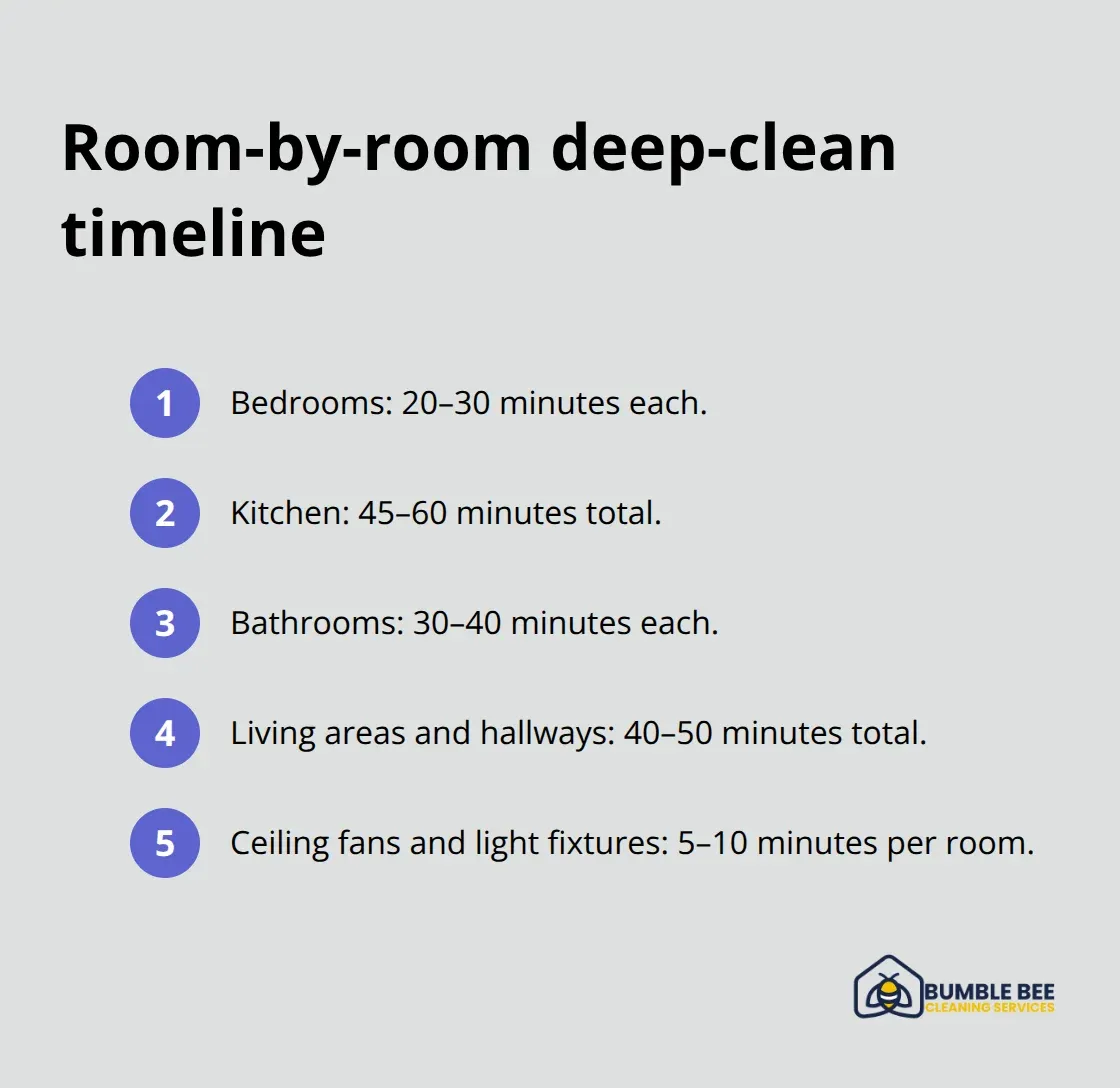
The fastest deep cleaning happens when you work systematically from the least-used spaces to the most-used ones. Start with bedrooms first because they typically have fewer high-touch surfaces and less accumulated grime than kitchens or bathrooms. Spend 20–30 minutes per bedroom vacuuming thoroughly, wiping down baseboards, cleaning ceiling fans, and tackling light fixtures. This approach lets you build momentum before facing the tougher spaces. Move next to hallways and less-trafficked areas, which require similar effort but take less time than main living zones.
Your goal here is to complete these quieter spaces while your energy is fresh, then transition to the high-impact areas where most of the visible dirt accumulates.
Kitchen Demands the Longest Time Investment
The kitchen is where deep cleaning separates amateurs from professionals. According to the National Association of Realtors, kitchens in pristine condition can boost home value by up to 5%, which tells you exactly why this room matters most. Deep-clean your oven inside and out, refrigerator coils and interior, and microwave interior thoroughly. Wipe every cabinet front and interior shelf, scrub grout lines on tiled surfaces with a specialized brush, and polish all fixtures until they gleam. Baseboards in kitchens collect grease and dust faster than anywhere else, so dedicate real time here. This room alone should consume 45–60 minutes of your deep cleaning day because the kitchen is where buyers and guests form their strongest first impressions.
Bathrooms Require Precision Over Speed
Bathrooms deserve your second-longest time commitment because grout and mineral deposits accumulate quickly in humid climates. Scrub grout lines aggressively with a grout brush, polish all chrome and stainless fixtures until streak-free, and ensure mirrors shine without streaks. Clean behind and underneath the toilet, wipe down cabinet interiors, and address any mold spots immediately with appropriate cleaners. Spend 30–40 minutes per bathroom working methodically from top to bottom, saving floor cleaning for last. High-touch surfaces in bathrooms (faucets, door handles, light switches) spread contamination fastest, so prioritize these areas with fresh cleaning cloths and separate tools from other rooms. Finish living areas and hallways last, spending 40–50 minutes vacuuming, dusting all surfaces systematically from high to low, and mopping floors with clean water and a fresh mop head each time.
With your room-by-room strategy locked in, the next step is selecting the right tools and products that actually speed up your work instead of slowing it down.
Equipment and Products That Actually Speed Up Your Work
Microfiber Cloths Transform Your Cleaning Efficiency
Microfiber cloths are non-negotiable for fast deep cleaning because they trap dirt and grime far more effectively than cotton rags. Microfiber cloths remove up to 99% of bacteria from surfaces when used properly, meaning you’ll need fewer passes and less cleaning solution to achieve results. Invest in at least 12–15 microfiber cloths so you can dedicate separate ones to bathrooms, kitchens, and living areas without cross-contamination. Replace them every 500 washes or when they start pilling, because worn cloths perform poorly and slow you down.
Specialized Brushes and Vacuum Power Matter
For grout lines and stubborn buildup, a stiff grout brush with angled bristles cuts your scrubbing time in half compared to standard brushes. A cordless vacuum with strong suction and a motorized brush roll handles both carpets and hard floors faster than switching between multiple tools. Look for models rated above 200 air watts of suction power, which removes embedded dust and allergens more efficiently than lower-powered units.
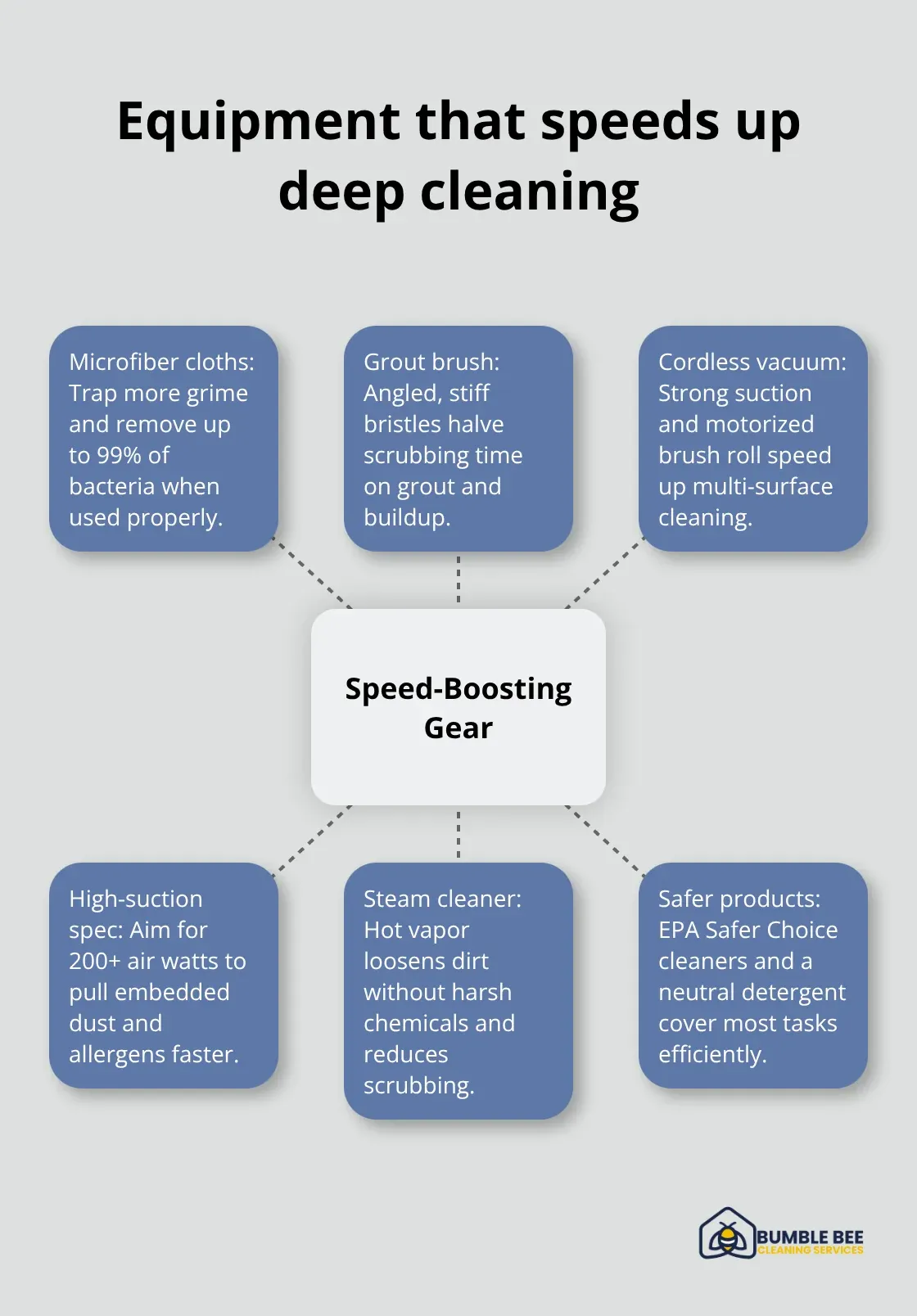
Steam cleaning equipment deserves serious investment because hot vapor loosens dirt without harsh chemicals, reducing your physical scrubbing effort significantly.
Eco-Friendly Products Protect Your Home and Speed Your Work
Non-toxic cleaners with EPA Safer Choice certification work as effectively as harsh chemicals while protecting indoor air quality, which matters especially in Seattle’s damp climate where mold and mildew spread quickly. The Carpet and Rug Institute confirms that clean carpets improve indoor air quality, and eco-friendly cleaners achieve this without ammonia or bleach fumes that slow you down with ventilation requirements. A multi-surface neutral detergent handles 80% of your cleaning tasks across kitchens, bathrooms, and living areas, eliminating the need to switch products constantly. Reserve specialized cleaners only for specific jobs like grout treatment or oven degreasing, which keeps your cleaning process streamlined.
Organize Your Cleaning Arsenal for Maximum Speed
Store all cleaners in clearly labeled containers, keep a spray bottle of diluted neutral detergent ready at all times, and maintain a separate disinfectant for high-touch surfaces like faucets and door handles. This organized system prevents wasted time searching for the right product mid-task. When you combine the right equipment with a strategic product lineup, you’re ready to focus on the deep cleaning tasks that actually deliver the fastest visible results.
Which Deep Cleaning Tasks Deliver Results Fastest
High-traffic areas demand your attention first because dirt accumulates fastest where people walk, sit, and touch surfaces daily. Kitchen counters, bathroom vanities, entryway floors, and the path between your bedroom and bathroom collect more grime than quiet corners, so cleaning these zones first gives you visible progress immediately and keeps momentum strong.
Baseboards and Overhead Surfaces Set the Pace
Baseboards throughout your home hide shocking amounts of dust and pet hair, yet most homeowners skip them entirely, which is a mistake. Baseboards in high-traffic hallways and living rooms accumulate more visible dust than baseboards in bedrooms, so prioritize these areas and tackle them with a damp microfiber cloth wrapped around a paint stick for leverage. This approach lets you clean baseboards standing up rather than kneeling, which saves your knees and cuts your time in half.
Ceiling fans and light fixtures trap dust that eventually falls onto cleaned surfaces, so clean these from top to bottom before you mop floors. A simple damp cloth wrapped around your fingers works faster than spraying and wiping, and you’ll avoid drips that require recleaning. Dust light fixture covers and ceiling fan blades in 5–10 minutes per room when you use this technique consistently.
Steam Cleaning Carpets Removes What Vacuums Miss
Steam cleaning your carpets and upholstery deserves serious investment because it removes embedded dirt and allergens that regular vacuuming misses, and steam does the heavy lifting so you don’t have to scrub physically. The Carpet and Rug Institute confirms that clean carpets improve indoor air quality, which matters in Seattle’s damp climate where mold and mildew thrive in fiber.
Rent a commercial-grade steam cleaner rather than purchasing a consumer model because commercial units heat water to 212 degrees and deliver higher pressure, cutting your cleaning time by 60% compared to lightweight machines. Run the steamer over high-traffic carpet paths twice, allowing the hot vapor to loosen dirt on the first pass and extract it on the second pass, then move to less-trafficked areas.
For upholstery, test the steamer on a hidden corner first to confirm the fabric tolerates heat, then work in sections and allow fabric to dry completely before sitting. If your carpets show stains or lingering odors, steam cleaning addresses both problems far faster than spot treatments alone, and the results justify the rental cost when you factor in time saved and improved indoor air quality throughout your home.
Final Thoughts
Deep cleaning your Seattle home fast comes down to three fundamentals: work room-by-room from least-used to most-used spaces, invest in microfiber cloths and steam cleaning equipment, and prioritize high-traffic areas where dirt accumulates fastest. When you follow this systematic approach, you’ll finish in a single day rather than spreading the work across a weekend. The cleaning efficiency gains from using the right tools and products compound quickly, turning what feels like an overwhelming project into manageable work.
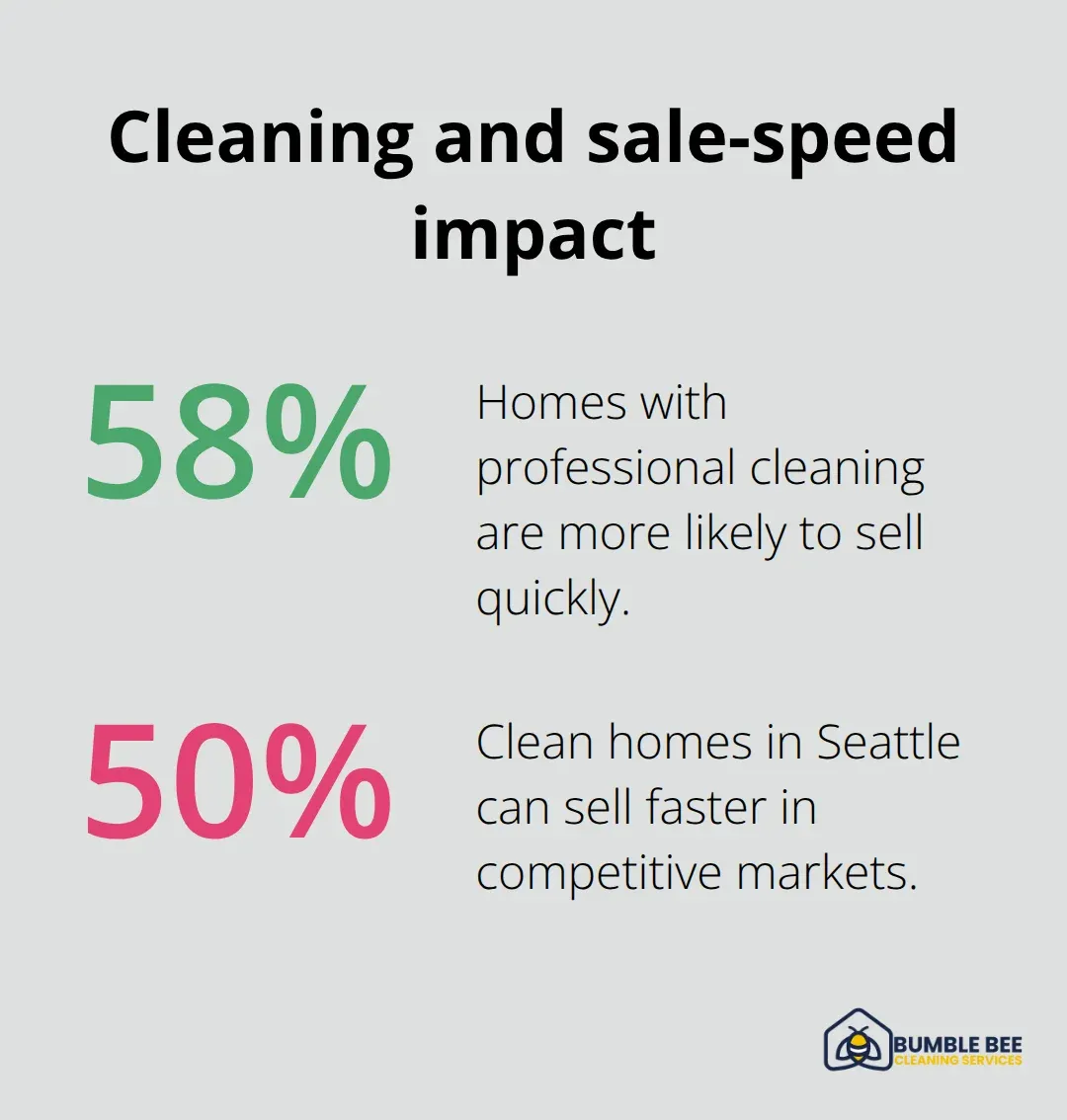
HomeLight data shows that homes with professional cleaning are about 58% more likely to sell quickly, and in Seattle’s competitive market, clean homes can sell up to 50% faster. These numbers reflect something important: professional cleaners deliver results that DIY efforts struggle to match, especially when you factor in the hours you’d spend scrubbing grout lines and steam cleaning carpets yourself. Most people would rather spend their weekend with family than on their hands and knees.
We at Bumble Bee Cleaning Services understand that deep cleaning demands real time and physical effort, which is why our team handles the heavy lifting for you. Our cleaners use eco-friendly products and proven techniques that protect your home while delivering pristine results, whether you’re preparing to sell, moving into a new space, or simply want your home to feel fresh again. Contact us for professional deep cleaning that saves you time and guarantees results.
For more information about our cleaning services in Seattle and Atlanta, or to request a cleaning quote, call or text us at 425-786-1360 or email us at info@qbclean.com
