
Construction projects in Seattle create significant dust that infiltrates homes and affects your family’s health. Fine particles from drywall, concrete, and wood can trigger respiratory problems, allergies, and other serious conditions.
Dust suppression during construction is your first line of defense, but it’s not always enough. We at Bumble Bee Cleaning Services know that professional post-construction cleanup removes the dust that settles inside your home, protecting your family long after the work ends.
What Construction Dust Actually Does to Your Lungs
Silica Dust and Irreversible Lung Damage
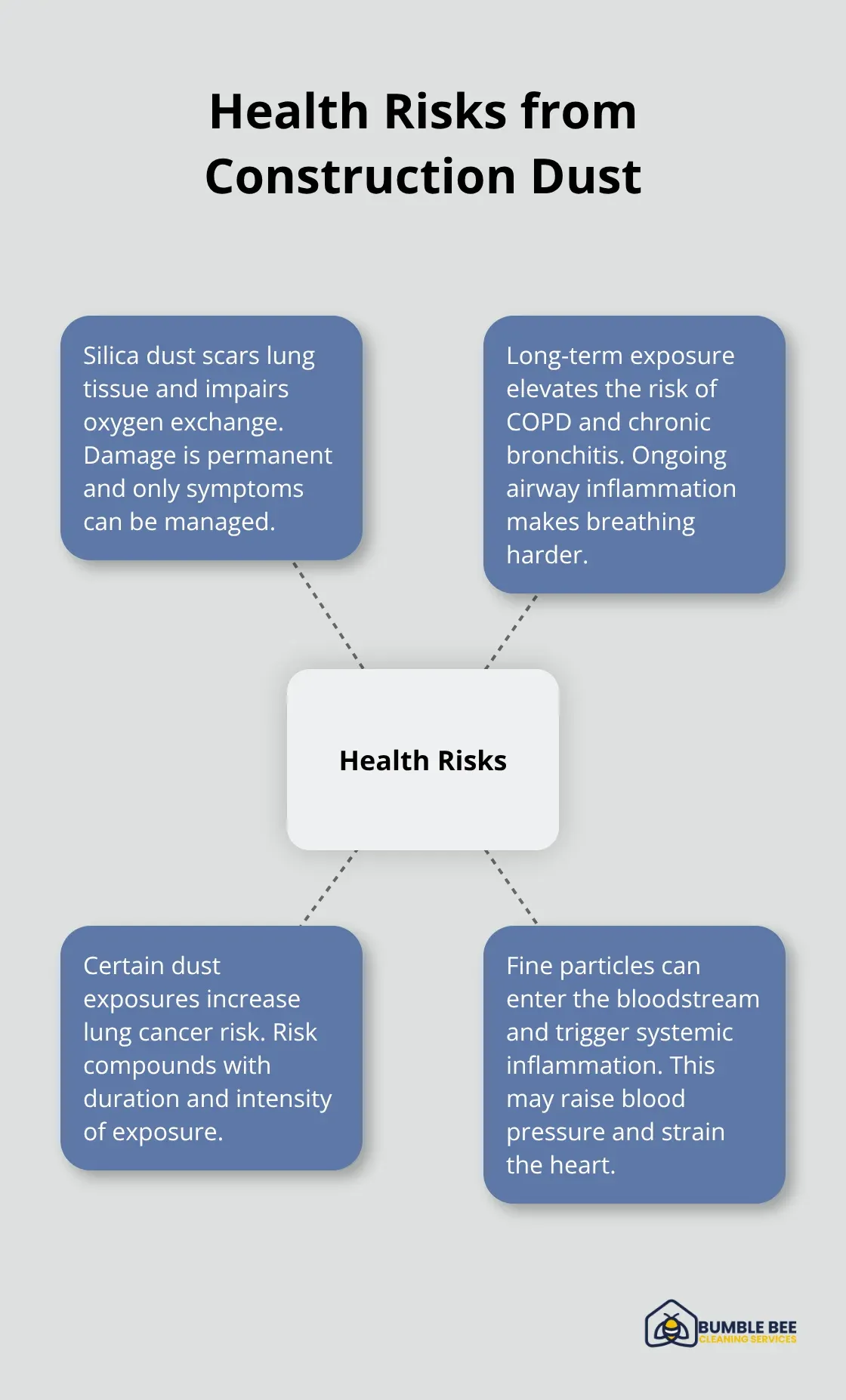
Construction dust in Seattle homes contains silica particles from concrete and brick, wood fibers from framing, and drywall particles that penetrate deep into your lungs. Silica dust poses a serious threat. When you inhale respirable silica-particles small enough to reach the alveoli in your lungs-it damages the cells responsible for clearing debris from your respiratory system. According to Cleveland Clinic, chronic silicosis typically develops after more than 10 years of exposure, but acute silicosis can appear within months during heavy, intense exposure.
There’s no cure for silicosis, only symptom management through pulmonary rehabilitation, bronchodilators, and supplemental oxygen in severe cases. The disease causes persistent cough, breathing problems, airway inflammation, and irreversible lung scarring. Long-term exposure to construction dust increases your risk of COPD, chronic bronchitis, and lung cancer.
Other Dust Hazards in Your Home
Wood dust from construction triggers allergic reactions and asthma-like symptoms in sensitive individuals, while cement dust irritates skin and causes dermatitis. The CDC and Cleveland Clinic emphasize that fine particles entering your bloodstream can cause systemic effects-for example, lead dust from older buildings causes lead poisoning affecting multiple organ systems. Children and elderly family members face higher risk because their lungs are still developing or have lost elasticity.
Why Fine Particles Matter More Than You Think
The cardiovascular impact of construction dust gets overlooked too often. Fine particulate matter from construction sites doesn’t stay in your lungs; particles small enough bypass your upper airway defenses and enter the bloodstream, triggering inflammation throughout your body. This systemic inflammation stresses your heart, increases blood pressure, and narrows blood vessels, raising your risk of heart attacks and strokes.
Construction dust exposure also worsens existing asthma and allergies by irritating airways and triggering immune responses. What makes this worse is latency-silicosis and dust-related cancers can take years or decades to manifest, meaning exposure today creates health problems you won’t notice until significant damage has occurred.
How Dust Infiltrates Your Seattle Home
During Seattle renovations, dust doesn’t stay on the construction site. It infiltrates your home through gaps around doors, windows, and HVAC systems, settling on surfaces and remaining in the air you breathe for weeks after work stops. This persistent indoor contamination means your family continues breathing construction dust long after contractors leave the property, making post-construction cleanup essential to restore safe air quality.
How Dust Suppression Actually Works on Seattle Construction Sites
Water Suppression Stops Dust at the Source
Water suppression remains the most effective method for controlling construction dust at the source, and it outperforms relying solely on air filtration after dust spreads throughout your home. The Health and Safety Executive recommends water-based suppression for activities like wet core drilling, cutting concrete and tile with saws, and removing rubble or debris because saturating dust particles prevents them from becoming airborne in the first place.
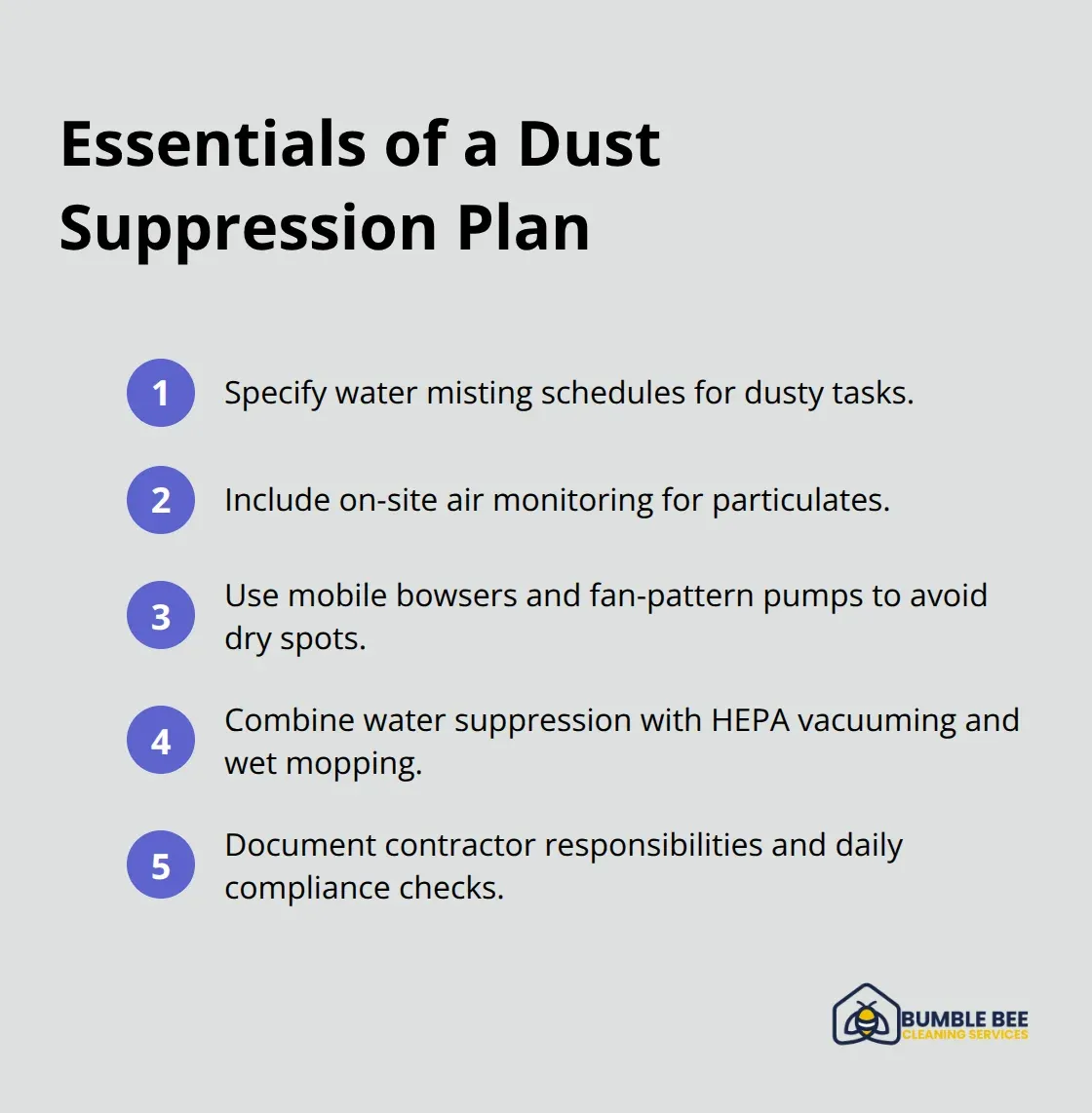
Mobile water bowsers deliver continuous spray coverage across high-traffic construction zones, and equipment like Whale Tail pumps enhance water distribution in fan-like patterns to eliminate dry spots where dust accumulates. For Seattle homeowners hiring contractors, insist that your renovation agreement includes a dust suppression plan specifying water misting schedules and on-site air monitoring rather than accepting vague promises about cleaning up afterward.
Containment and Negative Air Pressure Systems
Containment barriers paired with negative air pressure systems create sealed zones that prevent dust from migrating into adjacent living spaces, though proper installation determines whether this approach works effectively. These systems work best when contractors seal gaps around doors, windows, and HVAC returns with plastic sheeting and tape, then operate portable air scrubbers that pull air out of the work zone faster than dust can escape. Negative pressure forces air to flow toward the containment area rather than spreading dust into your family’s bedrooms and living spaces. However, even well-installed containment systems fail if workers leave doors open or fail to maintain the seal throughout the workday.
HEPA Filtration and Housekeeping Practices
HEPA filtration captures fine particles as they’re produced, but HEPA units alone cannot replace source suppression because they only address dust that’s already airborne inside your home. The EPA emphasizes that good housekeeping practices during construction-including regular wet mopping and HEPA-filter vacuuming instead of dry sweeping-minimize settled dust accumulation on work areas and surrounding surfaces. Contractors who combine water suppression with HEPA vacuuming and wet mopping create multiple barriers against dust infiltration, significantly reducing what enters your living spaces. This layered approach (water suppression at the source, containment barriers, and HEPA cleanup) protects your family far more effectively than any single method alone.
What Happens After Construction Ends
After construction ends, professional post-construction cleaning removes the dust that inevitably penetrates your home despite suppression efforts, restoring indoor air quality and protecting your family’s respiratory health for months to come. We at Bumble Bee Cleaning Services specialize in post-construction cleaning, using HEPA-filter equipment and wet-cleaning methods to eliminate settled dust from every surface, ductwork, and air return in your home. This final cleanup phase matters because construction dust doesn’t disappear on its own-it remains in your HVAC system, on ceiling fans, baseboards, and furniture, continuing to affect air quality long after contractors leave.
Protecting Your Home During Construction Projects
Seal Entry Points Before Work Begins
The most effective defense against construction dust happens before work starts. When you hire contractors in Seattle, your first step is creating a written dust control agreement that specifies sealing all entry points to your living spaces. Contractors must seal gaps around doors and windows with plastic sheeting and painter’s tape, block HVAC returns with temporary covers, and close interior doors leading to occupied rooms. The EPA emphasizes that barriers should be used to contain dust and other pollutants from the work area to other parts of the home, so demand that contractors inspect and reseal entry points daily since plastic sheeting deteriorates and tape loses adhesion over time. If your contractor resists these requirements or treats them as optional, that’s a warning sign about their commitment to protecting your family. Negative air pressure systems work only when the containment is airtight, so poor sealing undermines the entire suppression strategy.
Establish and Maintain a Clean Zone
During renovation, establish a clean zone in your home where dust hasn’t penetrated, typically a bedroom or section of your home farthest from construction. This clean zone becomes your family’s refuge during the workday and a baseline for measuring whether dust control efforts are actually working. Keep this area sealed and require contractors to remove their boots or change into clean footwear before entering, preventing tracked dust from spreading. Air quality monitoring during construction reveals whether suppression methods are actually reducing dust levels. Portable air quality monitors measure particulate matter in real time, providing objective data rather than relying on visual inspection or contractor assurances.
Remove Dust After Construction Ends
After construction ends, dust lingers in your home for weeks without professional intervention. Settled dust accumulates in your HVAC system, on ceiling fans, light fixtures, baseboards, and furniture where it continues circulating into the air you breathe. The EPA recommends HEPA-filter vacuuming and wet mopping rather than dry sweeping, which resuspends particles back into the air.
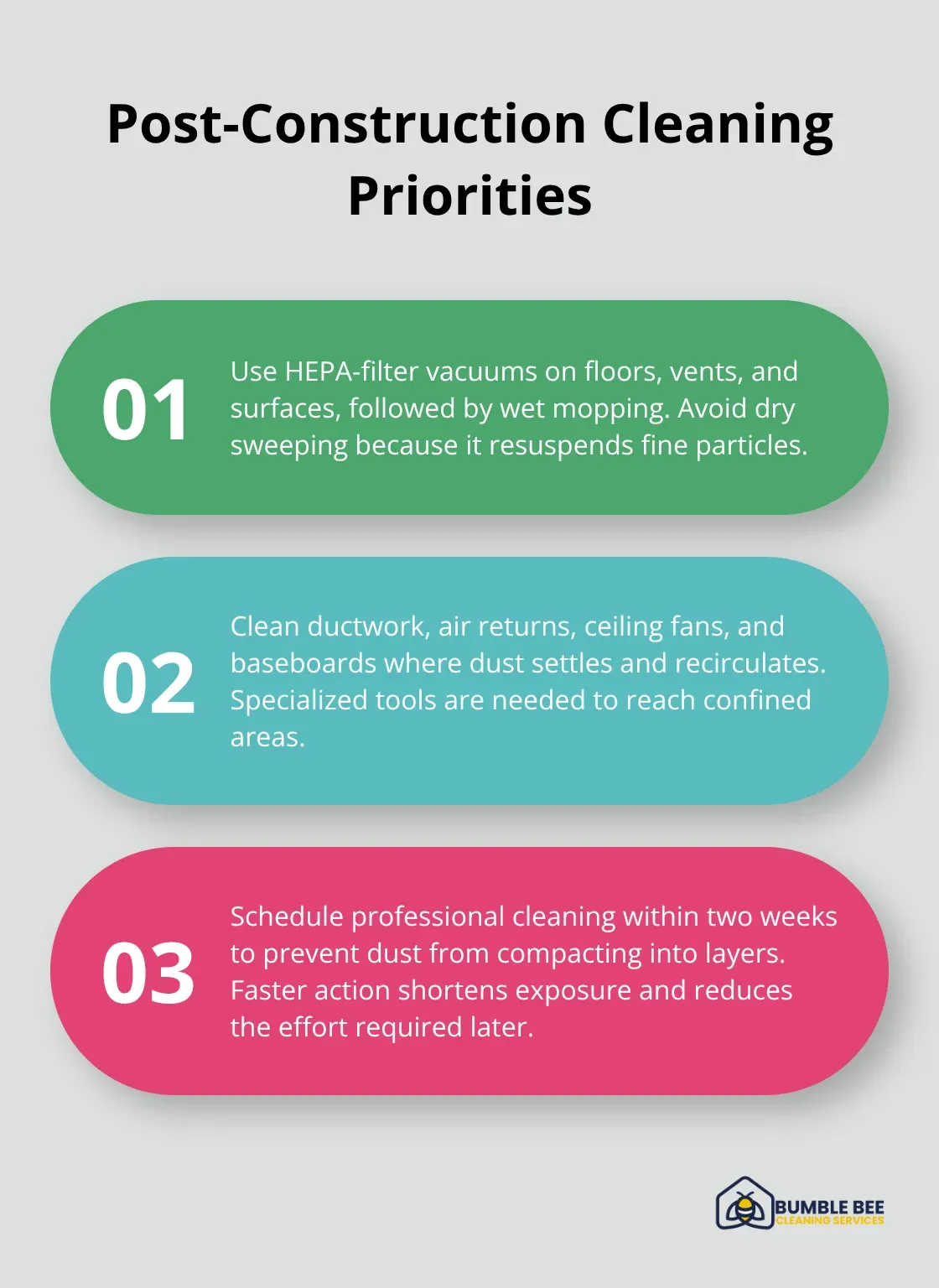
However, standard cleaning equipment cannot reach dust inside your ductwork, behind baseboards, or in your HVAC system where the largest accumulations occur. Professional post-construction cleaning with HEPA equipment uses industrial-grade methods and wet-cleaning to systematically remove dust from every surface, ductwork, and air return in your home. Scheduling post-construction cleaning within two weeks of project completion prevents dust from settling permanently and becoming harder to remove. Waiting longer allows dust to accumulate in layers, requiring more intensive cleaning and extending your family’s exposure to contaminated air.
Final Thoughts
Construction dust poses real health threats to your Seattle family, from irreversible lung damage caused by silica exposure to cardiovascular problems triggered by fine particulate matter entering your bloodstream. Dust suppression during construction, combined with professional cleanup afterward, dramatically reduces these risks. Water-based suppression at the source, containment barriers with negative air pressure, and HEPA filtration create multiple layers of protection that prevent dust from infiltrating your home in the first place.
No suppression method proves perfect, and dust inevitably penetrates your living spaces despite contractors’ best efforts, settling in your HVAC system and on surfaces where it continues circulating through your home long after construction stops. Professional post-construction cleanup removes the dust that accumulates in layers, preventing it from becoming harder to eliminate over time. Scheduling cleanup within two weeks of project completion protects your family from developing respiratory diseases and reduces cardiovascular stress before silicosis and dust-related cancers develop silently over decades.
We at Bumble Bee Cleaning Services understand that construction dust cleanup requires specialized equipment and expertise that standard cleaning cannot provide. Our post-construction cleaning services use industrial-grade HEPA equipment and wet-cleaning methods to systematically remove dust from every surface, ductwork, and air return in your home. Your family’s respiratory health matters too much to leave to chance.
For more information about our cleaning services in Seattle and Atlanta, or to request a cleaning quote, call or text us at 425-786-1360 or email us at info@qbclean.com
