
Luxury flooring in Seattle homes demands more than a standard vacuum and mop. Hardwood, marble, and specialty surfaces each require specific care techniques to preserve their beauty and value.
We at Bumble Bee Cleaning Services see homeowners make costly mistakes when they skip professional deep cleaning or use the wrong products. This guide walks you through the right approach to protect your investment.
Understanding Luxury Flooring Types in Seattle Homes
Hardwood Flooring Demands Moisture Control
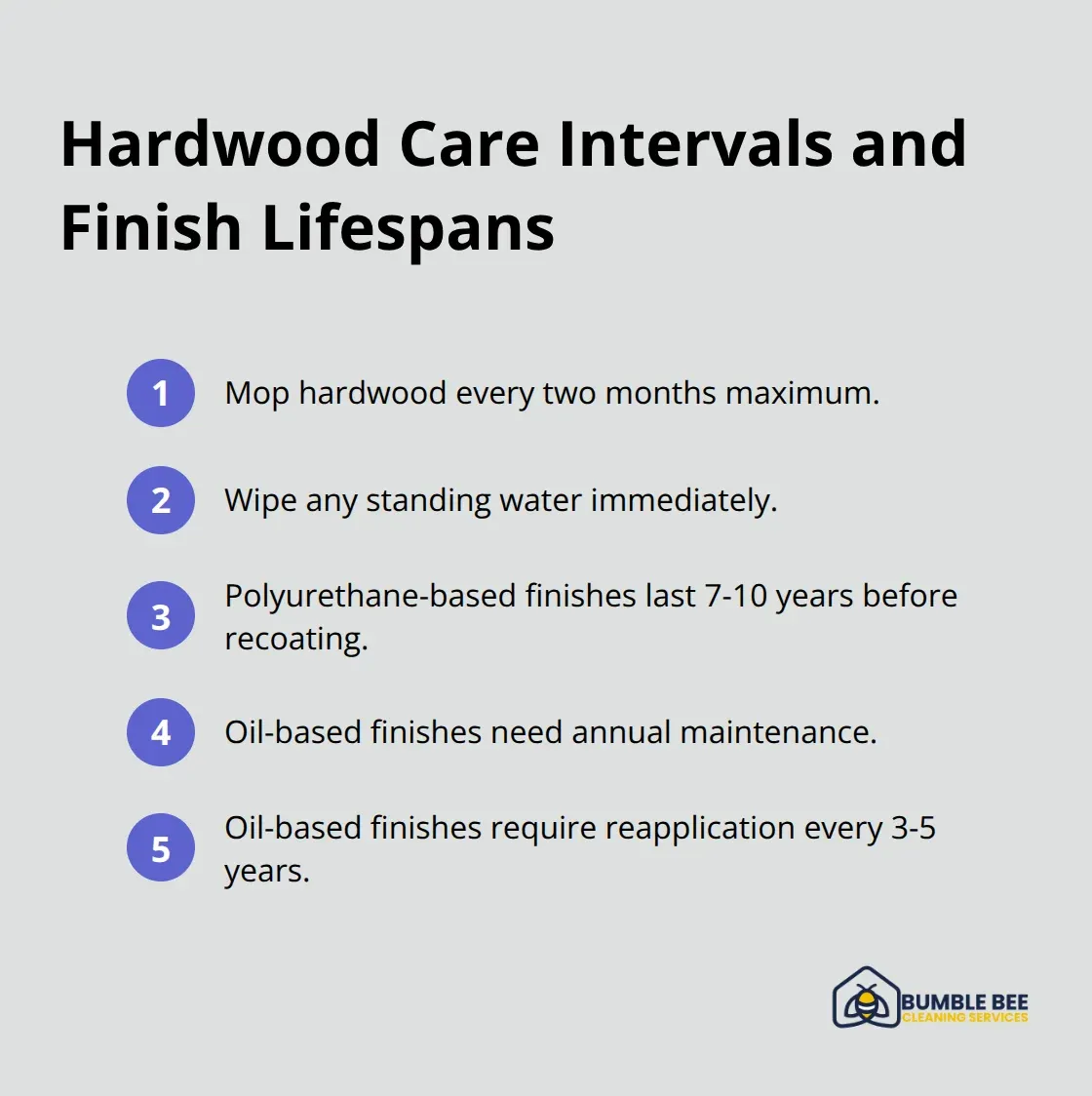
Hardwood floors dominate Seattle homes, but they’re not all created equal. Solid hardwood requires more aggressive protection than engineered wood because moisture penetrates deeper into the wood structure. As relative humidity in a room rises or falls, your wood floors expand or contract. This is why matte finishes outperform high-gloss on hardwood-they hide dust and water spots that become visible within days on glossy surfaces. Hardwood needs mopping every two months maximum, and you must wipe any standing water immediately. Many Seattle homeowners ignore this and end up with cupping or warping that costs thousands to repair. The finish type matters enormously: polyurethane-based finishes last 7-10 years before you need recoating, while oil-based finishes require annual maintenance and reapplication every 3-5 years.
Natural Stone Requires pH-Neutral Care
Marble and granite are porous materials that absorb liquids, which is why acidic cleaners destroy them. Vinegar, lemon juice, and commercial tile cleaners with pH below 7 etch marble surfaces permanently. Only pH-neutral cleaners work, and even then, marble needs sealing every 1-2 years depending on foot traffic. Granite is more forgiving but still requires the same sealing schedule. Stone floors need daily dust removal to prevent dirt from scratching the surface during mopping. Professional deep cleaning for stone should happen quarterly, not monthly, because over-cleaning accelerates seal breakdown. The IICRC recommends stone-specific protocols that most DIY approaches miss entirely.
Engineered Wood and Specialty Surfaces Need Precision
Engineered hardwood has a veneer over plywood, which means water damage affects the core faster than solid wood. Vinyl plank flooring with 20-22 mil wear layers dominates Seattle basements and kitchens because it’s waterproof, but the plank seams trap moisture if you mop excessively. Laminate floors are the most fragile-water seeping between planks causes permanent swelling within hours. These surfaces need mopping every couple of months, not weekly. Luxury vinyl planks require daily sweeping and mopping only when visible dirt appears, using minimal water and microfiber mops that don’t oversaturate. The texture matters too: embossed surfaces hide dirt better but trap debris in the grooves, requiring more frequent vacuuming. Manufacturer warranties explicitly void coverage for water damage and improper cleaning methods, so ignoring care instructions costs you protection and potential replacement coverage.
Now that you understand what makes each flooring type unique, the next step involves learning which deep cleaning methods actually work without causing damage.
Deep Cleaning Methods for Luxury Flooring
Professional Equipment Protects Your Investment
Professional deep cleaning for luxury flooring requires equipment and products specifically matched to each surface type. Microfiber mops trap dirt without oversaturating, combined with pH-neutral cleaners formulated for hardwood, stone, or engineered surfaces. Standard household mops push water deep into seams and grain, causing the swelling and cupping you’re trying to prevent. Rotary scrubbers work on marble and granite but only at low speeds under 300 RPM to avoid scratching the seal. For hardwood, soft-bristle brushes attached to low-speed equipment remove embedded dust without gouging the finish.
Stone Floors Need Extraction, Not Saturation
The IICRC recommends that stone floors receive deep cleaning every 3-4 months using extraction equipment that pulls moisture from seams rather than leaving residue behind. Hardwood benefits from deep cleaning annually or every 18 months depending on foot traffic, while vinyl plank and laminate floors rarely need professional deep cleaning if you maintain them properly between services. Timing matters enormously: deep clean hardwood in spring or fall when humidity is moderate, not during Seattle’s wet winters when moisture content in wood is already elevated.
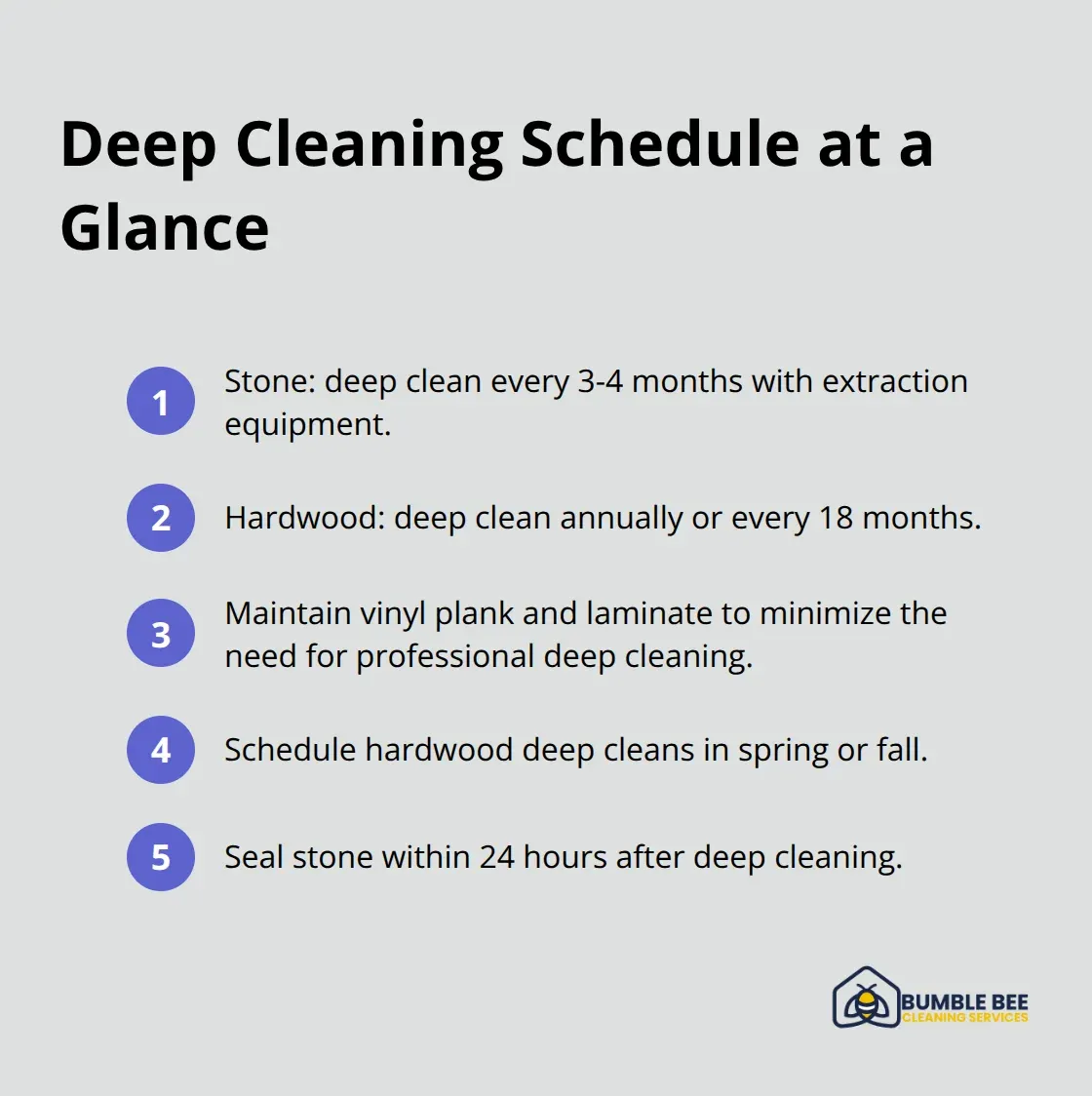
Stone floors need sealing immediately after deep cleaning, within 24 hours, before foot traffic returns and dirt settles into freshly cleaned pores.
Eco-Friendly Products Outperform Harsh Chemicals
Eco-friendly products outperform harsh chemicals on luxury flooring because they clean without breaking down protective finishes. Castile soap diluted to proper ratios works excellently on hardwood and engineered wood without leaving residue that attracts dirt. For stone, plant-based cleaners with pH-neutral formulas clean effectively without etching marble or granite. Many Seattle homeowners purchase commercial tile cleaners with citric acid or bleach, which permanently damage stone within one application. Avoid any product listing vinegar, lemon, or ammonia as primary ingredients.
Quality Cleaning Products Prevent Costly Repairs
Quality matters more than quantity: one application of proper cleaner removes more dirt than three applications of cheap products that leave buildup. Check manufacturer specifications on your flooring warranty before selecting any cleaning product, since many warranties void coverage if you use products outside their approved list. Vinyl plank manufacturers like COREtec and Mohawk specify only water and pH-neutral cleaners, rejecting anything stronger. Laminate flooring carries similar restrictions. The investment in professional-grade eco-friendly products costs more upfront but prevents the expensive refinishing or replacement that comes from using the wrong solutions. These mistakes compound over time, transforming what should be routine maintenance into major restoration projects that demand specialized contractors and significant expense.
Common Mistakes That Damage Luxury Floors
Water Damage Destroys Flooring Faster Than Wear
Water damage and improper cleaning products destroy luxury flooring faster than any other mistake we see in Seattle homes. Excessive water is the primary culprit: hardwood swells and cups within days of oversaturation, engineered wood delaminates as moisture penetrates the plywood core, and laminate floors swell permanently after water seeps between planks. Most homeowners mop hardwood weekly with a standard mop that leaves standing water in grain and seams, directly violating manufacturer care instructions that state mopping every two months maximum.
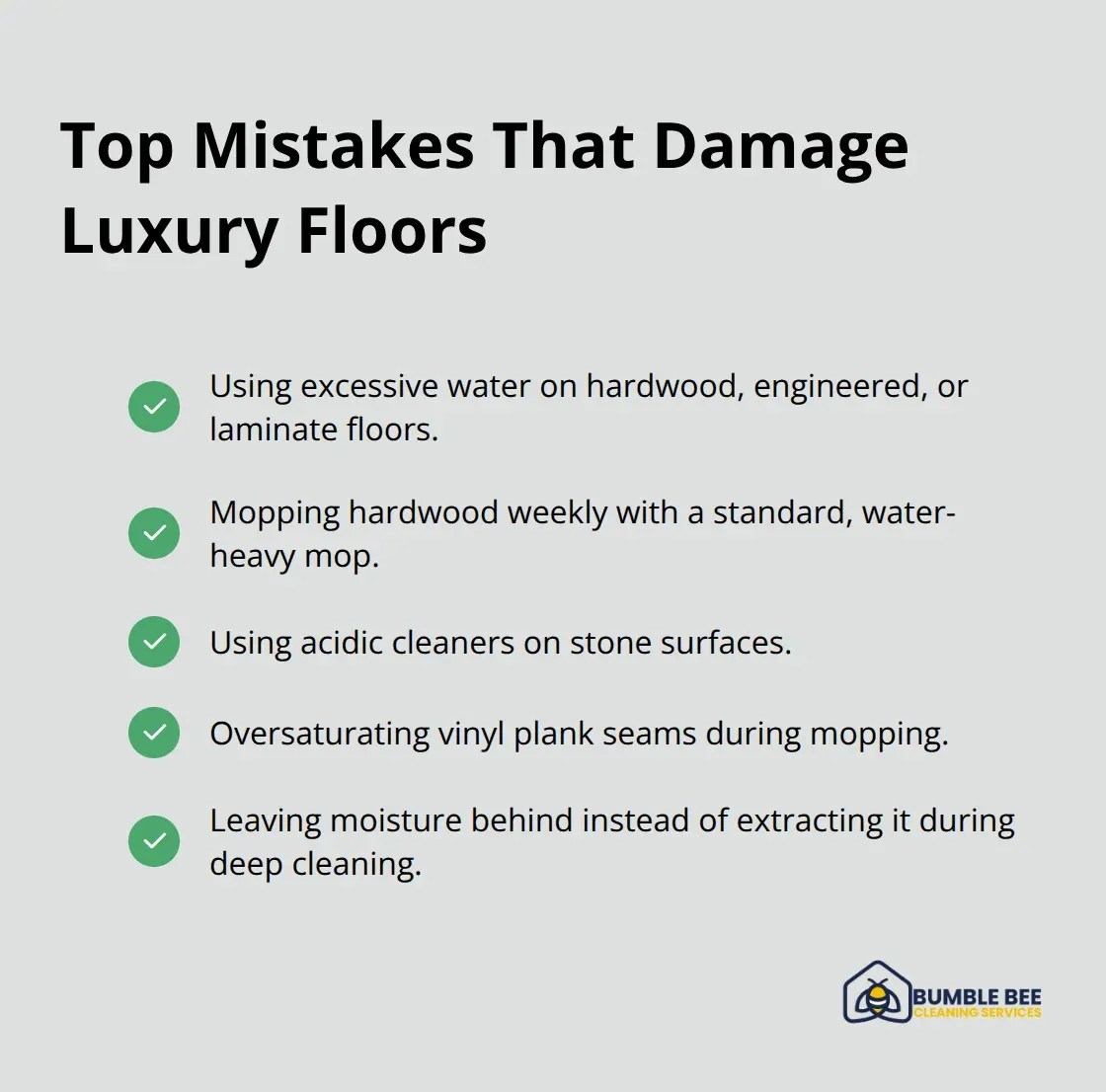
Stone floors absorb acidic cleaners that etch the surface within minutes, creating dull patches that cost thousands to refinish professionally. Vinyl plank flooring with 20-22 mil wear layers is waterproof, but homeowners often mop vinyl as if it were tile, oversaturating seams where moisture accumulates and causes mold growth beneath the planks.
The IICRC standards require moisture extraction, not saturation, for all luxury flooring types, yet most DIY approaches leave excess water behind. This single mistake compounds over time, transforming routine maintenance into major restoration projects that demand specialized contractors and significant expense.
Wrong Cleaning Solutions Break Down Protective Finishes
Vinegar and lemon-based cleaners permanently etch marble and granite within one application, while bleach and ammonia damage hardwood finishes and discolor stone. Many Seattle homeowners purchase commercial tile cleaners assuming they work on all hard surfaces, but these products contain citric acid and surfactants that strip sealant from stone floors and leave buildup on hardwood that attracts more dirt. Manufacturer warranties explicitly void coverage for water damage and improper cleaning methods, which means one mistake eliminates your protection and replacement coverage.
Quality matters more than quantity: one application of proper cleaner removes more dirt than three applications of cheap products that leave residue. Check your flooring warranty before selecting any cleaner, and stick exclusively to products the manufacturer approves (most vinyl plank manufacturers like COREtec and Mohawk specify only water and pH-neutral cleaners).
Neglecting Maintenance Between Deep Cleans Accelerates Damage
Neglecting regular maintenance between deep cleans accelerates damage because dirt accumulates in grain and seams, forcing you to use excessive water and stronger chemicals to remove buildup that weekly sweeping would have prevented. Most luxury flooring fails not from normal wear but from improper care that compounds over months. Ignoring manufacturer specifications costs you thousands in restoration because each flooring type has different moisture tolerance, pH requirements, and approved cleaning products that manufacturers list in warranty documents.
Hardwood needs mopping every two months maximum, and you must wipe any standing water immediately. Stone floors need daily dust removal to prevent dirt from scratching the surface during mopping. Vinyl plank and laminate floors require daily sweeping and mopping only when visible dirt appears, using minimal water and microfiber mops that don’t oversaturate. These maintenance schedules prevent the costly repairs that result from water damage and chemical breakdown of protective finishes.
Final Thoughts
Professional deep cleaning protects luxury flooring investments that cost thousands of dollars to install and repair. One mistake with the wrong cleaner or excessive water triggers damage that spreads for months before you notice cupping, etching, or delamination on hardwood, stone, or specialty surfaces. We at Bumble Bee Cleaning Services understand that these materials demand expertise most homeowners lack, and the cost to restore your floors after damage exceeds what professional deep cleaning would cost annually.
Your maintenance routine between professional services determines whether floors stay protected or deteriorate. Sweep hardwood and stone daily to prevent dirt from scratching during mopping, mop hardwood every two months maximum using only pH-neutral cleaners and microfiber mops, and check your warranty documentation for approved cleaning products since unapproved solutions void manufacturer coverage. Vinyl plank and laminate require only daily sweeping and occasional mopping with minimal water when visible dirt appears, while stone floors need quarterly professional cleaning to maintain seals.
Contact Bumble Bee Cleaning Services to schedule professional deep cleaning and maintain your floors for decades. Our team uses eco-friendly products matched to your specific flooring type, protecting both your investment and your home environment.
For more information about our cleaning services in Seattle and Atlanta, or to request a cleaning quote, call or text us at 425-786-1360 or email us at info@qbclean.com
