
Construction waste disposal in Seattle isn’t just an environmental issue-it’s a legal requirement with real consequences. Improper handling of construction debris contributes to landfill overflow, carbon emissions, and water contamination across our region.
We at Bumble Bee Cleaning Services know that contractors and property managers face complex regulations around waste management. This post covers Seattle’s compliance requirements, practical on-site strategies, and the financial benefits of doing disposal right.
What Actually Happens to Seattle’s Construction Debris
Construction waste in Seattle doesn’t vanish after it leaves a job site. According to Seattle Public Utilities, food waste alone makes up 19% of all landfilled waste at 50,396 tons annually, and construction and demolition debris represents a massive portion of what gets buried. The European Union reports that construction and demolition waste constitutes 25–30% of total waste across developed regions, and Seattle follows similar patterns. When contractors dispose of debris improperly or send it to the wrong facilities, that material takes decades to break down. Concrete, wood, metals, and asphalt all contribute to landfill overflow that reduces available space for other waste streams. SPU’s 2024 data shows Seattle’s daily garbage disposal sits at 2.68 pounds per person, and the city remains off track to meet the 2030 target of 2.13 pounds per day. Construction sites that fail to separate materials for recycling accelerate this problem directly. The financial cost matters too: disposing of large amounts of heavy construction waste costs contractors significantly, and recycling with material recovery can lower disposal costs substantially. Licensed C&D recycling facilities exist specifically to handle this material, yet many contractors still route debris to transfer stations instead of specialized processors, wasting both money and environmental capacity.
Transportation and Carbon Footprint
Every trip a waste hauler makes to the wrong facility burns fuel and generates unnecessary emissions. Improper waste transportation requires multiple trips instead of one consolidated haul to an SPU-qualified C&D recycling facility. Cities account for around 75% of global greenhouse gas emissions, so construction practices in Seattle directly influence regional carbon output. When hazardous materials like asbestos or lead-contaminated debris mix into general waste streams, they require special handling that multiplies transportation complexity and emissions. SPU requires explicit construction and demolition waste management plans as part of project compliance, yet many contractors skip this step entirely. The result is inefficient routing, contaminated loads, and wasted fuel. Deconstruction should replace demolition to maximize salvage of materials and reduce landfill waste, but few Seattle projects implement this approach. Contractors who hire licensed third-party haulers with experience in construction waste ensure materials reach correct recycling facilities on the first attempt, eliminating redundant trips.
Contamination and Water Quality Risks
Hazardous materials left unsecured at construction sites leach into soil and groundwater. Lead dust, asbestos fibers, and chemical residues from building materials don’t stay contained without proper containment and HEPA filtration during demolition and construction. SPU guidance explicitly requires licensed abatement and proper disposal pathways for asbestos-containing materials, yet contamination incidents still occur when contractors skip this step. Water contamination from improper construction waste handling affects Seattle’s stormwater systems and ultimately Puget Sound. Contractors who implement on-site dust control and water usage during demolition protect air quality and prevent nuisance while safeguarding groundwater. A material-sorting plan on site that separates metals, concrete, wood, and asphalt for recycling rather than disposal prevents hazardous cross-contamination. When construction debris reaches the wrong transfer stations or processors, mixed loads compromise the entire batch of recyclable material, forcing more waste to landfill. Proper planning and use of SPU-qualified facilities eliminate this risk entirely. These compliance requirements form the backbone of Seattle’s waste management system, and understanding what regulators actually expect from contractors shapes how projects must operate.
Seattle’s Construction Waste Rules and What They Mean for Your Project
Seattle’s construction waste regulations exist because improperly disposed debris directly harms the city’s sustainability goals. Seattle Public Utilities requires explicit construction and demolition waste management plans as part of project compliance, and contractors who skip this step face serious consequences. The city’s Administrative Rule SPU-DR-01-07 defines which materials qualify for beneficial use-meaning diversion from landfills through substitution in manufacturing, like untreated wood waste used as fuel. This isn’t theoretical guidance; it’s enforceable policy that shapes how every project on the ground must operate.
Qualified Facilities and Licensed Haulers
Contractors must use only SPU-qualified C&D recycling facilities to ensure proper material handling and maximum diversion from landfills. Hiring licensed third-party haulers with construction waste experience is non-negotiable if you want materials sorted and routed correctly on the first attempt. Seattle’s North and South Transfer Stations enforce specific rate structures and accept only properly tarped loads; uncovered loads trigger fines, and understanding these fee guidelines minimizes unexpected costs. SPU’s Construction Resources require salvage and recycling documentation as part of project compliance, meaning contractors need material-sorting plans on site that separate metals, concrete, wood, and asphalt before anything leaves the job.
Deconstruction Over Demolition
Deconstruction replaces demolition whenever feasible to maximize salvage of materials and reduce landfill waste, yet many contractors default to demolition because they underestimate the cost difference. The reality is that deconstruction prioritization reduces total disposal volume significantly, often offsetting labor costs through material recovery value. This approach aligns with SPU’s waste diversion targets and strengthens your project’s compliance standing from the start.
Penalties and Documentation Standards
Violations carry real financial penalties that contractors cannot ignore. Seattle enforces fines for uncovered loads at transfer stations, non-compliance with waste management plans, and use of unqualified disposal facilities. Hazardous materials like asbestos-containing debris and lead-contaminated waste require licensed abatement and proper disposal pathways; failure to follow SPU guidance on these materials creates liability that extends beyond fines into civil and criminal territory.
Third-party verification and documentation standards mean contractors must maintain records of waste diversion metrics and follow SPU guidance for reporting and permitting purposes throughout project duration. Keep receipts from SPU-qualified facilities, track tonnages diverted by material type, and document any hazardous waste coordination with Household Hazardous Waste programs for items outside standard C&D streams. This documentation protects contractors if disputes arise and proves compliance to city inspectors.
Sorting Practices and Material Value
Contamination in the recycling stream remains a major cost driver; targeted education and improved sorting practices significantly improve material value and reduce processing costs. Seattle-specific practices like bin-tagging feedback and online recycling tools offer practical templates for improving construction waste disposal programs. Contractors who treat waste management as a core project requirement rather than an afterthought consistently meet compliance standards, avoid penalties, and reduce disposal costs substantially. Understanding these rules transforms waste management from a compliance burden into a cost-control strategy that protects your bottom line while advancing Seattle’s sustainability targets.
How to Build an On-Site Waste Management System That Works
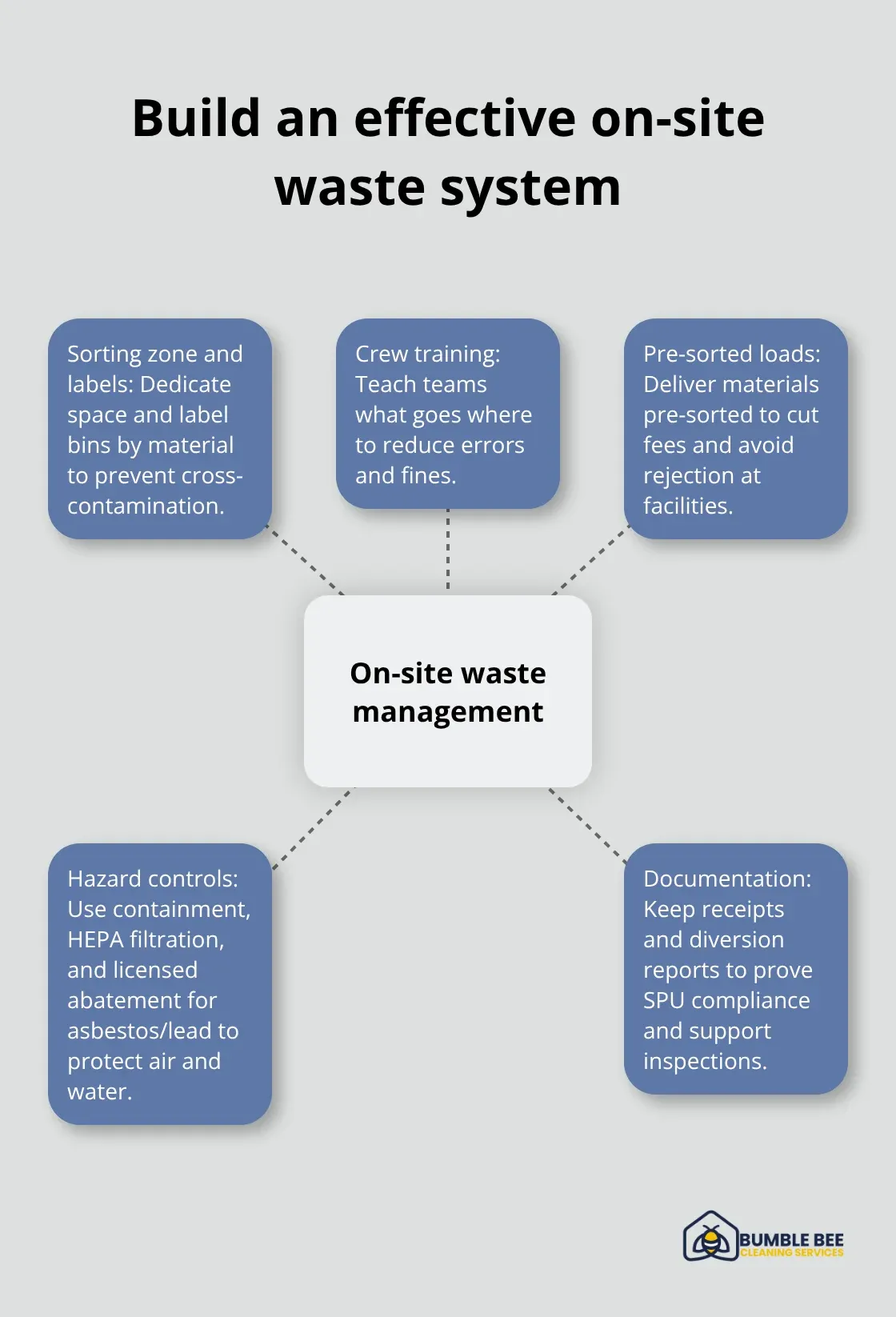
Construction sites produce multiple material streams at once, and separating them on-site is the only way to maximize recycling value and prevent contamination in recycling streams and prevent contamination that ruins your entire load. Metal, concrete, wood, and asbestos-containing materials require different processors, so mixing them at the job site forces everything into the landfill instead of recovering individual material values. Start with a comprehensive waste management plan before work begins-this isn’t optional guidance, it’s an SPU compliance requirement that protects you from fines and documentation failures. Assign a specific area on-site for sorting, label containers clearly for each material type, and train crew members on what belongs where. The National Academies of Sciences, Engineering, and Medicine found that contamination in recycling streams remains a major cost driver, so targeted education and improved sorting practices significantly improve material value and reduce processing costs.
Separate Materials Correctly to Protect Your Costs
Concrete and asbestos-containing materials demand special attention since mixing them contaminates the entire batch and forces reprocessing. Wood pallets, dimensional lumber, and untreated scrap wood route to different facilities than treated or painted wood, yet most contractors throw everything into one pile. Licensed third-party haulers with construction waste experience understand these distinctions and can audit your on-site sorting before loads leave the job, preventing expensive reprocessing fees or rejection at the facility. SPU-qualified C&D recycling facilities exist specifically to handle sorted materials correctly, but they charge premium fees for contaminated loads or refuse them entirely. Your disposal costs drop significantly when materials arrive pre-sorted and ready for processing.
Track and Document Everything
Track what gets diverted by material type and maintain receipts from SPU-qualified facilities as proof of compliance-this documentation protects you if city inspectors question your waste management practices and proves you met the city’s diversion targets. Request a waste diversion report from your hauler after project completion showing tonnages by material type and the specific facilities where each stream went. This documentation proves compliance to SPU and supports your project’s sustainability claims without relying on guesses or estimates.
Partner With Experienced Licensed Haulers
The relationship between your on-site team and your licensed hauler determines whether waste management succeeds or fails on your project. Third-party haulers should visit the site during planning phases to assess material volumes, identify potential hazardous items like asbestos or lead-contaminated debris, and establish pickup schedules that prevent on-site congestion. Many contractors treat haulers as interchangeable vendors, but experience matters enormously-haulers familiar with Seattle’s specific regulations know which transfer stations accept which materials, understand SPU’s uncovered-load penalties, and route debris directly to the right facilities on the first trip instead of wasting fuel and time on multiple stops.
Request references from haulers and verify they hold current licenses with the state Department of Transportation. Ask about their experience with deconstruction projects specifically, since this approach requires different handling than demolition waste. Establish clear communication protocols so crews know exactly what goes into each hauler’s truck and when pickups occur. Some contractors coordinate hauler schedules with their own project timelines poorly, leaving debris piled on-site longer than necessary and creating safety hazards. A well-managed hauler partnership means materials leave the site within days of generation, reducing contamination risk and freeing up job space.
Prevent Hazardous Material Contamination
Hazardous materials left unsecured at construction sites leach into soil and groundwater. Lead dust, asbestos fibers, and chemical residues from building materials don’t stay contained without proper containment and HEPA filtration during demolition and construction. SPU guidance for asbestos-containing materials requires licensed abatement and proper disposal pathways, yet contamination incidents still occur when contractors skip this step. Water contamination from improper construction waste handling affects Seattle’s stormwater systems and ultimately Puget Sound. Contractors who implement on-site dust control and water usage during demolition protect air quality and prevent nuisance while safeguarding groundwater. A material-sorting plan on site that separates materials for recycling rather than disposal prevents hazardous cross-contamination. When construction debris reaches the wrong transfer stations or processors, mixed loads compromise the entire batch of recyclable material, forcing more waste to landfill. Proper planning and use of SPU-qualified facilities eliminate this risk entirely.
Final Thoughts
Proper waste disposal in Seattle delivers three concrete benefits that matter to contractors and property managers: you avoid fines and compliance violations that drain project budgets unexpectedly, you reduce disposal costs through material recovery and efficient routing to SPU-qualified facilities instead of transfer stations, and you contribute directly to Seattle’s sustainability targets by diverting debris from landfills and reducing transportation emissions. Seattle’s construction waste regulations exist because the city takes its 2030 waste reduction goals seriously. When contractors implement on-site sorting, partner with licensed haulers, and maintain documentation, they transform waste management from a compliance headache into a cost-control strategy.
The National Academies of Sciences, Engineering, and Medicine confirmed that targeted education and improved sorting practices significantly improve material value and reduce processing costs across construction waste streams. Deconstruction over demolition, material separation at the source, and use of SPU-qualified facilities aren’t optional extras-they form the foundation of projects that meet regulatory standards while protecting your bottom line. Seattle’s path toward sustainable construction practices depends on contractors treating waste disposal as a core project requirement rather than an afterthought.
We at Bumble Bee Cleaning Services understand that construction sites generate significant debris and contamination that extends beyond waste management. Our post-construction cleaning services remove dust, debris, and hazardous residues from buildings after demolition or renovation work completes, and with 11 years of experience plus certifications from ARCSI and IICRC, our team handles the cleanup phase that follows proper waste disposal to ensure your project meets both environmental and occupancy standards.
For more information about our cleaning services in Seattle and Atlanta, or to request a cleaning quote, call or text us at 425-786-1360 or email us at info@qbclean.com
