
Most Seattle business owners view cleaning as an expense. We at Bumble Bee Cleaning Services see it differently-preventive facility maintenance is an investment that cuts costs significantly.
Neglected buildings deteriorate fast. Regular cleaning prevents expensive repairs, reduces employee absences, and protects your bottom line.
What Happens When You Skip Regular Cleaning
Dirt Accelerates Deterioration
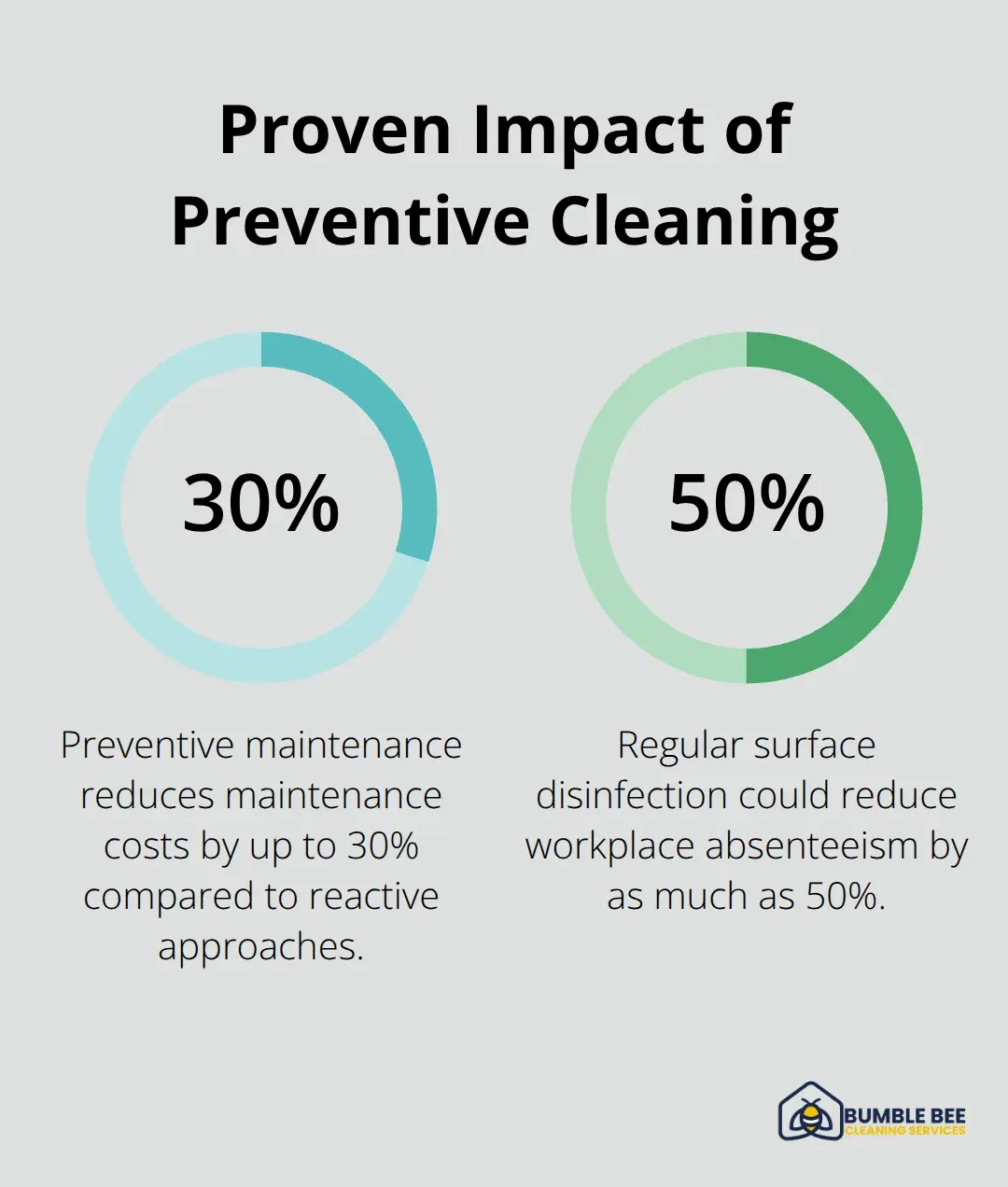
Dirt and grime actively degrade building materials and corrode surfaces. When you skip preventive cleaning, you accelerate deterioration and invite unexpected costs. Preventive maintenance reduces maintenance costs by up to 30% compared to reactive approaches. For a Seattle business spending $10,000 annually on preventive cleaning, that translates to roughly $50,000 in avoided emergency repairs and lost production time-a 400% return on investment.
Flooring takes the heaviest hit. Dust and debris act like sandpaper, scratching protective finishes on hardwood and tile. Once the seal breaks, moisture seeps in, causing warping, staining, and structural damage that demands expensive replacement. High-traffic areas deteriorate fastest. A hallway walked on 50 times daily without regular cleaning shows visible wear within months, while a maintained hallway stays protected for years.
Carpeted Spaces Deteriorate Rapidly
Carpeted areas face similar pressure from neglect. Embedded dirt breaks down fibers, and spills left unattended become permanent stains or mold growth that requires professional remediation costing thousands. Regular cleaning protects your carpet investment and extends its lifespan significantly.
Illness Spreads Through Contaminated Surfaces
Desk surfaces harbor far more bacteria than a toilet seat. Shared keyboards, door handles, and conference tables become transmission highways when not cleaned regularly. One sick employee contaminates surfaces that infect coworkers within hours. The cascade effect is brutal: one person’s illness spreads through your team, creating a wave of absences that cripples productivity.
Indoor air quality directly influences cognitive performance, productivity, and long-term health. Seattle’s paid sick leave law requires employers to provide paid time off, but preventing absences proves more cost-effective than managing them. A cleaner workspace reduces sick days significantly, keeping your team present and productive. Regular cleaning of high-touch surfaces stops pathogens from spreading, protecting both your workforce and your revenue stream.
These mounting costs-from facility damage to lost work hours-compound quickly. The question shifts from whether you can afford preventive cleaning to whether your business can afford to skip it. Understanding which cleaning strategies deliver the strongest ROI helps you make the right investment decision.
What Neglecting Cleaning Actually Costs Your Business
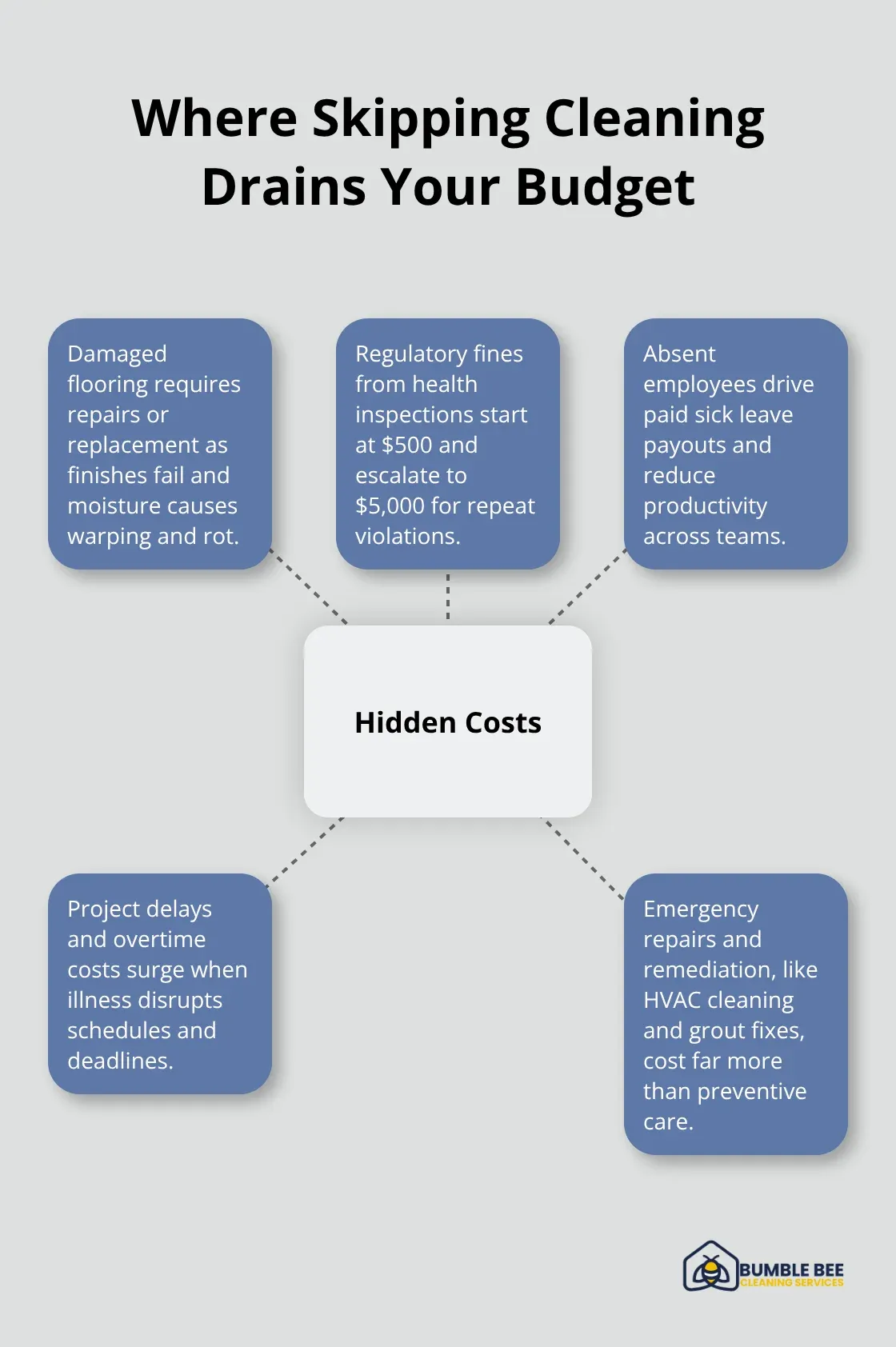
Skipping regular cleaning does not save money-it hemorrhages it. The costs hide in plain sight: damaged flooring, regulatory fines, and absent employees. Seattle business owners who treat cleaning as optional discover the true expense only after their building starts failing and their team falls sick.
The Math Behind Deterioration
The numbers are stark. According to the National Institute of Standards and Technology, reactive maintenance costs 2 to 5 times more than preventive strategies. That $10,000 annual cleaning investment prevents roughly $50,000 in cascading damage and productivity loss. Ignore cleaning for six months and your flooring loses its protective seal. Ignore it for a year and mold colonizes your HVAC system. Ignore it for two years and your carpet becomes a biohazard requiring professional remediation that costs thousands.
Surfaces degrade exponentially once deterioration starts. A sealed hardwood floor lasts 15 years with preventive care but only 5 years without it. Tile grout absorbs moisture and bacteria when unsealed, leading to structural rot behind walls that contractors charge $15,000 to fix. High-traffic hallways, entryways, and restrooms deteriorate fastest because foot traffic and moisture compound daily. One month of neglect in a busy restroom creates mold growth that spreads into ceiling cavities.
Health Code Violations and Fines
Health code violations add another financial layer that most business owners underestimate. Seattle’s health department conducts facility inspections for commercial kitchens, medical offices, and food-service establishments, with violations triggering fines starting at $500 and escalating to $5,000 for repeat infractions. Contaminated surfaces from poor cleaning practices create documented violations that appear in public records and damage your business reputation.
The Cascade of Employee Illness
Employee illness spirals the damage further. A single contaminated keyboard infects five employees within a week. Those five employees miss an average of 3 days each, costing your business roughly $2,400 in lost productivity for a small team. Desk surfaces harbor more bacteria than toilet seats, yet most offices clean them weekly at best. Shared equipment like printers, door handles, and conference tables become transmission vectors when cleaning schedules slip.
The cascade effect compounds: one sick employee infects coworkers, creating a wave of absences that disrupts projects, delays deadlines, and forces overtime costs to compensate. Your payroll absorbs the hit through paid sick leave obligations under Seattle’s paid sick leave law, which requires accrual of 1 hour per 40 hours worked. A team of 10 people losing 30 combined sick days annually costs approximately $12,000 in paid time off alone, not counting the lost output and project delays.
Prevention Stops the Bleeding
Regular surface disinfection could reduce workplace absenteeism by as much as 50%. Prevention eliminates the compounding costs that multiply across facility damage, regulatory risk, and workforce absence. Understanding which cleaning strategies deliver the strongest ROI helps you make the right investment decision and protect your bottom line.
Which Cleaning Strategies Deliver the Strongest ROI
Target High-Traffic Areas First
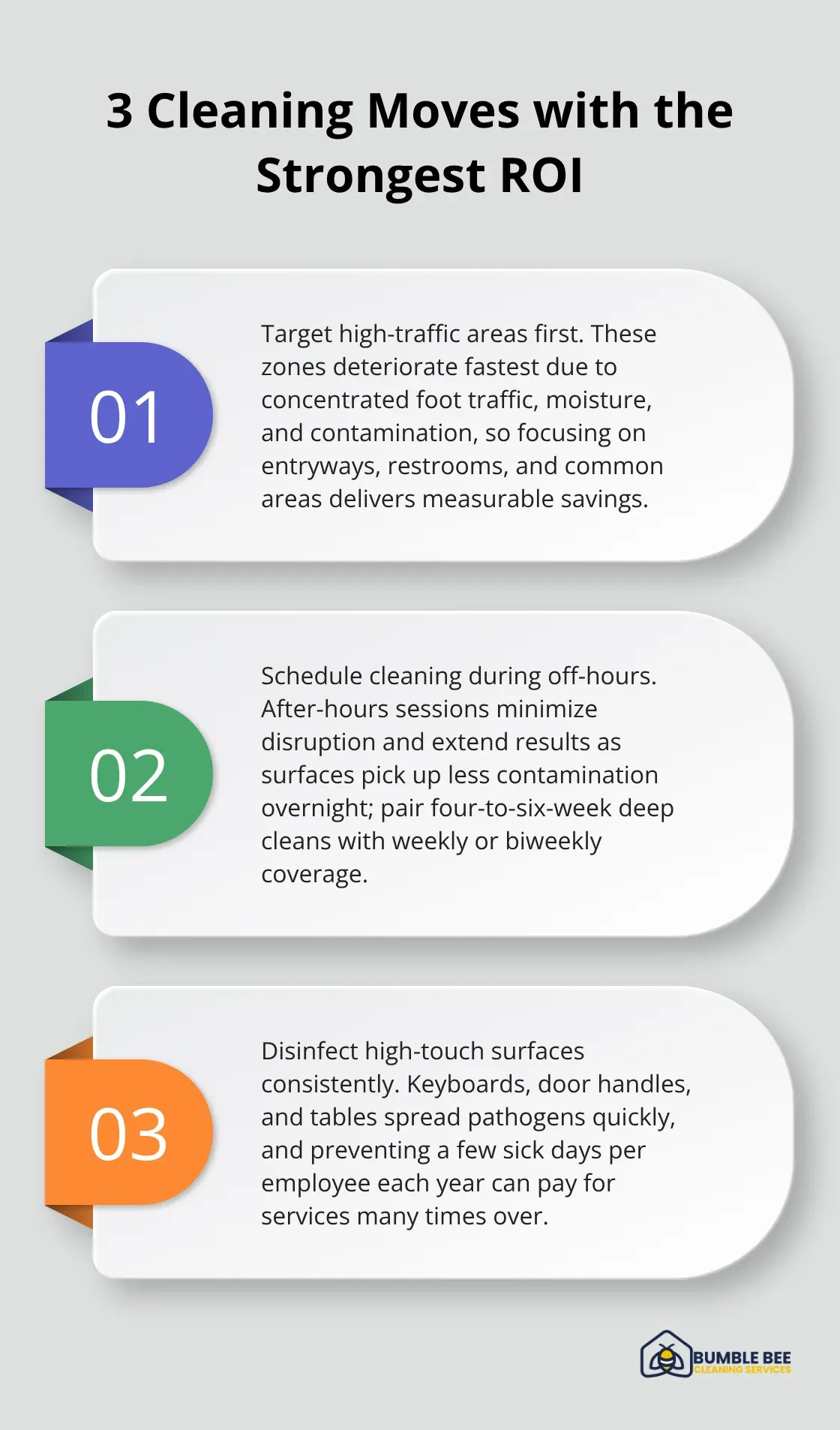
Deep cleaning sessions, floor maintenance, and targeted janitorial coverage stop deterioration before it becomes catastrophic. The key is matching your cleaning frequency and intensity to where damage actually happens. High-traffic areas deteriorate fastest because foot traffic, moisture, and contamination concentrate there. A Seattle business spending $5,000 monthly on building-wide cleaning wastes resources if it spreads that budget evenly across the entire facility. Concentrating cleaning intensity on entryways, restrooms, and common areas where people spend the most time delivers measurable cost savings. According to the ISSA Clean Standard, comprehensive facility assessment improves cleaning efficiency and reduces costs by identifying exactly where to allocate resources.
Schedule Cleaning During Off-Hours
Professional janitorial services targeting high-traffic zones prevent the exponential deterioration that forces expensive emergency repairs. After-hours cleaning is preferred by businesses to minimize disruption while protecting your facility when foot traffic is lowest. This timing matters because surfaces accumulate less new contamination overnight, meaning your cleaning investment lasts longer before the next session. Scheduling deep cleaning every four to six weeks combined with weekly or biweekly janitorial coverage of high-traffic surfaces creates a maintenance rhythm that stops compound damage. The math is straightforward: a $2,000 monthly deep cleaning investment prevents roughly $15,000 in annual tile grout remediation, HVAC system cleaning, and carpet replacement costs.
Invest in Floor Protection and Maintenance
Floor maintenance and protection represent the single largest ROI opportunity for most Seattle businesses. Sealed hardwood floors last 15 years with preventive care but only 5 years without it, meaning the difference between a maintained and neglected floor is $8,000 to $12,000 in replacement costs. Protective floor coatings and regular maintenance prevent moisture from penetrating grout lines and wood grain, which is where structural damage begins. A one-time floor sealing investment of $1,500 to $2,500 extends floor life by a decade and prevents the mold growth that spreads into substructure and ceiling cavities. Professional floor maintenance also includes regular stripping and recoating schedules that cost less than emergency replacement.
Disinfect High-Touch Surfaces Consistently
High-touch surface disinfection stops the cascade of employee illness that costs Seattle businesses thousands in paid sick leave and lost productivity. Keyboards, door handles, conference tables, and elevator buttons need daily or twice-daily cleaning because these surfaces transmit pathogens faster than any others in your facility. One contaminated keyboard infects multiple employees within days, triggering the paid sick leave obligations that compound quickly under Seattle’s paid sick leave law. Preventing even three to four sick days per employee annually through rigorous surface disinfection pays for professional janitorial services many times over. These high-impact areas generate measurable financial returns for your business when you prioritize them in your cleaning strategy.
Final Thoughts
The math is clear: preventive facility maintenance saves Seattle businesses substantial money. A $10,000 annual investment prevents roughly $50,000 in cascading damage, health code violations, and lost productivity-a 400% return on investment that speaks louder than any argument about cleaning being an expense. When you factor in avoided emergency repairs, reduced employee sick days, and extended equipment lifespan, preventive cleaning becomes one of the smartest financial decisions your business can make.
Treating cleaning as a business investment rather than a cost fundamentally changes how you approach facility maintenance. Businesses that prioritize high-traffic areas, schedule deep cleaning sessions strategically, and maintain floor protection systems experience measurable financial returns within months. The alternative-reactive cleaning that addresses problems only after damage occurs-costs exponentially more and damages your reputation in the process.
We at Bumble Bee Cleaning Services help Seattle businesses implement preventive cleaning strategies that protect your facility and your bottom line. Contact Bumble Bee Cleaning Services to discuss a customized cleaning plan that fits your facility’s specific needs and budget.
For more information about our cleaning services in Seattle and Atlanta, or to request a cleaning quote, call or text us at 425-786-1360 or email us at info@qbclean.com
