
Seattle offices face a growing problem that most business owners don’t see coming. Standard cleaning routines miss the deep sanitization that prevents illness outbreaks and costly downtime.
We at Bumble Bee Cleaning Services see this gap daily. Commercial disinfection goes far beyond surface wiping, yet many companies still rely on basic cleaning that leaves dangerous pathogens behind.
Why Standard Office Cleaning Misses 90% of Germs
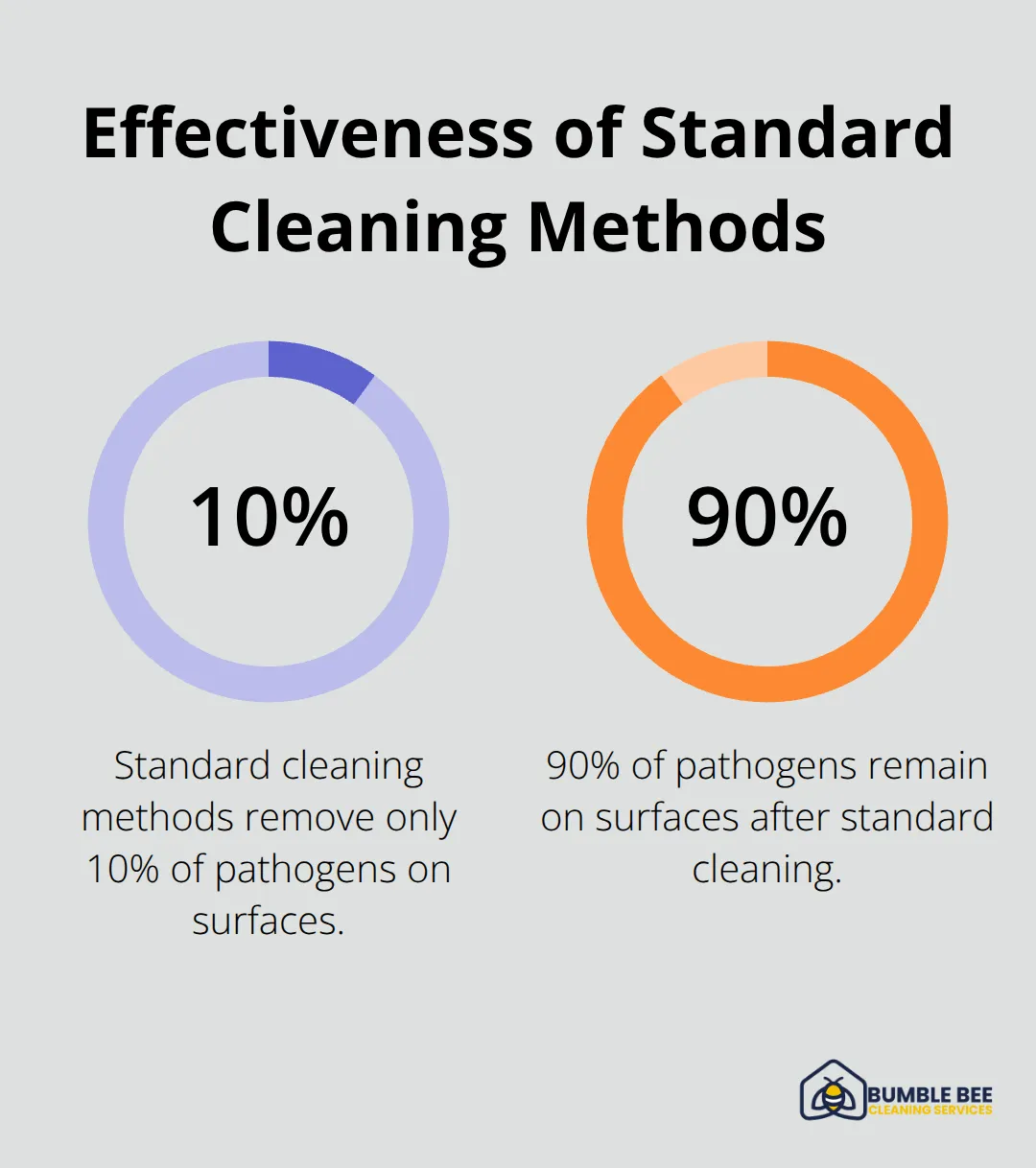
Standard cleaning routines target visible dirt but ignore the microscopic threats that cost Seattle businesses millions annually. The Environmental Protection Agency reports that indoor air often contains pollutants from sources inside buildings, yet most office cleaning protocols focus only on aesthetics. Door handles, elevator buttons, and printer controls harbor up to 25,000 germs per square inch according to microbiologist studies, while traditional cleaning methods remove less than 10% of these pathogens.
Seattle’s Flu Season Creates Perfect Storm Conditions
Seattle’s extended flu season from October through May coincides with reduced ventilation and increased indoor crowding. Offices can reduce sick days through consistent sanitization routines, but most companies still rely on weekly surface wiping that allows pathogens to multiply between cleanings. The average American spends six hours weekly on cleaning tasks according to the American Cleaning Institute, yet office environments receive far less attention per square foot than residential spaces.
High-Touch Areas Become Germ Highways
Restrooms require cleaning at least twice daily to maintain safety standards, but most Seattle offices clean them once per day or less. Touchpoints like elevator buttons and printer controls need daily disinfection, especially during peak illness seasons. Coffee machines, refrigerator handles, and conference room equipment become contamination centers when cleaning crews skip these areas during routine maintenance (often due to time constraints).
Standard Methods Leave Dangerous Gaps
Color-coded cleaning cloths prevent cross-contamination, yet many cleaning services use the same materials across multiple surface types. Microfiber cloths enhance cleaning effectiveness for various surfaces, but without proper disinfectant contact time, harmful germs survive the cleaning process. The CDC emphasizes that cleaning must precede disinfection to remove impurities that hinder germ-killing efficacy, but rushed cleaning schedules often combine these steps incorrectly (creating a false sense of security).
These gaps in standard cleaning create hidden costs that extend far beyond what most Seattle business owners realize.
What Poor Sanitization Really Costs Seattle Offices
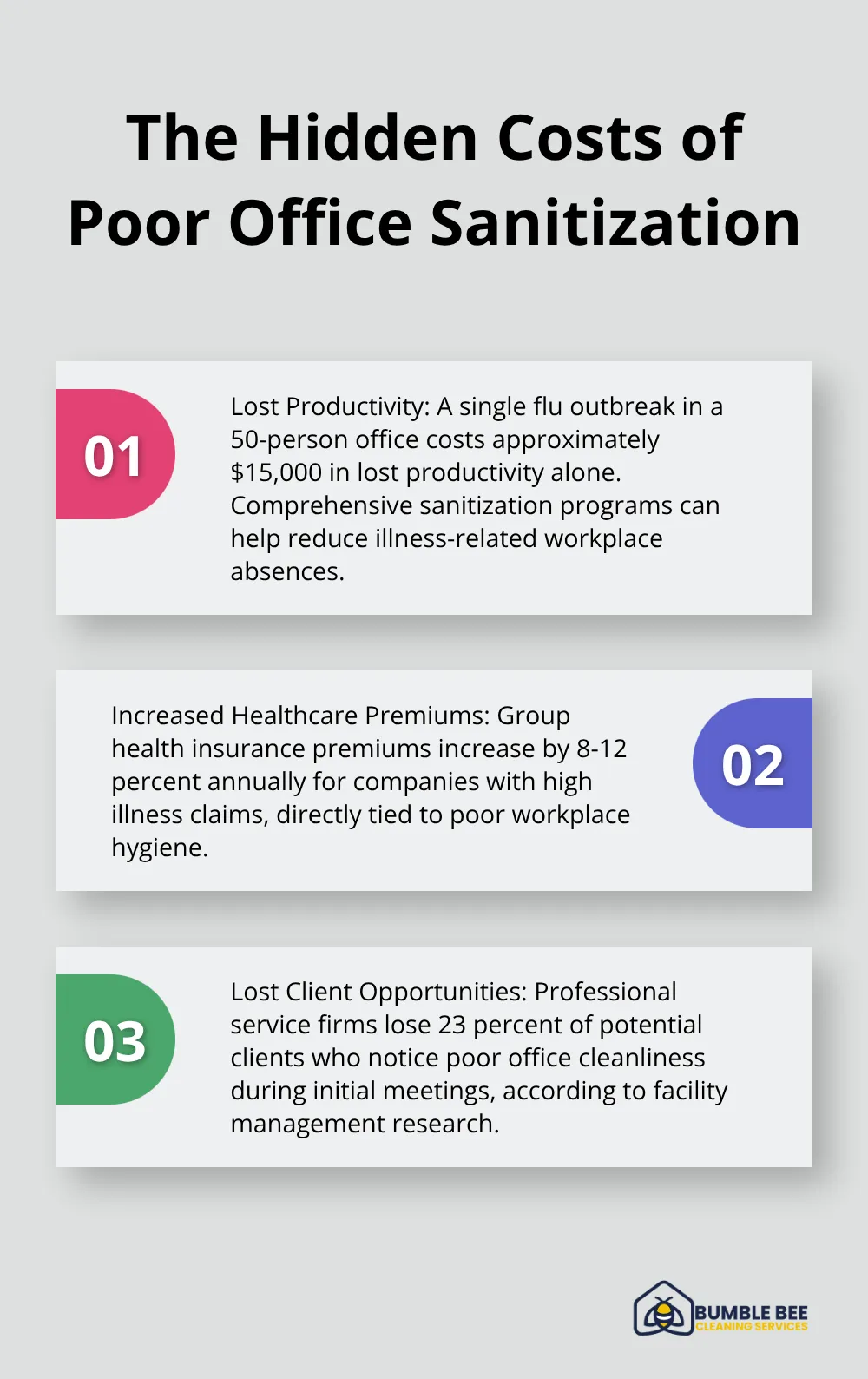
Poor office sanitization creates a cascade of financial damage that most Seattle businesses never calculate properly. The Bureau of Labor Statistics reports workplace absence data, but offices with inadequate sanitization see rates climb to 12-15 days per employee. A single flu outbreak in a 50-person office costs approximately $15,000 in lost productivity alone, while comprehensive sanitization programs can help reduce illness-related workplace absences according to workplace hygiene studies.
Healthcare Premiums Rise From Preventable Illnesses
Group health insurance premiums increase by 8-12 percent annually for companies with high illness claims, directly tied to poor workplace hygiene. The Occupational Safety and Health Administration documents that businesses spend $225 billion yearly on occupational injuries and illnesses, with respiratory infections and gastrointestinal diseases representing the largest preventable categories. Seattle companies face additional pressure as Washington State requires specific sick leave provisions, meaning employers pay twice for each illness day through replacement wages and continued benefits.
Client Relationships Deteriorate From Visible Neglect
Professional service firms lose 23 percent of potential clients who notice poor office cleanliness during initial meetings, according to facility management research. Law firms, accounting practices, and consulting companies in Seattle report that visible grime on conference room surfaces or musty odors from inadequate sanitization directly impact contract negotiations. One contamination incident involving food poisoning at a corporate event can destroy years of relationship building (while consistent sanitization protocols demonstrate professionalism and attention to detail that clients associate with quality service delivery).
Hidden Operational Costs Multiply Daily
Equipment replacement costs soar when keyboards, phones, and shared devices harbor bacteria that accelerate wear and deterioration. Office furniture and carpets require premature replacement when pathogens create permanent stains and odors that standard cleaning cannot remove. Emergency deep cleaning services cost 300-400 percent more than preventive sanitization programs, yet most Seattle offices only address contamination after problems become visible to employees and visitors.
These mounting costs make proper sanitization protocols not just a health necessity, but a smart business investment that pays immediate dividends.
Which Sanitization Methods Actually Work in Seattle Offices
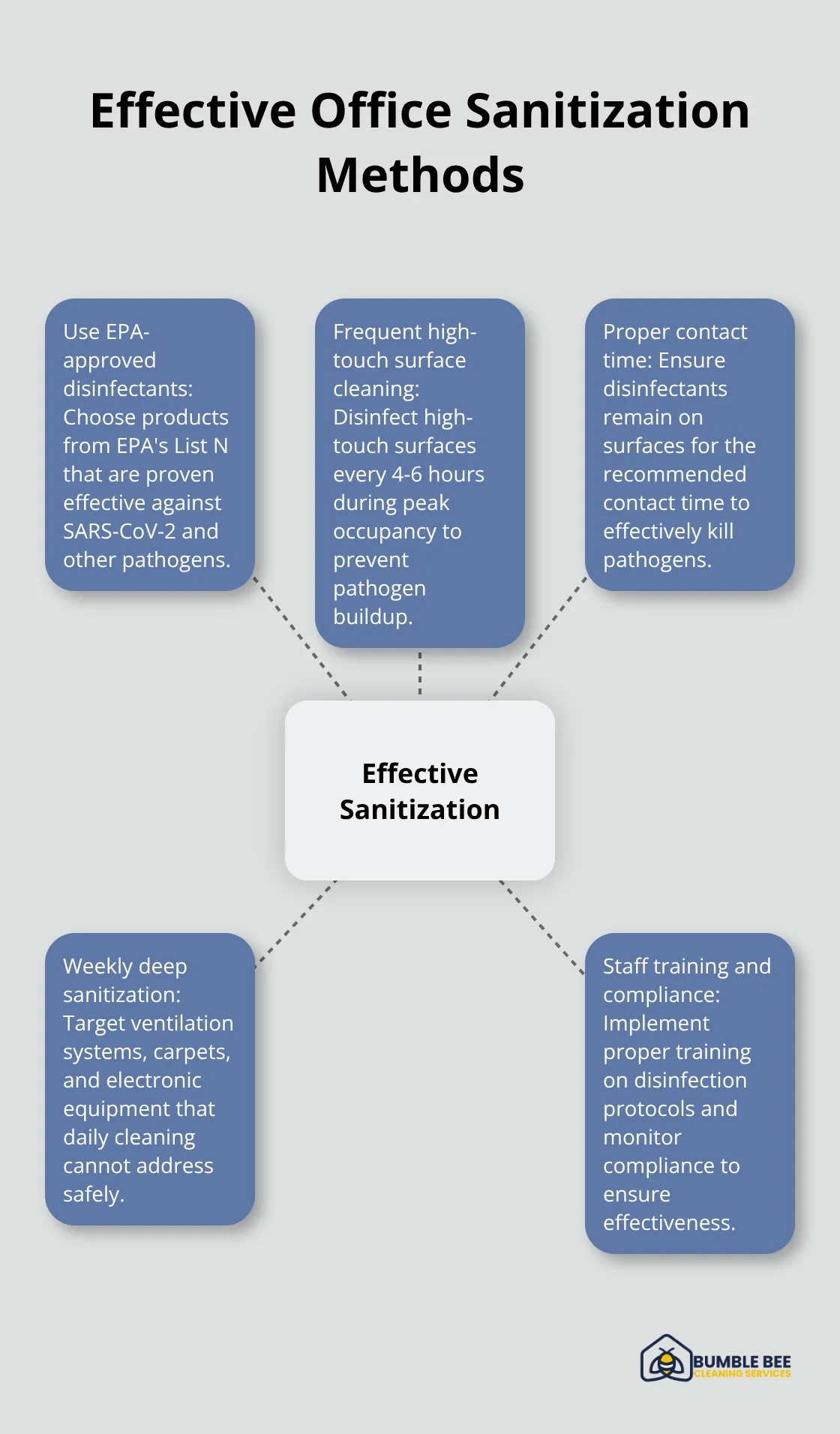
The Environmental Protection Agency maintains a List N of approved disinfectants that kill SARS-CoV-2 and other pathogens, yet most Seattle offices use generic cleaners with insufficient active ingredients. Quaternary ammonium compounds require 30 seconds to 10 minutes of contact time (depending on concentration), but cleaning crews often spray and wipe immediately, which neutralizes effectiveness. Alcohol-based solutions need 70 percent concentration minimum and 60-second contact time, while hypochlorite bleach solutions require 1,000 parts per million for hard surfaces and complete air drying.
EPA-Approved Products Deliver Proven Results
Professional cleaning services choose EPA-registered products because they undergo rigorous testing that generic alternatives skip. These products are expected to kill all strains and variants of the coronavirus SARS-CoV-2 when used according to label directions. Generic cleaners often lack active ingredients at concentrations needed to kill viruses and bacteria effectively.
Daily Surface Protocol Prevents Pathogen Buildup
High-touch surfaces need disinfection every 4-6 hours during peak occupancy, not the once-daily schedule most offices follow. Door handles, elevator buttons, and shared equipment accumulate bacteria, viruses and fungi that contaminate various surfaces within hours of cleaning (making twice-daily treatment the absolute minimum). Restrooms require cleaning at least twice daily according to CDC guidelines, while break rooms and conference spaces need attention after each use during flu season.
Weekly and Monthly Deep Sanitization Targets Hidden Areas
Weekly deep sanitization should target ventilation systems, carpet decontamination, and electronic equipment that daily cleaning cannot address safely. Monthly protocols must include descaling coffee machines, sanitizing refrigerator interiors, and treating upholstered furniture with appropriate antimicrobial solutions. These deeper cleaning cycles address pathogen buildup in areas that daily protocols miss.
Staff Compliance Determines Program Success
Color-coded microfiber cloths prevent cross-contamination between restrooms, food areas, and general office spaces, but staff need specific training on proper cloth rotation and replacement schedules. The Occupational Safety and Health Administration requires personal protective equipment during chemical application, yet many offices skip glove and eye protection requirements that prevent worker exposure. Compliance monitoring through daily checklists and weekly supervisor inspections identifies gaps before they compromise sanitization effectiveness.
Final Thoughts
Seattle offices that implement proper sanitization protocols see immediate returns through reduced sick days, lower healthcare premiums, and improved client confidence. The data shows that comprehensive commercial disinfection programs cost significantly less than the financial damage from illness outbreaks and equipment replacement. Companies that invest in EPA-approved disinfectants and proper contact times typically recover their investment within three months through decreased absenteeism alone.
Professional sanitization prevents the 300-400 percent premium that emergency deep cleaning services charge after contamination incidents occur. Your next step involves evaluation of current protocols against CDC guidelines and identification of gaps in high-touch surface treatment. Staff training on proper disinfectant application and contact times transforms basic maintenance into effective pathogen elimination (while protecting your workforce and bottom line).
We at Bumble Bee Cleaning Services help Seattle businesses implement these protocols with our certified expertise. Our comprehensive commercial cleaning solutions include EPA-approved disinfectants and proper application methods. The choice between reactive emergency response and proactive sanitization determines whether your office becomes a productivity center or a liability that drives away clients and employees.
