
Your office furniture collects more than dust-it harbors bacteria, viruses, and allergens that affect your team’s health and productivity. We at Bumble Bee Cleaning Services know that upholstery sanitizing isn’t optional in Seattle workplaces where moisture and indoor air quality matter.
This guide walks you through proper sanitization methods, common pitfalls, and why professional cleaning beats DIY approaches for commercial spaces.
Why Contaminated Office Furniture Harms Your Workplace
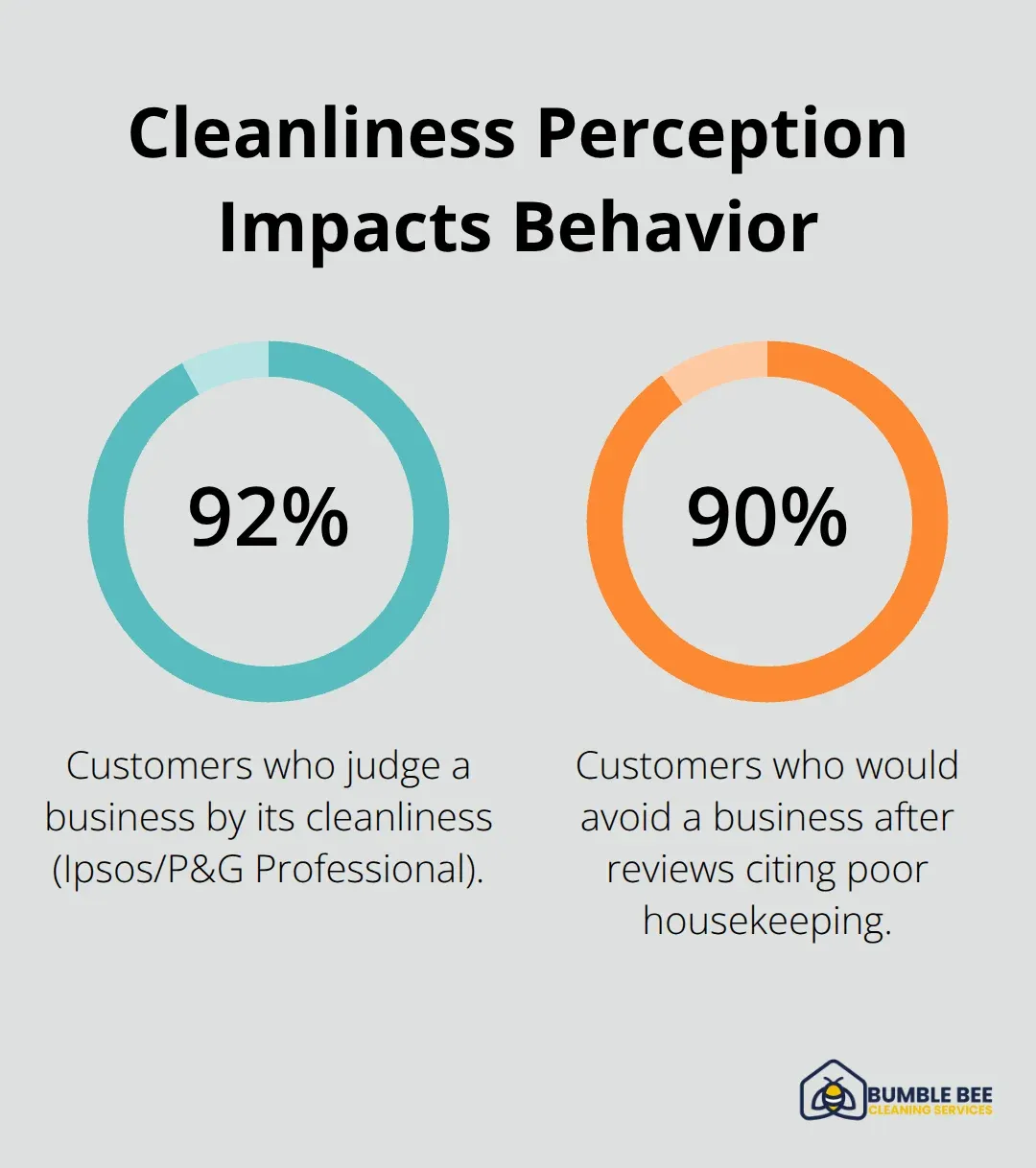
Office chairs and upholstered furniture accumulate pathogens faster than most people realize. A single contaminated surface transmits bacteria, viruses, and allergens to multiple employees throughout the day. Research from Ipsos on behalf of P&G Professional found that 92% of customers judge a business by its cleanliness, and 90% would avoid a business after reading reviews mentioning poor housekeeping. For Seattle workplaces, this extends beyond customer perception-it directly affects your team’s health and your bottom line.
High-Touch Surfaces Spread Infection
High-touch surfaces like office chairs sit in the pathogen transmission chain. When employees touch contaminated fabric and then their faces, infection spreads. The CDC guidance on cleaning and disinfection emphasizes that regular cleaning removes germs before sanitization occurs, making upholstery maintenance a foundational step rather than optional work. Neglecting this step allows preventable illness to circulate through your office.
Productivity Losses Add Up Quickly
Sick employees cost money. When upholstery harbors bacteria or viruses, absenteeism increases and productivity drops. A Harris Poll conducted by Cintas found that 51% of people say a really clean environment makes them more likely to overlook poor service, showing that cleanliness directly influences perception and morale. Your team notices when furniture looks and smells clean.
Odors from contaminated upholstery trigger negative impressions and signal neglect-even if other areas of your office are spotless. Seattle’s humid climate accelerates bacterial growth in damp upholstery, making regular sanitization non-negotiable. Overwet furniture creates mold and mildew, compounding health issues and creating additional cleaning costs. Proper upholstery sanitization prevents these cascading problems before they start.
Standards and Compliance Protect Your Business
IICRC standards define best practices for sanitizing office furniture and infection prevention. Following these standards protects your business from liability and demonstrates that you take workplace safety seriously. EPA-registered disinfectants must match your specific pathogens-List N products target SARS-CoV-2, List H covers MRSA and VRE, and List G addresses Norovirus. Choosing the wrong product wastes money and fails to eliminate the pathogens you’re trying to prevent.
OSHA requires that cleaning solutions receive proper labeling, safe storage, and application according to manufacturer instructions. Skipping professional guidance opens your business to compliance violations and worker safety issues. Understanding your fabric type and selecting the right sanitization method prevents damage while meeting regulatory standards-the first step toward a healthier workplace.
How to Identify Fabric Type and Select the Right Sanitization Method
Your office upholstery has a care tag that tells you exactly which cleaning methods won’t damage the fabric. Look for a tag on the underside or seam of chairs and couches-it contains a letter code that determines everything about sanitization. W means water-based cleaning works, S means solvent or dry-cleaning products only, SW or WS means either method is safe, X means professional cleaning is required, and C indicates Crypton fabric with built-in stain and moisture resistance. Ignoring this tag wastes money on the wrong products and ruins furniture.
Water-Based Fabrics Require Gentle Handling
Water-based fabrics need mild dish soap mixed with water-use just a few drops per gallon of lukewarm water. Test this solution on a hidden area first, then blot the stained spot rather than pouring liquid directly onto the chair. Never saturate the fabric because overwetting causes mold growth in Seattle’s humid climate. Work with clean portions of your cloth and rotate to new areas to prevent reapplying soil back onto the upholstery.
Solvent-Only Fabrics Demand Ventilation and Care
For solvent-only fabrics, use a water-free product and ensure ventilation because these products release fumes. Apply the solvent to a cloth and blot the stain-never pour it directly onto the fabric. The fumes can irritate your respiratory system, so open windows and use fans to circulate air throughout the space while you work.
Crypton Fabrics Offer Built-In Resistance
Crypton fabrics are forgiving because they resist stains, moisture, mildew, bacteria, and odors. Mix 1/4 cup mild dishwashing liquid per gallon of lukewarm water, mist the fabric, work from the stain’s edges inward, rinse thoroughly, and let air dry completely. This fabric tolerates water-based cleaners better than standard textiles, making sanitization faster and less risky.
Vinyl and Specialty Surfaces Need Specific Products
Vinyl chairs require different handling than fabric upholstery. Remove spills with a damp cloth, then use a mild soap solution. For tougher stains, Formula 409 or Fantastik work well on vinyl. Healthcare-grade vinyl with PERMABLOK 3 finish needs careful stain-specific treatment-mascara and grease may respond to Formula 409, while red lipstick sometimes requires a 1:1 ammonia-water solution. Never use full-strength bleach or alcohol on vinyl because these damage the surface.
Applying EPA-Registered Disinfectants Correctly
Always verify that any EPA-registered disinfectant you choose lists fabric or upholstery as an approved surface on its label. The label specifies contact time-how long the surface must stay wet for germs to die. If the surface dries before contact time ends, reapply the product. Work in a well-ventilated area, wear gloves as specified on the product label, and keep the fabric damp for the required duration without oversaturating. After sanitization, air dry completely to prevent mold. For X-rated furniture or complex stains, professional cleaning prevents costly damage and ensures your investment stays protected.
What Damages Office Upholstery During Sanitization
Wrong Chemicals Destroy Fabric Instantly
Sanitizing office furniture requires precision. One misstep ruins expensive chairs, creates health hazards, or wastes money on products that don’t work. The most destructive mistake is applying the wrong chemical to fabric. Harsh disinfectants strip color, weaken fibers, and leave residue that attracts dirt faster than untreated upholstery. Many facilities managers grab whatever disinfectant sits in the supply closet without checking the label. If the product doesn’t list fabric or upholstery as an approved surface, it will damage the material. Bleach-based cleaners destroy most textiles instantly. Alcohol-heavy products cause fading and brittleness. EPA-registered disinfectants fail if applied to incompatible fabrics. A product on List N for SARS-CoV-2 might work perfectly on hard surfaces but ruin water-sensitive fabrics marked with an S code. The label is not optional guidance-it’s the only reliable source for what your specific furniture can tolerate. Test any product on a hidden seam before treating visible areas.
Overwetting Creates Mold and Health Risks
Overwetting upholstery creates a different disaster. Seattle’s humidity makes moisture control critical because damp fabric becomes a breeding ground for mold within 24 to 48 hours. Mold growth triggers respiratory issues, allergies, and asthma in employees. Once mold colonizes upholstery fibers, professional remediation becomes necessary, costing far more than preventive sanitization. Many facilities workers spray disinfectant until fabric glistens, believing wetness ensures effectiveness. This is backwards. Contact time-how long the surface stays wet-matters more than saturation. A product requiring 10 minutes of wetness accomplishes its job with a light mist, not a soaking spray. Apply disinfectant to a cloth first, then wipe the upholstery, rather than spraying directly onto fabric. Allow air circulation with fans and open windows to speed drying. If furniture remains damp after three hours, you’ve applied too much product.
Neglecting Maintenance Between Deep Cleans Multiplies Costs
Skipping maintenance between deep cleans multiplies problems. Monthly spot cleaning prevents stains from setting, reduces odor buildup, and catches contamination before it spreads. Facilities that wait six months between cleanings spend more on disinfectants, see higher absenteeism, and risk compliance violations. A quick vacuuming and spot treatment every two weeks takes 15 minutes per office area and prevents the expensive damage that accumulates from neglect. Regular maintenance keeps your furniture in better condition and extends its lifespan while protecting employee health.
Final Thoughts
Upholstery sanitizing in your Seattle workplace protects employee health, prevents compliance violations, and preserves your furniture investment. The core principle is straightforward: identify your fabric type, select the correct cleaning method, apply products according to label instructions, and maintain regular schedules between deep cleans. Wrong chemicals destroy fabric, overwetting causes mold, and neglecting maintenance multiplies costs-following these steps eliminates pathogens without damaging your office furniture.
Professional cleaning removes the guesswork and liability from upholstery sanitization. We at Bumble Bee Cleaning Services understand Seattle’s humidity challenges, select EPA-registered disinfectants matched to your specific pathogens, and apply contact time correctly to kill germs without oversaturating fabric. Our team handles fabric assessment, product selection, and drying protocols so your staff focuses on work instead of cleaning.
Contact Bumble Bee Cleaning Services to schedule your first upholstery sanitization assessment. Our team identifies contamination hotspots, recommends cleaning frequency based on your workplace traffic, and provides flat-rate pricing with no surprises. Your employees deserve a clean, healthy workspace.
For more information about our cleaning services in Seattle and Atlanta, or to request a cleaning quote, call or text us at 425-786-1360 or email us at info@qbclean.com
