
Your garage floor takes a beating. Oil stains, cracks, and worn surfaces make the space look neglected and create safety risks for your family and visitors.
Professional garage floor restoration fixes these problems and protects your investment for years to come. We at Bumble Bee Cleaning Services help Seattle homeowners transform their garage floors into durable, attractive surfaces that add real value to their homes.
Why Professional Restoration Protects Your Space
Bare concrete garage floors deteriorate fast in Seattle’s wet climate. Moisture seeps into cracks, freeze-thaw cycles expand damage, and salt from winter roads accelerates concrete breakdown. Within 3–5 years, an untreated floor develops structural problems that cost thousands to repair. Professional restoration stops this damage before it spreads. Sealed and coated floors block moisture penetration, preventing the mold and mildew that thrive in our rainy environment. A non-porous surface keeps water out and protects the concrete beneath, extending its lifespan by decades. This is structural protection that keeps your home’s foundation stable and prevents expensive concrete replacement down the road.
Moisture and Structural Damage in Seattle’s Climate
Seattle’s wet conditions accelerate concrete deterioration. Moisture penetrates unprotected concrete and expands during freeze-thaw cycles, creating cracks that widen over time. Salt from winter roads compounds the problem, chemically breaking down the concrete surface. Professional coatings create a moisture barrier that stops water infiltration at the source. This protection prevents the mold and mildew that thrive in damp garages, protecting both the concrete and your family’s health. A sealed floor extends concrete lifespan by decades and eliminates the need for costly replacement.
Safety Hazards on Unfinished Floors
Bare concrete becomes dangerously slippery when wet, especially in garages where spills occur constantly. Oil, coolant, and tire residue make conditions worse. Fall-related injuries send millions to emergency departments annually, with roughly 1 in 4 resulting in serious injury. Your garage faces these same risks. Professional coatings include anti-slip additives that grip shoes and tires, dramatically reducing fall risk for family members and visitors. Sealed floors also eliminate tripping hazards caused by spalling concrete, where the surface flakes and creates uneven patches. A properly finished floor protects everyone who enters your garage.
Aesthetic Value and Home Worth
A polished, sealed garage floor increases home value in the Seattle market. Real estate data shows that upgraded garage flooring attracts buyers and justifies higher asking prices. A finished floor signals that you maintain your home, which influences buyer perception of overall condition. Metallic, stone, or solid-color finishes transform a dull concrete slab into a showpiece that complements your home’s style. This matters especially if your garage is visible from the street or if you use it as a workspace where clients visit. The visual improvement costs far less than other home upgrades, yet delivers comparable return on investment.
Understanding these benefits clarifies why professional restoration matters. The next step is learning how the restoration process actually works and what happens when professionals assess and prepare your floor.
How Garage Floor Restoration Actually Works
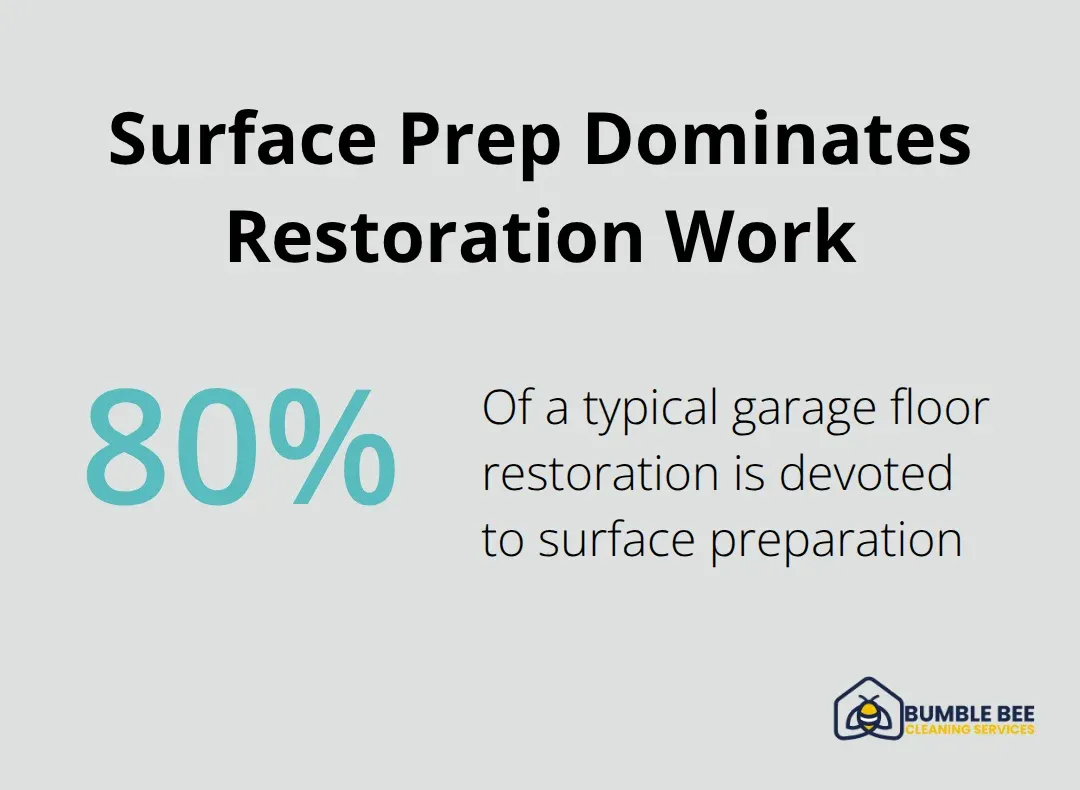
Professional restoration starts with a thorough assessment of your concrete’s current condition. Technicians test moisture levels using ASTM F2170 in-situ relative humidity testing, which measures vapor rising from below-grade slabs. This step matters in Seattle because moisture trapped beneath the surface causes coatings to delaminate and fail prematurely. Surface contamination like oil, grease, and tire residue must be removed completely or the coating won’t bond properly. Roughly 80% of a restoration project involves surface preparation, not the coating application itself.
This means grinding, cleaning, and sometimes pressure washing to strip away contaminants. Cracks receive attention next. Small hairline cracks are routed out and filled with epoxy or polyurethane to prevent water infiltration and structural expansion. Larger cracks or spalling concrete require more aggressive repair, sometimes including patching compounds that match the concrete’s strength. This preparation phase typically takes 1–3 days depending on floor size and damage severity.
Surface Preparation Sets the Foundation
The preparation phase determines whether your coating lasts 15 years or fails in three. Technicians grind the concrete surface to open the pores and expose fresh material for coating adhesion. Pressure washing removes salt, oil, and road residue that prevent proper bonding. Chemical cleaners strip stubborn contaminants without damaging the concrete. Moisture testing confirms that vapor levels fall within acceptable ranges before coating application begins. Any moisture above the threshold will cause the coating to bubble and peel, wasting your investment. This rigorous approach explains why professional restoration outperforms DIY kits-most homeowners skip or rush these critical steps.
Coating Application and Performance
Once the surface is pristine, the coating system goes down in layers. Polyaspartic coatings cure faster than epoxy, typically drying to traffic-ready in 1–2 hours, which minimizes downtime for your garage. These coatings penetrate concrete pores to form a permanent bond, reducing the peeling and flaking that plague epoxy systems. Polyaspartic also resists hot tire pickup-the tendency of tire heat to lift weaker coatings-and won’t yellow under UV exposure like epoxy does. Anti-slip additives are mixed into the topcoat to deliver the grip needed for safety on wet floors. A properly applied polyaspartic coating lasts 15–20 years with regular maintenance, far outlasting cheaper alternatives.
Maintenance Keeps Your Floor Protected
Maintenance itself is straightforward and protects your long-term investment. Weekly sweeping or blowing removes dust and salt, monthly warm-water hose-downs keep the surface clean, and soft-bristle brushes with pH-neutral cleaners handle tougher grime. Avoid harsh chemicals and heavy scraping tools that gouge the coating. Seasonal inspections catch chips or dull spots early, allowing timely touch-ups that extend the floor’s life.
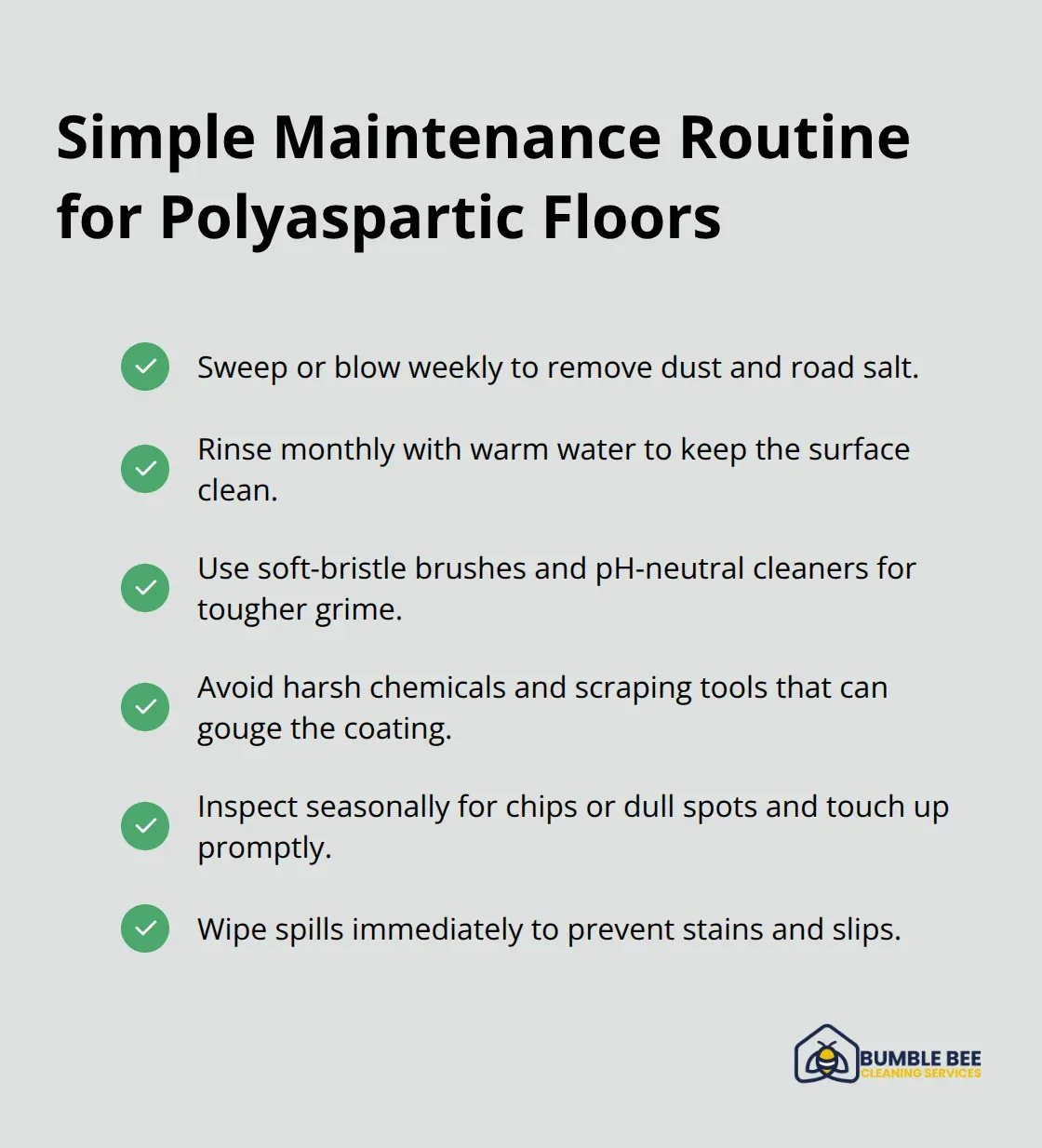
Prompt spill cleanup prevents permanent staining and keeps the surface safer for foot traffic. These simple habits preserve the coating’s appearance and durability for years.
With your floor properly restored and maintained, the next decision involves selecting the right professional to handle the work-and that choice significantly impacts both quality and long-term results.
Hiring a Restoration Professional Who Delivers Results
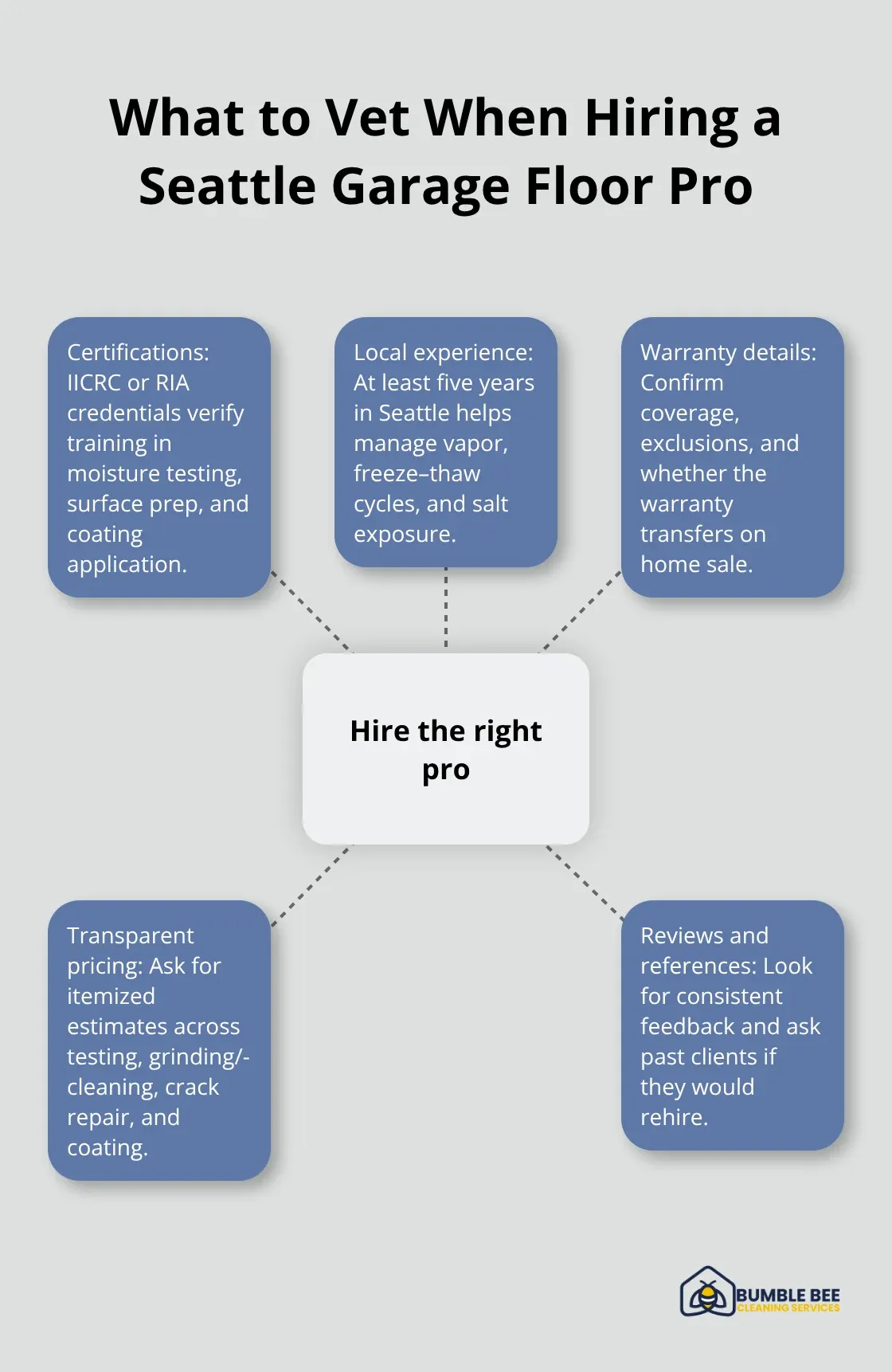
Finding the right garage floor restoration company in Seattle requires looking beyond marketing claims and focusing on concrete credentials and proven performance. The International Institute of Inspection, Cleaning and Restoration Certification (IICRC) sets industry standards for cleaning and restoration work. Well-trained professionals certified through this organization understand moisture testing, surface preparation, and coating application at a technical level that matters for your project. The Restoration Industry Association (RIA) offers similar credentialing that signals training in structural assessment and repair protocols.
When you contact potential contractors, ask directly whether their technicians hold IICRC or RIA certifications and request documentation. A company that hesitates or cannot provide proof likely cuts corners on the preparation work that determines whether your coating lasts 15 years or fails in three.
Experience in Seattle’s Climate Matters
Experience matters equally. A contractor working in Seattle’s climate for at least five years understands how moisture vapor, freeze-thaw cycles, and salt damage affect concrete differently than contractors in drier regions. Ask specifically how many garage floor projects they completed last year and request photos of completed work in residential garages similar to yours. Generic before-and-after images from commercial warehouses or fitness centers don’t tell you how they handle the smaller, tighter spaces homeowners navigate daily.
Warranty Coverage Separates Quality from Shortcuts
Warranty coverage separates quality contractors from those betting you won’t notice problems. Limited lifetime warranties on polyaspartic coatings are standard in the industry, but the fine print matters enormously. Some warranties exclude damage from improper maintenance, harsh chemicals, or salt exposure-conditions that Seattle garages face constantly. Read the warranty document yourself rather than relying on a salesperson’s summary. Ask whether the warranty transfers if you sell your home, since that detail influences the property value benefit you actually receive.
Compare Pricing and Preparation Details
Pricing requires careful comparison because the cheapest quote often reflects inadequate surface preparation, cheaper coating materials, or both. Request itemized estimates that break down moisture testing, grinding and cleaning, crack repair, and coating application separately. If one contractor’s total is significantly lower than others, ask why. Honest contractors explain specific cost differences; evasive answers suggest hidden problems.
Verify References and Review Patterns
Customer reviews on Google, Trustpilot, and the Better Business Bureau reveal patterns about communication, timeline adherence, and post-project support. Read negative reviews carefully-contractors sometimes receive unfair criticism, but repeated complaints about moisture problems, peeling coatings, or poor communication indicate systemic issues. Ask references directly whether they would hire the same company again and whether maintenance proved as simple as the contractor promised.
Final Thoughts
Professional garage floor restoration delivers measurable returns that extend far beyond appearance. A properly sealed and coated floor protects your concrete from Seattle’s moisture and freeze-thaw damage, preventing structural deterioration that costs thousands to repair. The anti-slip surface eliminates fall hazards, keeping your family and visitors safe, while the finished floor increases home value and signals to buyers that you maintain your property carefully.
The financial case is straightforward. A polyaspartic coating costs between $1,500 and $3,500 for a typical two-car garage, depending on floor size and damage severity. That investment lasts 15–20 years with basic maintenance, delivering annual protection costs under $200. Preventive restoration saves money by stopping damage before it reaches the structural level, and homeowners also save on maintenance since sealed floors require only sweeping, occasional mopping, and prompt spill cleanup rather than repeated sealing or patching.
Getting started requires contacting a certified restoration contractor who understands Seattle’s climate and can document their experience with residential garage projects. Request itemized estimates that break down moisture testing, surface preparation, crack repair, and coating application, and verify that technicians hold IICRC or RIA certifications. Contact Bumble Bee Cleaning Services today to schedule a moisture assessment and receive a detailed estimate for your garage floor restoration project.
For more information about our cleaning services in Seattle and Atlanta, or to request a cleaning quote, call or text us at 425-786-1360 or email us at info@qbclean.com
