
Seasonal allergies hit hard in Seattle, especially when pollen counts spike in spring and fall. Most families don’t realize that dust mites, pet dander, and pollen accumulating inside their homes are making symptoms worse.
Deep cleaning targets these allergen sources directly, offering real allergy relief when done right. We at Bumble Bee Cleaning Services have seen families breathe easier after addressing the hidden allergen buildup in their homes.
Where Do Household Allergens Actually Come From
Dust mites are the real culprit behind year-round allergy symptoms in Seattle homes. About 20 million Americans have dust mite allergies, and these microscopic creatures thrive specifically in bedding, carpets, and upholstered furniture where they feed on dead skin cells. A single dust mite produces roughly 20 waste particles daily, and it’s this waste-not the mite itself-that triggers allergic reactions. Your mattress alone can harbor hundreds of thousands of dust mites, making weekly hot water washing of bedding at 130°F or higher essential for killing them.
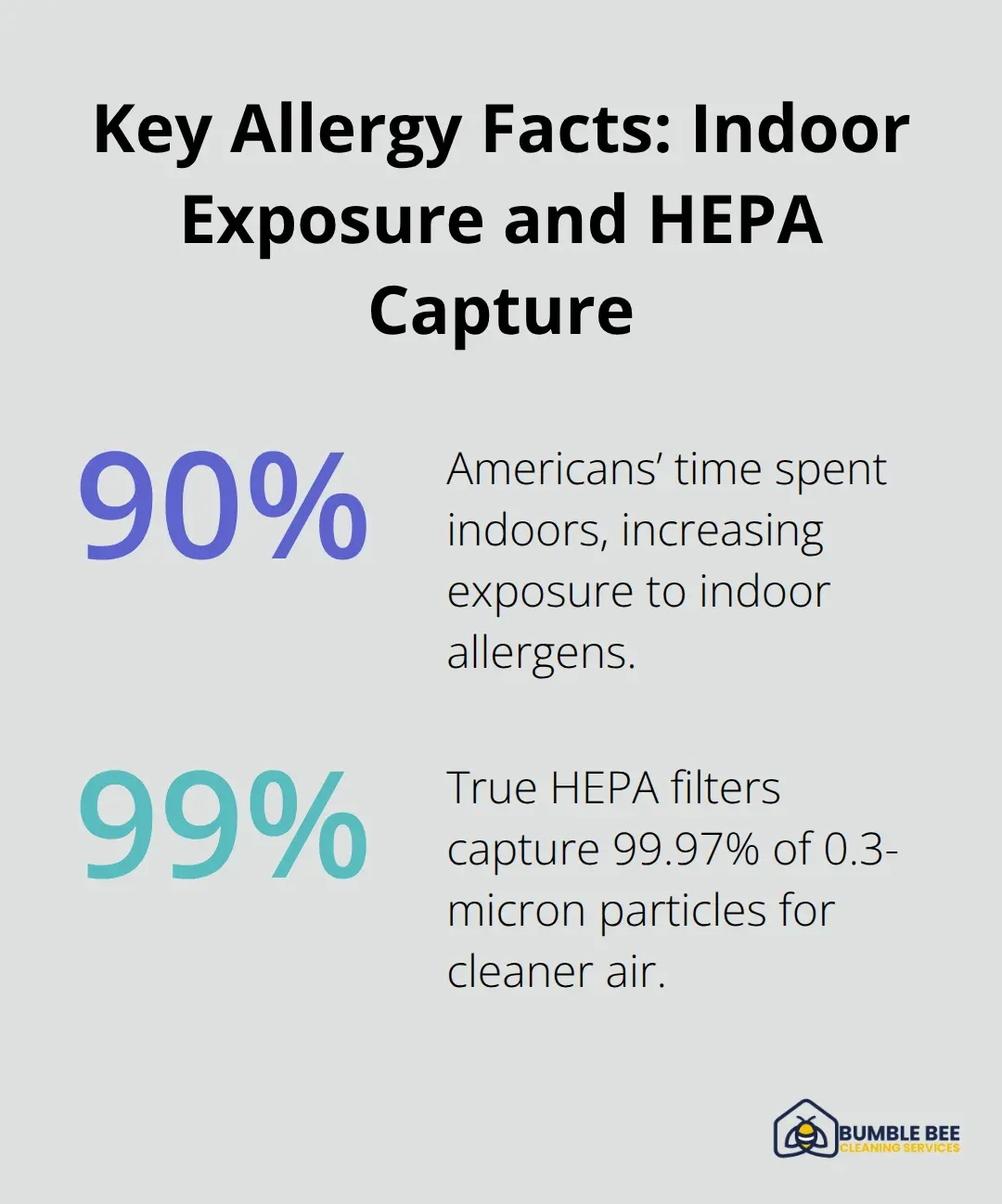
Pet dander presents another persistent problem because it doesn’t just settle on surfaces; your HVAC system continuously recirculates it throughout your home, spreading allergens into every room even when pets aren’t present. Pollen infiltration happens more aggressively in Seattle during spring tree pollen season (March through May) and fall grass pollen season, entering through window gaps, door frames, and ventilation systems. The EPA reports that people spend approximately 90 percent of their time indoors, meaning these accumulated allergens create constant exposure rather than occasional irritation.
How Seattle’s Climate Amplifies Allergen Problems
Seattle’s damp climate intensifies allergen problems because moisture promotes both dust mite populations and mold growth. Keeping indoor humidity between 30-50 percent reduces dust mite survival rates significantly, yet Seattle’s maritime climate naturally pushes humidity higher. This combination creates ideal conditions for allergens to thrive year-round in local homes.
When Allergen Levels Peak in Seattle
Spring pollen arrives earliest, with tree pollination beginning mid-March and overlapping with grass pollen starting in April. Fall brings a second wave of grass and weed pollen that can persist until the first frost. Winter months offer temporary relief from outdoor pollen but don’t eliminate indoor allergen sources like dust mites and pet dander that remain active year-round.
Understanding these timing patterns helps families anticipate when allergen loads peak in their homes and when deep cleaning becomes most valuable. The seasonal cycles in Seattle create predictable windows when targeted cleaning efforts produce the greatest relief for allergy sufferers. This knowledge sets the stage for understanding which deep cleaning techniques work best against these specific allergen sources.
Which Deep Cleaning Methods Actually Remove Dust Mites and Pollen
HEPA vacuuming captures particles smaller than 0.3 microns, which means it removes dust mite waste and pollen that standard vacuums leave behind. The American Academy of Allergy, Asthma & Immunology confirms that traditional vacuums recirculate allergens into the air, making them worse for allergy sufferers. When you vacuum, those microscopic particles escape back into your breathing space unless your vacuum has true HEPA filtration.
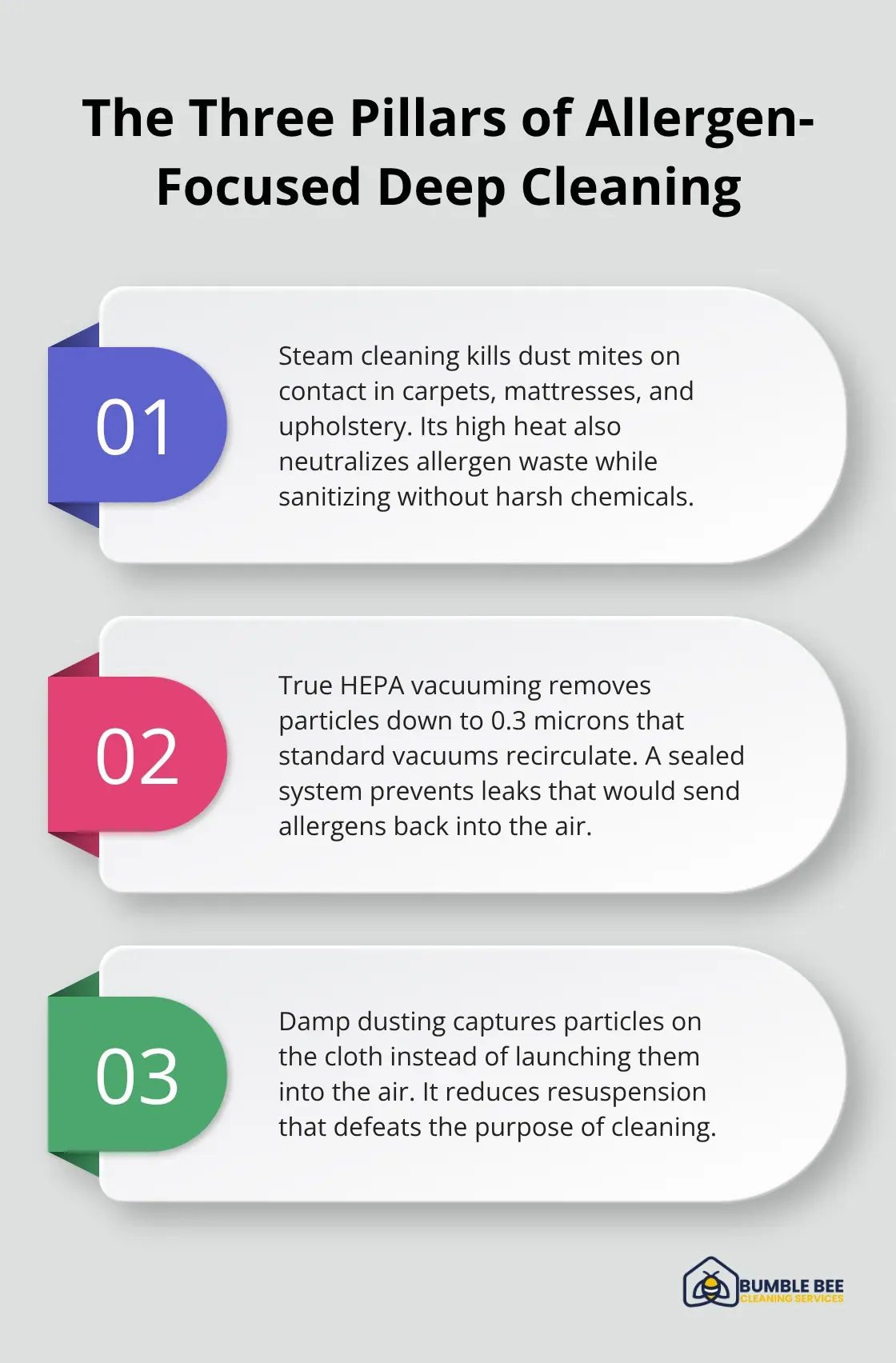
Steam cleaning eliminates dust mites directly because high-temperature steam kills them on contact in carpets, mattresses, upholstered furniture, and curtains. Research shows that steam at 130°F or higher destroys dust mites and their waste products, which is why weekly hot water washing works for bedding but steam cleaning addresses the larger allergen reservoirs throughout your home. The EPA emphasizes that regular cleaning reduces allergen buildup, and damp dusting prevents particles from becoming airborne when you disturb surfaces. This matters because dry dusting or sweeping launches allergens into the air where you inhale them, defeating the purpose of cleaning.
Steam Cleaning Penetrates Where Vacuuming Falls Short
Steam cleaning reaches deep into carpet fibers, mattress layers, and upholstery seams where dust mites hide and reproduce. Standard HEPA vacuuming alone cannot reach these protected zones, which is why many families who vacuum regularly still suffer from dust mite allergies. Steam’s heat kills the mites and sanitizes the area simultaneously without requiring chemical cleaners that irritate airways. A single mattress can harbor hundreds of thousands of dust mites, making steam treatment essential for bedroom allergen control.
Damp Dusting Traps Allergens Instead of Spreading Them
Damp cloths trap dust and allergens on the cloth surface rather than launching them into the air like dry dusting does. This simple technique applies to all hard surfaces (baseboards, window sills, and furniture). Vinegar and water solutions work effectively without harsh chemicals that trigger respiratory irritation in allergy sufferers.
Why HEPA Filtration Matters More Than You Think
True HEPA filters capture 99.97% of particles at 0.3 microns, but many vacuums claim HEPA performance without meeting this standard. Look for vacuums with sealed systems that prevent air leaks around the filter, which defeats the entire purpose of HEPA technology. Cheap HEPA filters allow microscopic allergens to escape back into your home, making the investment in quality equipment worthwhile for allergy relief.
These targeted techniques work because they address allergen sources at different levels-steam penetrates deep into fabrics, HEPA filtration removes airborne particles, and damp dusting prevents resuspension. Understanding which method targets which allergen source helps families prioritize their cleaning efforts for maximum relief. The next step involves knowing when to schedule these deep cleaning sessions for optimal results in Seattle’s specific climate and pollen calendar.
Building Your Year-Round Allergy Defense Strategy
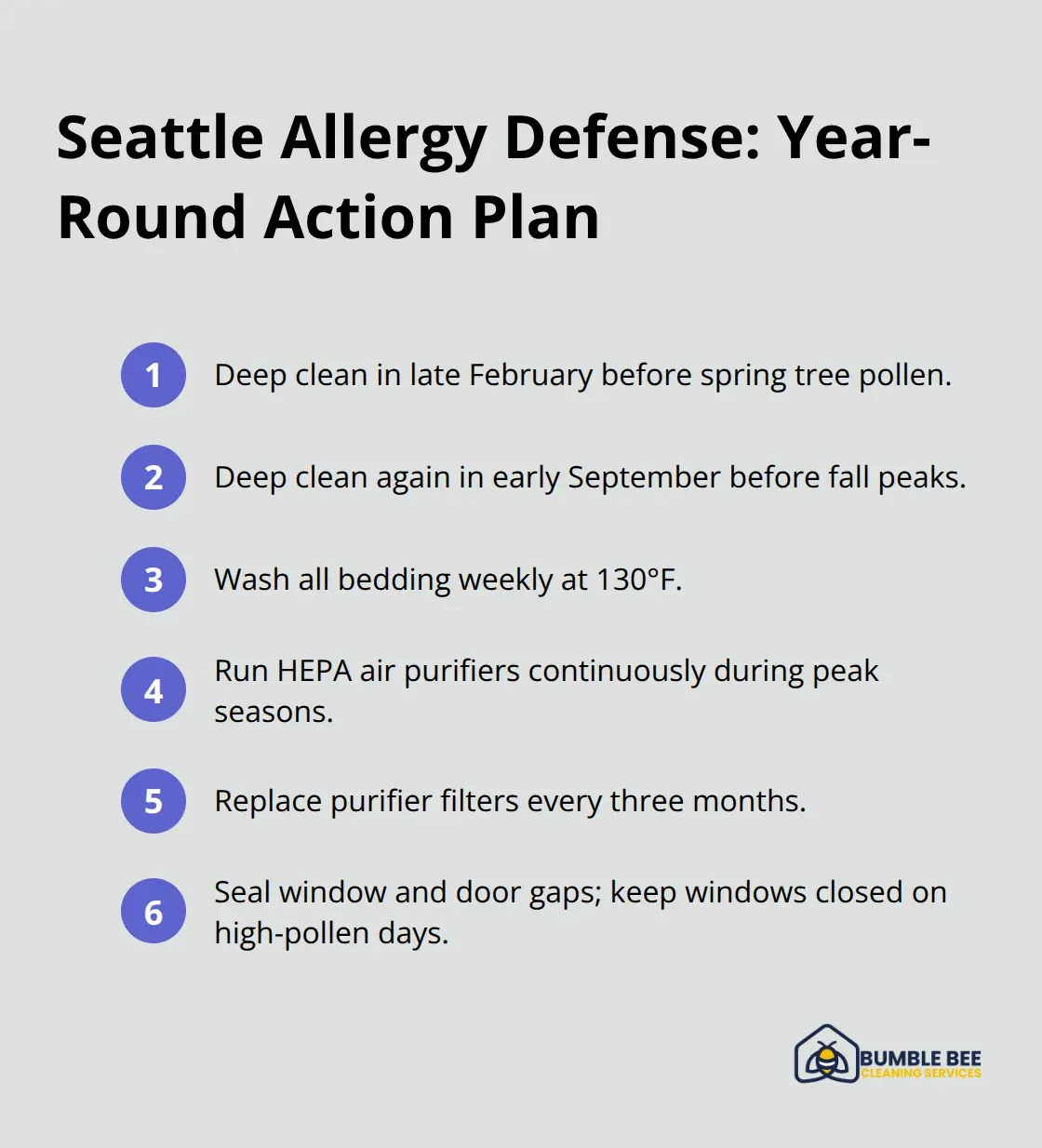
Deep cleaning works best when timed strategically around Seattle’s pollen calendar. Schedule intensive cleaning sessions in late February before tree pollen arrives in mid-March, then again in early September before fall grass and weed pollen peaks. This preventive approach stops allergen accumulation before it triggers symptoms rather than waiting until your family is already suffering.
The American College of Allergy, Asthma and Immunology confirms that spring cleaning reduces indoor allergens like dust, mold, and grime, which directly improves breathing and lowers sneezing and wheezing. However, many Seattle families make the mistake of deep cleaning only once yearly when the real solution involves two strategic sessions plus consistent maintenance between them.
Weekly Bedding Washing Kills Dust Mites in Your Sleep Space
Hot water at 130°F kills dust mites on contact, so wash all bedding every week rather than every two weeks or monthly. This weekly frequency prevents populations from rebuilding in the one place where you spend eight hours daily inhaling allergens. Your pillowcases, sheets, mattress pads, and blankets all need this treatment because dust mites feed on dead skin cells that accumulate throughout your sleep. Standard warm water around 104°F fails to kill dust mites effectively, so the hotter temperature matters significantly for families with diagnosed dust mite allergies. Wash these items separately from regular laundry to maintain consistent temperature and avoid cross-contamination from pet bedding or other allergen sources.
HEPA Air Purifiers Target What Cleaning Misses
Position HEPA air purifiers in your bedroom first, then add one to your main living area if budget allows. These units capture dust mite waste, pollen particles, and pet dander that remain airborne even after vacuuming and dusting. The EPA confirms that air cleaners supplement other strategies and help remove biological pollutants, though they work best in combination with source control like steam cleaning and damp dusting. Run your air purifier continuously during peak allergy seasons and at minimum eight hours daily year-round. Replace filters every three months rather than following manufacturer recommendations of six months, since Seattle’s moisture and allergen load wears filters faster than typical climates.
Seal Window and Door Gaps to Stop Pollen Before It Enters
Caulk gaps around window frames and weatherstrip door seals before spring pollen season arrives. A single gap of one-eighth inch around a window frame allows pollen to infiltrate continuously, negating your indoor cleaning efforts. Check door sweeps at the bottom of exterior doors and replace worn ones that no longer create a tight seal. During high pollen days in spring and fall, keep windows closed entirely rather than cracking them open for fresh air, since outdoor pollen counts spike during afternoon hours. The EPA specifically recommends avoiding outdoor air during high pollution or pollen periods, which means checking AirNow for Seattle’s daily air quality index before opening windows. These simple sealing measures prevent constant pollen reintroduction that undermines your deep cleaning results.
Final Thoughts
Deep cleaning directly addresses the allergen sources that trigger seasonal allergies in Seattle homes. Steam cleaning eliminates dust mites where they hide deepest, HEPA vacuuming captures microscopic particles, and damp dusting prevents allergens from becoming airborne. These methods work because they target specific sources rather than masking symptoms.
The real allergy relief comes from combining strategic deep cleaning with consistent year-round maintenance. Washing bedding weekly in hot water, running HEPA air purifiers continuously, and sealing entry points create layers of protection that prevent allergen accumulation. Timing matters too-scheduling deep cleaning before peak pollen seasons in late February and early September stops problems before they start rather than waiting until your family already suffers.
Professional deep cleaning amplifies these results because trained technicians reach areas you cannot access alone and use equipment that penetrates carpet fibers and upholstery seams where dust mites thrive. We at Bumble Bee Cleaning Services specialize in deep cleaning that targets these exact allergen sources, combining steam cleaning, HEPA filtration, and thorough damp dusting to reduce the allergen load in your Seattle home.
For more information about our cleaning services in Seattle and Atlanta, or to request a cleaning quote, call or text us at 425-786-1360 or email us at info@qbclean.com
