
Construction projects in Seattle leave behind more than just new spaces-they leave behind dust, chemicals, and debris that can permanently damage sealed surfaces like hardwood floors, polished concrete, and stone countertops.
Seal protection during post-construction cleanup isn’t optional if you want to preserve your investment. We at Bumble Bee Cleaning Services have seen countless properties where improper cleanup turned minor surface damage into costly repairs.
What Damages Sealed Surfaces During Construction
Drywall Dust and Construction Debris
Drywall dust is the primary culprit during Seattle construction projects, and it’s far more destructive than most property owners realize. When contractors cut, sand, or install drywall, fine particles settle on every surface-including freshly sealed hardwood, polished concrete, and stone. These particles are abrasive and scratch sealed finishes when foot traffic or cleaning equipment moves across them without containment. Construction dust also contains gypsum and other compounds that etch stone and concrete if left sitting with moisture. The dust migrates through HVAC systems, settling in sealed areas you thought were protected. Properties without dust barrier systems face cleanup costs that triple because sealed surfaces require restoration rather than simple cleaning.
Chemical Exposure from Materials and Solvents
Construction materials release volatile organic compounds and adhesive residues that bond to sealed surfaces. Sealants, paints, and protective coatings off-gas chemicals that cloud or discolor hardwood finishes and stone. Adhesive residue from protective films hardens over time, making removal difficult without damaging the seal underneath. If you don’t remove these films and residues immediately after trades finish, they become permanent blemishes. IICRC restoration standards specify that protective coatings and sealants require specific removal protocols to avoid stripping the underlying finish. Generic cleanup methods using standard household products won’t work; they can actually worsen the damage by reacting with construction chemicals already on the surface.
Physical Damage from Equipment and Foot Traffic
Heavy equipment, ladders, and tool carts create scratches, gouges, and dents on sealed surfaces that construction crews rarely notice in the moment. Polished concrete and stone countertops are particularly vulnerable because their smooth finish shows every mark. Hardwood floors get scuffed when contractors move materials across them without protection. Once a seal is compromised, moisture penetrates underneath, causing warping or staining that sealed surfaces are meant to prevent. The damage accelerates because the seal no longer provides its protective barrier. Controlled cleanup protocols during active construction-including floor protectors, dust barriers, and restricted access to finished areas-protect your investment before cleanup even begins.
How to Protect Sealed Surfaces Before and During Construction
Isolate Work Zones with Physical Barriers
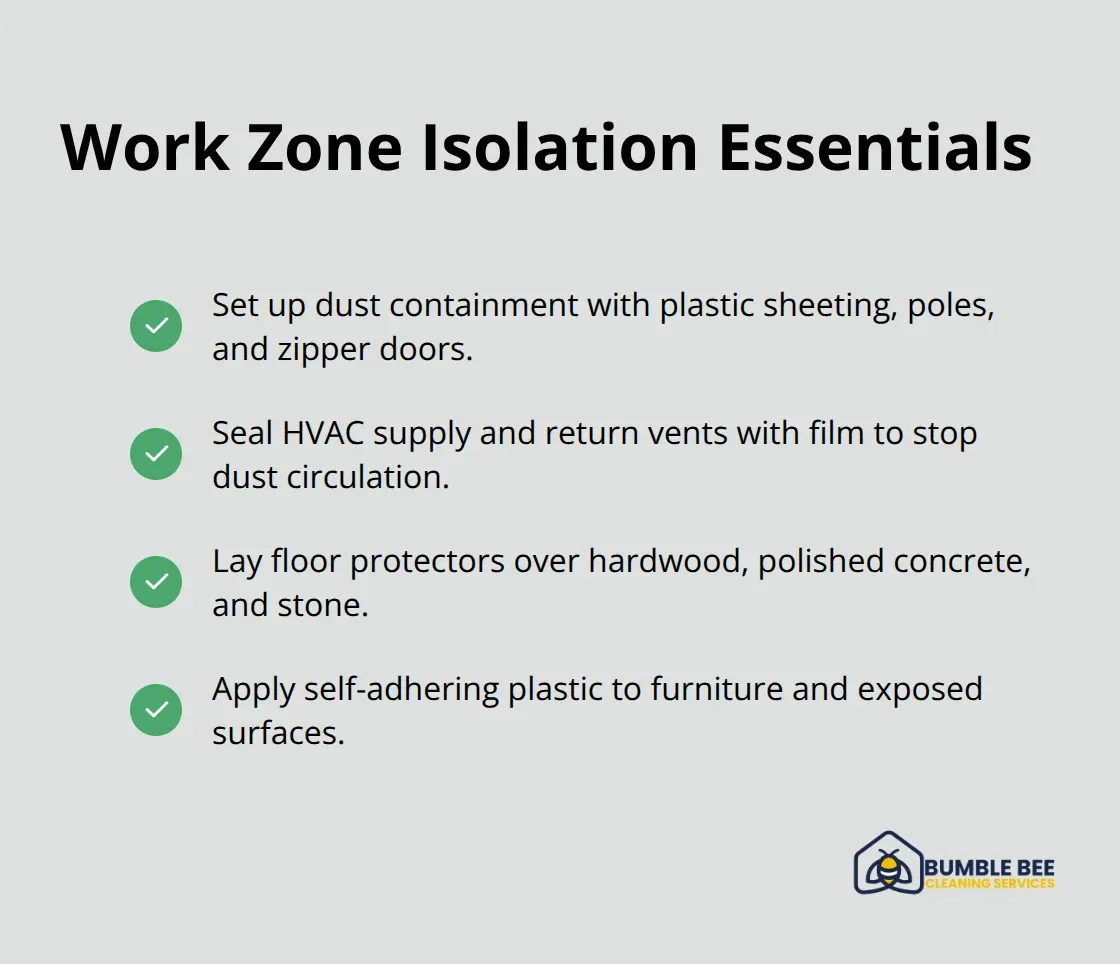
Protecting sealed surfaces starts weeks before construction crews arrive on your Seattle property. The most effective approach uses physical barriers to contain dust and chemicals at their source rather than attempting cleanup afterward. Dust containment systems with plastic sheeting, containment poles, and zipper doors isolate work zones and prevent fine particles from migrating through your home or building. HVAC ducts need sealing with film to stop drywall dust from circulating through your air system, and return vents in non-work areas require the same protection. Floor protectors shield hardwood, polished concrete, and stone from direct contact with construction debris and equipment wheels. Self-adhering plastic sheeting applied to furniture and exposed surfaces pulls dust from the air before it settles on sealed finishes.
Maintain Daily Cleanup During Active Construction
During active construction, daily end-of-day cleanup with HEPA-filter vacuums and damp microfiber cloths maintains low dust levels in work zones and adjacent areas. Protective films and stickers on fixtures, hardware, and appliances must come off immediately after installation to prevent adhesive residue from hardening onto sealed surfaces. Window frames, sills, and tracks need cleaning before final paint and sealing work to avoid trapping construction debris under new finishes. Controlled access protocols that restrict foot traffic on sealed floors and designate equipment pathways prevent the physical scratches that compromise protective barriers.
Remove Protective Coatings Safely
Immediate post-construction treatment involves careful removal of any remaining protective coatings using heat or appropriate solvents rather than scraping, which damages underlying seals. Interior surfaces require top-to-bottom cleaning starting with ceilings and working down to floors, using pH-balanced cleaners matched to each material type. Stone countertops and polished concrete demand specialized, non-abrasive products because generic cleaners can etch or dull sealed surfaces. Professional post-construction crews follow industry standards for surface protection during cleanup, ensuring sealed finishes emerge photo-ready without hidden damage that appears months later when moisture intrusion occurs.
The specific sealed surfaces in your Seattle home or building-hardwood floors, polished concrete, and stone countertops-each face distinct vulnerabilities during construction and require tailored protection strategies.
Common Sealed Surfaces in Seattle Homes and Buildings
Hardwood Floors Face Rapid Deterioration
Hardwood floors in Seattle homes take a beating during construction because moisture and dust from drywall work penetrate sealed finishes faster than most property owners expect. Hardwood seals typically last 5–7 years under normal residential use, but construction dust mixed with moisture causes permanent discoloration, warping, or white haze within weeks if left unprotected. The seal itself fails when abrasive drywall particles scratch the surface or when adhesive residues from protective films harden onto the wood. Once the seal fails, moisture travels underneath and swells the wood grain, creating buckling that costs $3,000–$8,000 per room to repair depending on the hardwood species and extent of damage.
pH-neutral cleaners specifically formulated for wood finishes are non-negotiable during post-construction cleanup; generic floor cleaners strip or dull the seal and require full refinishing. Protective floor coverings during construction prevent direct contact between wood and construction debris, which remains the most cost-effective damage prevention strategy available to Seattle property owners.
Stone Countertops and Polished Concrete Etch Permanently
Stone countertops and polished concrete demand equally rigorous protection because both materials etch when acidic construction chemicals or drywall dust sit on them for extended periods. Concrete seals typically last 1–5 years depending on sealer type and traffic conditions, and construction work accelerates deterioration because equipment wheels and dropped tools create micro-fractures that allow moisture penetration. Stone etching from acidic residues is permanent and cannot be reversed without professional honing, which costs $800–$2,000 for countertop-sized areas.
Specialized, non-abrasive products matched to each material type protect these surfaces during post-construction cleanup. Standard cleaners react with construction residues and cause additional damage rather than removing it, making professional treatment essential for preserving your investment.
Sealed Grout Lines Require Specialized Attention
Sealed grout in tile installations represents the overlooked vulnerability that causes mold and structural damage months after construction finishes. Grout seals protect against moisture intrusion that leads to mold growth in wall cavities behind tile, and construction dust clogging grout lines prevents proper sealing application during post-construction finishing. Grout and tile cleaning must occur as a separate, specialized task because standard post-construction crews often miss grout-line debris that compromises the seal’s effectiveness.
If grout remains unsealed or improperly sealed after construction, mold develops within 48–72 hours during Seattle’s rainy seasons, requiring full remediation under IICRC mold standards rather than simple cleanup. This timeline makes immediate post-construction attention to grout protection non-negotiable for any Seattle property undergoing construction work.
Final Thoughts
Sealed surfaces in your Seattle property represent a significant investment, and seal protection during construction requires more than hoping for the best during cleanup. Drywall dust etches stone, adhesive residue hardens on hardwood, and moisture penetrates compromised finishes-all of this happens fast and costs far more to repair than prevention ever would. A single room of hardwood floor damage runs $3,000–$8,000 to restore, while stone etching requires professional honing at $800–$2,000 per countertop area.
Professional post-construction cleaning protects sealed surfaces that would otherwise fail prematurely from construction residue left behind. Crews trained in IICRC standards remove protective coatings safely, apply pH-balanced cleaners matched to each material, and document the work so you have proof of proper care if issues arise later. We at Bumble Bee Cleaning Services bring experience and IICRC certification to every post-construction project, ensuring your hardwood, concrete, stone, and grout emerge photo-ready without hidden damage waiting to surface.
Investing in proper seal protection during construction costs a fraction of what you’ll spend replacing or refinishing damaged surfaces months or years down the road. Contact Bumble Bee Cleaning Services to schedule your post-construction cleanup and protect the investment you’ve just made.
For more information about our cleaning services in Seattle and Atlanta, or to request a cleaning quote, call or text us at 425-786-1360 or email us at info@qbclean.com
