
Construction dust and debris wreak havoc on sealed surfaces, embedding into stone and compromising your sealant’s protective layer. The first 48 hours after construction work ends are critical for preventing permanent damage to your granite and marble.
We at Bumble Bee Cleaning Services know that proper post-construction cleaning and sealing techniques make the difference between stone that lasts decades and surfaces that deteriorate quickly. This guide walks you through exactly what you need to do to protect your investment.
Why Sealed Stone Needs Extra Protection After Construction
Construction dust embeds silica particles directly into porous stone surfaces. Granite and marble, despite their reputation for durability, are highly vulnerable immediately after construction ends. Seattle’s climate accelerates this damage significantly. The combination of frequent rain, high humidity, and winter temperatures forces water and grit deeper into stone pores, intensifying both dulling and structural deterioration.
How Construction Dust Damages Your Stone
Construction dust settling into unsealed or newly sealed granite creates a grinding paste that scratches and abrades the protective sealant layer. Fine silica particles from cutting, grinding, and demolition settle everywhere-not just on visible surfaces but inside cabinet interiors, appliance crevices, and window tracks. When moisture from Seattle’s rain or humidity activates these particles, they transform into an abrasive slurry that dulls and scratches granite polish.
The sealant itself becomes compromised because dust particles prevent proper adhesion, creating weak spots where water breaches the protective barrier. Once the sealant fails, liquids penetrate the stone itself, causing permanent staining and eventually cracks that spread outward. HEPA filtration captures 99.97% of particles 0.3 microns and larger, preventing this damage before it occurs. Standard vacuuming and mopping miss these microscopic particles entirely.
The Critical 48-Hour Window
The first 48 hours after construction work ends represent your critical window to act. Sealing without first removing construction residue traps contaminants beneath the sealant, guaranteeing premature failure within months rather than years. This is why timing matters more than most homeowners realize.
Schedule sealing work after all construction trades finish and after professional post-construction cleaning is complete-never before. Attempting to seal over construction dust is counterproductive and wastes money on sealant that won’t adhere properly.
Getting Your Stone Ready for Sealing
Most granite and marble require 24 to 48 hours of drying time after cleaning before any sealer application. Seattle’s moisture-heavy climate can extend this timeline, so verify that your stone surface reads below 3% moisture content before proceeding. If you rush this timeline, trapped moisture beneath the sealant causes white hazing and reduces the protective barrier’s effectiveness by up to 40%.
Your sealant investment only protects stone when applied to a genuinely clean, dry surface. With construction dust removed and proper drying time observed, you’re ready to select the right sealant product for your specific stone type and application method.
Protecting Stone Through Proper Cleaning and Sealing
Professional Post-Construction Cleaning Comes First
Professional post-construction cleaning must happen before sealing, and this step determines everything that follows. HEPA filtration captures fine silica dust that settles into granite and marble surfaces and dulls their finish. Standard vacuuming leaves behind particles smaller than 0.3 microns, which means construction dust remains embedded in your stone even after mopping. Specialized residue-removal wipes pull adhesive residues and grout haze from stone surfaces, preventing hazing and scratches that compromise the sealant’s adhesion.
Room-by-Room Cleaning Strategy
Clean from ceiling to floor in a room-by-room sequence to prevent recontamination of sealed granite and marble. Inside cabinets, drawers, and appliances require thorough attention because hidden construction dust settles on stone countertops when you open these spaces later. Window tracks, ledges, and trim around stone surfaces stop dust accumulation that can mar the finish. In kitchens, wipe cabinet tops and exteriors, backsplashes, and detail appliances to keep stone countertops pristine. Bathrooms need vanities, sinks, tile grout, and fixtures cleaned thoroughly to remove construction dust that could abrade stone surfaces. Interior doors, handles, and hardware prevent dust transfer onto stone surfaces when wiped down. Vacuum and mop all floors with attention to edges and corners to prevent dust from abrading stone floors or sealant. Clean HVAC vents and return covers to minimize dust circulation that settles on stone surfaces.
Selecting and Applying the Right Sealant
Choose a high-quality penetrating sealer designed specifically for natural stone and avoid generic all-purpose sealers that fail within months on granite and marble. Test the sealer in a small inconspicuous area before full application to confirm it won’t darken the stone or leave streaks. Clean the countertop with mild dish soap and warm water, ensuring the surface is completely dry before sealing. Apply the sealer in small sections with a clean, lint-free cloth to guarantee even coverage without pooling.
Proper Dwell Time and Multiple Coats
Allow the sealer to penetrate for the manufacturer’s recommended time, which typically ranges from 10 to 30 minutes depending on the product. Wipe away excess sealer after the dwell time to avoid hazy or streaky appearance that indicates improper application. Multiple coats often improve protection, but each coat must dry completely before applying the next one (this entire process takes longer than most homeowners expect). Rushing creates weak spots where water penetrates the stone, undoing months of careful preparation work. Once your sealant cures fully, your stone enters a maintenance phase that determines how long the protective barrier actually lasts.
Keeping Your Sealed Stone in Peak Condition
Daily Cleaning Protects Your Sealant Investment
Daily cleaning matters far more than most homeowners realize, and the products you select determine whether your sealant lasts three years or a decade. Mild, pH-balanced cleaners specifically formulated for marble and granite are non-negotiable because harsh cleaners strip away the protective sealant layer and leave your stone vulnerable to staining and moisture penetration. Blot spills immediately without wiping, since wiping spreads liquids across a larger surface area and forces them deeper into any microscopic gaps in the sealant.
Cutting boards protect granite from scratches even though granite resists scratching better than marble does. Trivets or hot pads under hot cookware prevent thermal shock that can cause hairline cracks to spread.
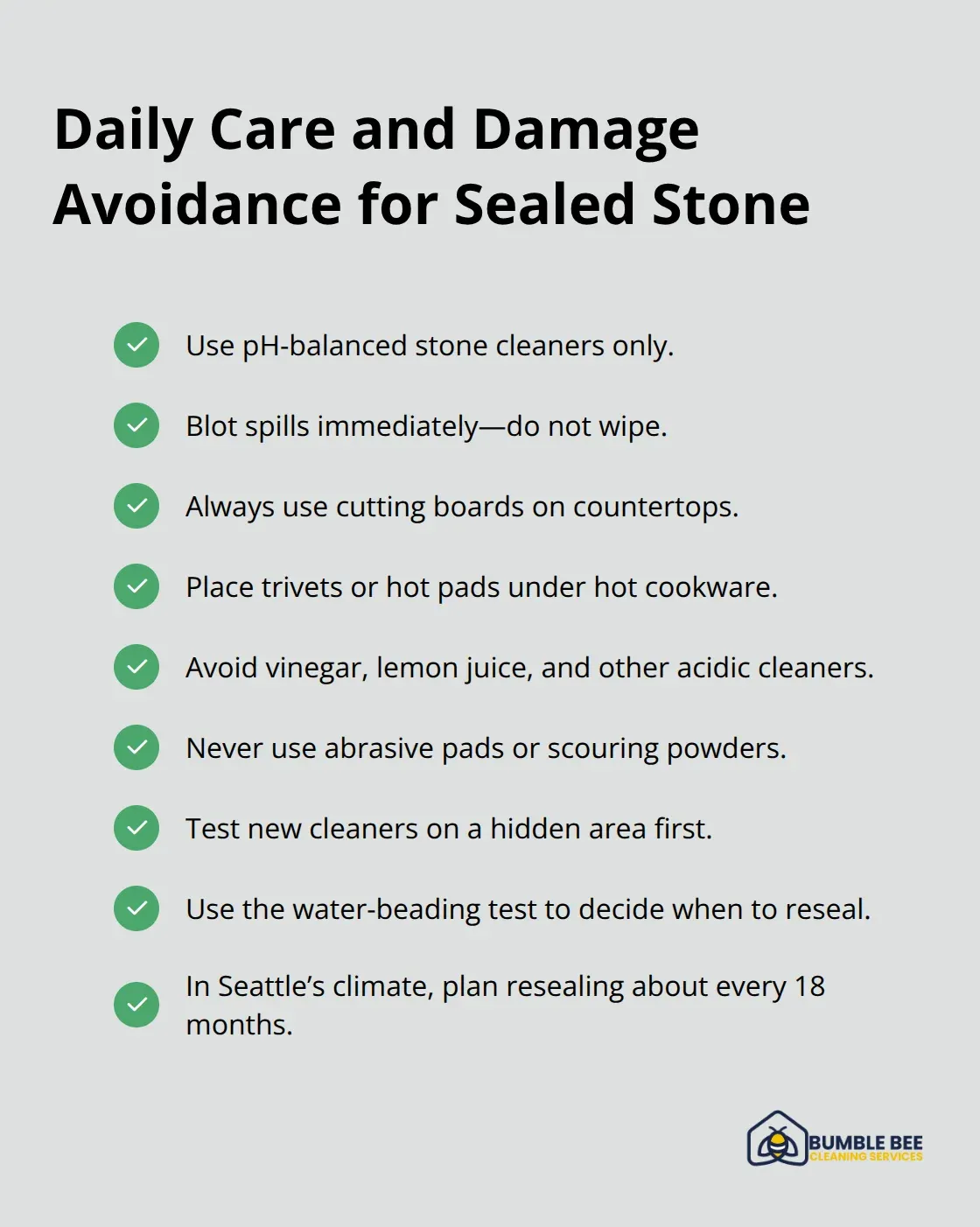
The ISSA, the International Sanitary Supply Association, recommends pH-neutral cleaners between 6.5 and 8.5 on the pH scale for natural stone maintenance, which means testing any new cleaner on a hidden area first before using it on visible countertops.
Products That Damage Sealed Stone
Avoid vinegar, lemon juice, and acidic solutions entirely because they etch marble and compromise granite sealant durability. Never use abrasive scrubbing pads or scouring powders that scratch the protective layer and expose bare stone to moisture and staining. These daily habits cost nothing but prevent expensive restoration work that becomes necessary when sealant fails prematurely.
Professional Resealing Keeps Protection Active
Professional resealing frequency depends on stone type, household usage, and sealant quality rather than following a universal timeline that works for everyone. Granite should be sealed once per year, with high-use kitchen countertops benefiting from sealing every 6–8 months, while marble in high-traffic bathrooms may require annual resealing due to its greater porosity. Watch for the water-beading test: if water no longer forms tight beads on the surface but instead spreads flat, your sealant has degraded and resealing is overdue.
Seattle’s climate with frequent rain and high humidity accelerates sealant breakdown compared to drier regions, so plan resealing every 18 months rather than waiting for visible signs of failure. The cost of professional resealing ranges from $300 to $800 for typical kitchen countertops depending on square footage and stone type, which is far cheaper than addressing water damage, permanent stains, or crack repair that costs thousands.
Final Thoughts
Protecting sealed surfaces after Seattle construction requires three non-negotiable steps: professional post-construction cleaning with HEPA filtration, proper sealant application on completely dry stone, and consistent maintenance using pH-balanced cleaners. Skip any of these steps and your investment deteriorates within months rather than lasting decades. The water-beading test tells you everything about your sealant’s health-when water no longer beads tightly on the surface, resealing is overdue.
Seattle’s wet climate accelerates sealant breakdown faster than drier regions, so plan professional resealing every 18 months rather than waiting for visible failure. Daily habits matter enormously: blot spills immediately, use cutting boards and trivets, and clean with stone-specific products only. Acidic cleaners, abrasive pads, and harsh chemicals strip away your sealant’s protective layer and expose bare stone to moisture penetration (these small daily choices determine whether your sealed surfaces remain pristine or require expensive restoration).
We at Bumble Bee Cleaning Services specialize in post-construction cleaning that removes construction dust before sealing happens. Contact Bumble Bee Cleaning Services to schedule your post-construction cleaning and establish a maintenance plan that keeps your sealed surfaces looking new for years to come.
For more information about our cleaning services in Seattle and Atlanta, or to request a cleaning quote, call or text us at 425-786-1360 or email us at info@qbclean.com
