
Seattle’s humid climate creates unique cleaning challenges that standard chemical cleaners simply can’t handle well. Enzymatic treatment breaks down dirt at the source instead of just masking it, which is why we at Bumble Bee Cleaning Services recommend it for homes in this region.
Your family and pets deserve cleaning solutions that actually work without leaving toxic residue behind. This post shows you exactly why enzyme-based cleaners outperform traditional chemicals in Seattle homes.
How Enzymatic Cleaners Break Down Stains
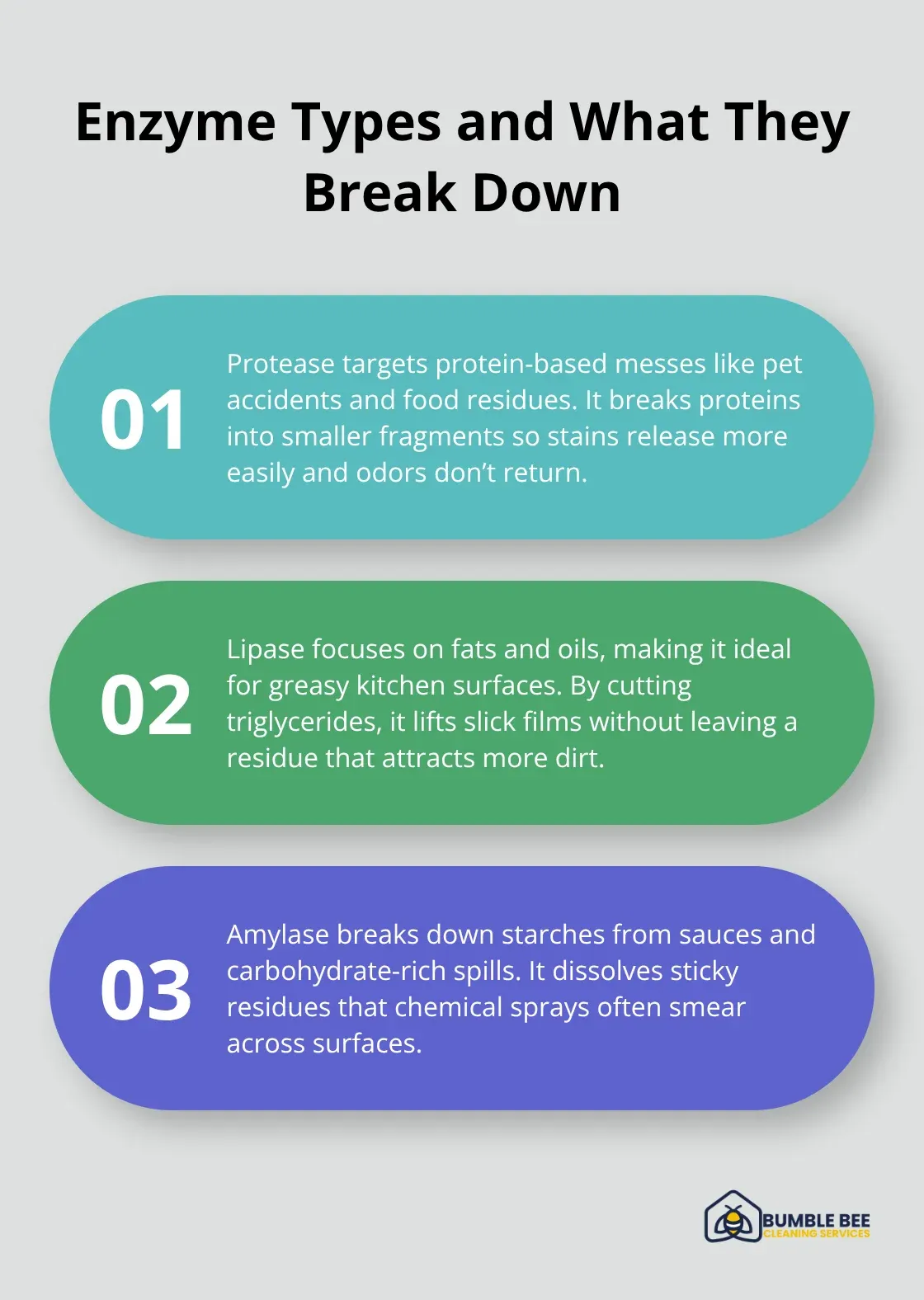
Enzymatic cleaners work through a straightforward biological mechanism that traditional chemicals simply cannot replicate. Enzymes are proteins that function as catalysts, binding to specific organic compounds like a lock-and-key and breaking them down at the molecular level. When you apply an enzymatic cleaner to a pet stain or food residue, protease enzymes target proteins, lipase enzymes attack fats and oils, and amylase enzymes break down starches. This targeted approach means the cleaner doesn’t just cover up the problem-it eliminates the actual source of the stain and odor. This continuous action sets enzymatic cleaners apart from chemical cleaners, which work once and stop. In Seattle’s humid environment, where moisture lingers on surfaces and in carpets, enzymatic cleaners maintain their effectiveness far longer than their chemical counterparts.
Why Pet Stains Require Enzymatic Treatment
Pet accidents present a specific challenge that chemical cleaners handle poorly. Urine, vomit, and feces contain proteins and organic compounds that chemical cleaners cannot fully dissolve-they merely mask the odor with fragrance or bleach it away temporarily. Enzymatic cleaners break down the actual urea and proteins responsible for the smell, preventing odors from returning when humidity reactivates dried residue. Be Green Carpet Cleaning, a Seattle-area professional cleaner, uses enzymatic pretreatment as a core step in their pet stain removal process, combined with UV light technology to locate hidden contamination before treatment starts. This targeted approach works because urease specifically target urine compounds, eliminating them rather than covering them up. For homeowners dealing with recurring pet accidents, enzymatic solutions deliver results that chemical spot treatments simply cannot match.
Food Stains and Kitchen Buildup
Kitchen cleaning demands a different enzyme profile than pet stain removal. Lipase enzymes excel at cutting through grease, while amylase handles starch-based residues from sauces and food spills. Chemical degreasers often leave a slick residue that attracts more dirt, requiring frequent reapplication and creating a cycle of buildup. Enzymatic cleaners eliminate the grease itself, leaving surfaces clean without residue. On Seattle kitchen counters and stovetops (where humidity can trap grease and create sticky buildup over time), enzymatic treatment prevents the accumulation that chemical cleaners leave behind. The continuous enzyme action means the cleaner works throughout the drying process, providing deeper penetration than a single chemical spray-and-wipe application.
How Seattle’s Climate Amplifies Enzyme Effectiveness
Seattle’s persistent moisture creates conditions where enzymatic cleaners thrive while chemical solutions falter. Humidity reactivates dried chemical residues, causing odors to return and sticky buildup to accumulate on surfaces. Enzymatic cleaners, however, continue their molecular work as long as moisture exists-a significant advantage in a climate where surfaces stay damp longer. This means your home benefits from extended cleaning action without the need for harsh chemical reapplication.
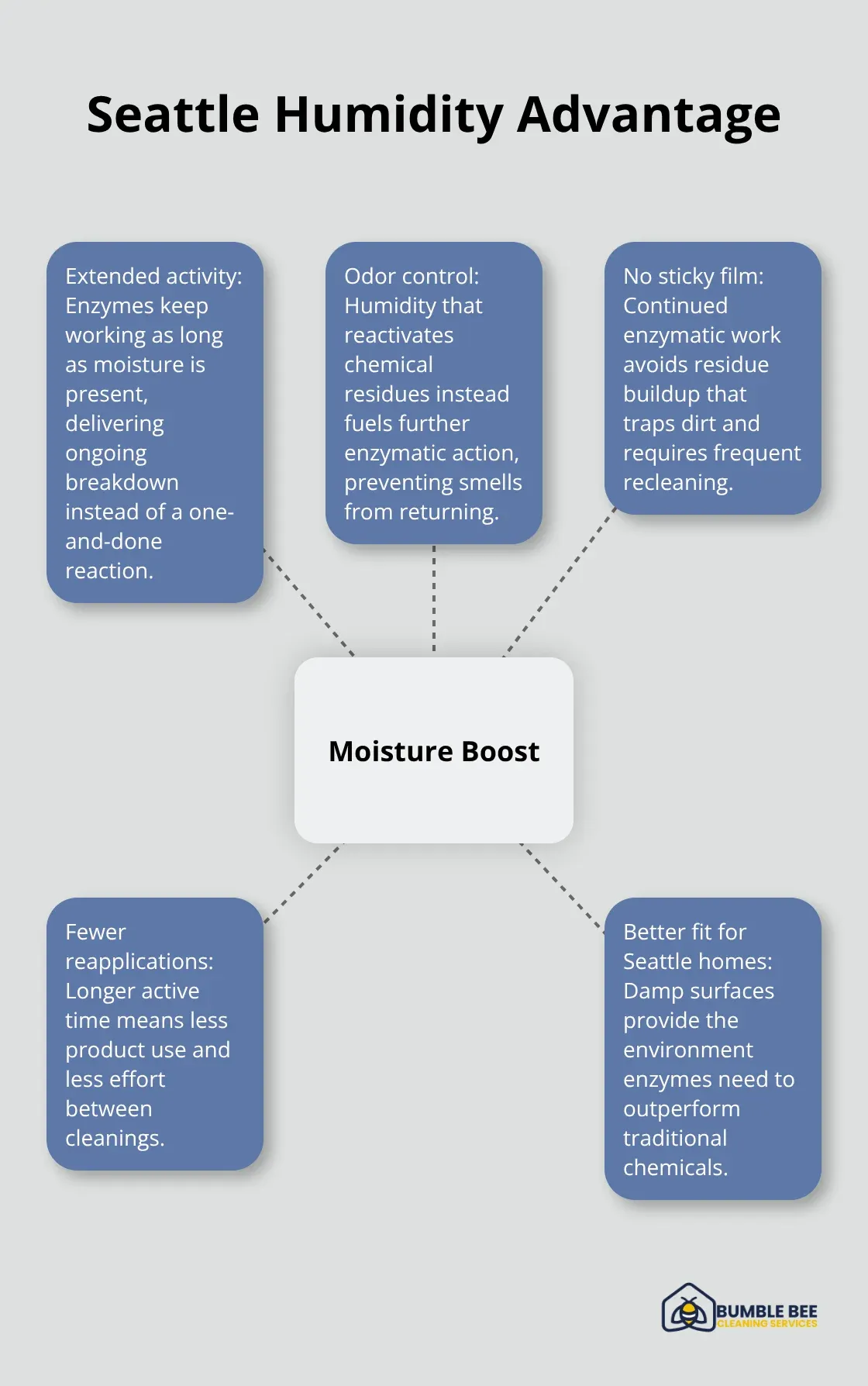
Understanding this climate-specific advantage helps explain why enzyme-based solutions outperform traditional approaches in Pacific Northwest homes.
Why Chemical Cleaners Struggle in Seattle’s Humidity
The Short Lifespan of Chemical Action
Chemical cleaners deliver a single burst of action that dissipates quickly, leaving your Seattle home vulnerable to the region’s persistent moisture. When you spray a chemical cleaner on a surface, the active compounds work for a short window before evaporating or breaking down, especially in humid conditions where water molecules compete for space on the surface. Within hours, as Seattle’s moisture settles back into carpets, grout lines, and upholstery, chemical residues dry and harden into a sticky film that traps odors and dirt underneath. That film becomes a magnet for new contamination, forcing you to clean more frequently just to maintain basic cleanliness.
The Residue Trap and Buildup Cycle
Chemical degreasers exemplify this problem-they cut grease temporarily, but the residue they leave behind actually attracts more grease particles, creating a self-perpetuating cycle of buildup that worsens over time. In contrast, enzymatic cleaners maintain their effectiveness as long as moisture persists, which in Seattle means days or weeks of continued molecular breakdown rather than hours. This extended action prevents the sticky film that chemical cleaners leave behind, stopping the accumulation cycle before it starts.
Health Costs of Repeated Chemical Applications
The health cost of repeated chemical applications adds up faster than most homeowners realize. Each time you spray bleach, ammonia, or synthetic degreasers in your home, you release volatile organic compounds (VOCs) that accumulate in indoor air and settle into carpets and furniture. VOCs can cause eye and respiratory tract irritation, headaches, dizziness, and visual disorders. Professional carpet cleaners using chemical-based methods often leave behind residues that off-gas for days after cleaning, which explains why some homes smell chemically “fresh” but feel stuffy afterward.
Economic Reality of Chemical Versus Enzymatic Solutions
Enzymatic cleaners, being biological in nature, convert to harmless byproducts like carbon dioxide and water, eliminating the toxic exposure that comes with repeated chemical applications. Over time, a household using chemical cleaners regularly spends more per month than one using concentrated enzymatic solutions, plus the hidden cost of replacing carpets and furniture damaged by chemical degradation and residue accumulation. When you factor in the reduced need for reapplication and the absence of health impacts, enzymatic treatment becomes the economically rational choice for Seattle homes. Understanding these cost and health differences reveals why many homeowners now turn to enzyme-based solutions-and what makes them the smarter investment for families committed to long-term cleanliness and wellness.
Practical Benefits for Seattle Homeowners
Enzymatic cleaners eliminate the toxic exposure that chemical-based products create in your living spaces. When enzymes break down organic matter, they convert into carbon dioxide and water-harmless byproducts that don’t linger in your home’s air or settle into carpets and furniture. Chemical cleaners release volatile organic compounds that accumulate over time, especially in Seattle’s humid conditions where air circulation moves more slowly.
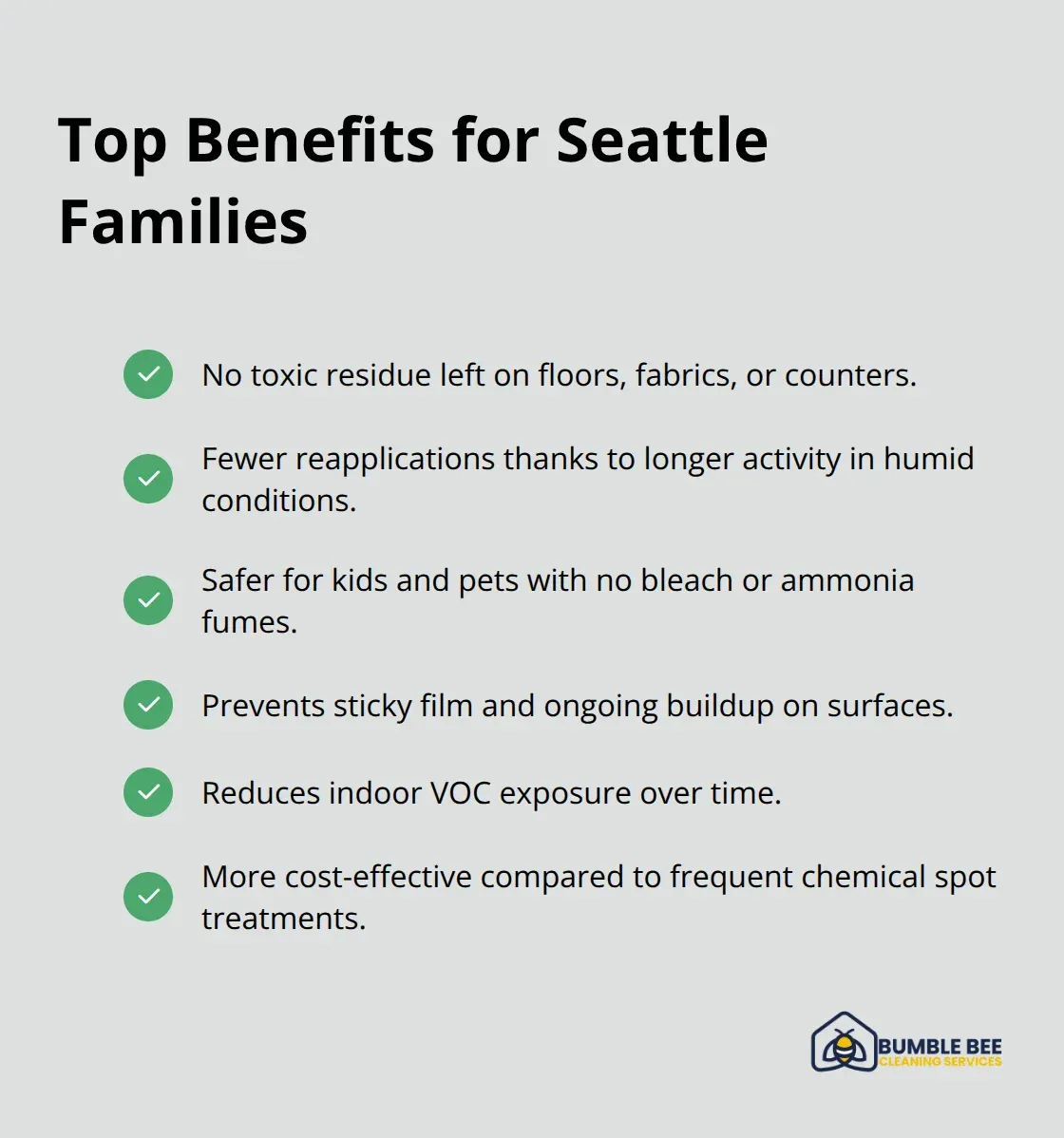
VOC exposure causes eye and respiratory irritation, yet most households apply harsh chemicals weekly without understanding the cumulative health toll. Children and pets are particularly vulnerable because they spend more time on floors and in enclosed spaces where chemical residues concentrate. Enzymatic solutions work without bleach or ammonia, meaning you won’t expose your family to fumes that linger for days after application.
Safety for Families and Pets
Pet owners dealing with recurring accidents no longer need to choose between cleaning effectiveness and animal safety-enzyme-based products handle both simultaneously. Enzymatic cleaners convert to harmless byproducts, eliminating the toxic exposure that comes with repeated chemical applications. Your family breathes easier when enzymatic solutions replace harsh sprays that off-gas for days after application. Chemical degreasers and bleach-based cleaners accumulate in indoor air and settle into carpets and furniture, creating health risks that extend far beyond the initial cleaning. Enzymatic treatment protects vulnerable household members without sacrificing cleaning power.
Environmental Impact and Water Systems
Wastewater treatment facilities across Washington State struggle with chemical residues from household cleaning products. When you rinse chemical cleaners down drains, those compounds enter the water system and resist standard treatment processes, eventually reaching Puget Sound and affecting aquatic ecosystems. Enzymatic cleaners are biodegradable, breaking down safely in wastewater treatment and posing no threat to marine life or drinking water supplies. Seattle’s water system depends on maintaining ecological health in the Sound-a responsibility that extends from your home’s drains outward. Choosing enzymatic solutions means your household cleaning decisions don’t contribute to the chemical contamination that forces utilities to invest in expensive filtration upgrades. The economic reality is straightforward: enzymatic cleaners protect public water infrastructure while chemical cleaners shift costs onto municipal treatment systems and environmental restoration efforts.
Results on Stubborn Seattle Home Problems
Bathroom tile and grout in Seattle homes accumulate mold and soap scum faster than in drier climates because moisture never fully leaves the surface. Enzymatic cleaners specifically target the organic growth that causes discoloration and odor, while chemical bleach merely kills the visible mold without removing the underlying biofilm that allows regrowth. Hardwood floors in humid homes develop sticky residue from chemical floor treatments-a problem that enzymatic solutions prevent entirely because they don’t leave behind the film that attracts dust and grime. Pet urine in carpets continues to smell after chemical treatment because those cleaners don’t eliminate urease compounds; enzymatic pretreatment removes the actual source, which is why professional cleaners recommend enzyme-based approaches for homes with multiple pets. Grease buildup on kitchen cabinets and backsplashes represents another area where chemical degreasers fail Seattle homeowners-the residue they leave actually accelerates future grease accumulation, forcing more frequent cleaning. Enzymatic treatment eliminates the grease itself rather than creating a sticky surface that traps new contamination. Over six months, a home using enzymatic solutions requires significantly fewer cleaning applications than one relying on chemical spot treatments, reducing both labor time and product costs substantially.
Final Thoughts
Enzymatic cleaners outperform chemical solutions across every metric that matters to Seattle homeowners: effectiveness, safety, cost, and environmental responsibility. They work at the molecular level to eliminate stains and odors rather than masking them, and they maintain their cleaning action throughout Seattle’s humid climate while converting to harmless byproducts instead of leaving toxic residue behind. Chemical cleaners create a cycle of buildup and frequent reapplication that drains your wallet while exposing your family to volatile organic compounds, whereas enzymatic treatment represents a fundamentally different approach that aligns with how your home actually functions in the Pacific Northwest.
Seattle homes benefit most from enzymatic solutions because persistent moisture keeps enzymes active longer, preventing the sticky film that chemical cleaners leave behind. Your carpets, grout lines, and upholstery stay cleaner longer without the accumulation cycle that forces more frequent applications, and families with pets see the most dramatic results because enzymatic cleaners eliminate the proteins and compounds that cause recurring odors rather than just the smell itself. For stubborn problems like mold in bathrooms or grease buildup in kitchens, enzymatic pretreatment followed by professional cleaning delivers results that spot treatments cannot match.
We at Bumble Bee Cleaning Services incorporate enzymatic solutions throughout our deep cleaning and recurring cleaning services to protect your family and the environment. Contact us to learn how enzymatic treatment can transform your Seattle home’s cleanliness while safeguarding those you care about most.
For more information about our cleaning services in Seattle and Atlanta, or to request a cleaning quote, call or text us at 425-786-1360 or email us at info@qbclean.com
