
Hardwood floors in Seattle face constant threats from moisture, pet accidents, and everyday spills. Most homeowners try DIY stain removal first, only to watch their floors get worse.
We at Bumble Bee Cleaning Services know that stain extraction requires specialized knowledge and equipment that typical household cleaners simply don’t have. Professional treatment stops damage before it becomes permanent.
What Stains Threaten Your Seattle Hardwood Floors Most
Water damage ranks as the leading cause of hardwood floor deterioration in the Pacific Northwest, where Seattle’s humidity creates persistent moisture challenges. Moisture seeps into wood grain and causes cupping, warping, and dark staining that spreads beneath the surface faster than most homeowners realize. Bathroom leaks, kitchen spills, and basement seepage create the perfect conditions for wood expansion and finish failure. The problem worsens because water stains often appear deceptively small on the surface while the damage underneath grows exponentially. Oil and grease stains present a different challenge entirely because they penetrate the wood’s porous structure and resist standard cleaning solutions.
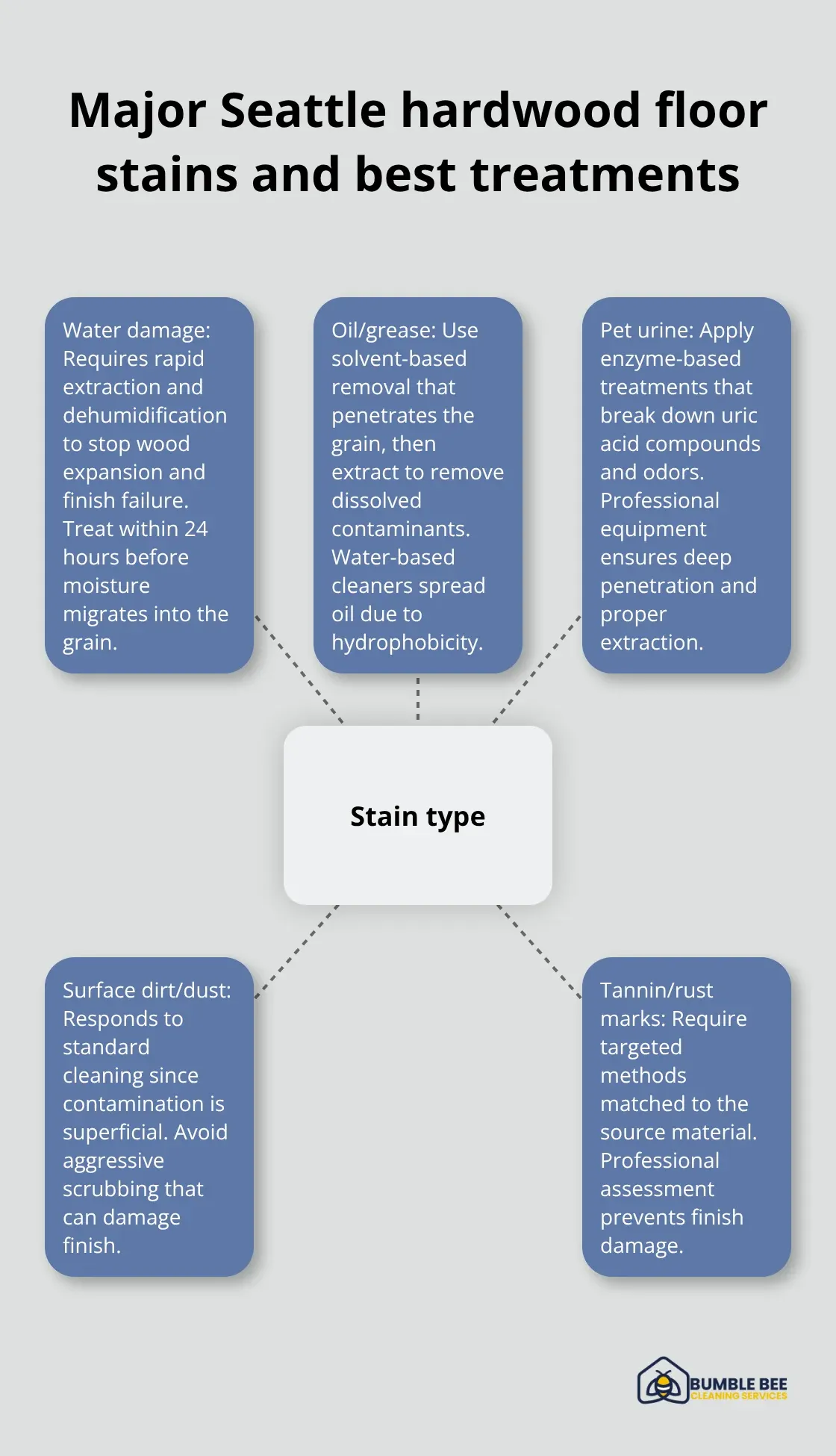
Kitchen spills from cooking oil, butter, or salad dressing soak into the grain within minutes, and waiting even a few hours makes removal exponentially harder. Pet accidents introduce biological stains that combine urine, enzymes, and bacteria-these substances bond chemically to wood fibers and create permanent discoloration if not treated immediately. Hardwood floors in Seattle homes also suffer from dust tracking, tannin stains from wet leaves, and rust marks from metal furniture legs, each requiring different removal approaches.
Moisture Damage Spreads Fast in Seattle Homes
The Pacific Northwest climate means your hardwood floors face constant moisture exposure. Water stains appear as dark patches or rings, but the real damage happens invisibly as water migrates into the wood structure and compromises the finish’s protective barrier. Addressing moisture stains within 24 hours prevents permanent wood grain damage, but most homeowners delay treatment, allowing the stain to set permanently into the wood cells.
Oil Stains Require Immediate Action
Oil-based stains resist removal once they cure because oils are hydrophobic and repel water-based cleaning solutions. Fresh spills demand immediate blotting with paper towels to prevent deeper penetration, but once oil soaks into the grain, household dish soap and vinegar solutions fail because they cannot break the oil’s molecular bond to the wood. Professional removal uses specialized solvents and extraction equipment that penetrate below the surface.
Pet Accidents Cause Permanent Discoloration
Pet urine contains uric acid that chemically alters wood color and creates odors trapped in the grain. Unlike surface stains, enzyme-based treatments break down the biological compounds causing both the stain and the smell. This process demands professional-grade equipment and knowledge of wood absorption rates that most homeowners lack.
Why Professional Treatment Matters Now
Each stain type responds differently to treatment methods, and incorrect approaches can lock damage permanently into your wood. The next section explains why professional stain removal outperforms DIY attempts and protects your floors from irreversible harm.
Why Professional Stain Removal Outperforms DIY Methods
Household cleaners lack the specialized formulations needed to penetrate different stain types without damaging wood finishes. When homeowners apply vinegar solutions, baking soda pastes, or standard floor cleaners to oil stains, they often push the contaminant deeper into the grain rather than extracting it, making professional removal exponentially more difficult afterward. Water-based solutions fail on oil stains because oils are hydrophobic and repel moisture, meaning the stain actually spreads when moisture is introduced. Pet urine requires enzyme-based treatments that break down uric acid at the molecular level, not surface cleaners that merely mask odors temporarily. Most homeowners also lack equipment to assess stain depth-what appears as a surface problem often extends several millimeters into the wood, where household methods cannot reach. Professional teams use extraction equipment, specialized solvents, and moisture meters that identify how far damage has penetrated before treatment starts. This diagnostic step alone prevents the permanent damage that occurs when homeowners treat only visible surface stains while subsurface contamination continues spreading.
Professional Equipment Extracts Rather Than Spreads
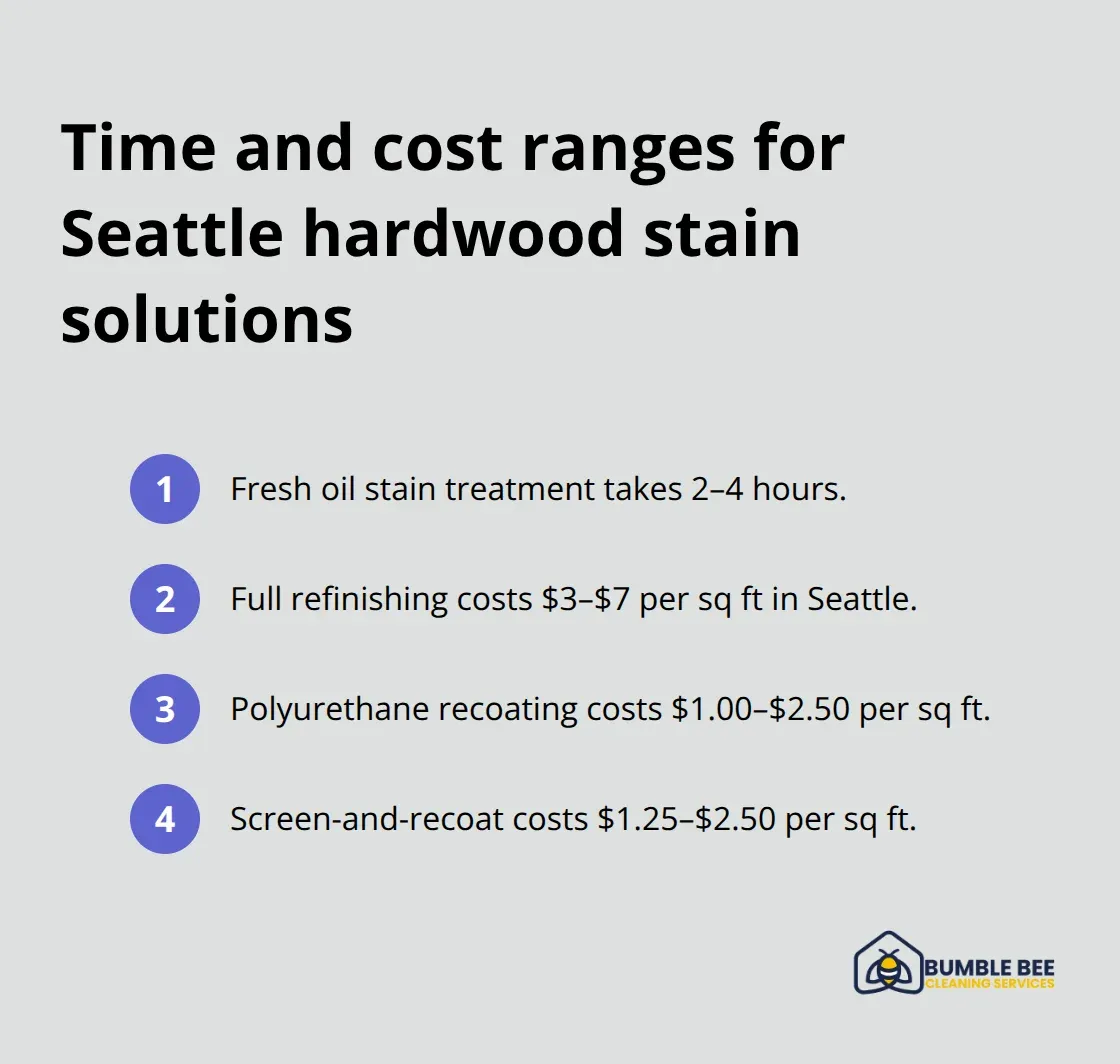
Stain removal equipment matters more than cleaning solution choice. Professional-grade extractors use suction and controlled moisture application that pulls contaminants out of wood grain rather than pushing them deeper-a fundamental difference from mop-and-bucket approaches. Hard-bristle scrubbing, which homeowners often resort to, actually damages protective finish coatings and opens wood to further moisture absorption. Professional treatment on fresh oil stains takes 2 to 4 hours depending on penetration depth, while delayed DIY attempts often require full refinishing that costs $3 to $7 per square foot in the Seattle area. Knowledge of wood species matters critically here-oak and ash are more porous than maple, meaning treatment timing and solvent selection differ significantly. Professionals assess wood type before selecting removal methods, preventing the finish damage that occurs when wrong approaches are applied to specific species.
Timing and Moisture Control Prevent Permanent Damage
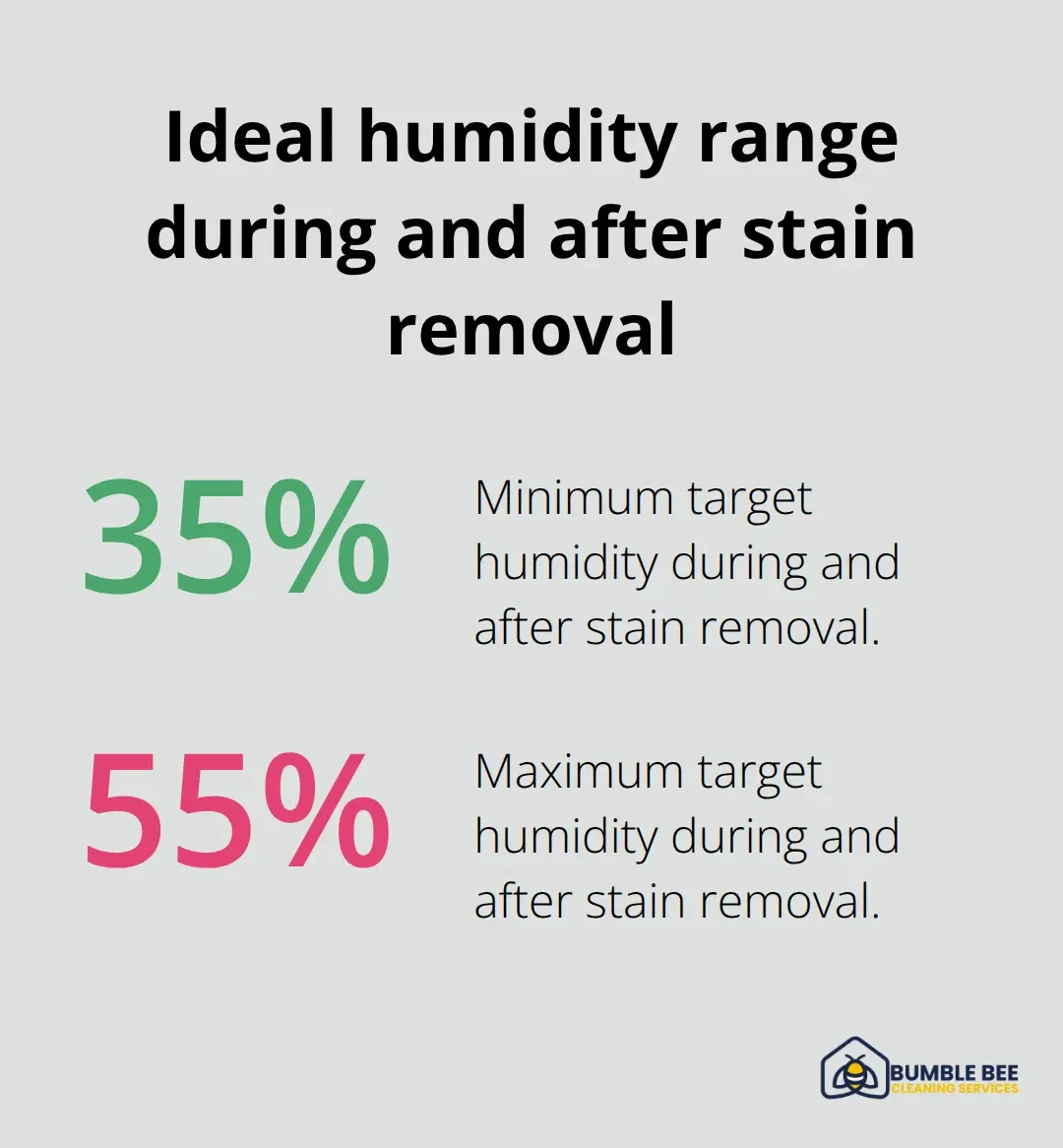
Water stains in Seattle homes demand action within 24 hours because wood expansion starts immediately as moisture migrates into grain cells. Homeowners often wait several days, allowing the stain to set permanently into the wood structure where no cleaning method can remove it. Professional teams understand that moisture control during treatment is essential-applying water-based solutions without proper drying protocols creates new damage while attempting to fix existing stains. Humidity levels between 35 and 55 percent are critical during and after stain removal, requiring dehumidifiers or humidifiers that most households lack. Incorrect drying allows wood to cup or warp, creating structural problems beyond cosmetic staining. Professional treatment includes post-removal monitoring to verify wood moisture content returns to safe levels before any protective coatings are applied.
Why Stain Type Determines Treatment Success
Each stain type responds differently to removal methods, and incorrect approaches can lock damage permanently into your wood. Oil stains resist water-based solutions because they repel moisture, while pet urine stains require enzyme treatments that break down biological compounds at the molecular level. Water damage demands rapid extraction and dehumidification to prevent wood expansion, whereas surface dirt responds to standard cleaning. Professionals identify stain composition before treatment starts, selecting the exact method that removes contamination without harming the finish or wood structure. This assessment step separates successful stain removal from attempts that worsen the problem.
How Professional Stain Removal Works
Professional stain removal starts with accurate diagnosis, not guesswork. Professionals identify exactly what caused the stain and how deep it has penetrated into the wood structure. This assessment determines everything that follows because water damage requires different treatment than oil or pet urine. Moisture meters reveal whether damage extends beyond the visible surface-a critical step that separates successful removal from attempts that fail because subsurface contamination was ignored. Fresh stains present vastly different challenges than set-in stains, which is why timing matters enormously. A water stain treated within 24 hours responds to extraction and dehumidification, but the same stain left untreated for a week often becomes permanent because the wood has already absorbed and chemically altered from the moisture exposure.
Stain Type Determines Treatment Selection
Oil stains require solvent-based treatments that break the molecular bond between oil and wood fiber, while pet urine stains demand enzyme treatments that neutralize uric acid compounds. Once the stain type is confirmed, professionals select the removal method specifically matched to that stain’s chemistry and the wood species being treated, accounting for differences in porosity between oak, maple, ash, and engineered hardwood. This targeted approach prevents the damage that occurs when wrong methods are applied to specific stain types.
Professional Equipment Extracts Contamination
The actual removal process demands equipment that extracts rather than spreads contamination. Professional-grade extractors apply controlled moisture and suction simultaneously, pulling stain particles from wood grain in a way that mop-and-bucket approaches cannot replicate. For oil stains, specialized solvents penetrate the grain and break down hydrophobic compounds while extraction equipment removes both the solvent and the dissolved contaminant before they can resettle. Pet urine treatment involves enzyme application that breaks down biological compounds over several hours, followed by extraction to remove both the enzyme solution and the decomposed uric acid.
Moisture Control Prevents New Damage
After removal completes, moisture control becomes essential because introducing any liquid to hardwood demands careful drying to prevent new damage. Humidity levels must remain between 35 and 55 percent during drying, requiring dehumidifiers in Seattle homes where ambient moisture levels often exceed this range naturally. Once the wood returns to safe moisture content, protective finishing restores the floor’s appearance and guards against future staining.
Protective Finishing Extends Floor Life
Protective finishing might mean recoating with polyurethane sealant at $1.00 to $2.50 per square foot, buffing to restore shine, or in severe cases where the finish is compromised, screen-and-recoat treatment that costs $1.25 to $2.50 per square foot to extend the floor’s lifespan without full refinishing. This final step locks in the stain removal work and creates a barrier against future contamination.
Final Thoughts
Professional stain extraction protects your hardwood floors from permanent damage that spreads invisibly beneath the surface. Water stains, oil contamination, and pet accidents all demand immediate, specialized treatment to prevent wood expansion, finish failure, and irreversible discoloration. When you address stains within hours rather than days, you avoid the exponentially higher costs of refinishing that can reach $3 to $7 per square foot across your Seattle home.
The long-term value of professional treatment extends far beyond appearance because hardwood floors represent a significant investment in your home’s structure and resale value. Stain damage left untreated compounds over time as moisture continues migrating into wood grain and biological compounds permanently alter wood color. Professional stain extraction stops this progression immediately by removing contamination completely and restoring protective finishes that guard against future damage.
Seattle’s climate makes professional stain removal especially important because constant moisture exposure accelerates damage from spills and accidents that might cause minimal problems in drier regions. Humidity levels in the Pacific Northwest naturally exceed safe ranges, meaning stains set faster and penetrate deeper than homeowners typically expect. Contact Bumble Bee Cleaning Services today to schedule a professional assessment and protect your hardwood investment from permanent damage.
For more information about our cleaning services in Seattle and Atlanta, or to request a cleaning quote, call or text us at 425-786-1360 or email us at info@qbclean.com
