
Dust mites are invisible to the naked eye, but their impact on your home’s air quality is very real. Millions of these microscopic creatures live in your bedding, carpets, and furniture, triggering allergies and respiratory issues for many Seattle residents.
We at Bumble Bee Cleaning Services know that standard vacuuming won’t eliminate dust mite colonies. Professional deep cleaning uses specialized techniques and equipment to target these allergens at their source, giving you a healthier home.
Understanding Dust Mites and Their Impact on Indoor Air Quality
How Dust Mites Thrive in Seattle Homes
Dust mites need very little to survive and multiply rapidly in your home. They feed on the dead skin that each person sheds daily-the average human sheds 30,000–40,000 dead skin cells every single minute, roughly 8–9 pounds per year-enough to sustain roughly one million mites. Seattle’s climate provides ideal conditions for these microscopic creatures. The Puget Sound region’s moisture and year-round dampness create perfect breeding grounds indoors, especially during fall and winter when homes are sealed tight and humidity climbs above 50%. A single bedroom can harbor millions of dust mites because residents spend hours there each night, shedding skin continuously.
These creatures concentrate in the places where you spend the most time. Your mattress, pillows, carpets, and upholstered furniture become primary colonies. Unlike pet dander, dust mite allergens don’t float freely in the air for long periods. Instead, they settle into fabrics and dust, which means most exposure happens while you sleep or sit on contaminated furniture.
Health Effects of Dust Mite Allergens
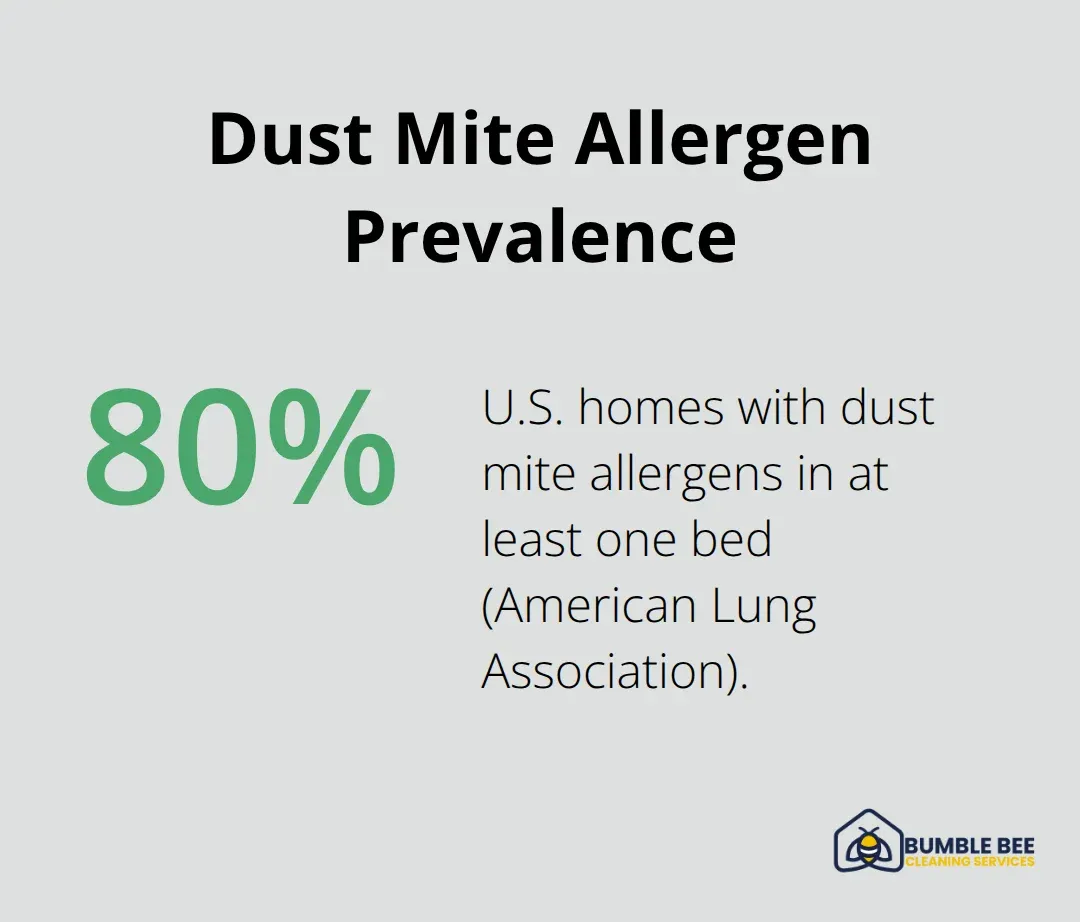
The American Lung Association found that roughly 80% of U.S. homes have dust mite allergens in at least one bed. When you inhale proteins from dust mite feces and decaying bodies, you may experience sneezing, watery eyes, itchiness, and congestion. People with asthma face much steeper risk; dust mite exposure can trigger mild symptoms or severe asthma attacks.
Vulnerable populations suffer more severe reactions. Children, pregnant women, older adults, and anyone with respiratory conditions are especially sensitive to these allergens. Seattle residents dealing with winter indoor allergies often blame seasonal factors, but dust mites are frequently the culprit year-round.
Where Dust Mites Concentrate Most in Homes
The problem intensifies in homes with forced-air HVAC systems, where continuous air movement distributes mite allergens throughout rooms and between units in multi-family buildings. Standard household vacuuming and occasional dusting cannot reach the colonies embedded deep in carpet fibers, mattress cores, and furniture seams. These hidden populations continue to multiply and spread allergens while surface-level cleaning simply stirs particles into the air rather than removing them. Professional deep cleaning targets these exact reservoirs, which is why standard methods fail to reduce populations effectively.
How Professional Deep Cleaning Eliminates Dust Mite Colonies
Hot Water Extraction Kills Mites at the Source
Professional deep cleaning removes dust mites where they actually live, not just where they’re visible. The EPA recognizes that regular household cleaning reduces biological contaminant buildup, but dust mites embedded deep in carpet fibers, mattress cores, and upholstered seams require temperatures and methods that standard vacuuming cannot achieve.
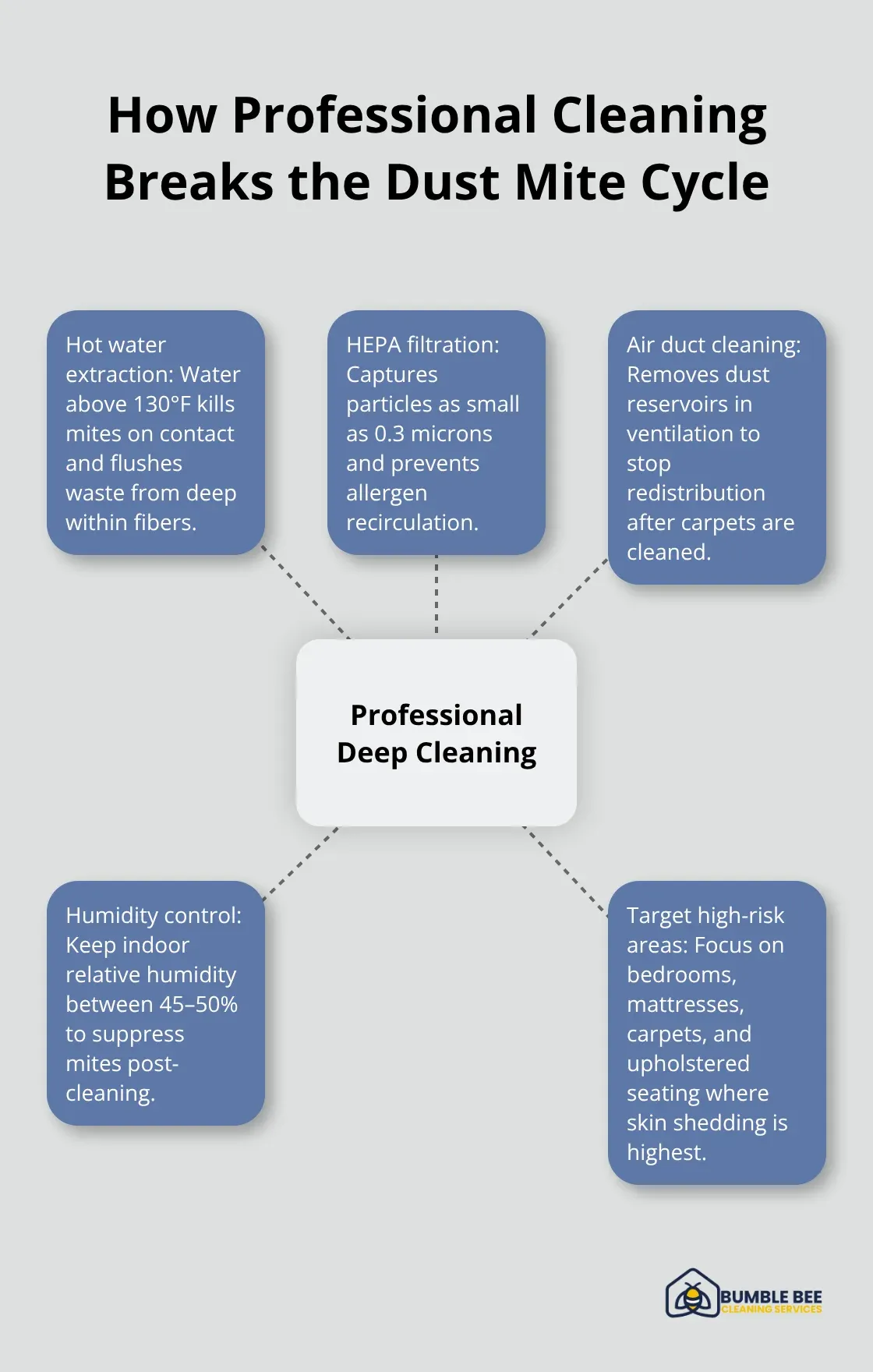
Hot water extraction, the industry standard for carpet cleaning, heats water above 130°F to kill mites on contact and flush out their waste proteins from deep within fibers. This temperature threshold is critical because dust mites cannot survive heat above 130°F, making professional-grade equipment essential for actual elimination rather than surface-level dust removal.
HEPA Filtration Captures Microscopic Allergens
HEPA-filtered vacuums capture allergen particles as small as 0.3 microns, whereas standard vacuums without HEPA filtration recirculate the very allergens you’re trying to remove back into your home’s air. Commercial-grade steam cleaning on upholstered furniture and mattresses delivers the same lethal heat while HEPA vacuuming afterward traps the dead mites and their allergens before they settle again. The combination of both methods yields significantly better results than either approach alone.
Targeted Treatment of High-Risk Areas
Carpeted bedrooms and living areas should receive hot water extraction every 6 months in standard conditions, or every 3 months in high-traffic zones, because these spaces harbor the largest mite populations due to skin shedding and extended occupancy. Mattresses, pillows, and upholstered seating require steam cleaning that penetrates fabric layers where mites colonize, not surface wiping. Lobby areas and common spaces in multi-unit buildings present particular challenges since shared HVAC systems distribute mite allergens throughout the building, making coordinated professional cleaning across common areas necessary to prevent cross-contamination.
Air Duct Cleaning and Humidity Control
Air duct cleaning removes accumulated dust and organic debris where mites accumulate invisibly, and scheduling duct cleaning alongside carpet extraction maximizes effectiveness because you eliminate both the mite reservoirs in fabrics and the redistribution pathways in your ventilation system. Humidity control between professional cleanings extends their impact significantly; maintaining indoor relative humidity between 45–50% suppresses mite populations compared with homes where humidity climbs above 50%, which Seattle’s damp climate makes challenging without active dehumidification or air conditioning. These environmental adjustments work hand-in-hand with professional cleaning to create conditions where mite populations struggle to reestablish themselves, setting the stage for the maintenance practices that sustain these results long-term.
Maintaining Results After Professional Deep Cleaning
Start Humidity Control Immediately
Professional deep cleaning eliminates dust mite colonies, but these microscopic pests return quickly without deliberate maintenance. The window between professional treatments is your opportunity to prevent rapid reinfestation. Seattle’s climate naturally pushes indoor moisture above the 50% threshold where mites thrive, so you must act fast. A dehumidifier costs $100–$300 upfront and uses roughly $10–$15 monthly in electricity, but it suppresses mite populations far more effectively than any cleaning method alone. Position your dehumidifier in your bedroom first, since that’s where you shed the most skin and spend the most hours. The EPA confirms that vulnerable groups including children and older adults benefit significantly from humidity between 30-50%.
Upgrade Your HVAC Filtration System
Check your HVAC system’s filter rating and upgrade to MERV 11 or higher if you’re still using MERV 8 filters, which cannot capture mite particles effectively. Replace these filters quarterly, not annually, because Seattle’s damp climate clogs them faster than standard recommendations suggest. This simple upgrade prevents your ventilation system from recirculating mite allergens throughout your home after professional cleaning removes them from carpets and furniture.
Establish a Weekly Cleaning Routine
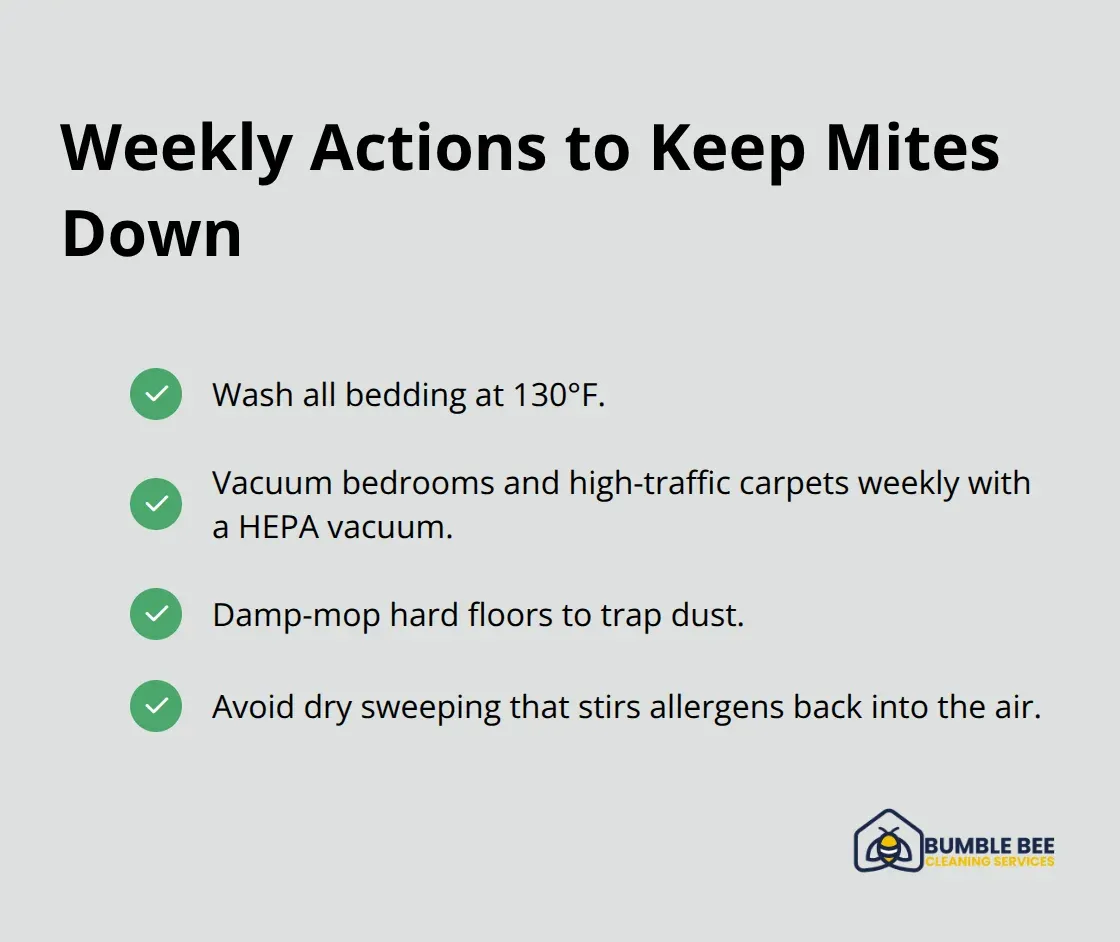
Your weekly routine determines whether mites recolonize or remain suppressed. Wash all bedding in water heated to at least 130°F on a regular cycle-this temperature kills mites on contact, just like professional hot water extraction does. Vacuum high-traffic carpets and your bedroom weekly using a HEPA-filter vacuum; standard vacuums without HEPA actually recirculate allergens back into your air. Damp-mop hard floors rather than dry-sweeping to trap dust instead of stirring mite allergens into circulation.
Protect Sleeping and Sitting Areas
For mattresses and upholstered furniture, use allergen-proof encasements on mattresses and pillows to block mite contact with your skin. These covers (typically $30–$80 per mattress) create a physical barrier that prevents new mites from colonizing while you sleep. This investment works alongside your weekly washing and humidity control to keep mite populations suppressed between professional treatments.
Schedule Recurring Professional Cleaning
Schedule recurring professional cleaning every 6 months for standard residential areas, or every 3 months if you have high-traffic zones, pets, or multiple household members with asthma. This frequency prevents mite populations from rebuilding to levels that trigger allergies again, keeping the benefits of your initial deep clean intact long-term.
Final Thoughts
Professional deep cleaning eliminates dust mite colonies at their source, delivering immediate relief from allergies and respiratory problems that plague your family. When we at Bumble Bee Cleaning Services remove mites from your carpets, mattresses, and upholstered furniture using hot water extraction and HEPA filtration, we target the exact populations triggering your symptoms. That single treatment reduces allergen levels dramatically and gives you cleaner air throughout your home.
The long-term payoff requires combining professional cleaning with maintenance habits that prevent dust mites from recolonizing. Humidity control, weekly bedding washing at 130°F, HEPA vacuuming, and allergen-proof mattress covers work together to sustain the benefits for months between treatments. Without these practices, mite populations rebuild within weeks and your symptoms return; with them, you maintain the relief that professional cleaning provides.
Contact Bumble Bee Cleaning Services to eliminate existing dust mite colonies and receive a 100% quality service guarantee with flat-rate pricing. Our team uses professional-grade equipment and eco-friendly products to target dust mites where they actually live, creating an environment where these microscopic pests struggle to survive.
For more information about our cleaning services in Seattle and Atlanta, or to request a cleaning quote, call or text us at 425-786-1360 or email us at info@qbclean.com
