
Allergies affect roughly 50 million Americans annually, and Seattle’s damp climate makes dust allergens particularly stubborn in homes. Deep cleaning removes the hidden triggers that standard vacuuming misses-dust mites, pet dander, and mold spores that accumulate in carpets, upholstery, and ventilation systems.
We at Bumble Bee Cleaning Services know that families dealing with allergies need more than surface-level cleaning. This guide shows you exactly how deep cleaning works to reduce allergens and what steps keep your home allergy-friendly long-term.
What Deep Cleaning Actually Removes From Your Home
Dust Mites Hide Where Vacuums Cannot Reach
Dust mites thrive in Seattle’s humidity, and a single mite produces roughly 20 waste pellets daily-each one a potent allergen. Standard vacuuming captures surface dust but leaves behind the embedded colonies living deep in carpet fibers, mattress cores, and upholstery seams. Deep cleaning with HEPA filtration and hot-water extraction pulls out these hidden populations that trigger year-round symptoms. HEPA filters capture about 99.97% of particles at 0.3 microns, which means the allergens actually get removed rather than circulated back into the air. Washing bedding weekly in water heated to at least 130°F kills existing mites, but deep cleaning addresses the thousands hiding where weekly laundry cannot reach.
Pet Dander Accumulates Faster Than Regular Cleaning Handles
Pet owners face a significant problem: dog and cat dander accumulates faster than regular vacuuming can manage, especially in homes where pets spend time on furniture and bedding. Professional extraction cleaning lifts embedded pet hair and dander from carpet backing and upholstery padding-the spaces where allergens concentrate and persist for months. These hidden reservoirs release allergens into the air long after pets leave a room, affecting sleep quality and respiratory health throughout the home.
Mold Growth Demands Moisture Control First
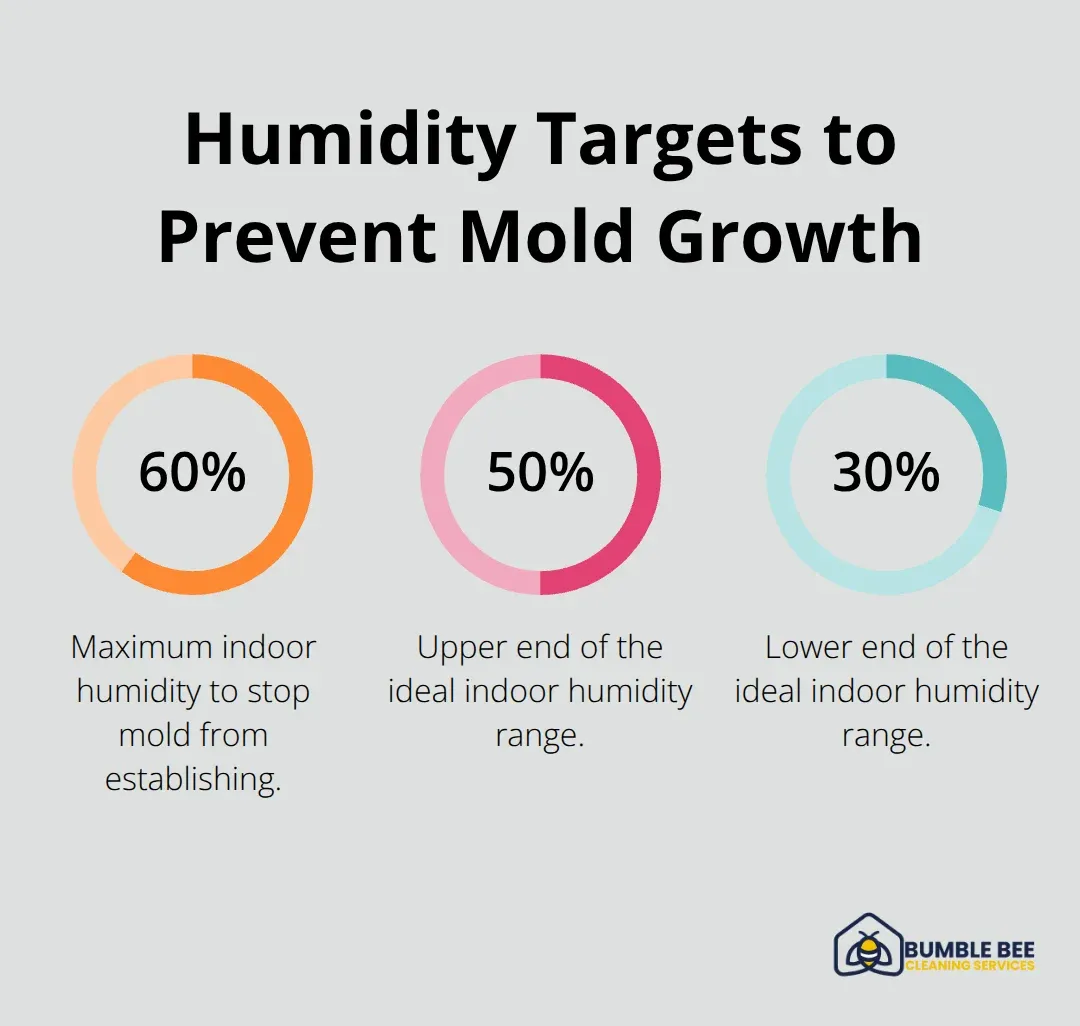
Seattle’s wet climate creates ideal conditions for mold, which releases spores that irritate airways and skin. The EPA recommends keeping indoor humidity below 60%, ideally between 30 and 50%, to stop mold from establishing itself. Deep cleaning removes existing mold from bathroom grout, around window frames, and inside HVAC ducts, but the real work happens after.
Ventilation system cleaning prevents mold spores from spreading through ductwork into living areas. Leaks and standing water require attention within 24 to 48 hours-after that window, mold colonies develop rapidly. The CDC recommends scrubbing visible mold with detergent and water, then drying completely, which professional deep cleaning accomplishes thoroughly. Many Seattle families miss moisture sources in crawl spaces, attic vents, and basement corners where mold thrives unnoticed. Deep cleaning paired with humidity monitoring creates an environment where mold cannot gain a foothold, directly reducing the allergen load that affects your family’s health. Once you eliminate these hidden allergen sources, the next step involves maintaining that progress through specialized equipment and ongoing care practices.
Deep Cleaning Equipment That Removes Allergens Permanently
HEPA filtration stands as the only technology that removes allergens rather than just moving them around your home. True HEPA filters capture 99.97% of particles at 0.3 microns, which means dust mite waste, pet dander fragments, and mold spores get trapped permanently instead of being recirculated through your air. Standard household vacuums lack this sealed-system design, so dust escapes back into breathing zones even with repeated passes.
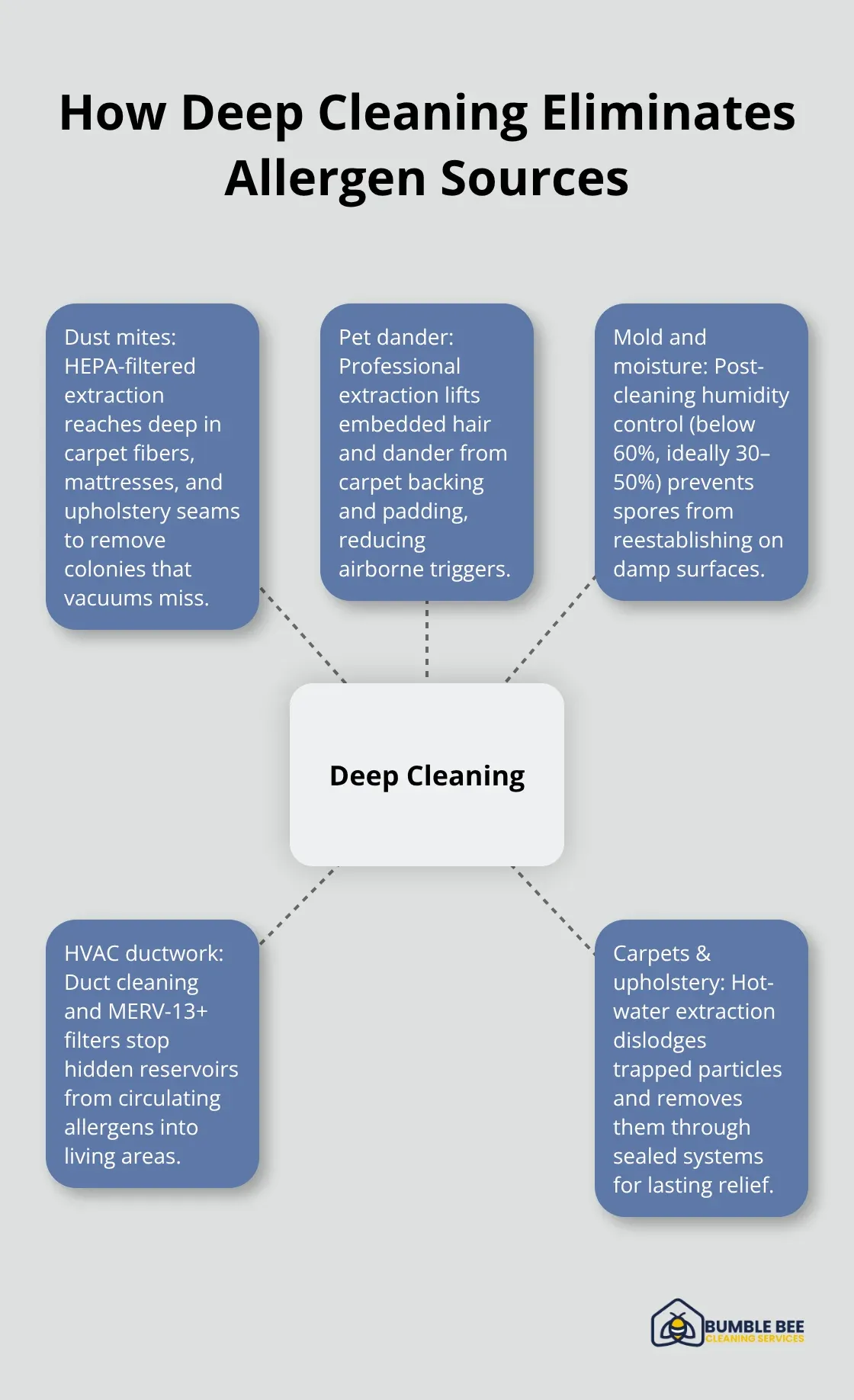
Professional-grade equipment uses sealed HEPA bags that contain allergens completely, preventing the contamination that happens when homeowners empty standard vacuum canisters into open trash cans.
Extraction equipment combines HEPA filtration with hot-water injection, which simultaneously lifts embedded particles from carpet fibers while the sealed system captures them. This two-step process matters because carpet backing and upholstery padding harbor allergen colonies that dry-cleaning methods leave behind. Extraction cleaning also addresses the moisture control problem by removing standing water that prevents mold growth within 24 to 48 hours, the critical window for preventing colony establishment.
HVAC Systems Spread Hidden Allergen Reservoirs Throughout Your Home
Your HVAC system spreads whatever lives inside it throughout your entire home every time the fan runs. Mold spores, dust mite colonies, and pet dander accumulate in ductwork where they multiply undisturbed, then get blown directly into bedrooms and living areas. Professional duct cleaning removes these hidden populations, though the ASHRAE standard recommends replacing HVAC filters every one to three months with MERV-13 or higher-rated filters to prevent rapid reaccumulation. Seattle’s humidity makes this maintenance critical because moisture inside ducts creates conditions for mold growth. After deep cleaning removes allergens from surfaces and fabrics, neglecting duct cleaning undermines that entire effort since contaminated air will continuously reintroduce triggers into your space.
Carpet and Upholstery Require Extraction to Reach Embedded Allergens
Surface cleaning with dry foam or light shampoo leaves 60 to 70% of embedded allergens untouched in carpet backing and furniture padding. Hot-water extraction forces heated water deep into fibers, dislodges trapped particles, and immediately vacuums them away through sealed hoses, which is why professional extraction delivers measurable allergy relief that homeowners notice within days. Damp-wiping hard surfaces with microfiber cloths removes allergens without kicking them into the air like dry dusting does. Mattress cleaning specifically targets the dust mite colonies living inside core layers where weekly washing cannot reach, directly addressing the allergen source responsible for morning congestion and nighttime symptoms that disrupt sleep quality.
With allergens removed from your home’s surfaces, systems, and fabrics, the real challenge becomes preventing their rapid return-which requires establishing maintenance routines and environmental controls that work together to keep your space allergy-friendly long-term.
Maintaining Allergy Relief After Deep Cleaning
Deep cleaning removes allergens, but your home will accumulate new ones within weeks without a maintenance strategy. Families often undo professional results by waiting months between cleanings or using ineffective methods that leave allergens undisturbed. The EPA states that people spend roughly 90 percent of their time indoors, making consistent allergen control essential rather than optional.
Establish a Recurring Cleaning Schedule That Works
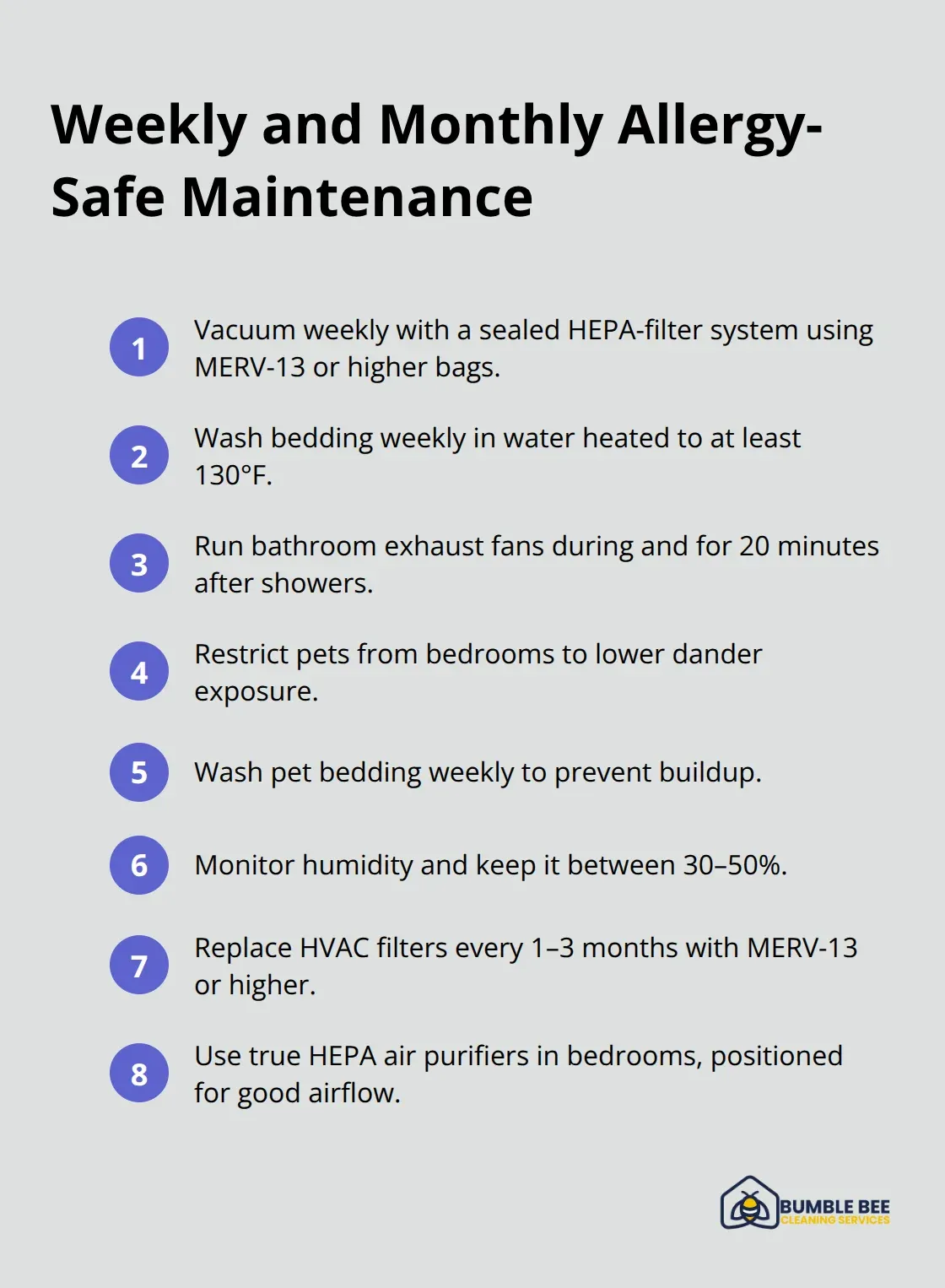
A practical maintenance schedule starts with recurring cleaning every two weeks for homes with pets or multiple family members with allergies, shifting to weekly attention to high-traffic areas and fabric surfaces. Dust microfiber cloths damp-wiped across surfaces capture allergens without dispersing them into breathing zones like dry dusting does. Vacuum weekly with a sealed HEPA-filter system using MERV-13 or higher bags, and wash bedding in water heated to at least 130°F.
Bathrooms require exhaust fan use during and 20 minutes after showers to control the moisture that enables mold spores to establish colonies. Pet owners should wash pet bedding weekly and restrict animals from bedrooms entirely, which the American College of Allergy, Asthma and Immunology identifies as one of the most effective dander-reduction strategies. Monitor humidity with an inexpensive digital meter, keeping levels between 30 and 50 percent to inhibit both dust mites and mold growth simultaneously.
Deploy Air Purifiers and Humidity Control Systems
Air purifiers with true HEPA filters address airborne allergens that settling and surface cleaning cannot eliminate completely. Run a portable unit in bedrooms during sleep when vulnerability peaks, and position it away from walls to maximize air circulation through the filter. Humidity control demands either a dehumidifier in damp climates or a humidifier in dry spaces, with Seattle’s maritime climate typically requiring dehumidification except during summer months.
Choose Flooring and Products That Reduce Allergen Buildup
Hard-surface flooring or washable rugs outperform wall-to-wall carpet for allergen management because they eliminate the reservoir of embedded particles that extraction cleaning only temporarily reduces. If carpet remains necessary, try low-pile options that trap fewer allergens than plush varieties. Product selection matters significantly: fragrance-free, hypoallergenic cleaners prevent chemical irritants from triggering reactions in sensitive individuals, and baking soda mixed with water offers effective cleaning without respiratory irritation.
Avoid antimicrobial products that kill microorganisms but leave dead cells behind as allergen sources. Implement a shoes-off policy at entry points to prevent outdoor pollen and mold spores from being tracked throughout your home, which directly reduces the allergen burden your maintenance routine must manage.
Final Thoughts
Deep cleaning removes dust allergens, pet dander, and mold spores that standard vacuuming leaves behind, delivering measurable relief that Seattle families notice within days. HEPA filtration, hot-water extraction, and ventilation system cleaning address allergen sources at their origin rather than circulating contaminated air through your home. This targeted approach works because it eliminates hidden populations living in carpet backing, upholstery padding, and ductwork where they multiply undisturbed and continuously trigger symptoms.
Long-term allergy relief depends on maintaining the progress deep cleaning achieves through recurring schedules, humidity control between 30 and 50 percent, and weekly bedding washes in 130°F water. Hard-surface flooring or washable rugs outperform wall-to-wall carpet for ongoing allergen management, and air purifiers with true HEPA filters address airborne particles that settling cannot eliminate completely. A shoes-off policy at entry points prevents outdoor pollen and mold spores from being tracked throughout your home, directly reducing the allergen burden your maintenance routine must manage.
We at Bumble Bee Cleaning Services understand that Seattle families need cleaning solutions specifically designed for your climate’s moisture and allergen challenges. Contact us to schedule your deep clean and establish the maintenance routine that protects your family’s health.
For more information about our cleaning services in Seattle and Atlanta, or to request a cleaning quote, call or text us at 425-786-1360 or email us at info@qbclean.com
