
Kitchen grease buildup doesn’t just look bad-it shuts down restaurants. We at Bumble Bee Cleaning Services know that one health code violation can cost you thousands in fines and lost business.
The good news is that prevention works. Daily routines and professional cleaning stop problems before they start.
Daily Kitchen Cleaning That Stops Grease Before It Spreads
Grease traps fail when restaurants treat them like set-it-and-forget-it systems. Managers often wait until the trap overflows or smells terrible before taking action. The reality is that grease traps need monthly maintenance, not annual attention. When you maintain grease traps monthly, you prevent backups that can shut down your entire kitchen during service. A backed-up grease trap forces you to close, lose revenue, and face health department citations all at once. Schedule maintenance on the same day each month-this creates accountability and prevents the trap from reaching critical capacity. Your plumber should document the service date and the amount of grease removed; this log proves compliance to health inspectors and catches patterns if a particular piece of equipment causes excessive buildup.
What Happens at the End of Every Shift
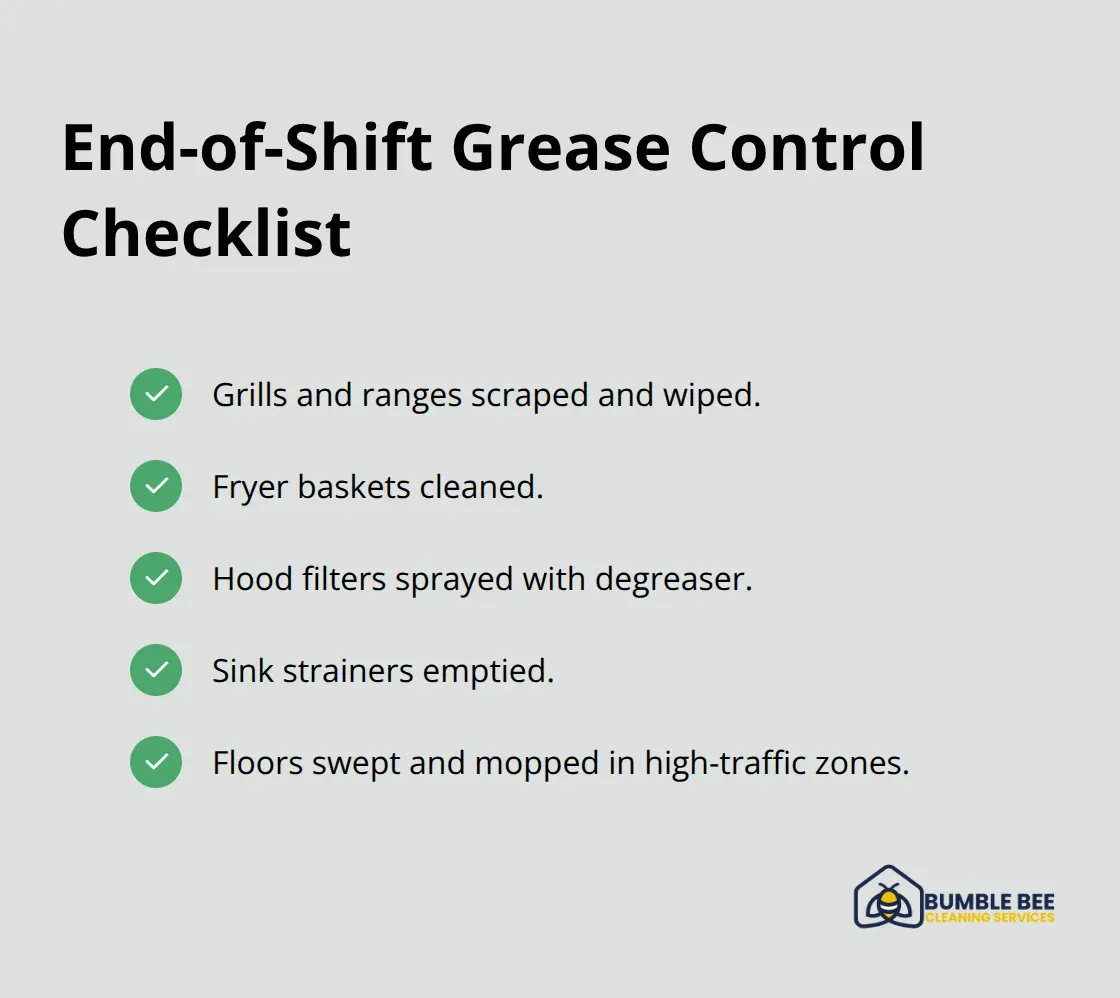
End-of-shift cleaning is where prevention actually happens, not in some quarterly deep clean. Your team should spend 20 to 30 minutes after service closing down the line: scrape warm cooking surfaces, wipe down grills and fryers while they’re still hot (this is faster and more effective than cold scrubbing), and run degreaser through hood filters. This is non-negotiable. Restaurants that skip end-of-shift protocols see grease harden overnight on equipment, which then requires aggressive chemicals and elbow grease to remove the next day. Assign one person each shift to oversee this work and verify it’s completed before anyone leaves. That person should initial a checklist so you have documentation. Many Seattle restaurants fail health inspections because they lack this simple accountability system. Your end-of-shift checklist should include: grills and ranges scraped and wiped, fryer baskets cleaned, hood filters sprayed with degreaser, sink strainers emptied, and floors swept and mopped in high-traffic zones.
Equipment Needs Different Cleaning Approaches
Fryers, convection ovens, and dishwashers each require specific care that generic degreasers cannot provide. Filter fryer oil daily and boil it out weekly to remove baked-on carbon and extend oil life-this saves money and improves food quality. Clean convection oven fans monthly because grease accumulation on fan blades reduces heat circulation and causes uneven cooking. In hard-water areas, delime dishwashers daily to prevent mineral buildup that reduces spray arm pressure and water temperature. Your equipment supplier provides cleaning recommendations in the manual; follow those guidelines exactly rather than inventing your own methods. When you deviate from manufacturer specs, you void warranties and risk damage that becomes expensive fast. Document each equipment cleaning with the date and person responsible. This practice reveals which equipment needs attention and which team members understand the procedures. Grease buildup on equipment shortens its lifespan dramatically-a commercial fryer properly maintained lasts 10 to 15 years, while a neglected one fails in 5 to 7 years.
Why Professional Kitchen Cleaning Prevents Costly Shutdowns
Daily routines stop most buildup, but professional kitchen cleaning catches what staff routines miss. Health code violations cost thousands in fines, and equipment breakdowns force closures that kill revenue. A single forced shutdown can cost a mid-sized restaurant $2,000 to $5,000 in lost sales alone, not counting repair bills or health department fines. Professional services deep-clean behind equipment, inside hoods, and through ventilation systems where grease accumulates invisibly. This preventive approach protects your business from the cascade of problems that start with neglected buildup.
What Stops Health Violations, Equipment Failures, and Lost Revenue
Health Inspectors Hold Restaurants Accountable
Health inspectors in Seattle use the King County Environmental Health Services rating system to evaluate restaurants, and violations documented in their inspections become public record. A single critical violation costs between $500 and $2,500 in fines, but the real damage happens afterward. Restaurants with violations lose customer trust immediately-people check ratings online before deciding where to eat, and a poor inspection rating tanks revenue faster than any other factor.
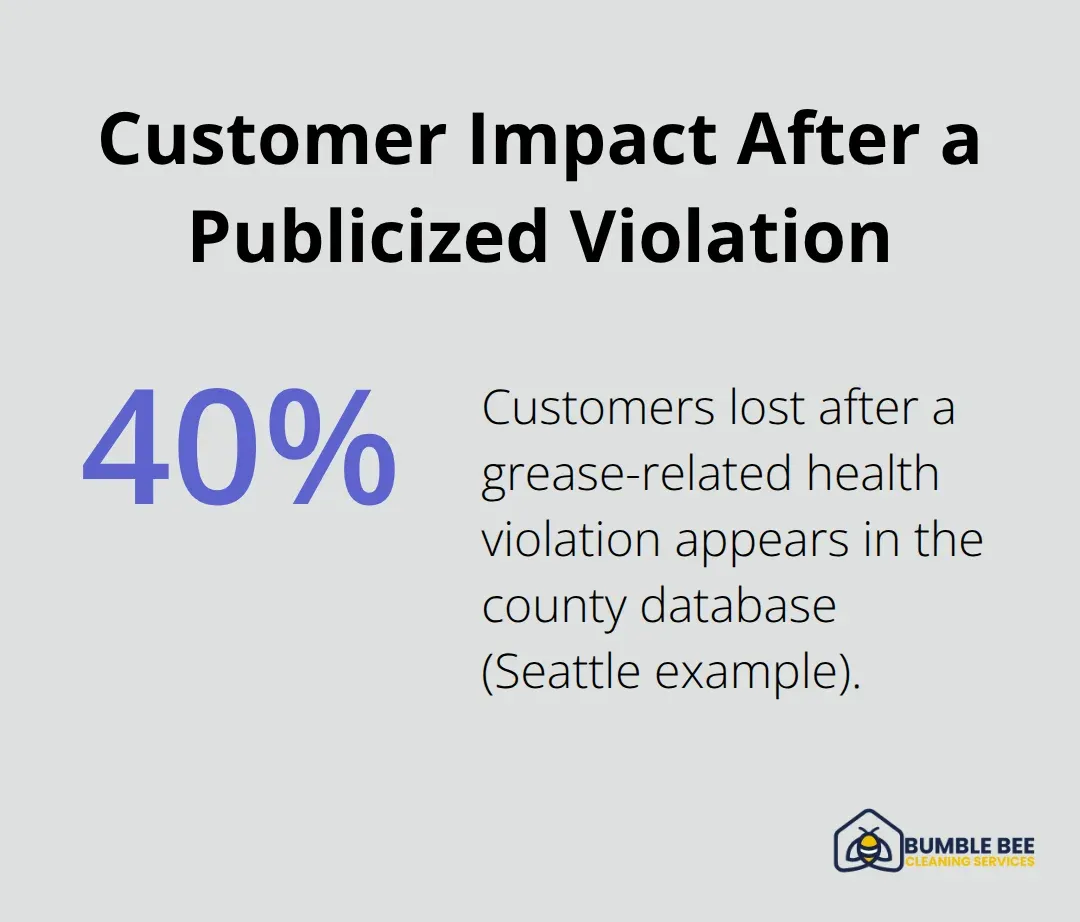
One Seattle restaurant lost 40% of its customer base after a grease-related health violation appeared in the county database. Beyond fines, violations trigger follow-up inspections that disrupt operations and require staff time to address citations. The cumulative cost of one violation easily reaches $5,000 to $10,000 when you factor in fines, lost sales, re-inspection fees, and staff hours spent correcting problems.
Equipment Breakdowns Force Expensive Shutdowns
Equipment failures create a different but equally expensive crisis. A commercial fryer that breaks down mid-service forces you to stop cooking, turn away customers, and pay emergency repair rates that run 30% to 50% higher than scheduled maintenance. If the fryer needs replacement instead of repair, you’re looking at $3,000 to $8,000 for a new unit plus installation downtime.
Dishwasher failures are equally brutal-you cannot operate a kitchen without clean plates and utensils, so a broken machine forces closure within hours. Grease buildup accelerates these failures by clogging internal components and reducing equipment efficiency long before catastrophic breakdown occurs.
Slip-and-Fall Liability Extends Beyond Cleaning Costs
Kitchen floors are often slippery, and hazardous grease, drinks, and food are all factors that can cause slip and fall injuries. Settlements and workers compensation claims add thousands more to your bottom line when accidents happen. Grease on floors doesn’t just look unprofessional-it exposes your business to lawsuits and regulatory action that compound the financial damage.
Professional Cleaning Addresses What Staff Routines Miss
Professional kitchen cleaning prevents these cascades by addressing grease buildup before it hardens on equipment, clogs ventilation systems, or triggers health department action. A professional cleaning service focuses on the high-risk zones-behind equipment, inside hood systems, and through exhaust ducts-where staff routines cannot reach. This preventive approach costs far less than emergency repairs, health violations, and forced closures combined. The investment in regular professional service protects your operating license, your reputation, and your revenue stream all at once.
What Seattle Health Inspectors Actually Require
King County Environmental Health Services enforces specific standards that restaurants must follow, and inspectors use documented evidence to decide whether your kitchen meets code. The inspection focuses on three areas: grease management, equipment sanitation, and staff practices. Grease buildup on surfaces, equipment, or floors is a critical violation because it creates fire hazards and harbors bacteria.
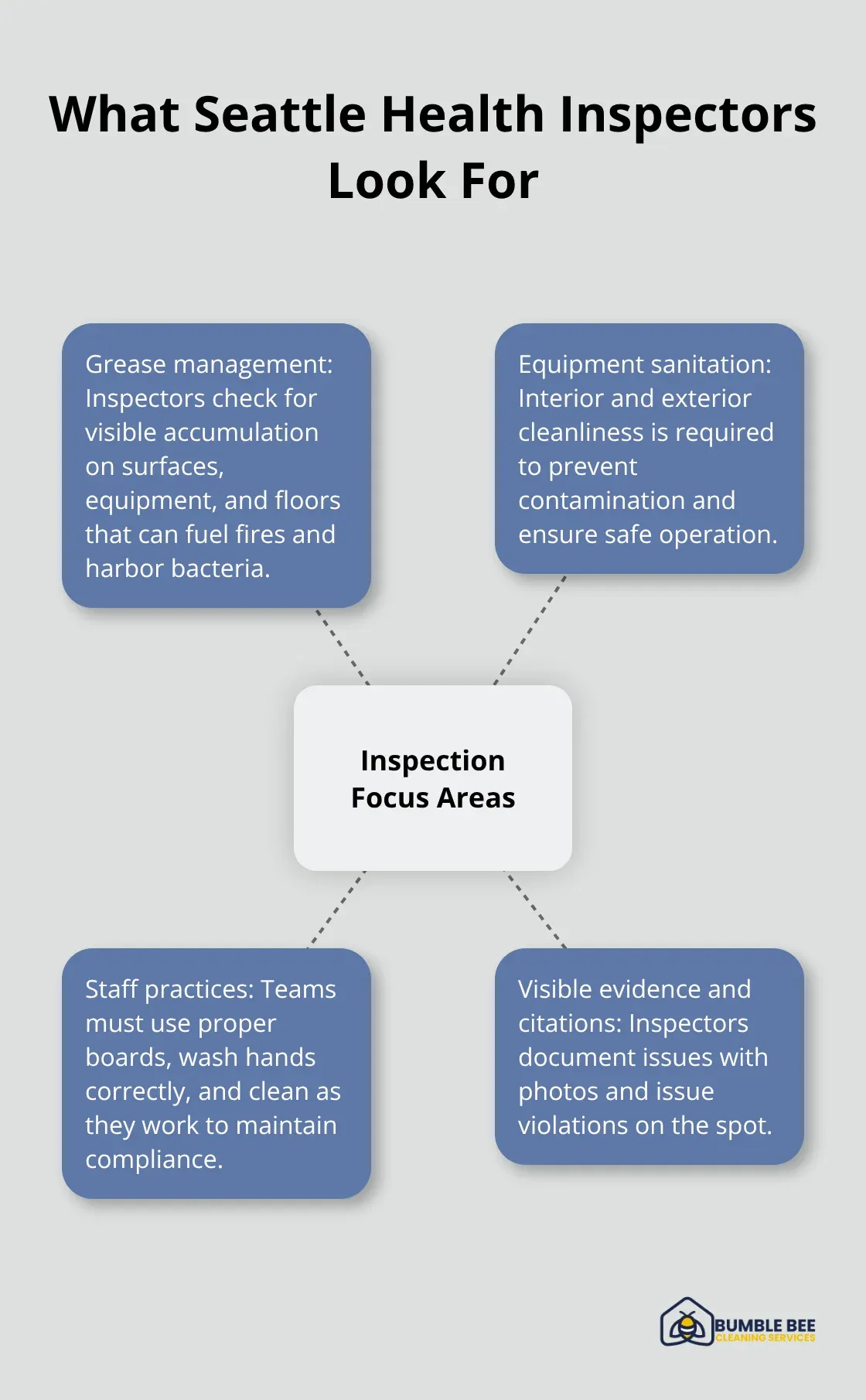
Inspectors photograph grease accumulation and cite violations on the spot. You cannot argue your way out of a grease violation-the evidence is visible.
Documentation Proves Compliance
Seattle restaurants must maintain grease traps monthly and document the service in writing. Inspectors ask to see maintenance logs, and if you cannot produce records, they assume neglect and issue citations. Equipment must be clean inside and out, which means your fryer cannot have carbon buildup on heating elements, your dishwasher spray arms must be clear, and your hood filters cannot drip grease onto food prep surfaces. Staff practices matter equally-inspectors watch whether your team uses separate cutting boards for raw meat and produce, whether they wash hands properly, and whether they clean as they work rather than waiting until the end of the day.
Public Ratings Shape Your Business
The King County Environmental Health Services publishes inspection data publicly, so poor ratings appear online immediately and damage your business reputation before you have a chance to fix anything. This transparency means prevention is not optional-it directly affects your ability to attract customers and operate profitably.
ISSA Standards Exceed Health Code Minimums
The International Sanitary Supply Association, known as ISSA, publishes cleaning and facility standards that professional kitchens should follow to prevent buildup systematically. This standard requires written procedures for every kitchen zone, documented training for staff, and regular audits to verify compliance. ISSA standards exceed basic health code because they address grease prevention comprehensively-not just visible surfaces but hidden areas like the interior of hood ducts and exhaust systems. Restaurants that adopt ISSA guidelines reduce health violations significantly because the system catches problems before inspectors arrive.
HACCP Plans Control Grease Risk
HACCP, which stands for Hazard Analysis Critical Control Point, requires restaurants to identify where contamination can happen and document how they prevent it. Grease accumulation is a control point because it supports bacterial growth and creates fire risk. Your HACCP plan must specify how often you clean grease-prone equipment, who does the work, and what product you use. Documentation proves your process works. Professional kitchen cleaning fills the gap between daily operations and compliance requirements by addressing the high-risk zones that staff routines miss and providing documentation that satisfies both health departments and audit requirements.
Final Thoughts
Prevention costs far less than the cascade of problems that grease buildup creates. A single health violation fine ($500 to $2,500), one emergency equipment repair ($3,000 to $8,000), or a week of lost revenue after a poor inspection rating appears online will consume your budget quickly. Monthly grease trap maintenance runs $150 to $300, and professional kitchen cleaning costs $500 to $1,500 per month depending on your kitchen size-your investment pays for itself within weeks when you factor in what one incident actually costs your business.
We at Bumble Bee Cleaning Services specialize in the high-risk zones that daily staff routines miss: behind equipment, inside hood systems, and through exhaust ducts where grease accumulates invisibly. Our team follows ARCSI and IICRC standards to deliver results that satisfy health inspectors and protect your operating license. Contact us for commercial cleaning services that provide the documentation you need for compliance and the preventive care that keeps your kitchen running safely and profitably.
Your kitchen’s cleanliness directly determines your business’s survival in Seattle’s competitive restaurant market. Start with daily routines, add professional cleaning on a regular schedule, and watch your health inspection scores improve while your repair costs drop. Prevention is not an expense-it’s insurance against the far more expensive consequences of letting grease buildup take control.
For more information about our cleaning services in Seattle and Atlanta, or to request a cleaning quote, call or text us at 425-786-1360 or email us at info@qbclean.com
