
Seattle’s rainy climate creates the perfect conditions for mold, bacteria, and viruses to thrive in your home. Standard cleaning alone won’t cut it-microbe control requires professional-grade sanitizing to eliminate pathogens that hide in high-touch surfaces and hard-to-reach areas.
We at Bumble Bee Cleaning Services understand that year-round protection matters in our region’s damp environment. This guide shows you why professional sanitizing is essential for keeping your family healthy through every season.
Why Seattle’s Damp Climate Demands Professional Sanitizing
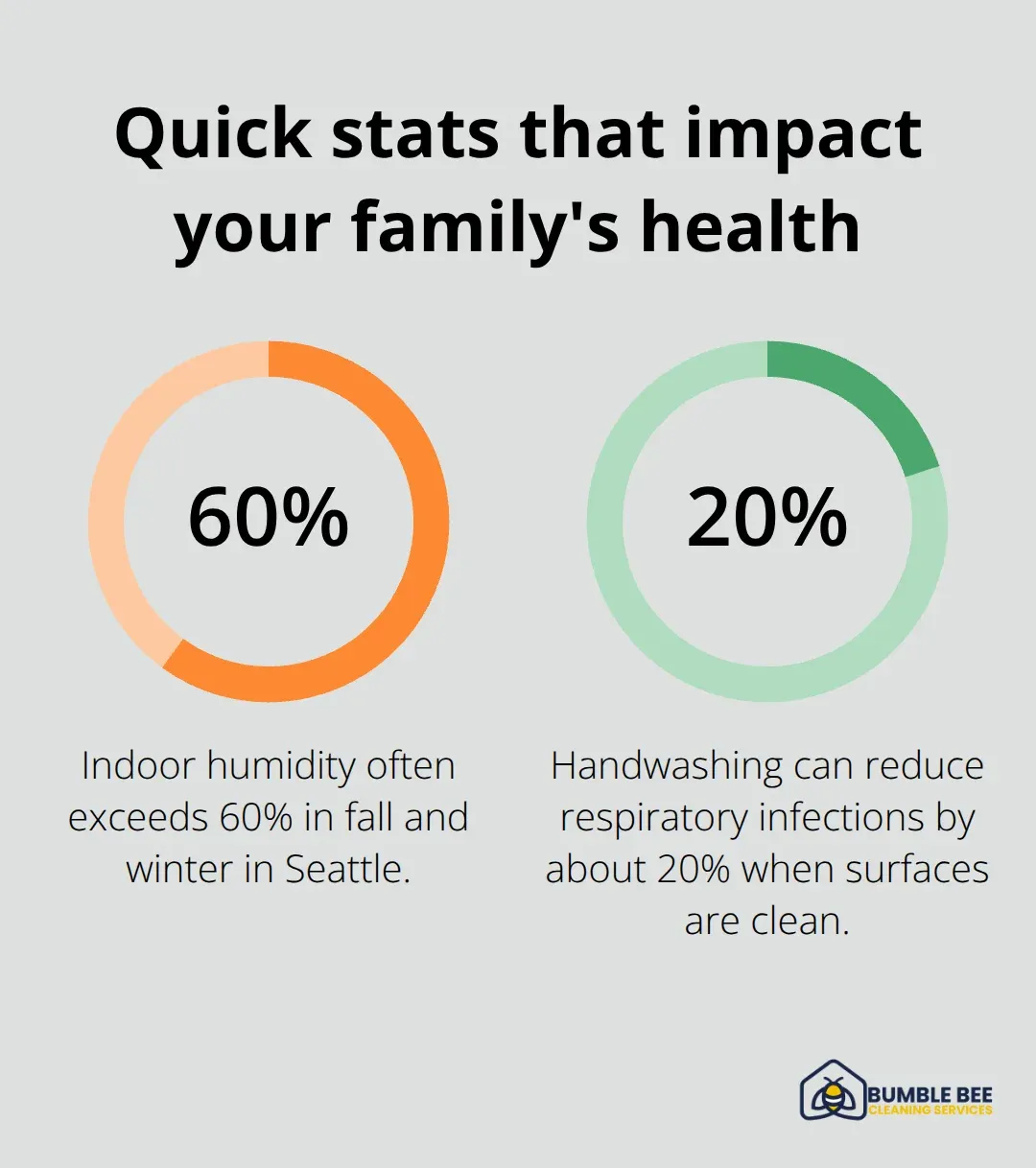
Seattle’s combination of rainfall, humidity, and cool temperatures creates an environment where pathogens thrive longer than in drier regions. The Pacific Northwest averages about 152 rainy days per year, and indoor humidity levels often exceed 60 percent during fall and winter months. This moisture doesn’t just damage wood and drywall; it actively extends the survival time of bacteria, viruses, and mold spores on household surfaces.
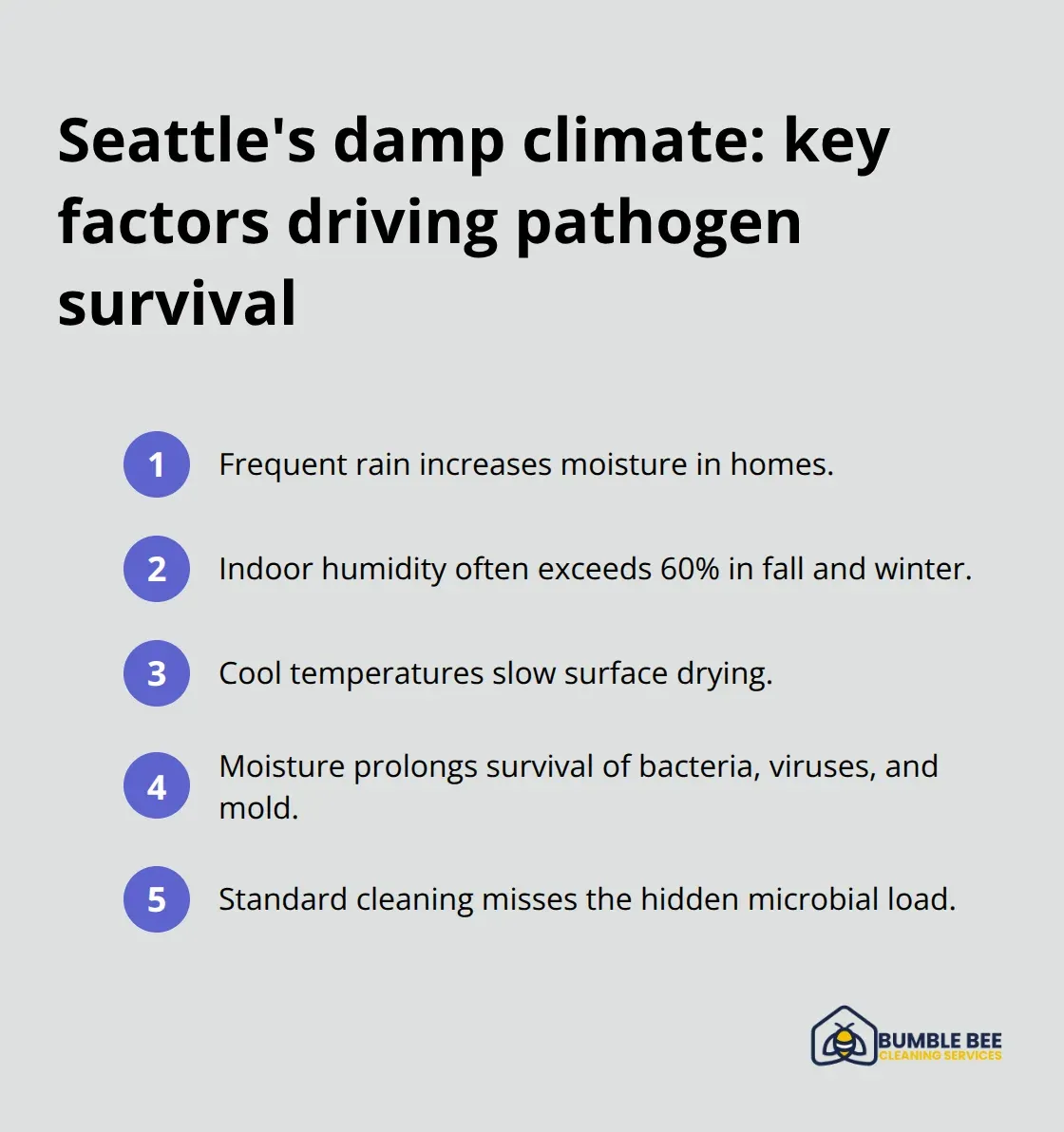
Standard household cleaners remove visible dirt but fail to eliminate the microbial load that accumulates in this climate. Professional sanitizing uses hospital-grade disinfectants and proven contact times to kill pathogens that ordinary cleaning misses, particularly on high-touch surfaces like doorknobs, light switches, and countertops where family members transfer germs multiple times daily.
Mold Growth Accelerates in Rainy Months
Mold colonizes bathrooms, under sinks, and around windows where condensation forms. Once mold establishes itself, inhaling spores triggers respiratory problems, especially in children and elderly family members. Professional sanitizing paired with moisture control prevents mold from taking hold, but this requires trained technicians who understand where mold hides and how to treat it safely. IICRC-certified technicians trained in microbial remediation address mold before it spreads, protecting your family’s lungs and your home’s structure year-round.
Cold Seasons Concentrate Illness Indoors
Winter months trap your family indoors with sealed windows and shared air, creating ideal conditions for respiratory viruses to spread. CDC data shows flu activity peaks between December and February, exactly when Seattle families gather indoors most frequently. Viruses survive longer on surfaces in cool, humid conditions, meaning a doorknob touched in the morning can still harbor active pathogens eight hours later. Professional sanitizing reduces this transmission risk by targeting surfaces before your family touches them, breaking the infection chain that standard cleaning cannot interrupt.
Why High-Touch Surfaces Matter Most
Your family touches doorknobs, light switches, and countertops dozens of times daily, transferring pathogens with each contact. These surfaces accumulate germs faster than less-trafficked areas, yet most households clean them only once or twice weekly. Professional sanitizing identifies and treats these high-touch zones with appropriate contact times and disinfectant concentrations, eliminating pathogens before they spread to your hands and face. This targeted approach (focusing on where transmission actually happens) outperforms general household cleaning and protects vulnerable family members from preventable illness.
What Health Gains Does Professional Sanitizing Actually Deliver
Professional sanitizing cuts illness transmission at the source, which is why it matters far more than standard cleaning in Seattle’s climate. When you sanitize high-touch surfaces with EPA-registered disinfectants and proper contact times, you interrupt the chain of infection before germs reach your family’s hands and faces. Research shows that handwashing reduces respiratory infections by about 20 percent, but that assumes surfaces are already clean. Professional sanitizing eliminates the pathogens waiting on doorknobs and countertops, so your handwashing efforts actually work. This means fewer sick days for working parents, fewer school absences for children, and fewer hospitalizations for elderly relatives sharing your home. The math is straightforward: fewer pathogens on surfaces equals fewer infections in your household.
Allergens and Respiratory Health Improve Dramatically
Dust mites, pet dander, mold spores, and VOCs from household products accumulate faster in Seattle’s humid environment and trigger allergies, asthma, and chronic respiratory problems. Standard vacuuming and dusting remove visible particles but leave behind microscopic allergens embedded in fabric, carpet, and air vents. Professional deep cleaning uses HEPA filtration and microbial remediation techniques to extract allergens that ordinary cleaning misses. When allergen loads drop, so do asthma attacks and allergy symptoms. Families with children or elderly members experience measurable relief within weeks of starting professional sanitizing, particularly during fall and winter when windows stay sealed and indoor air circulates the same allergens repeatedly. IICRC-certified technicians understand exactly where allergens hide and which methods safely remove them without spreading contaminants throughout your home.
Vulnerable Family Members Need Active Protection
Young children, elderly relatives, and anyone with compromised immunity cannot fight off infections the way healthy adults do. Infants under six months have no flu vaccine protection, and seniors over 65 face higher hospitalization rates during flu season. Professional sanitizing creates a protective barrier (reducing pathogen density on surfaces) that these vulnerable people touch most often. This protection directly lowers infection risk for the people in your home who need it most. Households with newborns, grandparents, or immunocompromised members should prioritize professional sanitizing during peak illness seasons (December through February) and maintain it year-round.
High-Touch Surfaces Demand Targeted Treatment
Your family touches doorknobs, light switches, and countertops dozens of times daily, transferring pathogens with each contact. These surfaces accumulate germs faster than less-trafficked areas, yet most households clean them only once or twice weekly. Professional sanitizing identifies and treats these high-touch zones with appropriate contact times and disinfectant concentrations, eliminating pathogens before they spread to your hands and face. This targeted approach focuses on where transmission actually happens and outperforms general household cleaning. Protecting vulnerable family members starts with controlling the surfaces they touch most frequently, which is exactly where professional sanitizing makes the biggest difference in your home’s health.
Why Professional Sanitizing Outperforms DIY Cleaning
DIY cleaning with household products simply cannot match what professional sanitizing delivers, especially in Seattle’s moisture-rich climate where pathogens survive longer on surfaces. Most people grab bleach or store-bought disinfectant sprays, spray them on a surface for 30 seconds, wipe, and call it clean. That approach fails because EPA-registered hospital-grade disinfectants require specific contact times to actually kill pathogens like flu virus, MRSA, and mold spores. Spray-and-wipe routines cut contact time to seconds, meaning the disinfectant never reaches its kill threshold. Professional sanitizing follows EPA label directions precisely, allowing products to sit on surfaces long enough to eliminate pathogens that household cleaning misses entirely. Studies from the CDC show that proper disinfection protocols reduce surface pathogen loads by 99.9 percent, while casual household spraying reduces them by maybe 50 to 70 percent. That gap matters when someone in your home gets sick.
Hospital-Grade Products Work Differently Than Household Cleaners
Household disinfectants like bleach solutions or quaternary ammonium sprays work, but only under exact conditions that DIY cleaning rarely meets. Contact time is the killer variable: Lysol and similar products need 10 minutes on a surface to kill flu virus, yet most people spray and wipe in under a minute. Temperature affects disinfectant action too; cold Seattle bathrooms slow the process compared to warmer environments. Concentration matters as well; diluting a disinfectant incorrectly (mixing bleach with ammonia or using too-weak solutions) reduces effectiveness dramatically or creates toxic fumes.
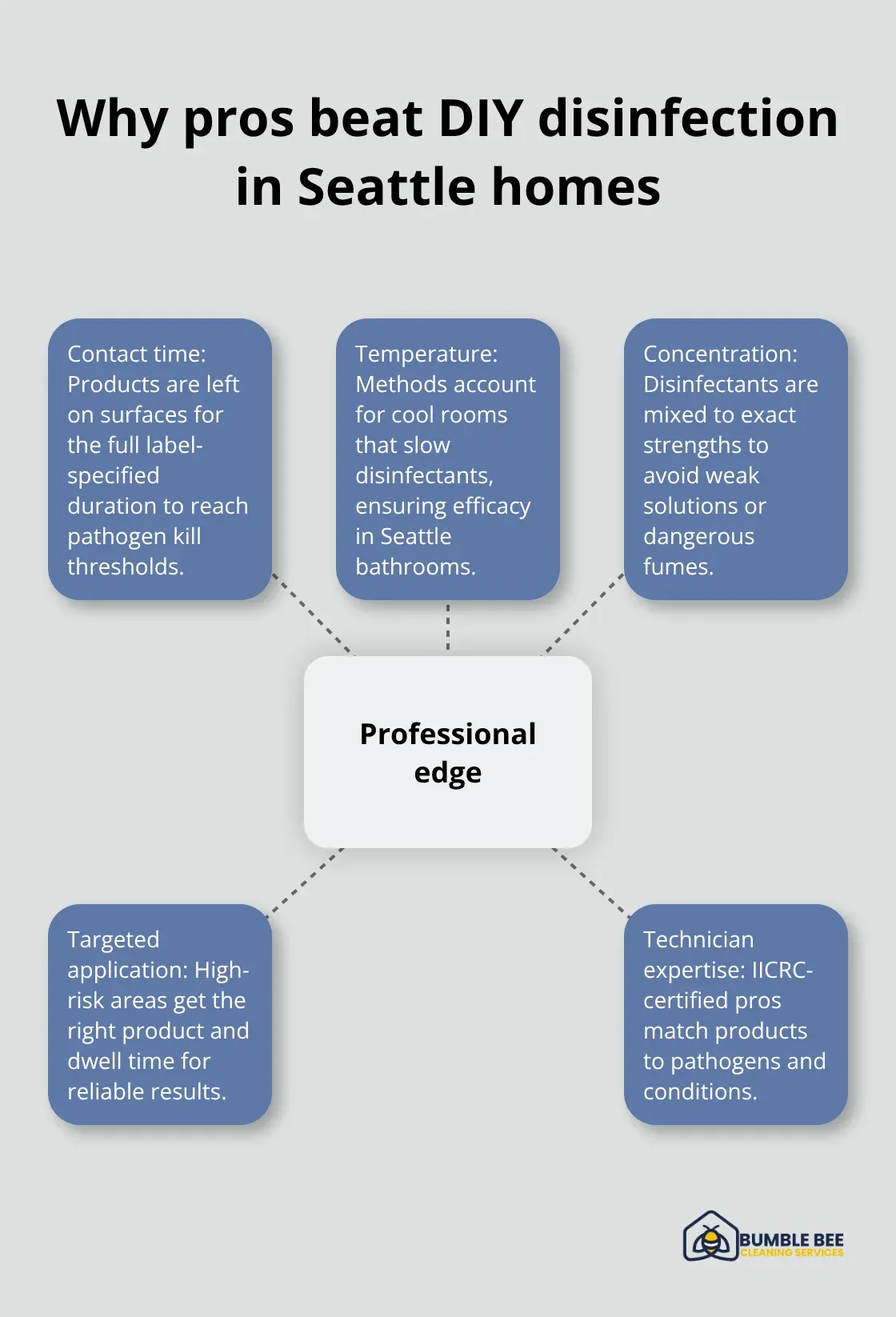
Professional sanitizing uses commercial-grade disinfectants formulated to work in cool, humid conditions and applied at exact concentrations with verified contact times. IICRC-certified technicians understand microbial remediation science and know which products kill specific pathogens; they don’t guess or rely on product marketing claims. This expertise eliminates guesswork and guarantees that the pathogens hiding on your doorknobs actually die.
Trained Technicians Locate Germs Your Cleaning Misses
Your family cleans visible surfaces-countertops, floors, light switches-but misses the places where pathogens actually hide and multiply. Under sink cabinets, inside refrigerator seals, air vents, baseboards, and the space between cabinet handles accumulate bacteria and mold that standard cleaning never reaches. Professional sanitizing technicians know exactly where moisture collects in Seattle homes and where pathogens thrive longest. They treat areas you don’t even think to clean: the tops of door frames where dust settles, the underside of bathroom exhaust fans where mold colonizes, and the spaces behind appliances where humidity promotes bacterial growth. IICRC-certified technicians trained in water damage restoration understand how moisture moves through your home and where remediation must happen to prevent future mold and bacterial blooms. This knowledge transforms sanitizing from a surface-level task into a targeted health intervention that stops illness transmission where it actually occurs.
High-Touch Surfaces Demand Targeted Treatment
Your family touches doorknobs, light switches, and countertops dozens of times daily, transferring pathogens with each contact. These surfaces accumulate germs faster than less-trafficked areas, yet most households clean them only once or twice weekly. Professional sanitizing identifies and treats these high-touch zones with appropriate contact times and disinfectant concentrations, eliminating pathogens before they spread to your hands and face. This targeted approach focuses on where transmission actually happens and outperforms general household cleaning. Protecting vulnerable family members starts with controlling the surfaces they touch most frequently, which is exactly where professional sanitizing makes the biggest difference in your home’s health.
Final Thoughts
Seattle’s damp climate makes year-round professional sanitizing non-negotiable for families serious about health. Standard household cleaning removes visible dirt, but microbe control requires hospital-grade disinfectants, proper contact times, and targeted techniques that only trained professionals deliver. Your family’s health depends on eliminating pathogens where they actually hide-under sink cabinets, on doorknobs, inside refrigerator seals, and in the spaces between cabinet handles.
Fewer pathogens on surfaces means fewer infections in your household, fewer sick days for working parents, and fewer school absences for children. Vulnerable family members like infants, elderly relatives, and anyone with compromised immunity cannot fight off infections the way healthy adults do, making professional sanitizing their best protection during peak illness seasons and year-round. This protection directly lowers infection risk for the people in your home who need it most.
We at Bumble Bee Cleaning Services specialize in professional sanitizing that targets high-touch surfaces and eliminates mold before it spreads. With experience in residential and commercial cleaning across Seattle, we deliver the microbe control your family needs to stay healthy through every season. Contact us today to schedule regular professional sanitizing and stop relying on DIY methods that leave pathogens behind.
For more information about our cleaning services in Seattle and Atlanta, or to request a cleaning quote, call or text us at 425-786-1360 or email us at info@qbclean.com
