
Moving out of your Seattle rental? Your landlord will inspect every corner, including cabinet interiors that often get overlooked during standard cleaning.
We at Bumble Bee Cleaning Services know that grimy cabinets can cost you hundreds in security deposit deductions. A thorough deep clean takes time and the right approach, but it’s worth protecting your money.
Why Cabinet Inspection Costs You Real Money
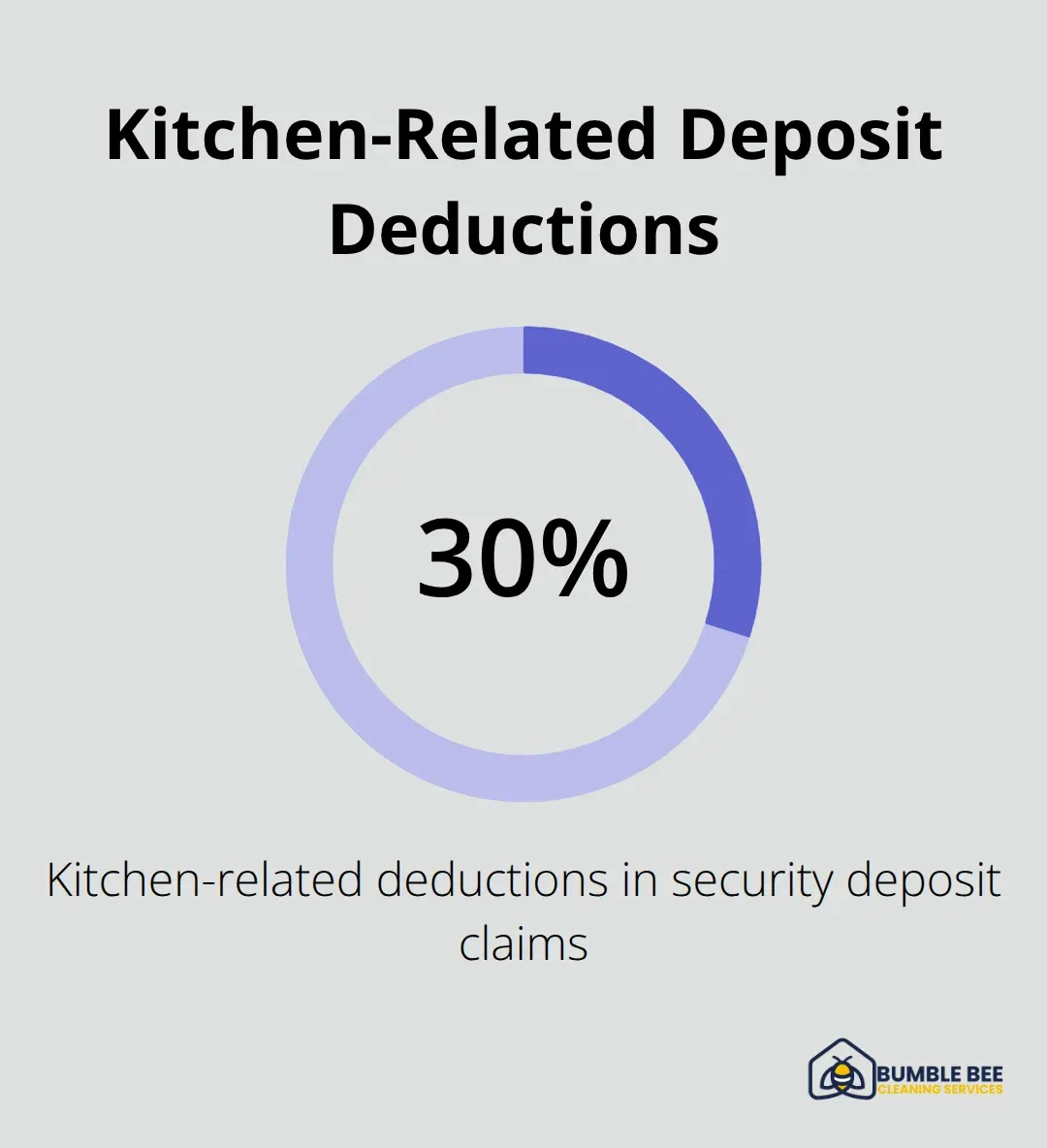
Landlords in Seattle conduct move-out inspections with a specific focus on kitchen cabinets because they reveal how well you maintained the property. Kitchen-related deductions account for roughly 30% of security deposit claims, with cabinet condition being a primary factor. Grimy cabinet interiors, grease buildup on doors, and stained handles signal neglect to inspectors, even if the rest of your kitchen sparkles. Tenants lose $200 to $500 on cabinet-related deductions alone when they skip interior cleaning or assume only visible surfaces matter.
Your landlord’s inspection checklist almost always includes opening every cabinet door, checking inside shelves, and examining handles for fingerprints and grime. Fail this part of the inspection, and your deposit deduction becomes nearly guaranteed.
The Financial Reality of Skipped Cabinet Cleaning
A spotless cabinet interior protects your security deposit directly. Most Seattle landlords withhold between $100 and $400 per rental unit for cleaning costs if cabinets fail inspection. Interior cabinet shelves accumulate dust, crumbs, and grease splatters over months of cooking and food storage. Doors and handles collect fingerprints, grease, and discoloration that become impossible to ignore during a walkthrough. The ISSA Clean, Measure, Monitor framework, used by professional cleaners to validate cleanliness standards, emphasizes high-touch surfaces like cabinet handles and interior shelf edges as critical inspection points. When you skip these areas during your own move-out prep, you’re betting your deposit money that your landlord won’t notice-most do. A professional deep clean for kitchen cabinets typically costs $150 to $300, which is far less than the deposit deduction you’ll face if cabinets fail inspection.
What Landlords Actually Look For
Landlord inspection protocols focus on cabinet functionality and cleanliness. They open doors to check for mold, water damage, or pest evidence on interior surfaces. They examine the condition of hinges, ensuring they operate smoothly and show no rust or damage. Cabinet handles receive particular scrutiny because they reveal how thoroughly you cleaned. Grease splatters near the stove, sticky residue from spills, and dust accumulation on top of cabinets are immediate red flags.
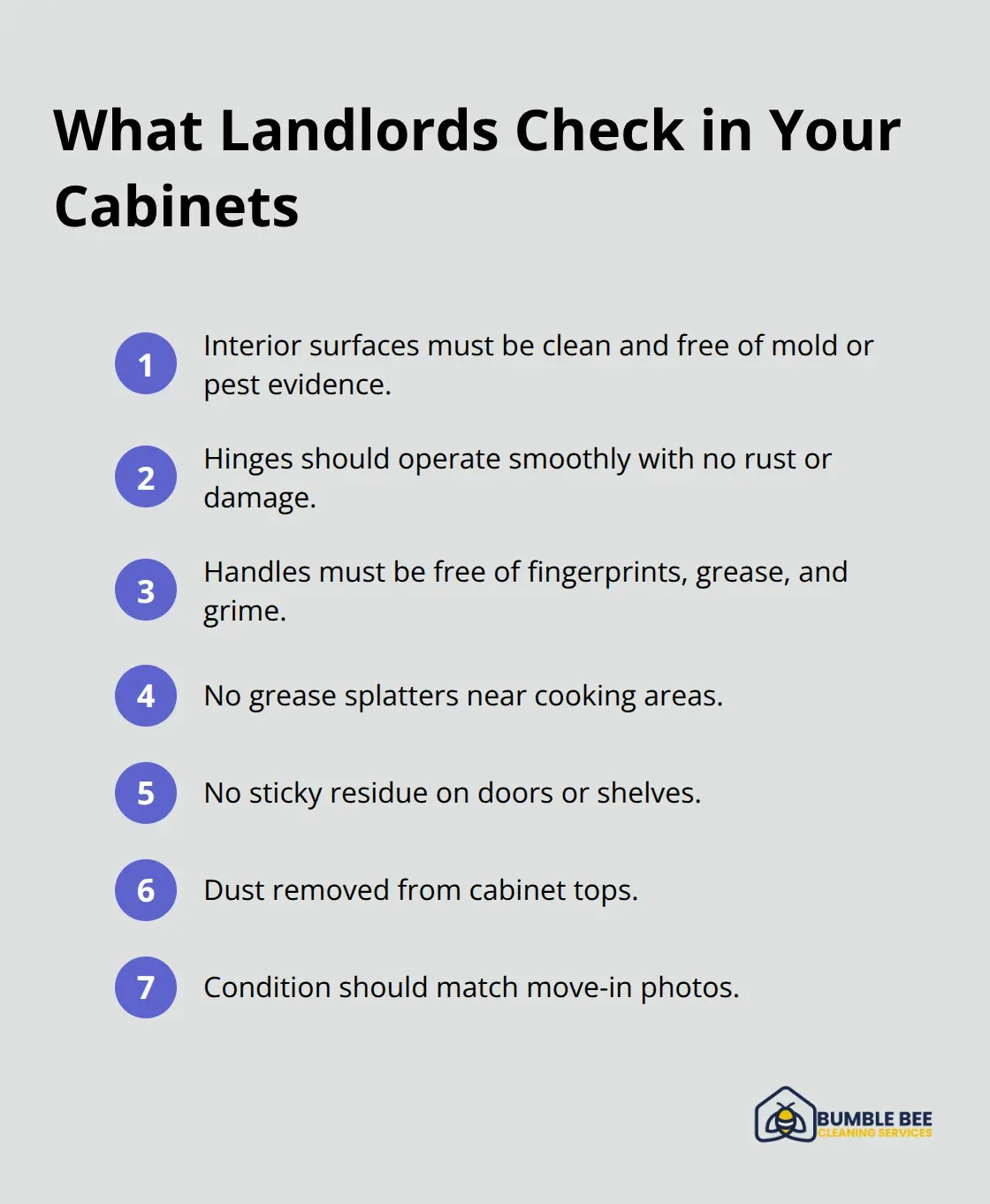
Your landlord compares your cabinet condition against the move-in inspection photos. If cabinets looked pristine when you moved in, they should look the same when you leave. Any deviation-discoloration, new stains, or visible grime-becomes justification for a deduction. Seattle rental agreements typically require you to return the unit in the same condition as move-in, with normal wear and tear as the only exception. Cabinet cleanliness falls into the maintenance category, not wear and tear, which means you’re responsible for restoring them to their original state.
Why Professional Standards Matter for Your Inspection
Professional cleaning services use measurement-based approaches to validate cabinet cleanliness. High-touch surfaces like handles, knobs, and interior shelf edges require the most attention during inspection. Dust accumulation on top of cabinets, grease buildup near cooking areas, and residue on door interiors all factor into your landlord’s assessment. When you understand what inspectors actually measure, you can target your cleaning efforts more effectively. The difference between a casual wipe-down and a thorough deep clean determines whether you pass inspection or lose hundreds from your deposit.
How to Deep Clean Kitchen Cabinets Properly
Empty and Inspect Interior Surfaces
Remove everything from your cabinets-every item, every shelf liner, every forgotten crumb. This step takes time but prevents you from missing hidden grime behind stored dishes or inside shelf corners. Vacuum the interior thoroughly with a handheld attachment to capture dust and debris that accumulates over months of use. Wipe down all interior surfaces with a damp microfiber cloth, then dry completely to prevent water spots or mold growth on wood. Pay special attention to shelf edges and corners where grease splatters settle and become sticky. High-touch cabinet surfaces that inspectors examine directly impact your landlord’s inspection because inspectors open doors specifically to check for cleanliness inside-this is where most tenants fail.
Attack Exterior Grease and Buildup
Cabinet doors and handles collect fingerprints, cooking grease, and dust that signal poor maintenance to any inspector. For grease removal from kitchen cabinets, use a vinegar and Dawn dish soap solution or create a baking soda paste. Apply the mixture with a soft non-abrasive sponge or cloth, scrub gently, then wipe away all soap residue with a clean damp cloth to prevent streaks. For stubborn grease near your stove or oven, create a paste with baking soda and water, apply it to the affected area, let it sit for five minutes, then scrub and rinse thoroughly.
Polish Handles, Hinges, and Hard-to-Reach Areas
Cabinet handles and hinges deserve individual attention because they’re high-touch surfaces that inspectors examine closely for fingerprints and grime. Wipe handles with a cloth dampened in your cleaning solution, then dry immediately to restore shine and remove all residue. Check hinges for rust, dust, or debris-a clean hinge suggests proper maintenance throughout your tenancy. Grease that has hardened on cabinet surfaces requires patience rather than aggressive scrubbing, which damages wood or laminate finishes. Never use abrasive scrub pads or harsh chemicals that leave streaks or discoloration, as these create new problems that cost more to repair than the original grease. Top-of-cabinet surfaces accumulate grease and dust that becomes visible when light hits them at certain angles during inspection-wipe these thoroughly with a damp cloth and dry immediately to prevent water marks.
Once your cabinets shine inside and out, your kitchen moves closer to passing landlord inspection. The next step addresses the other appliances and surfaces that inspectors scrutinize just as carefully.
Should You Hire a Professional or DIY Your Cabinet Deep Clean
The Time and Cost Reality of DIY Cabinet Cleaning
A DIY deep clean for kitchen cabinets takes between four and six hours of focused work, assuming you have the right supplies and know which products work on your specific cabinet material. You’ll need to purchase or gather all-purpose cleaner, degreaser, baking soda, vinegar, microfiber cloths, brushes, and potentially specialty products for wood or laminate finishes. The actual material costs run $20 to $40 if you already own basic supplies. However, most tenants underestimate the physical demands and precision required. Cabinets near your stove accumulate baked-on grease that requires multiple applications to remove effectively. Interior shelves hide dust in corners and crevices that a handheld vacuum struggles to reach completely. Cabinet handles and hinges require individual attention that feels tedious after the first hour.
Why Your Time Matters More Than Supply Costs
If you work a full-time job or have other moving logistics to manage, DIY cabinet cleaning competes for time you don’t actually have. The real cost of DIY isn’t the cleaning supplies-it’s your time, which most people value at far more than $150 to $300.
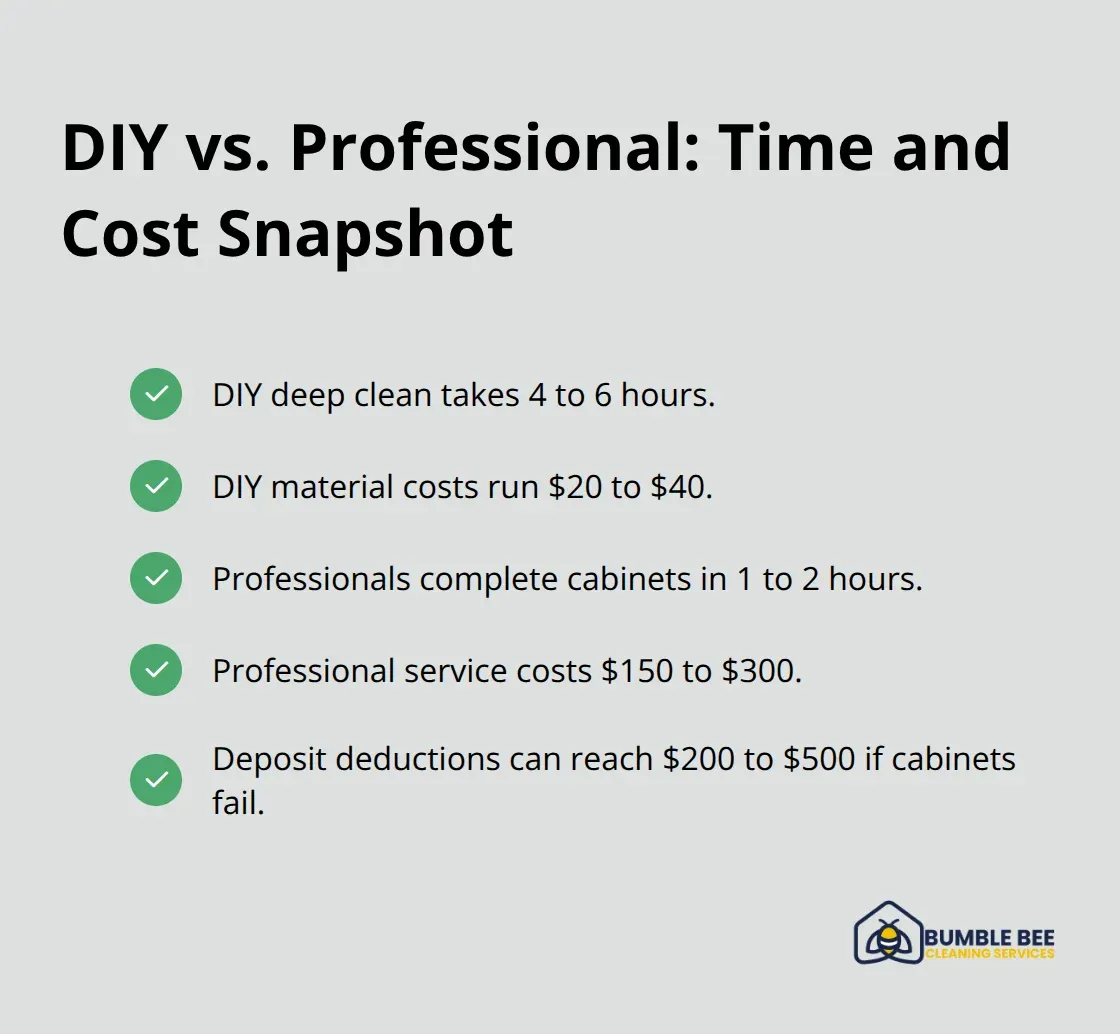
You’ll spend hours on a task that professional cleaners complete in one to two hours using equipment and techniques you won’t purchase for a one-time use. Handheld vacuums with specialized attachments and cleaning solutions formulated for different cabinet materials remain unused after your move. The financial math shifts dramatically when you calculate your hourly rate against the cost of professional service.
Professional Cleaning Protects Your Deposit
Professional move-out cleaning for kitchen cabinets costs between $150 and $300 depending on cabinet quantity and grease severity, which is substantially less than the $200 to $500 security deposit deduction you risk by failing cabinet inspection. Professional cleaners understand that cabinet inspection standards emphasize high-touch surfaces and hidden areas where grime accumulates-the exact spots landlords examine closely. They handle interior shelves, exterior doors, handles, hinges, and top-of-cabinet surfaces in a single focused service, eliminating the piecemeal approach most tenants attempt. Professional services carry insurance and guarantee results, meaning if your cabinets don’t pass landlord inspection due to their work, you have recourse. DIY cleaning leaves you responsible for any missed spots or damage caused by improper products or technique. The certainty of passing inspection outweighs the upfront cost savings of handling cabinets yourself.
Final Thoughts
Deep cleaning kitchen cabinets before your Seattle move-out protects your security deposit directly. Cabinet interiors reveal how well you maintained the rental, and landlords scrutinize these spaces during final inspections. The $200 to $500 you risk losing far exceeds the cost of thorough preparation, whether you handle it yourself or hire professionals.
If you choose the DIY route, budget four to six hours of focused work and gather the right supplies to target high-touch surfaces like handles, hinges, and interior shelf edges. Use Dawn dish soap mixed with warm water for grease removal, apply baking soda paste to stubborn buildup, and wipe everything dry to prevent water spots. Pay special attention to areas near your stove where grease accumulates most heavily, as this approach demands time and precision most tenants underestimate.
Professional move-out cleaning eliminates the guesswork and guarantees results that protect your deposit. We at Bumble Bee Cleaning Services handle cabinet interiors, exteriors, handles, and top surfaces in a single focused service, using techniques and products formulated for different cabinet materials (our team holds ARCSI and IICRC certification, meaning we understand the professional standards landlords expect). A professional deep clean costs $150 to $300, which is substantially less than the deposit deduction you’ll face if cabinets fail inspection, so contact us for professional move-out cleaning that protects your deposit and eliminates stress during your move.
For more information about our cleaning services in Seattle and Atlanta, or to request a cleaning quote, call or text us at 425-786-1360 or email us at info@qbclean.com
