
Seattle office workers spend roughly 90,000 hours at their desks over a career. Many of those hours are spent breathing air contaminated by workplace toxins from standard chemical cleaners.
We at Bumble Bee Cleaning Services have seen firsthand how these chemicals affect employee health, productivity, and company bottom lines. Chemical-free cleaning isn’t a luxury-it’s a necessity for any Seattle workplace serious about protecting its team.
What Chemicals Are Lurking in Your Office Air Right Now
VOCs and Their Immediate Effects
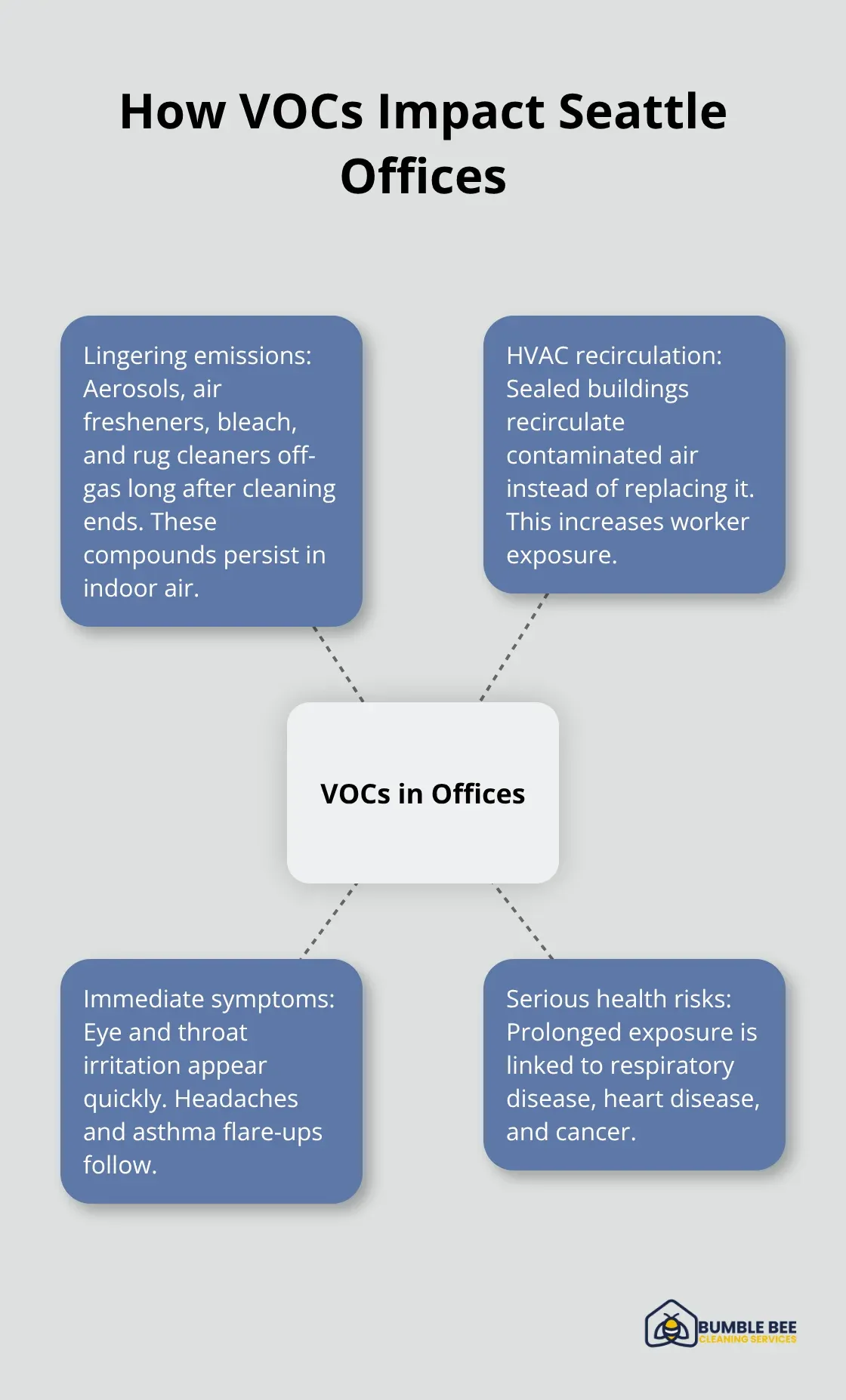
Standard office cleaning products release volatile organic compounds, or VOCs, that linger in the air long after janitorial staff leave. Aerosols, air fresheners, chlorine bleach, and rug cleaners all emit these compounds, which are linked to respiratory diseases, heart disease, and cancer. Workers in sealed office buildings face the worst exposure because modern HVAC systems recirculate contaminated air rather than fully replacing it. Common symptoms appear quickly: eye and throat irritation, triggered headaches, and worsening asthma in employees who never had breathing problems before.
Seattle’s Climate Amplifies the Problem
The problem intensifies in Seattle’s rainy climate, where facilities run heating systems constantly and open windows less frequently, trapping VOCs indoors for hours. Moisture from frequent rain also creates conditions where mold and mildew thrive, prompting facilities managers to spray even more chemical products to combat these issues. This cycle perpetuates chemical exposure throughout the workday, making Seattle offices particularly vulnerable to indoor air contamination.
Hidden Ingredients and Unknown Risks
Manufacturers aren’t legally required to disclose every ingredient on cleaning product labels, so your janitorial team may not even know what chemicals they’re spraying near your employees’ desks. Some products labeled green or natural still contain harmful ingredients that pose serious health risks, making label reading unreliable without expert knowledge. The EPA’s Safer Choice program identifies genuinely safer cleaning products for office environments, but most facilities never consult it.
Long-Term Damage from Chronic Exposure
Chronic exposure to VOCs and other cleaning chemicals contributes to long-term respiratory damage, particularly in workers with existing sensitivities or allergies. Skin irritation and allergic reactions occur when employees touch surfaces treated with harsh residues or inhale aerosolized particles. Never mix bleach with ammonia-a mistake that creates toxic gases capable of causing permanent breathing damage or death, yet untrained cleaning crews sometimes combine these products without realizing the danger.
The Path Forward with Non-Toxic Alternatives
Non-toxic alternatives like baking soda, vinegar solutions, and EPA-approved eco-friendly products deliver the same cleaning results without poisoning your indoor air. The shift requires finding certified green cleaning providers who understand HEPA filtration, proper ventilation protocols, and sustainable practices that actually work in Seattle offices. Your next step involves identifying which chemical-free products and providers can transform your workplace into a genuinely healthy environment.
What Happens When You Remove Chemicals from Your Office
Immediate Health Improvements in the Workplace
Employees notice measurable changes in their health within weeks after offices switch to chemical-free cleaning. Workers breathing cleaner air report fewer headaches, reduced eye irritation, and sharper focus during the workday. These aren’t minor complaints-they represent documented productivity drains that affect your bottom line directly.
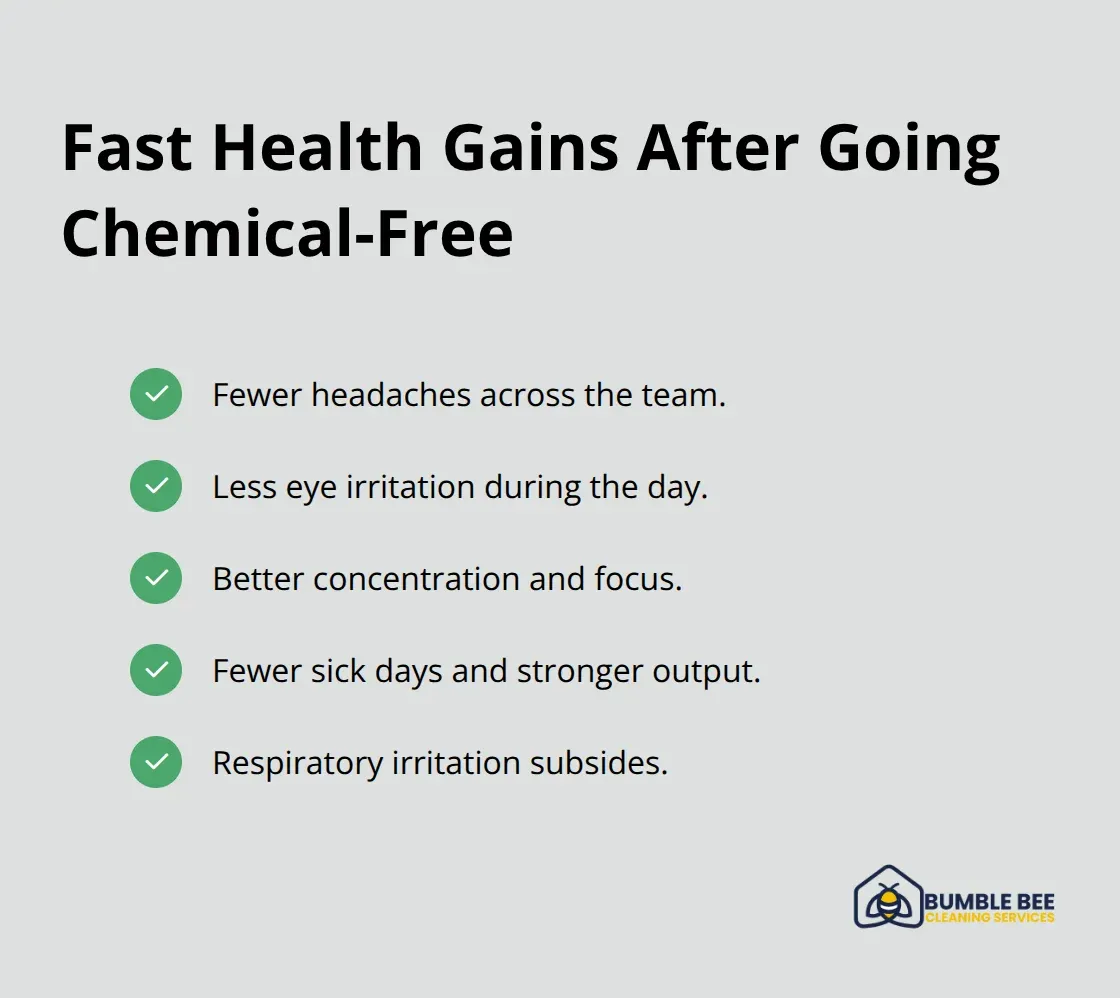
Research shows that exposure to indoor air pollutants from cleaning chemicals correlates with increased sick days and reduced work output. When Seattle offices transition to non-toxic products like EPA-approved cleaners and baking soda-based solutions, employees stop fighting respiratory irritation and actually work at full capacity.
The Financial Impact of Reduced Sick Days
A single employee missing five extra sick days per year costs companies between $500 and $1,500 in lost productivity, according to workplace health data. Multiply that across a team of 20 or 50 people, and the financial case for chemical-free cleaning becomes undeniable. Facilities that eliminate VOCs from their cleaning protocols see staff morale lift noticeably because people feel physically better at their desks. The productivity gains compound over time as chronic symptoms fade and workers stop battling chemical exposure throughout the day.
Superior Indoor Air Quality Without Toxic Residues
Indoor air quality improves when you stop recirculating VOCs through HVAC systems. HEPA-filter vacuums and non-toxic surface cleaners remove dust, mold spores, and allergens without leaving toxic residues that linger in the air hours after cleaning ends. Seattle’s damp climate makes this shift especially critical-moisture combined with chemical fumes creates conditions where respiratory problems accelerate faster than in drier climates. Your office air quality measurement improves measurably, which you can verify through simple air quality testing if needed.
Reduced Healthcare Costs and Skin Irritation
Healthcare costs drop because employees develop fewer respiratory infections and allergic reactions triggered by workplace toxins. Skin irritation cases decline when janitorial teams stop using harsh chemical cleaners that leave residues on desks, keyboards, and shared surfaces. Workers experience fewer allergic reactions and breathing difficulties, reducing both absenteeism and the strain on company health insurance plans. The cumulative effect creates a workplace where people actually want to show up, where sick leave drops, and where retention improves because employees feel their employer values their health.
Moving Toward Implementation
These health and financial benefits remain theoretical until you take action to implement chemical-free cleaning standards in your office. The next step involves understanding which certified providers and eco-friendly products can actually deliver these results in a Seattle workplace.
How to Switch Your Seattle Office to Chemical-Free Cleaning
Audit Your Current Products and Request Transparency
Start by auditing your current cleaning products and cross-referencing them against the EPA’s Safer Choice program, which maintains a searchable database of genuinely safer products for office environments. Many facilities use products that haven’t been evaluated against modern safety standards. Request Safety Data Sheets for every product currently in use and ask your cleaning provider which ones contain VOCs, ammonia, or bleach. This transparency matters because most office managers don’t know what’s actually being sprayed in their buildings.
Make Simple Product Swaps That Work
The shift often begins with straightforward substitutions: replace aerosol air fresheners with HEPA filtration, substitute baking soda for harsh scrubbing powders, and use vinegar-based solutions for glass and hard surfaces. These alternatives cost less than traditional products, deliver equal or superior cleaning results, and eliminate the respiratory irritants that plague your workforce. ISSA, the International Sanitary Supply Association with over 11,000 members, has published green cleaning standards that guide facilities toward lower-toxicity products and practices.
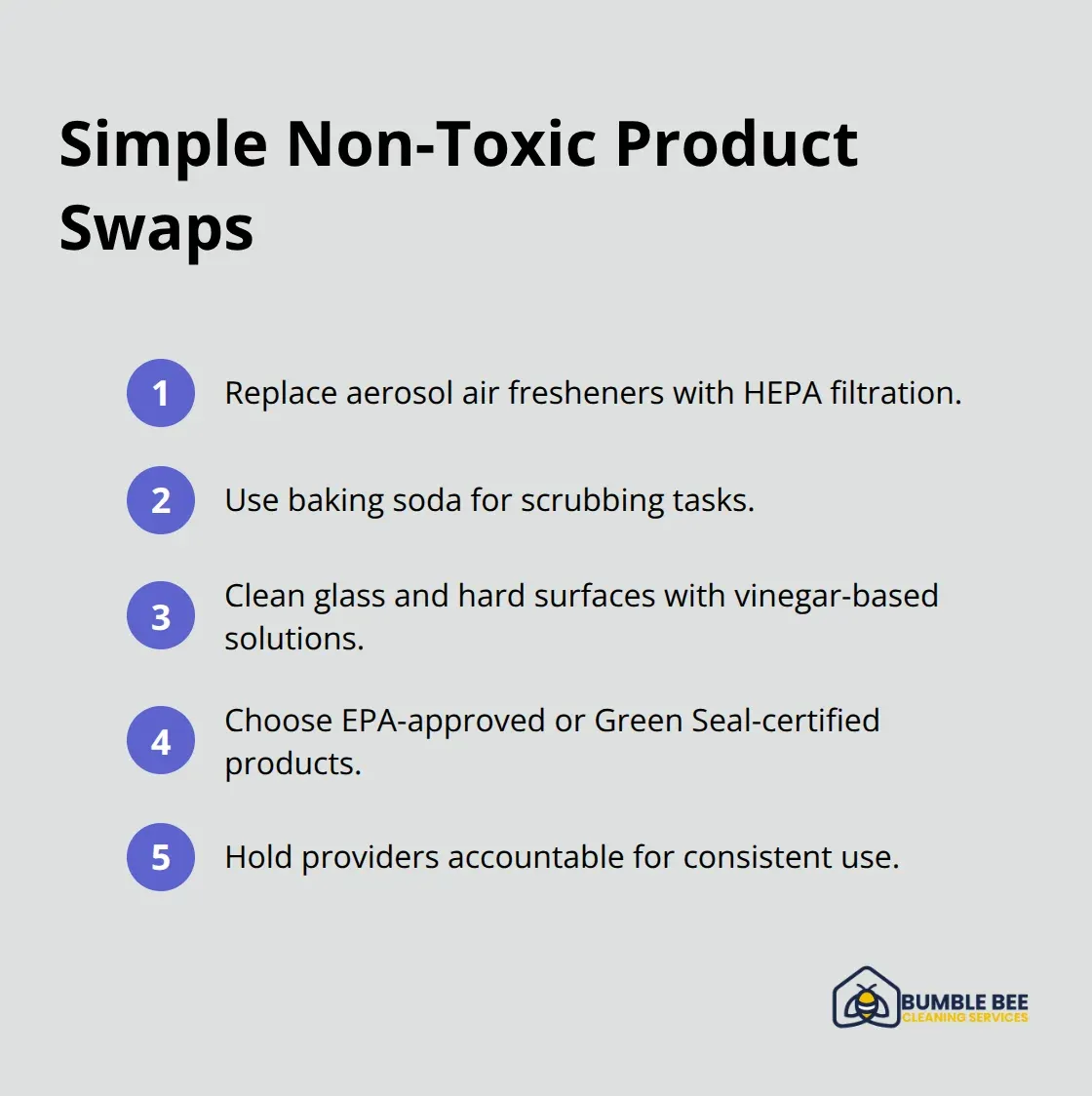
Many janitorial contractors now carry EPA-approved or Green Seal-certified products, so finding compatible supplies isn’t difficult. The real challenge lies in holding your provider accountable to use them consistently.
Select a Certified Green Cleaning Provider
Finding a certified green cleaning provider matters more than simply requesting eco-friendly products. ISSA’s green cleaning certifications recognize programs that minimize chemical use, reduce waste, and protect indoor air quality through rigorous protocols and staff training. Providers with these certifications understand ventilation requirements for Seattle’s damp climate, know how to use HEPA-filter vacuums effectively, and train their teams on proper product application to prevent residue buildup. When evaluating providers, ask whether they hold ISSA CIMS certification or similar credentials, request references from other Seattle offices, and verify that their cleaning protocols include facility assessment and customized plans tailored to your layout and traffic patterns. Avoid providers who quote low prices without understanding your specific needs or who resist transparency about their product inventory and staff training. Chemical-free cleaning requires higher-quality execution than standard janitorial work because eco-friendly products perform differently and demand proper technique.
Build a Healthier Office Culture Through Communication
Communicate the switch to your team, explain the health benefits they’ll experience, and measure results through simple feedback mechanisms like tracking sick days or conducting brief air quality assessments before and after implementation. When workers notice they’re breathing easier and headaches disappear, they become advocates for maintaining these standards. Schedule regular walkthroughs with your cleaning provider to verify consistent application of chemical-free protocols and adjust cleaning frequencies or methods based on employee feedback about air quality and surface cleanliness.
Final Thoughts
Seattle office workers deserve workplaces where they can breathe safely and focus without fighting workplace toxins from standard cleaning products. You now understand what chemicals lurk in your office air, how they damage respiratory health and productivity, and what happens when you eliminate them. The transition to chemical-free cleaning requires intentional action, but the health and financial benefits compound quickly as your team stops battling headaches and respiratory irritation.
Start by auditing your current cleaning products against the EPA’s Safer Choice program and requesting transparency from your janitorial provider about what they spray. Make simple product swaps like baking soda and vinegar solutions that deliver equal cleaning power without respiratory damage, then select a certified green cleaning provider who understands Seattle’s damp climate and implements HEPA filtration and proper ventilation protocols. We at Bumble Bee Cleaning Services specialize in exactly this transition-our recurring commercial cleaning services use non-toxic alternatives that improve indoor air quality while delivering superior results.
Your employees stop battling headaches and respiratory irritation, sick days decline measurably, and productivity rises as people actually feel healthy at their desks. Healthcare costs drop, retention improves, and your office becomes a place where workers genuinely want to spend their time. Contact Bumble Bee Cleaning Services today for a free estimate and discover how chemical-free cleaning standards can protect your employees and strengthen your business.
For more information about our cleaning services in Seattle and Atlanta, or to request a cleaning quote, call or text us at 425-786-1360 or email us at info@qbclean.com
