
Dust allergies affect millions of people, making it hard to breathe comfortably at home. Standard vacuuming and surface wiping miss the allergens hiding deep in carpets, upholstery, and air ducts where they accumulate over time.
Professional deep cleaning reaches these hidden spaces with equipment and techniques that regular cleaning simply cannot match. We at Bumble Bee Cleaning Services help Seattle residents create an allergen-free home by removing dust at its source, not just from the surface.
What Actually Causes Dust Allergies
Dust allergies stem from microscopic particles and biological matter that settle in your home, not from dust itself. The real culprit is dust mites-tiny organisms that thrive in bedding, carpets, and upholstery, producing waste that triggers allergic reactions in millions of people. According to research, dust mites are the most common indoor allergen, and their presence intensifies in homes with humidity levels above 60 percent.
The Hidden Allergens in Your Home
Beyond dust mites, household dust contains pet dander, pollen tracked indoors, mold spores, and dead skin cells that accumulate faster than most people realize. A single person sheds approximately 1.5 grams of skin cells daily, and these particles become food for dust mites, creating a cycle that regular vacuuming cannot interrupt. Pollen counts in Seattle reach Very High levels, particularly during spring and early summer when grass pollen peaks at levels like the 108 grains per cubic meter recorded recently, meaning outdoor allergens constantly enter homes through windows, doors, and clothing.
Why Standard Cleaning Fails Against Dust Allergens
Regular vacuuming and surface wiping address only what you can see, leaving up to 80 percent of allergens untouched in deep carpet fibers, furniture seams, and air ducts. Standard household vacuums lack HEPA filtration, meaning they recirculate dust back into the air rather than trapping it permanently. Experts recommend using vacuums with high-efficiency filters rated MERV 11 or 12, yet most homeowners never upgrade their equipment.
Where Allergens Hide Most
Carpets harbor the highest concentration of dust mites and allergens in any room, with studies showing professional deep cleaning reduces dust mite populations significantly more than routine vacuuming. Pet owners face additional challenges-pet dander embeds itself into upholstery and baseboards, and washing pet bedding alone cannot eliminate dander that has already settled throughout the home. Air ducts accumulate layers of dust and mold spores over years, and when HVAC systems run, they distribute these allergens throughout every room (the IICRC S590 standard specifically addresses professional assessment and cleaning of HVAC systems after contamination, recognizing that homeowner attempts typically miss the root accumulation points where allergens concentrate).
Understanding these hidden sources explains why professional deep cleaning targets areas that standard cleaning overlooks-and why the right approach transforms your indoor air quality.
How Professional Deep Cleaning Removes Allergens
HEPA Filtration Captures Particles Standard Vacuums Miss
Professional deep cleaning works because it targets allergen sources where standard equipment cannot reach. HEPA filtration systems capture particles as small as 0.3 microns, removing at least 99.97% of dust, pollen, mold, bacteria, and other airborne particles rather than recirculating them into your air. IICRC S100 standard for textile floor covering cleaning specifies equipment and methods that remove dust and allergens from carpets at depths household vacuums miss entirely. Standard household vacuums lack this filtration, meaning they recirculate dust back into the air instead of containing it.
Steam Cleaning and Extraction Kill Dust Mites at the Source
Professional-grade steam cleaning heats carpet fibers to temperatures that kill dust mites and their waste products while extraction equipment removes moisture that would otherwise allow mold spores to grow. For upholstery, the IICRC S300 standard guides the cleaning process to penetrate fabric seams and cushion cores where pet dander accumulates most heavily. Technicians access carpet backing and furniture frames systematically rather than randomly, which reduces dust mite populations far more effectively than routine vacuuming. Research shows that homes receiving professional deep cleaning experience measurable improvements in indoor air quality within days.
Air Duct Cleaning Stops Allergen Distribution
Air duct cleaning follows IICRC S590 guidelines, which address professional assessment and cleaning of HVAC systems. Contaminated ducts no longer distribute allergens throughout your home with every heating or cooling cycle. Most homeowner attempts miss the root accumulation points where allergens concentrate, making professional intervention essential for homes with significant dust buildup.
Eco-Friendly Products Eliminate Allergens Safely
Non-toxic cleaners eliminate allergens safely without introducing chemical irritants that trigger respiratory problems in sensitive individuals. These products break down completely without leaving residue that attracts new dust accumulation. The combination of proper equipment, methodology, and safe chemistry matters far more than any single product alone.
Maintaining Results Between Professional Cleanings
Humidity levels managed to stay below 60 percent prevent mold regrowth after cleaning. Vacuuming with a MERV 11 or 12 filter at least weekly, washing pet bedding every two weeks, and keeping windows closed during high-pollen days all extend the benefits of professional cleaning.
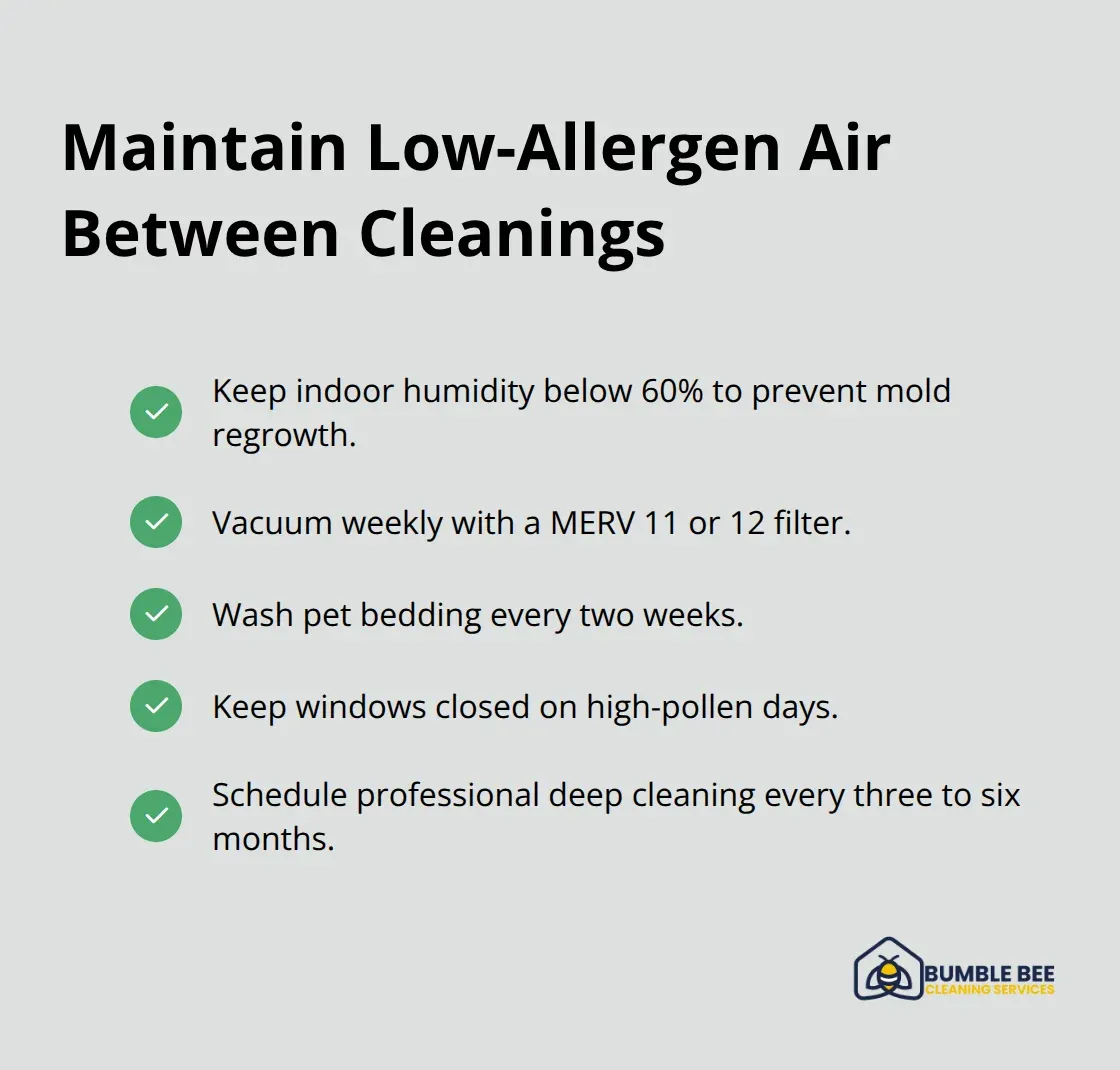
Scheduling deep cleaning every three to six months prevents allergen reaccumulation from reaching the levels that triggered your symptoms initially, breaking the cycle that standard cleaning perpetuates. These maintenance steps set the foundation for creating a lasting low-allergen home environment.
Protecting Your Clean Home Between Professional Sessions
After professional deep cleaning removes allergens at their source, maintenance actions prevent allergen reaccumulation. Humidity control stops mold spores and dust mites from thriving in bathrooms, basements, and bedrooms-keep indoor humidity between 30 and 50 percent. Use a dehumidifier if your Seattle home naturally retains moisture, particularly during rainy months when outdoor humidity climbs above 70 percent.
Weekly Vacuuming and Pet Bedding Care
Weekly vacuuming with a MERV 11 or 12 filter removes surface dust before it settles into carpet fibers and furniture. Wash pet bedding every two weeks to eliminate the dead skin cells that feed dust mite colonies. These two actions interrupt the cycle that allows allergens to reaccumulate between professional sessions.
Controlling Outdoor Allergens Indoors
During high-pollen days when grass pollen reaches Very High levels (as it does in Seattle spring and summer), keep windows closed and run your air conditioning with fresh air intake disabled. This prevents outdoor allergens from entering your home during peak pollen periods. Strategic window management during peak pollen periods makes a measurable difference in indoor air quality.
Scheduling Deep Cleaning on Your Timeline
Homes with pets, multiple occupants, or high foot traffic should schedule deep cleaning every three months, while households with fewer allergen sources can extend to six months. If dust allergy symptoms return before your next scheduled cleaning, that signals your environment is reaccumulating allergens faster than expected-shorten your cleaning cycle rather than wait until symptoms worsen. Scheduling deep cleaning during peak outdoor pollen periods ensures your indoor air quality improves when outdoor allergen loads are highest and most likely to infiltrate your home.
Recognizing When Maintenance Isn’t Enough
Consistent maintenance between professional sessions creates a sustainable low-allergen environment rather than temporary relief followed by symptom return. The interval between deep cleanings determines whether you maintain results or slide backward into allergen accumulation. This strategic timing, combined with consistent maintenance actions, transforms your home into a space where dust allergies no longer disrupt daily life.
Final Thoughts
Dust allergies don’t have to control your life at home. Professional deep cleaning removes allergens at their source-in carpet fibers, upholstery seams, and air ducts-where standard vacuuming leaves 80 percent of the problem untouched. The combination of HEPA filtration, steam extraction, and eco-friendly products creates measurable improvements in indoor air quality within days, not weeks.
An allergen-free home requires two connected actions. First, schedule professional deep cleaning every three to six months depending on your household’s allergen load. Second, maintain results between sessions through weekly vacuuming with proper filters, humidity control below 60 percent, and strategic window management during high-pollen periods.
We at Bumble Bee Cleaning Services apply professional-grade techniques that target hidden allergen sources throughout your Seattle home. Contact us today to schedule your first deep cleaning and start building the allergen-free home you deserve.
For more information about our cleaning services in Seattle and Atlanta, or to request a cleaning quote, call or text us at 425-786-1360 or email us at info@qbclean.com
