
Property transitions happen fast in Seattle. Between move-outs and move-ins, you have a narrow window to get everything right-and that’s where turnover cleaning Seattle becomes critical to your success.
We at Bumble Bee Cleaning Services know that a properly cleaned property directly impacts your bottom line and tenant satisfaction. This guide walks you through the challenges, best practices, and strategies that make property transitions smooth and efficient.
What Turnover Cleaning Actually Involves
Turnover cleaning is the deep restoration of a rental unit between tenants-not a quick sweep or surface wipe-down. It includes intensive cleaning of kitchens and bathrooms, steam cleaning of carpets, scrubbing walls and baseboards, cleaning windows inside and out, and addressing problem spots that accumulate during occupancy. The scope also covers areas most landlords miss: tops of ceiling fans, inside refrigerators and ovens, behind appliances, and window tracks. In Seattle, where the average rent sits around $2,000 per month, every vacant day represents genuine lost income. A professional turnover cleaning team typically completes a standard two-bedroom apartment in 3–4 hours, while a landlord attempting DIY cleaning spends 12 hours on average-the equivalent of $207 in labor value at Seattle’s minimum wage of $17.27 per hour, before factoring in equipment and supplies.
Why Speed Matters More Than You Think
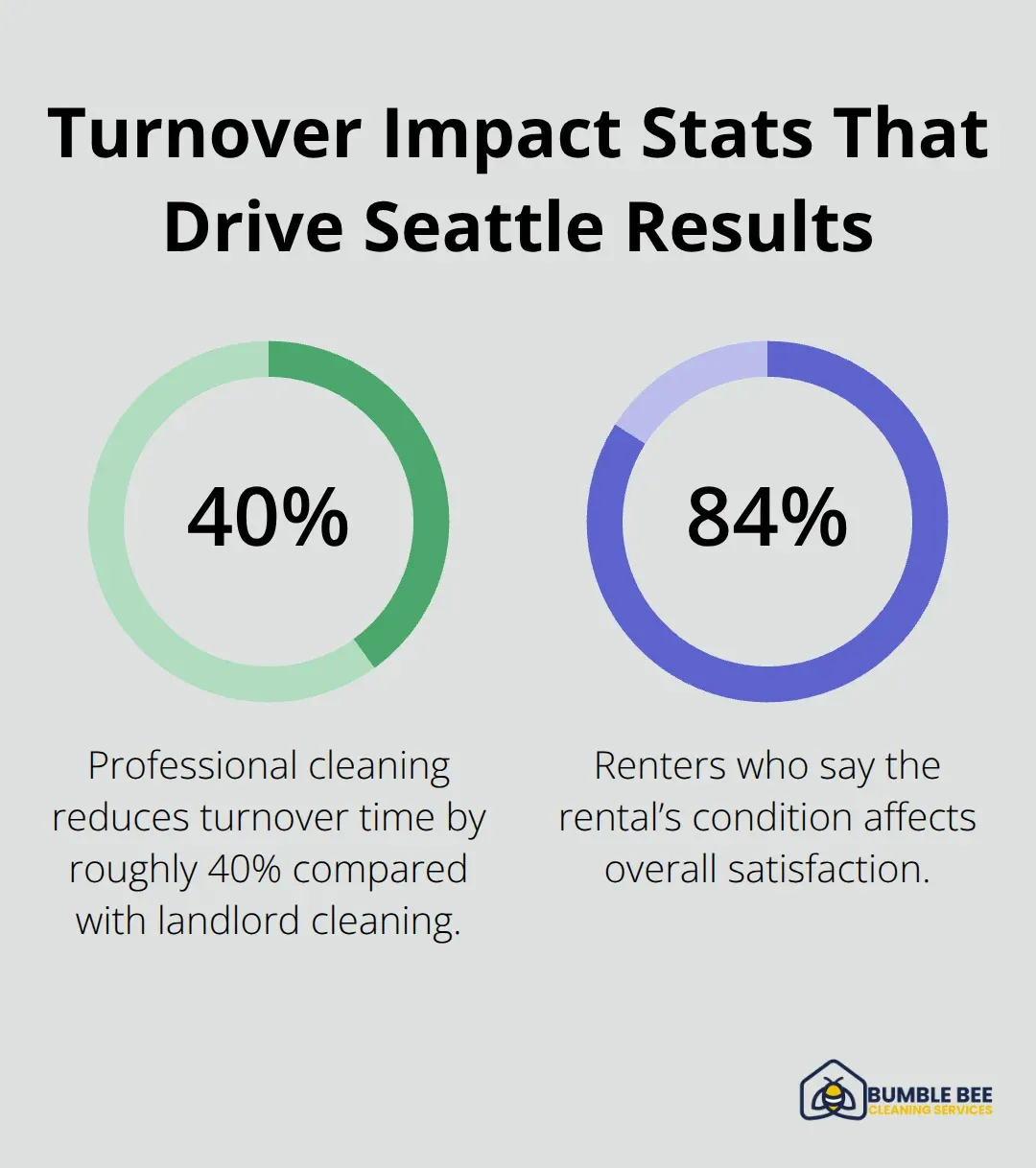
The timeline separating move-out and move-in determines your rental income directly. Professional cleaning reduces turnover time by roughly 40% compared with landlord cleaning, according to the National Association of Residential Property Managers. That acceleration shrinks vacancy periods substantially, which directly impacts your cash flow and property competitiveness. In Seattle’s summer peak season, when demand is highest, every day a unit sits vacant means you’re competing with landlords who’ve already placed new tenants.
Documentation matters during this window: tenants should photograph the unit before and after cleaning to prevent deposit disputes, while landlords must distinguish normal wear and tear from actual damage using Seattle Department of Construction and Inspections guidelines. This documentation protects both parties and keeps turnovers from stalling over disagreements.
The Real Cost of Skipping Professional Turnover Cleaning
Clean carpets increase a property’s value offer by 1% to 5% compared to similar properties. Conversely, poor turnover cleaning signals neglect to new tenants and damages your property’s market reputation. 84% of renters say the condition of their rental affects overall satisfaction-meaning spotless kitchens, bathrooms, and floors directly influence lease renewal decisions and tenant retention. Proactive maintenance through thorough turnovers can increase property value by roughly 1% per year, according to the National Association of Realtors. Professional move-out cleaning in Seattle typically costs $200–$400 depending on property size, yet the cost-benefit analysis heavily favors professionals: you avoid deposit disputes, reduce vacancy duration, and position the property competitively in a tight market.
What Separates Professional Turnover From DIY Attempts
Professional cleaners use industrial-grade equipment, including high-powered steam cleaners, to achieve deeper cleans and restore carpets toward like-new condition. They tackle hard-to-reach areas and apply stain-removal techniques that most landlords lack the tools or expertise to perform. A landlord who attempts DIY turnover cleaning often misses critical spots-inside appliances, window tracks, and baseboards-that new tenants notice immediately. These oversights create negative first impressions and increase the likelihood of early lease termination or poor renewal rates. The time investment alone makes professional turnover cleaning the practical choice: you reclaim hours that you can redirect toward tenant screening, lease renewals, or other property management priorities.
Moving Forward With Confidence
Understanding what turnover cleaning truly involves sets the foundation for recognizing why tight deadlines and multiple properties create real operational challenges. The next section explores the specific obstacles that property managers face during turnover cycles and how to overcome them.
Common Challenges in Turnover Cleaning Projects
Turnover cleaning in Seattle doesn’t happen in a vacuum. Property managers juggle competing deadlines, unexpected damage, and multiple units simultaneously-and each challenge compounds the others. The gap between move-out and move-in creates real pressure: a two-bedroom apartment needs to be spotless, inspected, and ready in days, not weeks.
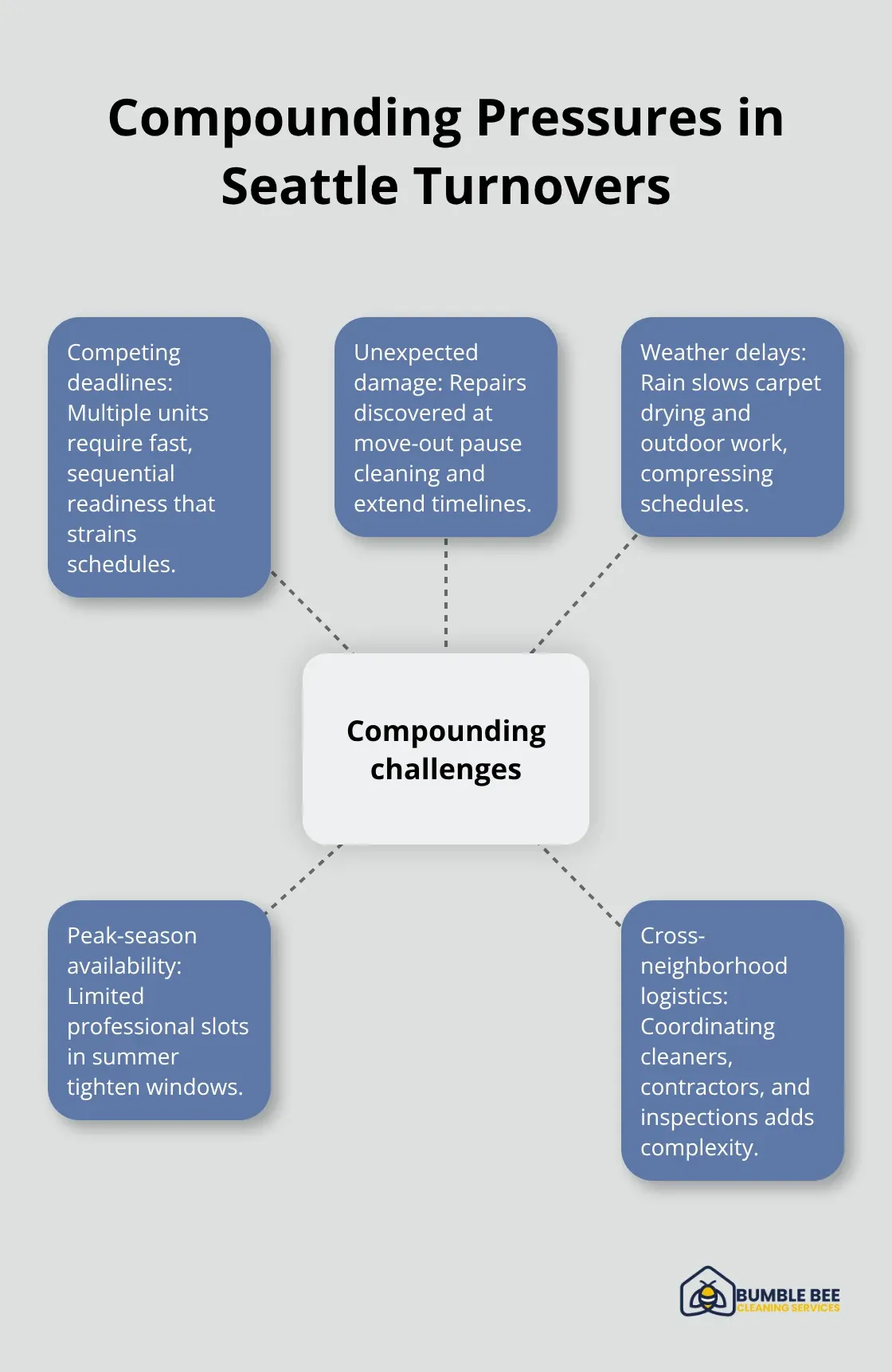
When you manage five properties across different neighborhoods, you coordinate cleaners, contractors, and inspections across a logistically complex operation. Add in Seattle’s weather-rain that delays carpet drying or outdoor cleaning-and your timeline tightens further. The National Association of Residential Property Managers reports that DIY cleaners spend 12 hours on a standard apartment, but professionals complete the same work in 3–4 hours. That speed advantage matters most when you have back-to-back turnovers or handle multiple units. However, even professional cleaners face real constraints: booking availability during peak season (summer in Seattle), coordinating with contractors for repairs that must happen before cleaning, and managing properties where tenants leave excessive damage that extends the turnover timeline significantly.
Damage and Stains Complicate Timelines
Damage and stains present another layer of complexity. Steam cleaning removes deep-seated dirt and allergens, but certain stains-pet damage, permanent marker, or water damage-require specialized treatment or replacement rather than cleaning. You must distinguish between normal wear and tear (which Seattle law prohibits you from charging tenants for) and damage you can deduct from deposits. This distinction prevents disputes and legal complications. When a unit arrives with multiple problem areas, the turnover timeline extends unpredictably. A property manager who discovers foundation damage, mold, or structural issues during turnover cannot simply add a cleaning crew; the entire project stalls until those issues are addressed. Frequent turnovers lead to increased wear and tear on your property, which can significantly impact your maintenance costs and overall profitability.
Managing Multiple Properties Creates Compounding Pressure
Managing multiple properties simultaneously amplifies this risk. While one unit undergoes repairs, another sits vacant, and a third needs immediate turnover to meet a move-in deadline. The solution isn’t working harder-it’s establishing clear pre-inspection protocols before move-out and photographing conditions with tenants present. A cleaning service that identifies maintenance issues early prevents surprises later and keeps turnovers on schedule. Without this coordination, property managers waste time chasing contractors, rescheduling cleaners, and explaining delays to new tenants.
How Best Practices Prevent Cascading Delays
The real challenge isn’t the individual obstacles-it’s how they interact. A delayed repair pushes back cleaning, which delays the move-in inspection, which compresses your window to market the unit. Each delay costs you rental income and reduces your competitive position in Seattle’s tight market. Establishing systematic protocols before problems arise transforms how you respond when they do. The next section outlines the specific practices that keep turnovers moving forward, even when obstacles emerge.
How to Structure Turnover Cleaning for Speed and Accuracy
The difference between a turnover that takes two weeks and one that takes three days comes down to systematic preparation, not luck or extra labor. Property managers who document conditions before move-out and establish clear cleaning protocols cut their vacancy periods dramatically. Start with a detailed pre-move-out inspection conducted with the departing tenant present. Photograph every room, closet, appliance interior, and wall surface in natural light. This documentation protects you legally when disputes arise over security deposits and gives your cleaning team a baseline for what constitutes normal wear versus damage requiring repair before cleaning begins.
Document Everything Before Cleaning Starts
Use a standardized checklist that covers kitchens (inside refrigerators, ovens, and cabinets), bathrooms (grout, tile, fixtures), carpets (stains and odors), walls (scuffs and holes), windows, and overlooked areas like ceiling fan tops and baseboards. The Seattle Department of Construction and Inspections provides clear guidelines distinguishing normal wear and tear from damage you can charge tenants for, so reference those standards in your documentation. This step eliminates back-and-forth conversations later and keeps your turnover timeline intact.
Execute a Consistent Room-by-Room Sequence
Once you’ve documented the unit’s condition, establish a room-by-room cleaning sequence that your team executes identically across all properties. Professional cleaners should start with bathrooms and kitchens, where the heaviest dirt accumulates, then move to bedrooms and living areas, finishing with floors and windows. This sequence prevents cross-contamination and ensures high-touch areas receive fresh supplies and equipment.
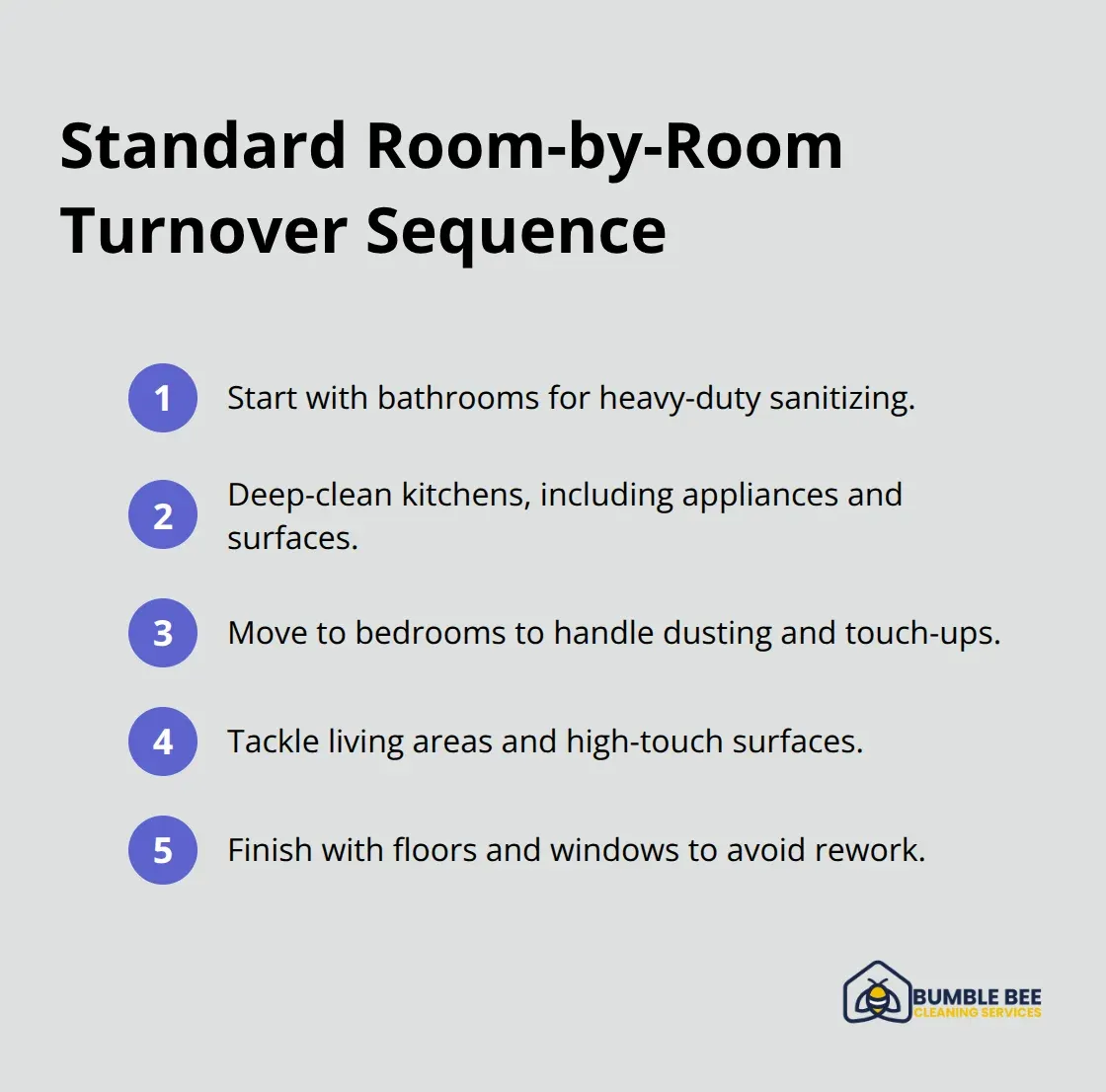
Assign specific tasks to specific roles: one person handles carpet steam cleaning while another tackles appliance interiors and wall preparation. The National Association of Residential Property Managers reports that professionals complete standard two-bedroom apartments in 3–4 hours using this approach, while uncoordinated teams waste time duplicating work or missing spots.
Separate Repairs From Cleaning Operations
For properties with damage beyond cleaning scope-water stains, holes in walls, or carpet that won’t respond to steam cleaning-coordinate repairs before the cleaning crew arrives. Attempting to clean around contractors or scheduling repairs after cleaning wastes time and money. Coordinate directly with your cleaning service and property maintenance contacts at least five business days before the move-out date to confirm availability and address any anticipated issues. This advance notice prevents last-minute scrambling and ensures your team has the right equipment and staffing for the specific property’s needs.
Dedicate Teams to Individual Properties
Properties with multiple vacant units simultaneously require even tighter coordination: assign dedicated cleaning crews to each unit rather than rotating teams between properties, which fragments focus and extends timelines unnecessarily. This approach keeps attention sharp and prevents the confusion that slows down turnovers when teams shift between locations.
Final Thoughts
Turnover cleaning Seattle requires systematic preparation, clear documentation, and professional execution to protect your rental income and competitive position. The practices outlined in this guide-pre-move-out inspections, room-by-room protocols, and coordinated repair scheduling-directly reduce vacancy periods and tenant disputes. Property managers who implement these strategies report faster turnovers, higher tenant satisfaction scores, and measurable financial gains in Seattle’s high-rent market where every vacant day costs real money.
Professional turnover cleaning delivers speed that DIY attempts cannot match, completing a standard two-bedroom apartment in 3–4 hours while landlords spend 12 hours on average. That time difference translates directly into faster move-ins, shorter vacancy periods, and competitive positioning in a tight rental market. Beyond speed, professional cleaners address overlooked areas like inside appliances, window tracks, and ceiling fan tops that new tenants notice immediately and that influence lease renewal decisions.
We at Bumble Bee Cleaning Services understand the operational demands of property transitions and specialize in move-in and move-out cleaning with flat-rate pricing and easy online booking. Our eco-friendly approach and 100% quality guarantee mean your properties meet professional standards without compromising environmental responsibility. Contact Bumble Bee Cleaning Services to discuss how we can streamline your next property transition and keep your timeline intact.
For more information about our cleaning services in Seattle and Atlanta, or to request a cleaning quote, call or text us at 425-786-1360 or email us at info@qbclean.com
