
Basement moisture is one of the most common problems we see in Seattle homes, and it rarely fixes itself. Left untreated, damp basements quickly become breeding grounds for mold, structural damage, and health hazards that affect your entire property.
We at Bumble Bee Cleaning Services know that standard cleaning won’t solve this problem. You need deep cleaning with specialized equipment and expertise to address the root causes and protect your home.
Why Moisture Takes Over Seattle Basements
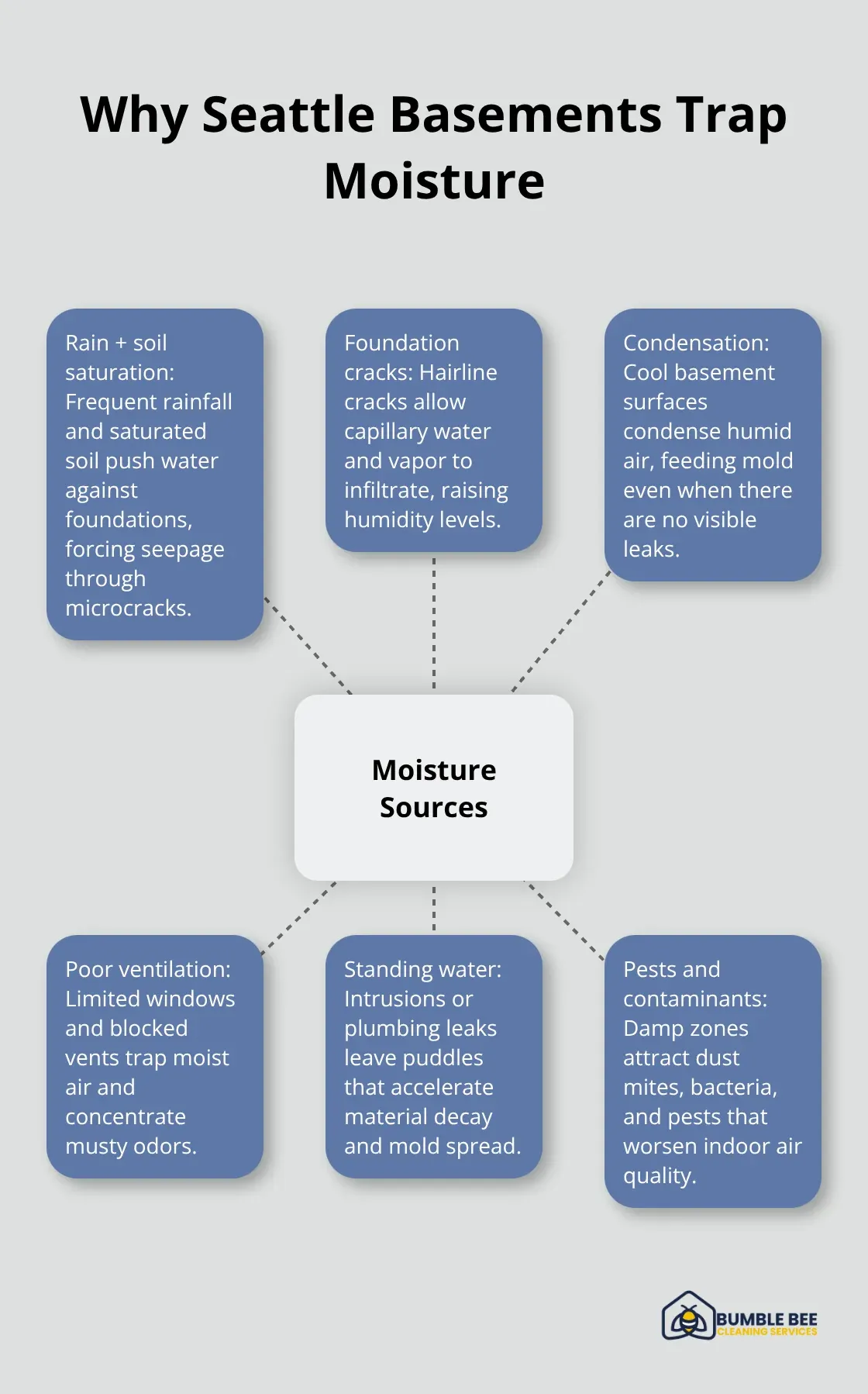
Seattle’s Climate Accelerates Basement Moisture Problems
Seattle’s climate creates perfect conditions for basement moisture problems that escalate quickly without intervention. The Pacific Northwest receives over 150 days of rain annually, with moisture infiltration through foundation cracks, groundwater seepage, and condensation buildup. According to the EPA, Americans spend about 90 percent of their time indoors, making basement moisture exposure a genuine health concern for families who use these spaces for storage, recreation, or living. Mold spores thrive in damp environments and become airborne, potentially reducing indoor air quality throughout your entire home.
Mold Growth Accelerates in Damp Basements
The Institute of Medicine found that asthma cases attributable to mold and dampness in buildings represent a documented health risk, meaning a wet basement isn’t just an inconvenience-it’s a genuine concern for respiratory health. Seattle’s frequent rainfall and high humidity create ideal conditions for indoor mold growth that continues year-round, regardless of season. The CDC notes that mold exposure commonly causes respiratory symptoms such as stuffy nose, cough, wheezing, sore throat, and burning eyes, with people with asthma facing particularly severe reactions.
Poor Ventilation Traps Moisture and Odors
Poor ventilation in basements traps moisture and allows mold colonies to expand unchecked. Many Seattle basements lack adequate airflow due to limited windows, blocked vents, or sealed crawl spaces designed to prevent drafts rather than manage moisture. Musty odors signal hidden moisture and mold even when visible growth isn’t apparent, meaning the problem extends beyond what you can see.
Standing Water Attracts Contaminants and Pests
Standing water and excessive humidity attract biological contaminants including bacteria, dust mites, and pests, which according to the EPA can enter through foundation cracks and plumbing issues. Structural materials like wood framing, drywall, and subflooring deteriorate when exposed to chronic dampness, leading to costly repairs that compound over time. The most effective approach combines moisture source elimination with deep cleaning and professional assessment-surface cleaning alone fails to prevent regrowth because it doesn’t address the water problem driving the mold. Understanding these moisture sources sets the stage for why professional deep cleaning becomes essential to protect both your health and your property’s structural integrity.
What Happens When Damp Basements Go Untreated
Mold Exposure Triggers Immediate Health Consequences
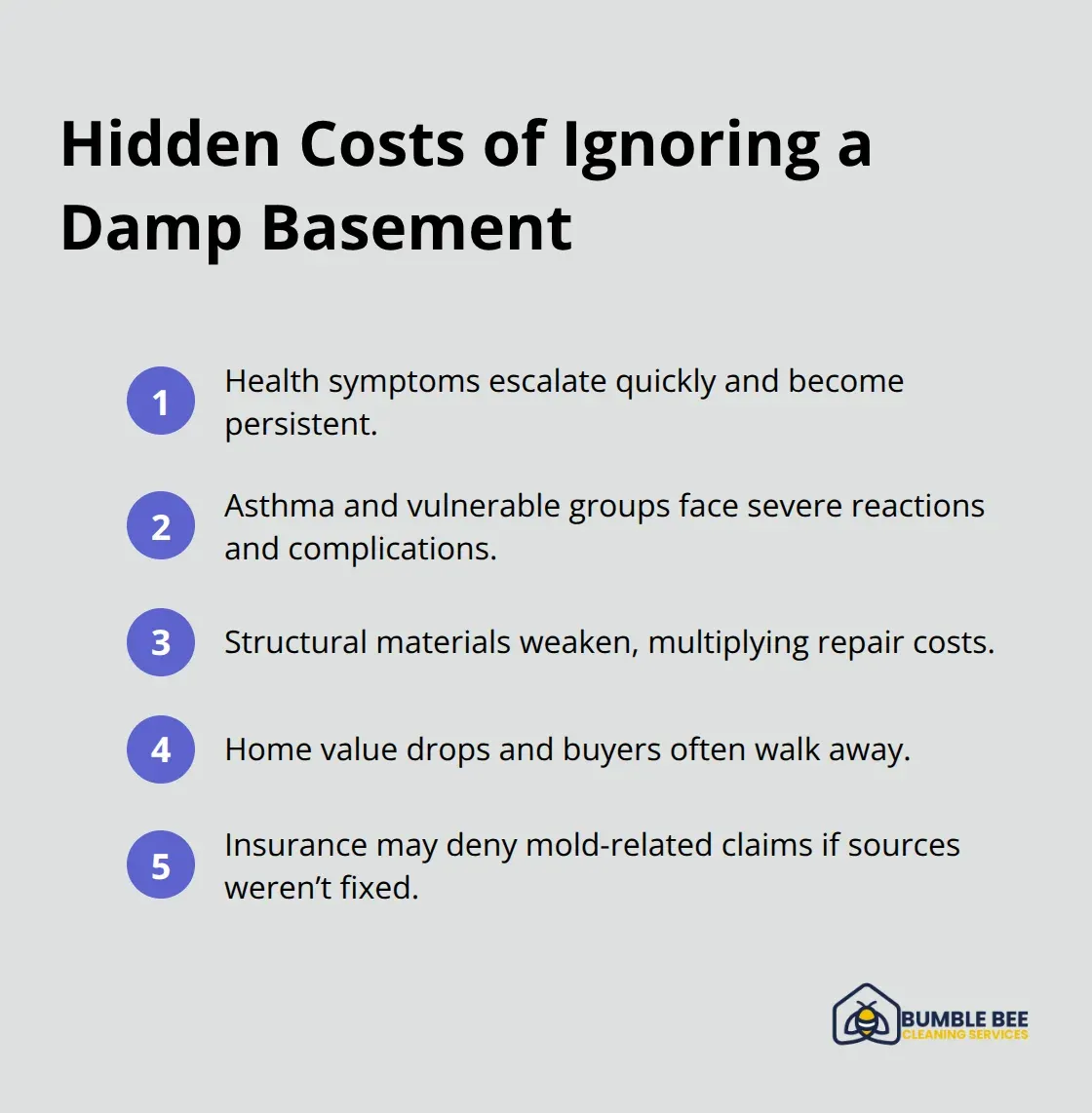
Ignoring basement moisture accelerates damage across three fronts that compound rapidly. Mold thrives aggressively in damp conditions, and the health consequences strike immediately and measurably. The CDC documents that mold exposure triggers stuffy nose, wheezing, and red or itchy eyes or skin in people sensitive to molds. For people with asthma, the stakes climb far higher: research linked mold and dampness in buildings to respiratory disease in vulnerable household members, with a 30% reduction in dampness and mold in homes translating to prevention of 1.4 million asthma cases.
Vulnerable Populations Face Severe Mold-Related Risks
Infants exposed to mold at home face elevated risk of developing asthma and allergic rhinitis later in childhood. Older adults and people with chronic lung diseases experience the most severe reactions to mold spores. Beyond respiratory problems, mold exposure can trigger hypersensitivity pneumonitis, a lung condition presenting with flu-like symptoms that causes permanent lung damage with chronic exposure. Immune-compromised individuals face life-threatening fungal infections from prolonged mold exposure. These aren’t theoretical risks-they represent documented health outcomes tied directly to uncontrolled basement moisture.
Structural Deterioration Destroys Property Value
Structural deterioration and financial loss follow close behind respiratory damage. Wood framing, drywall, and subflooring absorb moisture and weaken over time, compromising the foundation itself. Hidden mold behind walls or under flooring spreads damage you cannot see until repairs become extremely expensive. Home appraisers penalize moisture damage severely, and potential buyers often reject properties with documented damp basements regardless of remediation attempts. Deep cleaning prevents long-term damage to surfaces, potentially saving thousands in restoration costs.
Insurance Complications Leave You Financially Exposed
Insurance complications compound the financial burden significantly. Some insurers deny coverage for mold damage if you failed to address the moisture source, leaving you personally responsible for restoration costs that easily reach five figures. The real cost of delay isn’t measured in weeks-it’s measured in permanent health impacts and destroyed property value.
Addressing damp basements immediately stops mold colonization, prevents structural failure, and protects both your family’s health and your home’s market value. This is why professional deep cleaning paired with moisture control becomes the only effective solution to reverse the damage and prevent future problems.
How Professional Deep Cleaning Tackles Seattle’s Damp Basement Problem
Specialized Equipment Removes Moisture and Hidden Mold
Professional deep cleaning in Seattle requires specialized equipment designed specifically for moisture extraction and mold remediation, not generic household tools. HEPA-filter vacuums capture mold spores that regular vacuums miss and actually spread throughout your home, while commercial-grade dehumidifiers remove moisture at rates far exceeding standard units. Moisture meters measure humidity levels precisely, allowing technicians to identify hidden dampness behind walls and under flooring before visible mold appears. The IICRC standards S500 for Water Damage Restoration and S520 for Mold Remediation provide the framework that certified professionals follow to eliminate moisture sources systematically. This matters because surface cleaning alone fails repeatedly in Seattle basements-the moisture returns because the water problem persists.
EPA-Registered Products Stop Mold Without Harsh Chemicals
Eco-friendly EPA-registered antimicrobial solutions eliminate mold colonies without the harsh chemical fumes that damage air quality further. These products work on contact and require proper ventilation and contact time according to EPA guidelines, which untrained homeowners often skip. Professional technicians understand how to apply these solutions correctly, maximizing effectiveness while protecting your family and indoor air quality. Deep cleaning combined with moisture control stops the cycle of regrowth that costs homeowners thousands in repeated remediation attempts.
Humidity Control Prevents Mold Regrowth After Cleaning
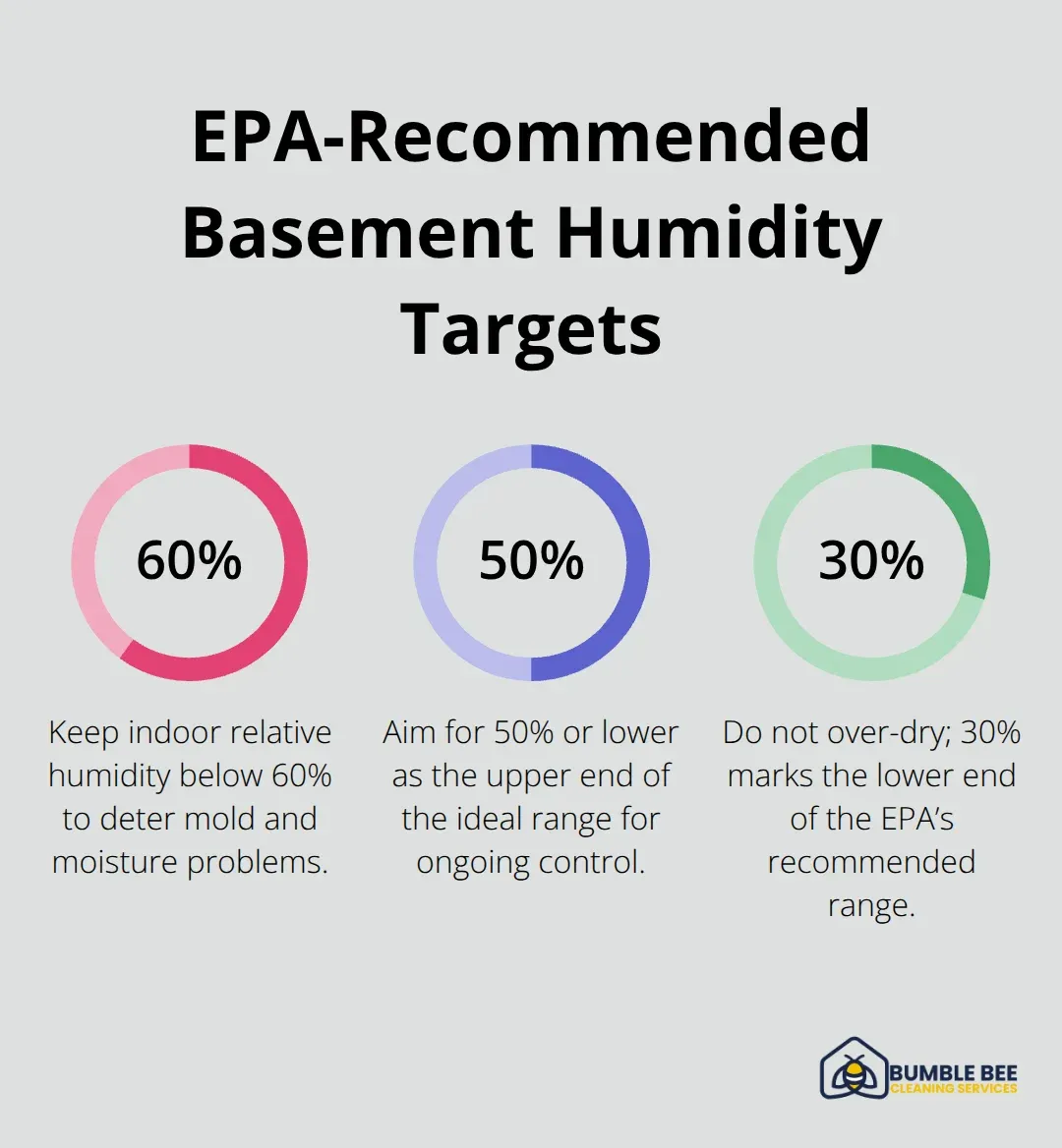
Post-cleaning maintenance determines whether your basement stays dry or slides back into the mold cycle within months. Maintain indoor relative humidity below 60 percent, ideally between 30–50 percent according to EPA guidance, which requires continuous dehumidification in Seattle’s climate. Foundation cracks need sealing, gutters need regular clearing to prevent water overflow near foundations, and condensation on cold water pipes should be addressed through pipe insulation.
Ventilation systems should move air through the basement actively rather than sealing it off, which traps moisture and accelerates mold growth.
Professional Assessment Identifies Hidden Moisture Sources
If your basement has windows, they must open fully and provide clear egress paths according to Seattle building codes, which also improves airflow. Professional assessment identifies moisture sources homeowners miss-groundwater intrusion patterns, inadequate drainage, and ventilation failures that generic solutions cannot address. The cost of professional deep cleaning paired with targeted moisture control investments prevents the exponentially higher costs of structural repair, health complications from chronic mold exposure, and property value collapse that untreated damp basements guarantee.
Final Thoughts
Damp basements demand professional intervention because surface-level cleaning cannot stop the moisture cycle that drives mold regrowth and structural damage. We at Bumble Bee Cleaning Services understand that basement moisture in Seattle requires deep cleaning paired with moisture control strategies that address root causes, not just visible mold. Our IICRC-certified team follows industry standards for water damage restoration and mold remediation, using specialized equipment and EPA-registered products to eliminate mold colonies while protecting your indoor air quality.
The health risks from untreated basement moisture strike immediately and measurably. Respiratory symptoms, asthma triggers, and permanent lung damage from prolonged mold exposure affect your family now, while structural deterioration and property value loss compound over time. Professional deep cleaning stops this damage progression by removing mold spores, controlling humidity levels, and identifying hidden moisture sources that homeowners typically miss.
Your basement’s condition directly impacts your entire home’s health and market value. Contact Bumble Bee Cleaning Services to schedule expert basement cleaning and take control of your Seattle home’s moisture problem before it escalates further.
For more information about our cleaning services in Seattle and Atlanta, or to request a cleaning quote, call or text us at 425-786-1360 or email us at info@qbclean.com
