
Seasonal allergies affect millions of people across the Pacific Northwest, and Seattle’s damp climate makes the problem worse. Dust mites, pet dander, pollen, and mold spores accumulate in your home faster than you might realize.
We at Bumble Bee Cleaning Services know that allergen removal goes beyond regular vacuuming. Deep cleaning targets the hidden sources where these irritants hide, giving you real relief during allergy season.
Where Do Allergens Hide in Your Seattle Home
Dust Mites Thrive in Your Bedding and Furniture
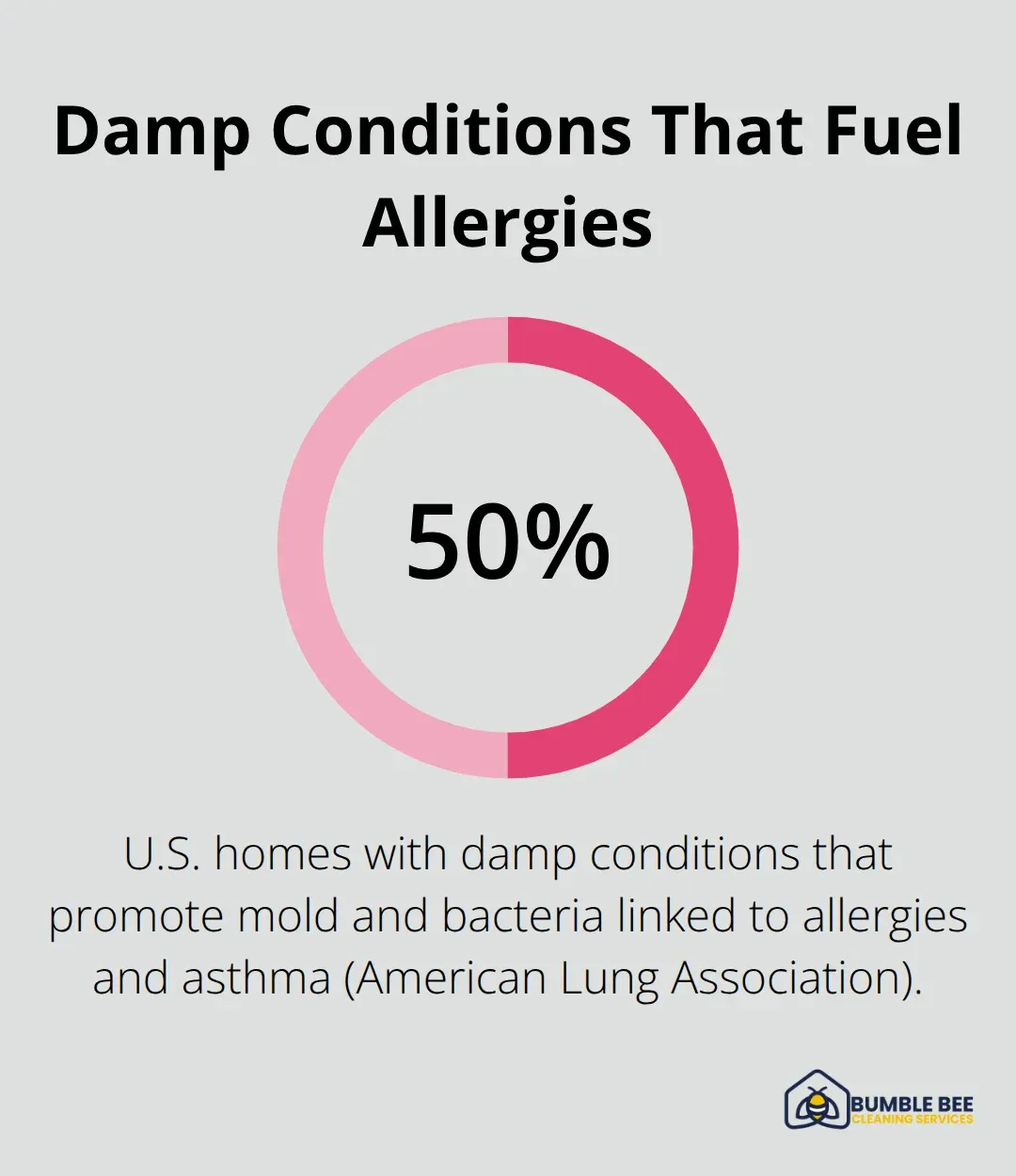
Dust mites are living in your bedding right now. The American Lung Association reports that up to 50 percent of homes have damp conditions that promote mold and bacteria linked to allergies and asthma. Seattle’s frequent rain and mild winters create the perfect environment for these microscopic pests to thrive in mattresses, pillows, and upholstered furniture.
A single dust mite produces about 20 waste particles daily, and these droppings accumulate faster than most people realize. Washing bedding weekly in hot water kills dust mites, but if you wash in warm water only, you leave them behind to multiply.
Pet Dander Settles Everywhere
Pet dander creates an allergen problem that extends far beyond your pet’s sleeping area. If you have dogs or cats, their skin cells settle onto every surface in your home and become airborne when you walk across the floor or sit on furniture. These particles remain suspended in the air longer than most people expect, traveling through your HVAC system and settling in places you rarely clean.
Mold Spores Grow in Damp Seattle Conditions
Between 2014 and 2019, researchers found that mold allergies affect a significant portion of the population, and Seattle’s damp climate means mold spores are growing in your bathroom grout, basement corners, and inside your HVAC system right now. Pollen enters through windows and doors during spring and fall, but the real problem is that pollen doesn’t leave once it settles. It sticks to fabrics, accumulates in air ducts, and recirculates every time your heating system runs.
Why Standard Cleaning Falls Short
Regular vacuuming and surface wiping miss the spaces where allergens accumulate fastest. Standard household vacuums only capture particles down to about 10 microns, while dust mites and their waste are far smaller. Hidden zones like air ducts collect pollen, pet dander, and dust mites that get blown back into living spaces with every cycle of your HVAC system. Professional air duct cleaning removes these contaminants before they recirculate, which is why many Seattle homeowners see immediate relief after having their ducts cleaned.
Mold thrives in moisture-prone areas, and keeping humidity below 50 percent is critical to prevent growth, but most people don’t address the mold already growing inside their ventilation systems. Hard-to-reach areas like behind furniture are where allergen buildup happens unchecked. Deep cleaning targets these neglected spots where dirt and allergens accumulate over months and years, preparing your home for the allergen-reduction strategies that follow.
What Professional Deep Cleaning Actually Removes
Carpet and Upholstery Extraction Goes Deeper Than Household Vacuums
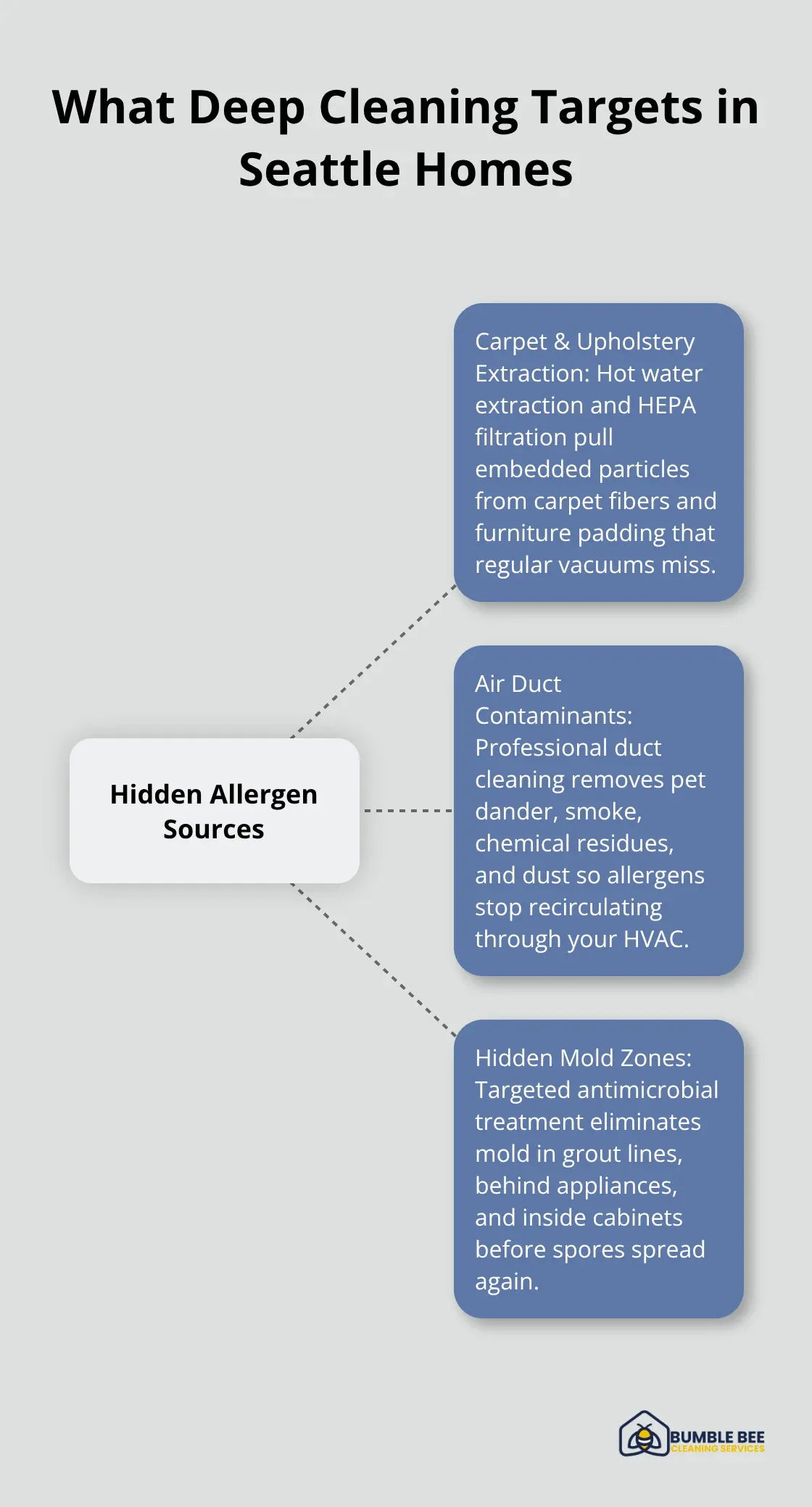
Professional carpet and upholstery cleaning extracts allergens that your household vacuum cannot reach. Standard vacuums capture particles down to about 10 microns, but dust mite waste and mold spores are far smaller, meaning they pass right through ordinary filters and settle deeper into carpet fibers and furniture padding. Professional-grade equipment uses hot water extraction and HEPA filtration to remove trapped allergens that have accumulated over months, pulling out particles embedded so deep that regular cleaning leaves them behind. This extraction process targets the foundation of your carpet and cushioning where allergens hide longest.
Air Duct Cleaning Stops Daily Allergen Recirculation
Air duct cleaning is where most Seattle homeowners see the fastest relief because your HVAC system recirculates allergens every single day. Without proper ventilation or filtration, pet dander, cigarette smoke and chemical irritants accumulate inside your ducts and get blown directly into your breathing space with each heating cycle. Professional duct cleaning removes these contaminants before they spread through your home again. Your air ducts act like the lungs of your home, and when they fill with allergens, every breath you take pulls those particles into your living areas.
Sanitizing Hidden Zones Eliminates Mold at the Source
Hard-to-reach areas like bathroom grout, behind appliances, and inside cabinet spaces collect mold and mildew that thrive in mold growth in Seattle’s moisture-rich environment. These neglected zones require targeted sanitization with appropriate antimicrobial treatment to eliminate mold growth at the source rather than just wiping visible surfaces. Deep cleaning these hidden spots prevents allergens from being stirred up and recirculated, creating the foundation for lasting allergy relief in your home. When mold grows in spaces you cannot see, it continues releasing spores into your air indefinitely-professional treatment stops this cycle before it starts.
The allergen removal process reveals why surface-level cleaning fails to address seasonal allergies in Seattle homes. Once you understand what professional deep cleaning actually removes, the next step is establishing a schedule that keeps these allergen sources from rebuilding.
Build Your Year-Round Allergen Defense Strategy
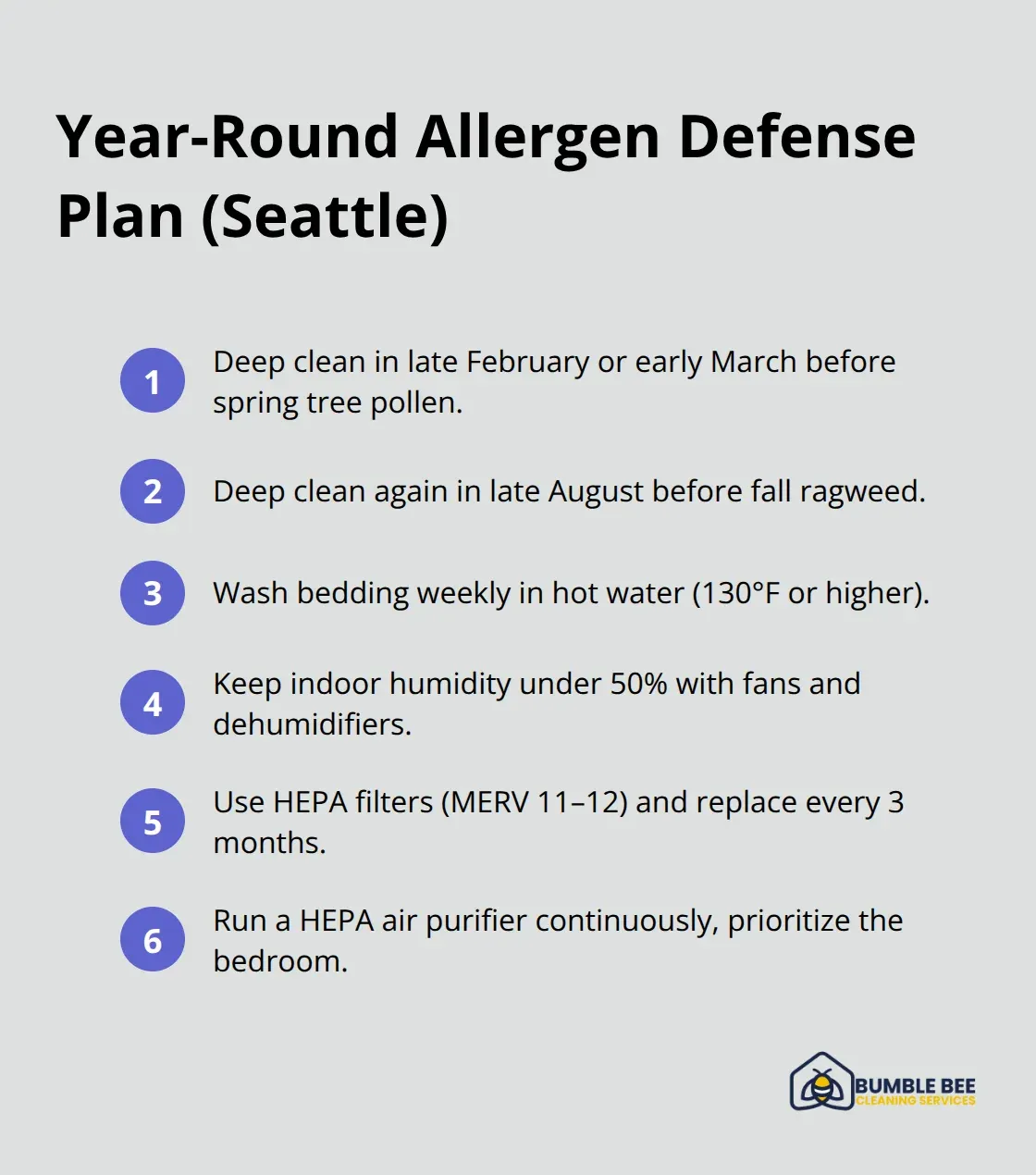
Deep cleaning removes allergens, but stopping seasonal allergies requires a maintenance plan that works between professional services. Seattle’s damp climate means allergens rebuild faster than in drier regions, so a consistent schedule prevents the accumulation that triggers symptoms. Schedule professional deep cleaning in late February or early March, before tree pollen peaks in spring, and again in late August before fall ragweed season arrives. This timing interrupts the allergen cycle when it matters most.
Wash Bedding in Hot Water Weekly
Hot water kills dust mites at temperatures above 130 degrees Fahrenheit, while warm water leaves them alive to reproduce. A single mattress can harbor dust mites, making weekly hot water washing non-negotiable if you want real relief. Set a calendar reminder for bedding day so it becomes automatic rather than optional. This simple habit stops dust mite populations from exploding in the place where you spend eight hours every night.
Control Humidity to Starve Mold Growth
Mold spores thrive when indoor humidity exceeds 50 percent, and Seattle’s rainy climate makes this your biggest challenge. Keep a humidity monitor in your bathroom, basement, and bedrooms to track levels throughout the day. If readings consistently stay above 50 percent, run exhaust fans during and for 30 minutes after showers, and consider a dehumidifier in the basement where mold grows fastest. Fix water leaks immediately because even small drips create the moisture mold needs to spread. Professional air duct cleaning removes existing mold colonies, but humidity control stops new growth from starting inside your ventilation system.
Upgrade Filters and Vacuum Equipment
Upgrade to a HEPA filter with a MERV rating of 11 or 12 to capture smaller allergen particles than standard filters, though these filters need replacement every three months rather than the typical six-month schedule because they clog faster. A HEPA-filtered vacuum prevents dust from becoming airborne during cleaning, which is why sweeping spreads allergens while vacuuming contains them. This equipment swap costs less than professional cleaning but delivers measurable results in reducing what you breathe.
Position Air Purifiers for Maximum Impact
Air purifiers with HEPA filters trap particles between professional cleanings, but placement matters more than most people realize. Position purifiers in your bedroom first because you spend eight hours breathing the same air, and reducing nighttime allergen exposure improves sleep quality and reduces morning congestion. Run the purifier continuously rather than intermittently because allergens settle and resurface throughout the day. A portable unit in your bedroom combined with a whole-home HVAC upgrade creates layered protection that catches allergens at multiple points in your home.
Final Thoughts
Deep cleaning significantly reduces allergen levels in your Seattle home, but the real power comes from combining professional services with consistent maintenance habits. A single deep cleaning removes years of accumulated dust, pet dander, mold, and pollen, yet allergens rebuild within weeks without follow-up care. The allergen removal process works best when you schedule professional deep cleaning before allergy seasons arrive, then maintain your home between appointments through weekly hot water bedding washes, humidity control, and HEPA filtration.
Seattle’s damp climate means allergens accumulate faster than in other regions, making a year-round strategy essential rather than optional. Seasonal deep cleaning prevents allergies before they start by interrupting the allergen cycle at its peak moments (late February before spring tree pollen peaks and late August before fall ragweed season). This timing stops the worst allergen buildup before symptoms develop.
We at Bumble Bee Cleaning Services understand that seasonal allergies require more than occasional vacuuming. Our team specializes in deep cleaning that targets hidden allergen sources your household equipment cannot reach. Professional allergen removal combined with your maintenance efforts creates lasting relief that gets you through allergy season without constant symptoms.
For more information about our cleaning services in Seattle and Atlanta, or to request a cleaning quote, call or text us at 425-786-1360 or email us at info@qbclean.com
