
Dirty windows cost your Seattle office more than you think. They block natural light, make your space look unprofessional, and drain employee focus.
We at Bumble Bee Cleaning Services know that window cleaning Seattle office buildings requires more than a squeegee and some elbow grease. That’s why we’ve put together this guide to show you why clean windows matter and how to keep them that way year-round.
Why Clean Windows Transform Your Seattle Office
Natural Light Powers Employee Performance
Natural light transforms how your team works. Studies show that employees in offices with adequate daylight report 15% higher productivity and experience significantly better mood regulation compared to those in artificially lit spaces. Seattle’s cloudy climate makes this even more critical-maximizing whatever natural light reaches your building through clean windows becomes a competitive advantage for focus and mental clarity.
Dirty windows block this light before it enters your space, forcing you to rely on artificial lighting and creating a dimmer, more depressing environment. When grime accumulates on glass, light transmission drops noticeably, and employees unconsciously adjust their mood and energy downward in response. Clean windows eliminate this barrier, allowing maximum daylight penetration and the psychological benefits that come with it.
First Impressions Start at Your Windows
A single smudge or streak on your office windows sends a message to clients, partners, and employees about your standards. Dirt, fingerprints, and water spots accumulate quickly in high-traffic areas like reception windows and conference rooms, and they’re the first thing visitors notice. When your windows look neglected, people question whether the rest of your operation receives proper attention.
Clean, streak-free windows project competence and professionalism without saying a word. In Seattle’s wet climate, rain and mineral deposits create visible marks that standard cleaning can’t remove-professional window cleaning eliminates these water spots entirely, leaving glass crystal clear. This clarity directly impacts how clients perceive your business, and perception drives decisions.
Window Cleanliness Influences Hiring and Retention
Your office appearance influences hiring outcomes too. Prospective employees view clean, well-maintained spaces as workplaces where they’ll be valued and supported. The condition of your windows (along with overall office cleanliness) signals whether management invests in employee experience or cuts corners on maintenance.
These factors compound over time. Employees who work in visibly clean, well-lit offices report higher job satisfaction and lower turnover intentions. The investment in professional window cleaning pays dividends through reduced recruitment costs and stronger team morale. Now that you understand why clean windows matter, the question becomes how to maintain them effectively in Seattle’s challenging climate.
Professional Window Cleaning Services vs. DIY Approaches
The Hidden Cost of In-House Window Cleaning
Cleaning your office windows yourself seems like an easy cost-saver until you face the reality of Seattle’s weather and multi-story buildings. In-house cleaning consumes significant staff time-a typical 10,000-square-foot office with 40+ windows takes 6 to 8 hours for an untrained employee, pulling them from productive work. Your payroll cost alone runs $100 to $200 just for labor, and that’s before accounting for equipment, cleaning solutions, and the inevitable mistakes that require a professional to fix.
Professional window cleaning for a comparable commercial space costs $400 to $600, but the service takes 4 hours with certified crews, eliminating the productivity drain entirely. The math favors professionals: you pay less and gain back employee time that generates far more value than the cleaning cost.
Why DIY Techniques Leave Streaks and Water Spots
Most in-house cleaning efforts fail because they lack the technique that professionals master. A single-direction squeegee stroke, microfiber drying cloths, and timing before rain all matter far more than most building managers realize. DIY approaches leave streaks and water spots because they skip these critical steps or apply them incorrectly.
Seattle’s wet climate amplifies this problem. Rain and mineral deposits create visible marks that standard cleaning cannot remove. Professional window cleaners understand how to eliminate water spots entirely, leaving glass crystal clear. This clarity directly impacts how clients perceive your business, and perception drives decisions.
Safety Hazards That DIY Cannot Overcome
Safety on multi-story buildings is where DIY cleaning becomes genuinely dangerous. OSHA standards require safety fall protection plans for work 4 feet or more above a lower level. Employees climbing ladders on upper floors without proper training face serious injury risks that no cost savings justify, and your liability insurance likely excludes unpermitted climbing work anyway.
Professional window cleaners arrive fully bonded and insured with trained crews. They handle buildings safely using ladders with level legs and roof access protocols. They also know Seattle’s climate challenges-rain, wind, and seasonal grime from pollen and occasional wildfire smoke-and schedule work during dry, calm conditions to prevent streaks and accidents.
Professional Standards and Compliance
Certified professionals follow industry standards and EPA guidelines for water waste containment, eco-friendly solutions, and documented results that DIY crews simply cannot match. These standards exist because they protect both your building and your employees. Insurance policies increasingly reference industry standards, making compliance a contractual requirement for window-cleaning services.
When you hire professionals, you gain more than clean windows. You gain documented safety protocols, environmental compliance, and the assurance that your building receives care according to industry standards. This foundation of professional service becomes especially important as you plan a sustainable cleaning schedule that fits Seattle’s unique weather patterns and your office’s specific needs.
How Seattle Weather Shapes Your Window Cleaning Schedule
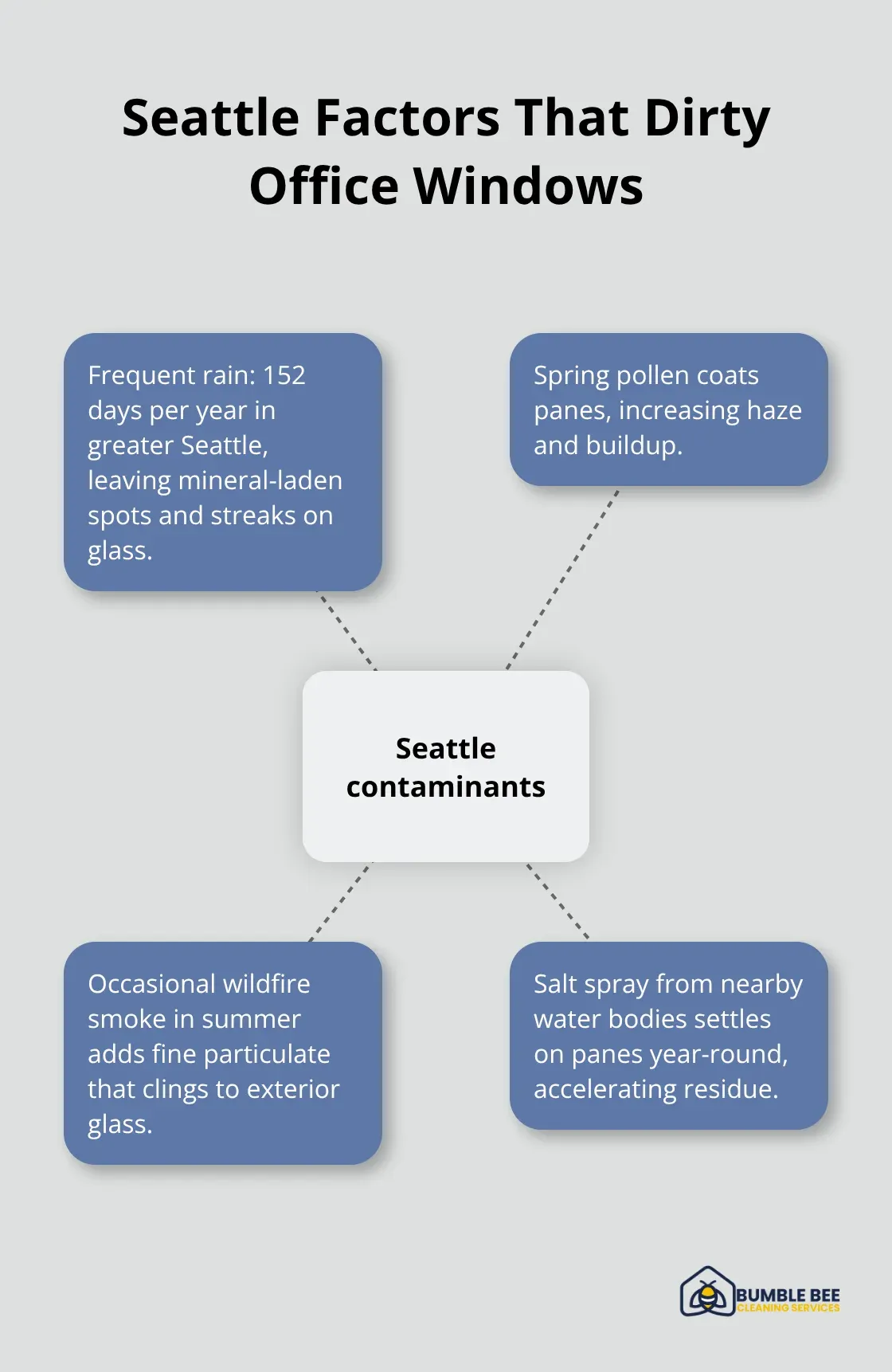
Seattle’s climate presents a constant challenge to window cleanliness. Rain falls 152 days per year in the greater Seattle area, and each storm deposits mineral-laden water that leaves spots and streaks on glass. Pollen arrives in spring, occasional wildfire smoke drifts in from eastern Washington during summer months, and salt spray from nearby water bodies settles on exterior panes year-round. These environmental factors cause your office windows to deteriorate faster than buildings in drier climates, making a reactive approach to cleaning expensive and ineffective.
Strategic Scheduling Around Weather Patterns
Professional window cleaners in Seattle understand this reality and schedule work strategically around weather patterns rather than on arbitrary calendar dates. Cleaning immediately before rain wastes money because fresh grime reappears within days. Instead, you should schedule exterior window cleaning during stable, dry weather windows that typically last 3 to 7 days between storms. Interior windows require less weather coordination but still benefit from monthly attention to prevent dust and fingerprint buildup that accumulates faster in occupied commercial spaces.
Establishing a Baseline Cleaning Frequency
Commercial buildings in Seattle should establish a baseline cleaning frequency of every 6 to 8 weeks for exterior windows and monthly for interior glass, then adjust based on specific building conditions. Ground-level windows and those facing high-traffic areas accumulate grime faster and may need cleaning every 4 weeks. Upper-story windows in downtown Seattle, where air pollution concentrates, benefit from quarterly deep cleaning to remove embedded particulate matter.
Seasonal Adjustments for Maximum Efficiency
Winter months bring heavy rain that can actually help rinse windows naturally, so December through February may require less frequent professional cleaning unless your building sits in a sheltered location where rain doesn’t reach certain panes. Spring pollen peaks in March and April, making this period critical for two cleaning sessions spaced 3 weeks apart. Summer and early fall present your best weather windows for exterior work, with calm, dry conditions allowing crews to achieve streak-free results without rain interfering with drying.
Using Data to Optimize Your Schedule
Document your windows’ condition with simple photos taken monthly from consistent angles, then use this visual record to justify cleaning frequency to stakeholders and adjust schedules based on what the building actually shows rather than guessing. This data-driven approach typically reduces unnecessary cleaning while ensuring windows never look neglected. Condition-based scheduling (rather than fixed calendar dates) responds to actual dirt levels and seasonal pollution patterns, making your maintenance investment far more effective.
Final Thoughts
Clean windows directly impact how your Seattle office functions and how clients perceive your business. The productivity gains from natural light, the professional appearance that attracts talent, and the mental clarity your team experiences all stem from one maintenance decision: keeping your glass clear. Window cleaning for Seattle office spaces isn’t a luxury-it’s an operational necessity in a climate that constantly works against visibility.
Professional window maintenance delivers long-term value that far exceeds the cost of service. You avoid the hidden expenses of in-house cleaning, eliminate safety risks on multi-story buildings, and gain documented compliance with industry standards (ARCSI and IICRC). More importantly, you free your staff to focus on work that generates revenue rather than struggling with squeegees and ladders.
Seattle’s rainy climate makes consistency your greatest advantage. Schedule exterior cleaning every 6 to 8 weeks during dry weather windows, combined with monthly interior attention, to keep your windows performing at their best year-round. Contact Bumble Bee Cleaning Services today to schedule your first professional cleaning and experience the difference clear windows make for your office environment.
For more information about our cleaning services in Seattle and Atlanta, or to request a cleaning quote, call or text us at 425-786-1360 or email us at info@qbclean.com
