
Moving out of your Seattle rental means facing a critical inspection. Landlords check everything from baseboards to ceiling corners, and missing even one area can cost you your security deposit.
Tenancy cleaning Seattle requires knowing exactly what inspectors look for and how to clean to their standards. We at Bumble Bee Cleaning Services help renters pass inspections on the first try by covering the specific requirements Seattle landlords demand.
What Seattle Landlords Actually Inspect During Move-Out
The Conditional Standard and Security Deposit Law
Seattle’s rental market operates under the conditional standard, meaning landlords judge your unit against its move-in condition, not some generic checklist. Washington state law RCW 59.18.280 requires landlords to return your security deposit within 30 days with itemized deductions for anything below that move-in standard. Cleaning issues account for a significant portion of security deposit deductions in Seattle, making it a major cause of disputes.
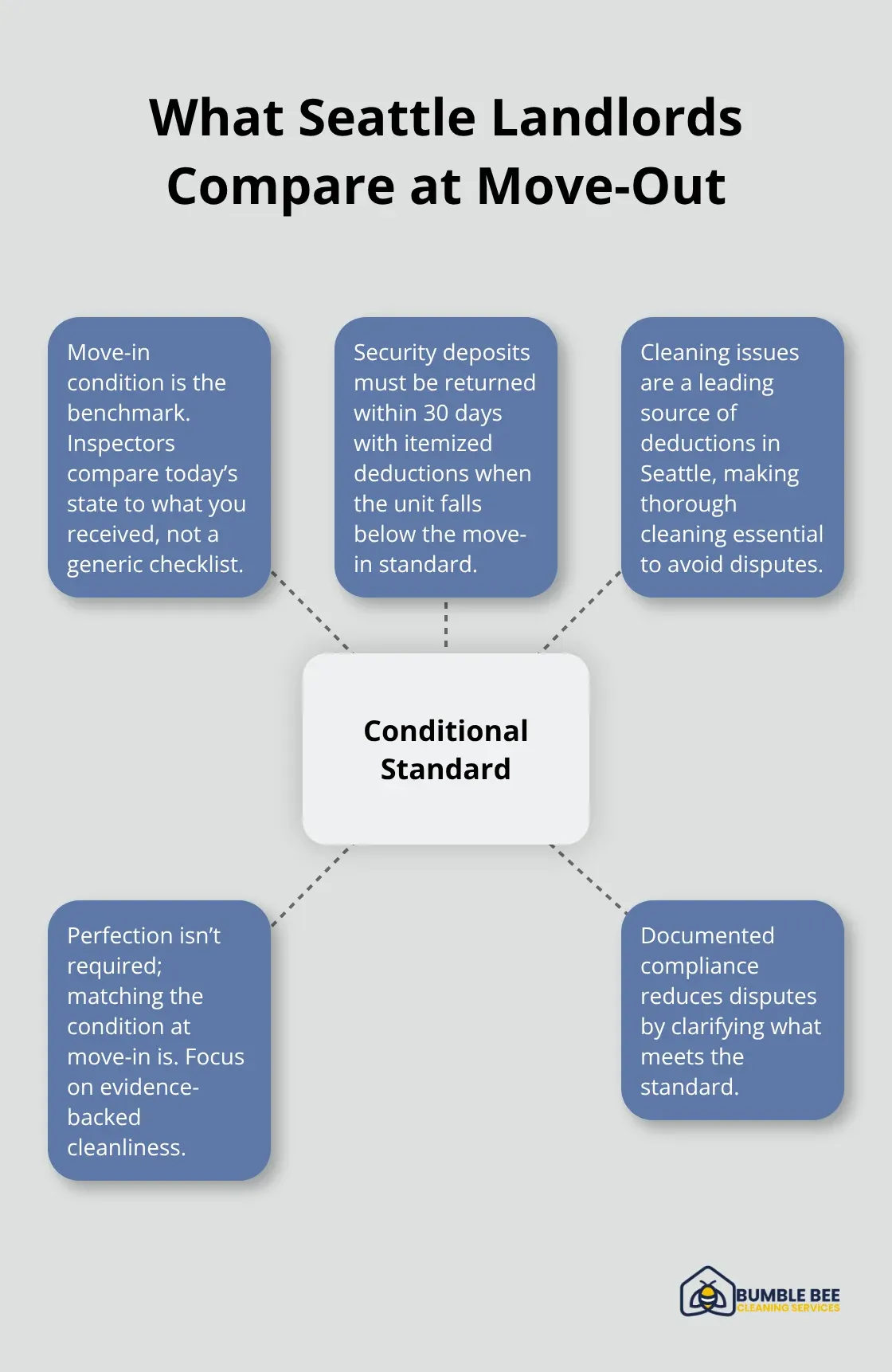
This isn’t about perfection-it’s about matching what you received when you moved in.
Kitchen Inspection: Where Landlords Focus Most Attention
Most Seattle leases require returning kitchens in pristine condition because these rooms signal water damage and grime problems that affect future tenants. Landlords inspect inside cabinets, behind the refrigerator, oven interiors, disposal cleanliness, and countertop mineral deposits. Your refrigerator shelves need cleaning with warm water and baking soda, and the space behind it must be vacuumed to remove hidden grime and odors. Ovens require heavy-duty cleaner applied overnight to break down buildup, while sinks, faucets, and disposals need thorough scrubbing. Countertops should be wiped with a vinegar-water solution to eliminate water spots.
Bathroom Sanitization Standards in Seattle’s Climate
Bathrooms in Seattle rentals face intense scrutiny because humidity increases mold risk significantly in this climate. Toilets must be scrubbed thoroughly (including the base and behind the seat), soap scum and mildew removed aggressively, and grout lines cleaned completely. Mirrors and chrome fixtures should be polished to remove streaks and fingerprints. Tenants have the right to request repairs for conditions that may lead to mold growth, including water leaks, moisture problems, and ventilation defects, but any new mold growth you cause will trigger deductions.
Floors, Windows, and Carpet Requirements
Floors, windows, and carpets round out the inspection. Professional carpet cleaning is often required by lease terms-skipping it guarantees an automatic deduction. Carpets in Seattle typically have a 5–7 year useful life, and normal wear isn’t charged, but stains, burns, or pet damage absolutely will be. Windows need cleaning on both sides with tracks cleared of debris. Take timestamped photos from the same angles you used at move-in to prove you’ve met the standard and prevent disputes later.
Documentation Protects Your Deposit
Photos create a clear record that protects you during the final inspection. Landlords appreciate visual proof that you’ve addressed every area they scrutinize. This documentation becomes especially valuable if disputes arise over deductions, as it demonstrates your compliance with the conditional standard. The next step involves identifying the specific mistakes that cost renters thousands in unnecessary deductions each year.
Common Move-Out Cleaning Mistakes to Avoid
Hidden Areas That Landlords Inspect First
Renters lose thousands annually in Seattle because they skip the hidden corners landlords inspect first. The top of the refrigerator, inside cabinet interiors, light switch plates, and door handles accumulate dust and grime that signal poor maintenance to inspectors. Behind appliances represents another critical area-pulling the refrigerator out and vacuuming the coils and floor space behind it removes hidden debris that creates odor problems for future tenants.
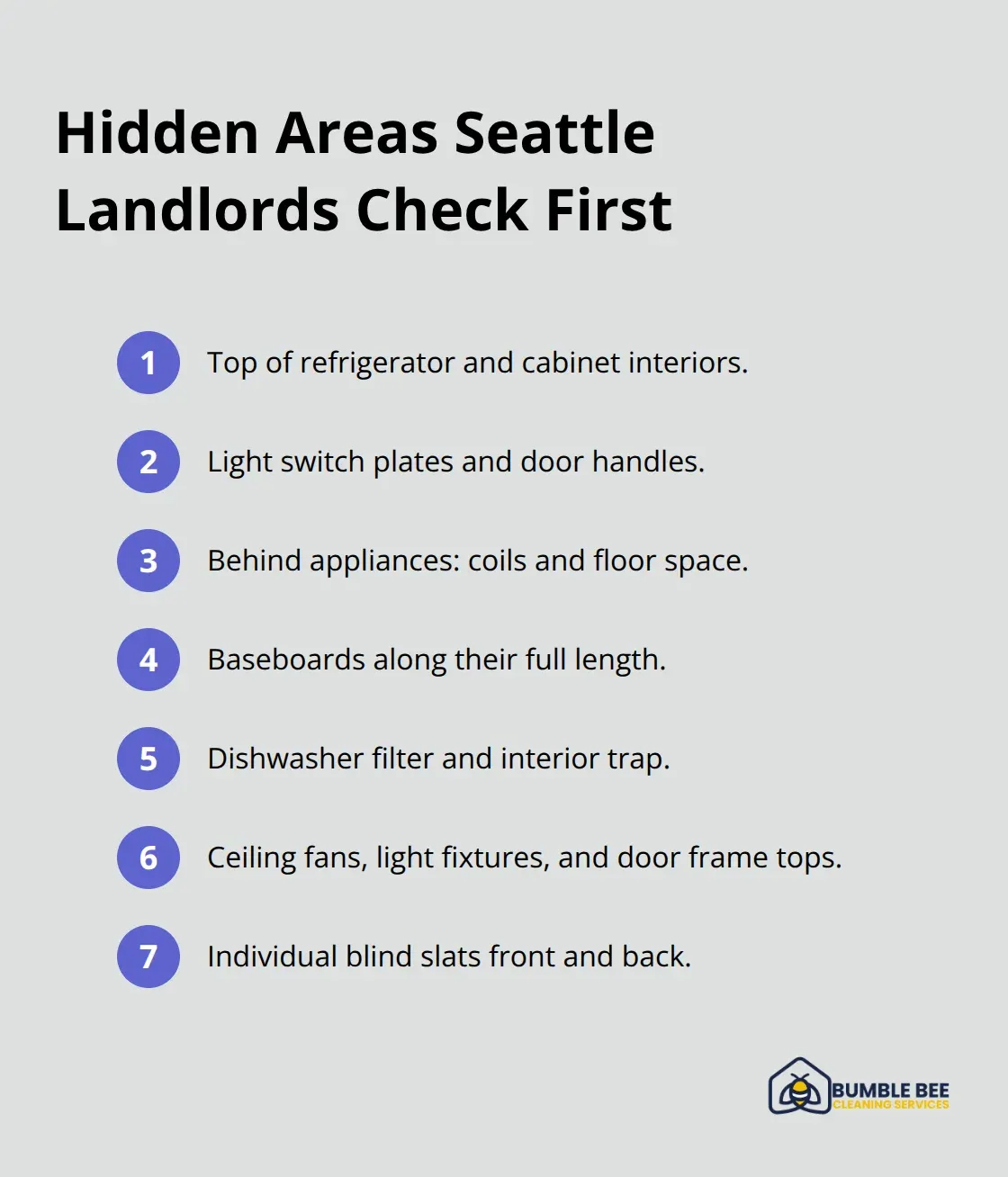
Baseboards collect dust along their entire length, yet many renters only spot-clean visible sections. The dishwasher filter traps food particles and bacteria that landlords specifically check during final walkthroughs. Ceiling fans, light fixture interiors, and the tops of door frames accumulate cobwebs and dust that are visible to anyone standing in the room. Blind slats require individual attention because dust settles between each one, and skipping this step leaves obvious evidence of incomplete cleaning.
Wrong Cleaning Products Damage Surfaces
Using the wrong cleaning products destroys surfaces and creates additional deduction claims. Abrasive scouring pads scratch stainless steel appliances and leave permanent marks that landlords photograph as damage. Bleach-based cleaners damage grout and tile finishes, and acidic products like vinegar can etch natural stone countertops if left sitting too long. The interior of ovens requires heavy-duty oven cleaner applied overnight to break down buildup safely, not steel wool or harsh scrubbing that damages the enamel coating. Bathroom grout needs a pH-neutral cleaner to avoid weakening the sealant, and using the wrong product leaves residue that inspectors interpret as inadequate cleaning. Countertops and backsplashes require cleaners matched to their material-granite needs different treatment than laminate, and mixing these up costs you deductions.
Documentation Prevents Deposit Disputes
Failing to document your work with timestamped photos from identical angles as your move-in photos removes your only defense if disputes arise over deductions. Your photos prove the condition at move-out and prevent landlords from claiming damage you didn’t cause. Without documentation, you cannot contest vague deduction claims, and disputes must be resolved quickly. These common move-out cleaning mistakes compound when renters attempt cleaning without understanding what Seattle landlords actually prioritize during inspections.
How to Prepare Your Seattle Home for Move-Out Inspection
Build a Room-by-Room Cleaning Checklist
A detailed room-by-room checklist transforms move-out cleaning from overwhelming to manageable. Start with the kitchen, which landlords inspect first and most thoroughly. Your checklist should include emptying all cabinets and wiping interiors with appropriate cleaners, pulling the refrigerator away from the wall to vacuum coils and floor space, cleaning oven interiors with heavy-duty cleaner applied overnight, sanitizing the sink and disposal, running the dishwasher empty with white vinegar, and wiping countertops with a vinegar-water solution to remove mineral deposits.
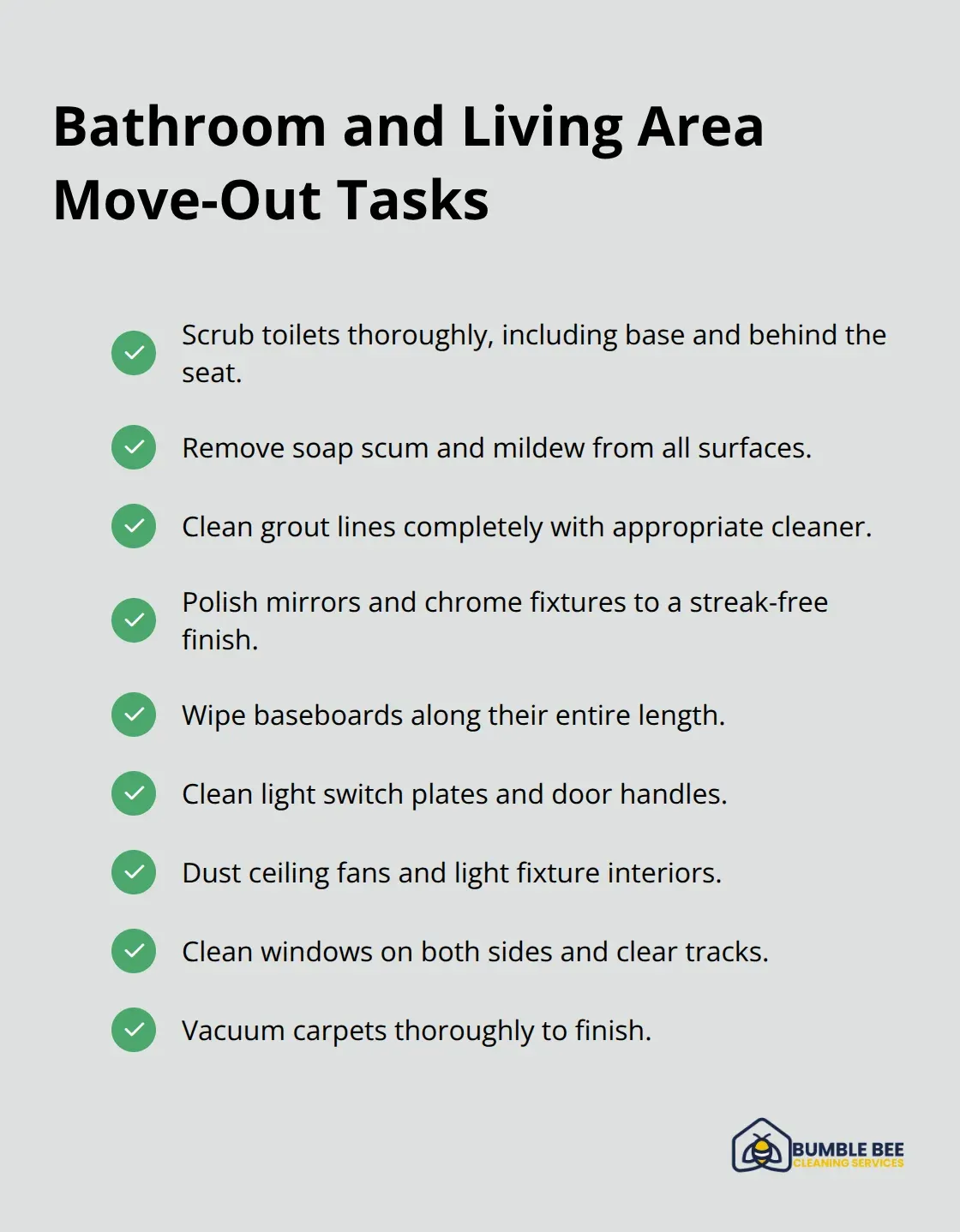
Move to bathrooms next, where Seattle’s humidity makes mold inspection a priority. Your checklist must include scrubbing toilets thoroughly (including the base and behind the seat), removing soap scum and mildew aggressively, cleaning grout lines completely, and polishing all mirrors and chrome fixtures. For living spaces and bedrooms, cover wiping baseboards along their entire length, cleaning light switch plates and door handles, dusting ceiling fans and light fixture interiors, cleaning windows on both sides with tracks cleared, and vacuuming carpets thoroughly.
Allocate Time Based on Apartment Size
A typical two-bedroom apartment requires 6 to 8 hours of DIY cleaning when you follow a detailed checklist. Work systematically through each room rather than jumping between areas, which wastes time and creates missed spots. This structured approach prevents the hidden areas that cost renters thousands in unnecessary deductions annually.
Hire Professional Cleaners for Maximum Deposit Protection
Professional cleaners familiar with Seattle’s rental standards complete the same work in 3 to 4 hours using industrial equipment and systematic checklists that eliminate missed areas. Professional move-out cleaning typically costs $150 to $400 depending on apartment size, and this investment often saves money by preventing security deposit deductions that average far higher. More importantly, professional cleaners provide timestamped before-and-after photos that align with Washington’s documentation requirements, which mandate that written documentation is mandatory for security deposits.
Bumble Bee Cleaning Services offers ARCSI and IICRC certification with a 100% quality service guarantee, providing the documentation landlords expect and the protection your deposit deserves.
Schedule Cleaning at the Right Time
Schedule your move-out cleaning 1 to 2 weeks before your lease ends rather than the day before, which gives you time to address any issues the cleaners identify and allows final touch-ups before your walkthrough. Landlords typically allow 48 hours’ notice before the move-out inspection, so scheduling early provides a buffer for repairs or additional cleaning if needed. Contact Bumble Bee Cleaning Services at 425-786-1360 or info@qbclean.com to book your move-out cleaning and receive the documentation that maximizes your security deposit recovery in Seattle’s competitive rental market.
Final Thoughts
Move-out cleaning in Seattle determines whether you recover your full security deposit or lose hundreds to preventable deductions. The conditional standard means landlords judge your unit against its move-in condition, not perfection, yet this standard still demands attention to hidden areas, proper cleaning products, and documented proof that you’ve met expectations. Kitchens and bathrooms require the most scrutiny because they signal maintenance problems to future tenants, and Seattle’s humidity makes mold prevention a legitimate concern for landlords evaluating your move-out condition.
Tenancy cleaning Seattle becomes manageable when you follow a room-by-room checklist and allocate realistic time for the work. A two-bedroom apartment takes 6 to 8 hours of DIY effort, but professional cleaners complete the same work in 3 to 4 hours using industrial equipment and systematic processes that eliminate missed spots. The cost of professional cleaning, typically $150 to $400, often saves money by preventing security deposit deductions that exceed this investment significantly.
Contact Bumble Bee Cleaning Services at 425-786-1360 or visit our website to book your move-out cleaning and take the guesswork out of protecting your security deposit. Schedule your cleaning 1 to 2 weeks before your lease ends to address any issues before your final walkthrough. Our team provides the documentation and protection your deposit deserves.
For more information about our cleaning services in Seattle and Atlanta, or to request a cleaning quote, call or text us at 425-786-1360 or email us at info@qbclean.com
