
Running a commercial cleaning operation means juggling dozens of moving parts. Without solid systems in place, quality drops, costs climb, and clients notice.
We at Bumble Bee Cleaning Services have built our reputation on commercial cleaning best practices that actually work. This playbook walks you through the exact protocols, tools, and measurement systems that keep teams efficient and clients satisfied.
How to Build Cleaning Protocols That Teams Actually Follow
Written checklists are non-negotiable. Without them, cleaning standards drift within days. Create area-specific checklists that break your facility into zones: restrooms, break rooms, workstations, high-traffic hallways, and any specialized spaces unique to your client. Each checklist should list specific tasks, the cleaning product or method required, and the surface type being cleaned. According to OSHA standards and CDC guidance on cleaning and disinfection, the sequence matters-always clean before sanitizing or disinfecting, since dirt and impurities reduce disinfectant effectiveness. Start with a top-to-bottom pattern: shelves and fixtures first, then desks, then floors. This prevents dirt from falling onto already-cleaned surfaces. Digital checklists work best; facility maintenance platforms help teams log what was cleaned, who cleaned it, when, and any issues encountered. This creates accountability and gives you data to spot gaps.
Set Task Frequency Based on Traffic and Risk
Frequency varies wildly depending on space type and usage. High-traffic zones like entrances, lobbies, and elevators need daily cleaning and disinfection of high-touch surfaces such as door handles, elevator buttons, and counters. Break rooms and restrooms require at least daily attention; restrooms in particularly heavy-use facilities may need twice-daily cleaning. Regular office workstations typically receive weekly or bi-weekly deep attention, though desks should be wiped down daily by occupants. Prioritize these relentlessly to prevent germ transmission. During illness outbreaks or in spaces where vomiting or other contamination events occur, disinfection becomes immediate and mandatory. Document your frequency schedule clearly so every team member knows exactly what gets cleaned when-no guessing, no shortcuts. This transparency prevents conflicts and ensures clients receive consistent service.
Invest in Safety and Technique Training
Training must cover three areas: proper technique, chemical safety, and ergonomic practices. The Bureau of Labor Statistics reports workplace injuries among cleaning workers, with falls on the same level ranking as a leading cause of workplace injuries. Wet floor signs must go down before cleaning starts and stay up until surfaces are completely dry. Staff need hands-on instruction on diluting chemicals correctly according to Safety Data Sheet instructions, proper ventilation requirements, and appropriate personal protective equipment for each product. Teach safe lifting mechanics and ladder protocols-if heights must be accessed, use telescopic poles with attachments to keep workers on the ground whenever possible. Inspect equipment before use: check cart wheels, power cords, hoses, and ladder integrity. Make safety a visible, ongoing priority with regular check-ins and a culture where hazard reporting happens without blame. This reduces injuries and improves efficiency simultaneously.
Move Forward With Accountability Systems
Your protocols only work if teams follow them consistently. Assign responsibility for each zone and task so no one assumes someone else handled it. Use color-coded cleaning tools to designate specific areas (restrooms, food areas, general spaces) and prevent cross-contamination. Post your checklists in visible locations and require staff to initial or digitally confirm completion.
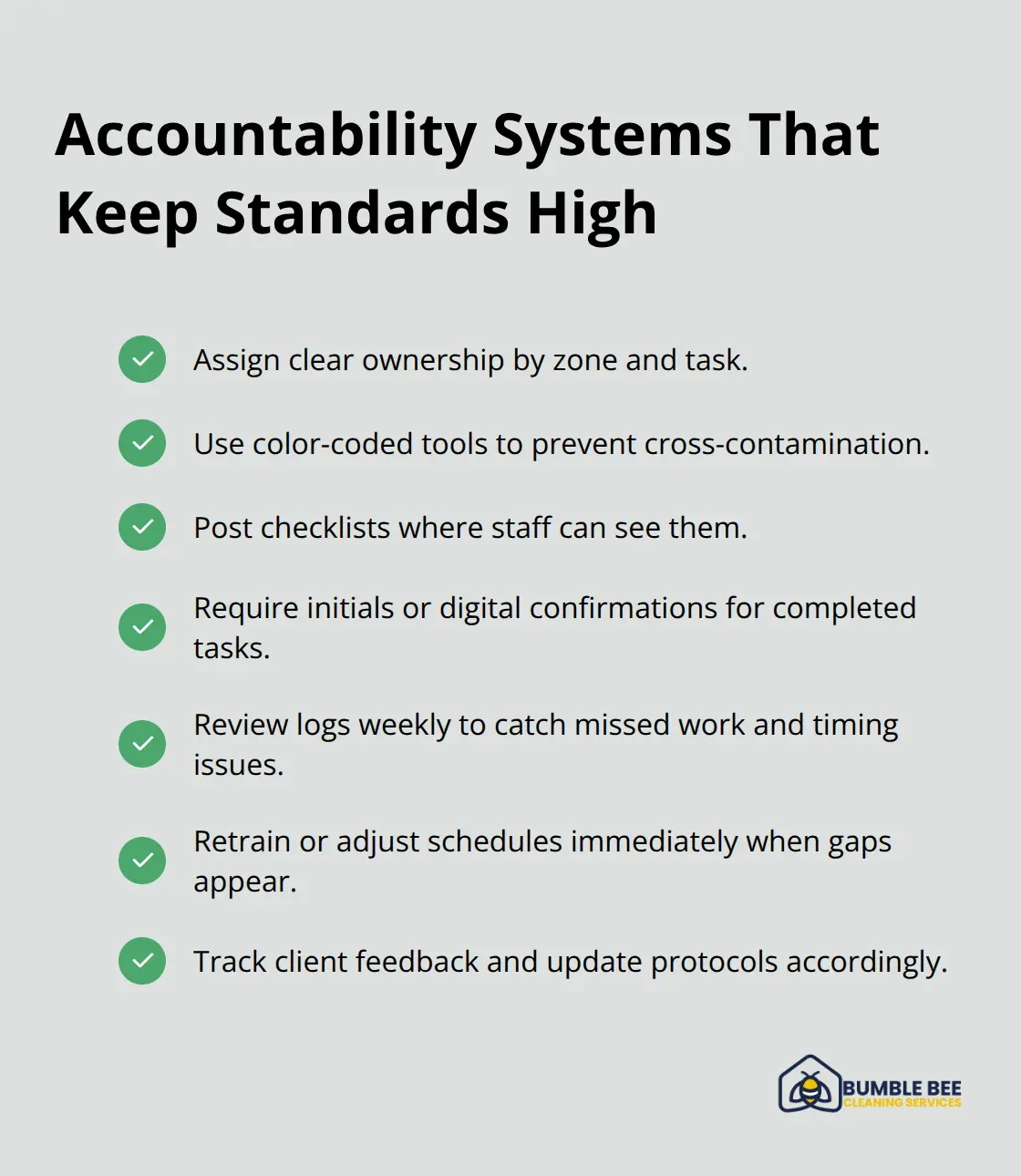
Review logs weekly to spot patterns-missed tasks, timing issues, or equipment problems. When gaps appear, address them immediately through retraining or schedule adjustments rather than letting standards slip. Client feedback reveals what matters most to them, so track complaints and adjust your protocols accordingly. This feedback loop transforms your playbook from static to dynamic, improving results over time.
Tools and Products That Match Your Commercial Space
The equipment and products you select directly determine whether your team finishes on time and meets quality standards. Floor type matters enormously. Carpet requires daily vacuuming with HEPA-filter machines to trap allergens and debris; hard surfaces need neutral pH cleaners and auto scrubbers for large spaces. Tile, vinyl, and concrete each respond differently to cleaning methods, so match your equipment accordingly. According to Fortune Business Insights, floor care and vacuuming represents 43.85 percent of the commercial cleaning market in 2026, making it your foundation. Invest in industrial-grade tools: HEPA vacuums, microfiber cloths, EPA-registered disinfectants, mops suited to your floor types, and touch-free dispensers where clients expect them. Window cleaning accounts for 33.25 percent of market value, so include squeegees and extension poles if this service applies to your contracts. Stock supplies strategically rather than overstocking. Many commercial teams maintain a rolling cart system with separate compartments for restroom products, general-use cleaners, and disinfectants. This prevents cross-contamination and speeds up task completion. Eco-friendly products with Green Seal certification increasingly matter to commercial clients; Fortune Business Insights reports rising adoption in North America and Europe. These products work effectively on standard surfaces while reducing chemical exposure for your team and building occupants. Check product labels against your equipment and surfaces before purchasing. Not all disinfectants work on all materials, and some damage certain floor finishes.
Match Equipment to Floor Types and Surfaces
Different floor materials demand different approaches. Carpet needs daily vacuuming with HEPA filters to capture allergens and debris effectively. Hard surfaces respond well to neutral pH cleaners paired with auto scrubbers for large areas. Tile, vinyl, and concrete each require specific equipment and cleaning solutions to avoid damage and achieve quality results. Select mops, brushes, and scrubbers that suit your facility’s dominant floor type. A facility with mixed surfaces (carpet in offices, tile in restrooms, concrete in loading areas) requires multiple equipment types. This investment upfront prevents damage claims and ensures consistent results across all zones.
Stock and Organize Supplies for Efficiency
A rolling cart system with separate compartments keeps your team organized and prevents cross-contamination. Dedicate one section for restroom products, another for general-use cleaners, and a third for disinfectants. This organization speeds up task completion and eliminates the need to hunt for supplies mid-shift. Stock supplies strategically-order enough to cover your schedule without overstocking, which wastes storage space and ties up budget. Create a simple spreadsheet or use a maintenance platform to flag when supplies drop below a threshold and need reordering. This eliminates guesswork and keeps your team focused on cleaning rather than scrambling for products.
Choose Products That Protect Your Team and Clients
Eco-friendly products with Green Seal certification increasingly matter to commercial clients. Fortune Business Insights reports rising adoption in North America and Europe. These products work effectively on standard surfaces while reducing chemical exposure for your team and building occupants. Check product labels against your equipment and surfaces before purchasing-not all disinfectants work on all materials, and some damage certain floor finishes. EPA-registered disinfectants must match the specific germs and surfaces you’re treating. This careful selection protects both your workers and your clients’ indoor air quality.
Maintain Equipment to Prevent Downtime and Injuries
Inspect equipment weekly before use. Check vacuum canisters for full capacity, clean or replace filters monthly in high-traffic buildings, and examine power cords for frays or damage. Worn equipment fails during shifts, forcing rescheduling and frustrating clients. Replace items before they break rather than reacting to failures. Keep a maintenance log that tracks when filters were changed, when cords were inspected, and when equipment was serviced. Digital facility maintenance platforms streamline this tracking and alert you when maintenance is due.
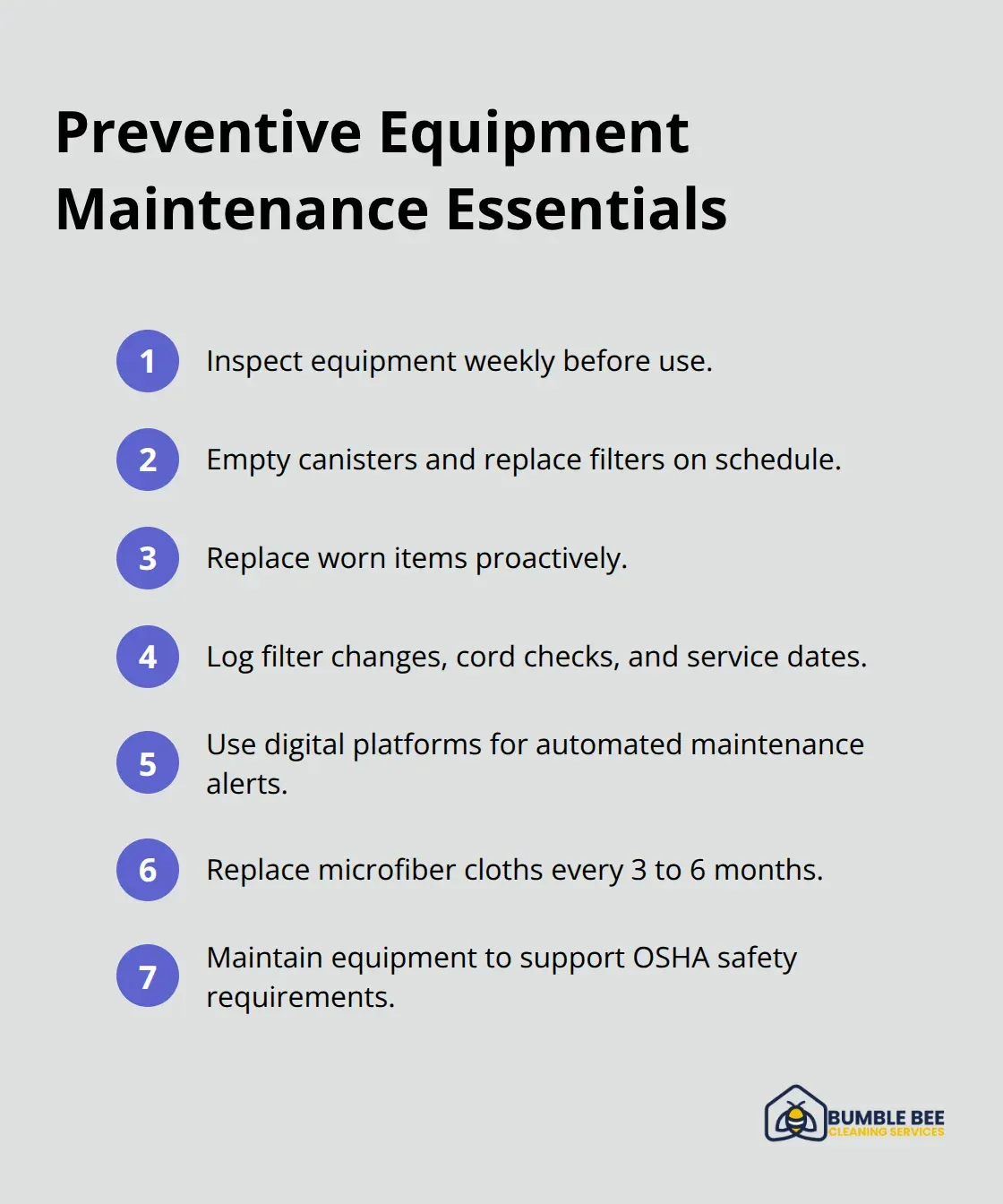
Microfiber cloths degrade after repeated washing; replace them every three to six months depending on usage intensity. OSHA standards and safety protocols require functional equipment, so this maintenance directly supports worker safety. Teams that maintain equipment on schedule report fewer injuries and higher productivity.
With your tools, products, and equipment systems in place, the next step focuses on measuring whether your protocols actually deliver results and adjusting them based on real performance data.
Measuring Quality and Maintaining Consistency
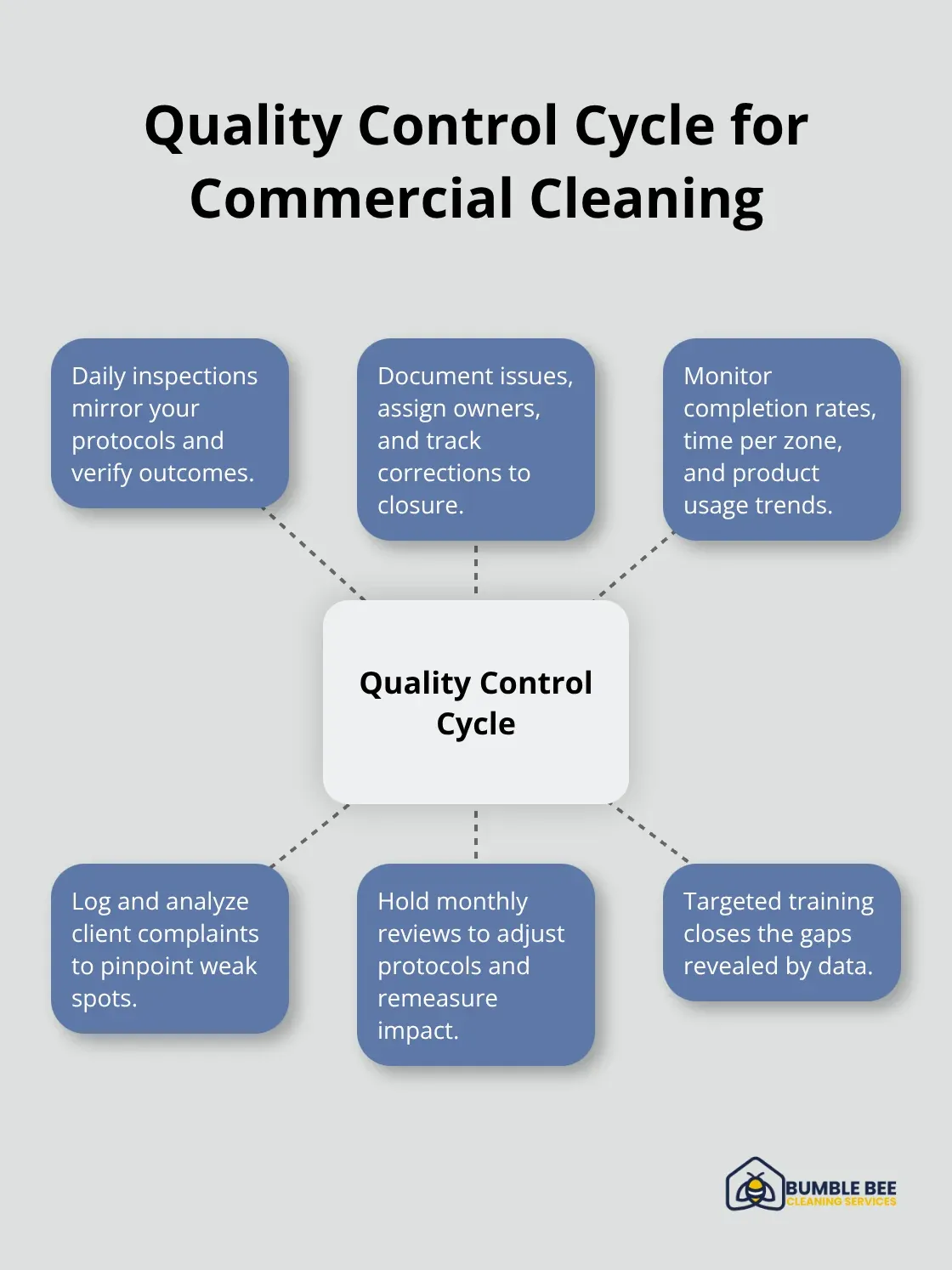
Quality inspection systems separate teams that deliver consistent results from those that gradually slip into mediocrity. Start by creating a simple daily inspection checklist that mirrors your cleaning protocols but focuses on verification rather than task completion. Walk through each zone and photograph problem areas using your phone or a tablet app. Document what you find: missed spots, streaks on glass, dust on high surfaces, or disinfectant residue. This visual record becomes proof of quality and identifies exactly where training gaps exist.
Document Inspections and Assign Corrections
Use a facility maintenance platform to log inspections digitally, assign responsibility for corrections, and track whether the same issues repeat. If restroom mirrors show streaks three days in a row, you have a technique problem that training solves. If high-touch surfaces in the lobby weren’t disinfected, you have a protocol adherence problem that requires accountability measures. Without this documentation, you operate blind and clients will fire you before you realize standards have eroded.
Track Performance Metrics to Spot Patterns
Performance metrics reveal patterns that daily observations miss. Track completion rates by team member and shift, noting which zones consistently finish late or incomplete. Measure time spent per zone against your expected standards and flag significant deviations. Monitor product usage against your cleaning schedule; if disinfectant consumption doubles without explanation, something is wrong with dilution ratios or application technique.
Client complaints provide the most honest metric of all. Document every complaint with the date, location, specific issue, and resolution time. This data shows which protocols need adjust and which teams need retraining. If complaints spike after you hire new staff, your onboarding process is inadequate. If complaints focus on restrooms but not other areas, that zone’s frequency or technique needs revision.
Adjust Protocols Based on Real Data
Set a monthly review meeting where you analyze these metrics together. Show your team the data and ask them what obstacles prevent perfect execution. Often they’ll identify scheduling conflicts, equipment failures, or unclear instructions that management missed. Adjust protocols based on this feedback, communicate changes clearly, and measure whether the adjustment worked. This cycle of measurement, adjustment, and remeasurement keeps your operation improving rather than stagnating.
Final Thoughts
The three pillars of commercial cleaning best practices-solid protocols, the right tools, and consistent measurement-work together to transform your operation from reactive to proactive. Written checklists prevent standards from drifting. Frequency schedules tied to traffic patterns and contamination risk keep your team focused on what matters most. Safety training protects your workers and reduces costly injuries. Equipment matched to your facility’s surfaces ensures quality results without damage. Eco-friendly products with Green Seal certification appeal to clients while protecting indoor air quality. Inspection systems and performance metrics reveal exactly where your team excels and where gaps exist, so you adjust rather than guess.
Your team works more efficiently because they know exactly what to do and when. Clients stay satisfied because quality remains consistent. Injuries drop when safety becomes a visible priority. Your reputation strengthens as word spreads about reliable, professional service. You reduce waste when you maintain equipment properly and stock supplies strategically rather than overstocking. These commercial cleaning best practices deliver measurable results that compound over time.
Start this week by picking one area to implement. If your protocols lack written checklists, create them for your highest-traffic zones first. If you’re ready to implement these standards but need expert support, Bumble Bee Cleaning Services can help you build systems that work.
For more information about our cleaning services in Seattle and Atlanta, or to request a cleaning quote, call or text us at 425-786-1360 or email us at info@qbclean.com
