
Office workers touch contaminated surfaces hundreds of times daily. Doorknobs, keyboards, and conference tables harbor pathogens that spread illness fast.
We at Bumble Bee Cleaning Services know that workplace sanitization isn’t optional-it’s the foundation of a healthy office. Weekly sanitization programs cut illness transmission rates significantly and keep your team productive.
How Illness Spreads in Seattle Offices
Office desks harbor more than 400 times the bacteria of a typical toilet seat, according to a University of Arizona study. This startling finding reveals why high-touch surfaces demand serious attention. Doorknobs, keyboards, elevator buttons, light switches, and shared equipment in Seattle offices become transmission highways for influenza, norovirus, and bacterial pathogens. Workers touch these surfaces hundreds of times daily, transferring pathogens from their hands to their faces, eyes, and mouths. A single contaminated keyboard can infect multiple employees within hours. The problem intensifies in mid-sized offices with 50 to 249 employees, which show a total recordable case incidence rate of 4.2 per 100 full-time equivalent workers in Washington state, according to the U.S. Bureau of Labor Statistics. This rate exceeds the state average of 3.2 and the national average of 2.3, signaling that offices in this size range require aggressive sanitization strategies.
Pathogen Persistence on Office Surfaces
Influenza viruses survive on hard surfaces for up to 48 hours, while norovirus persists for days. Seattle’s cool, humid climate actually extends pathogen survival times compared to warmer regions. Winter months from November through February create ideal conditions for respiratory viruses to remain viable on office surfaces longer.
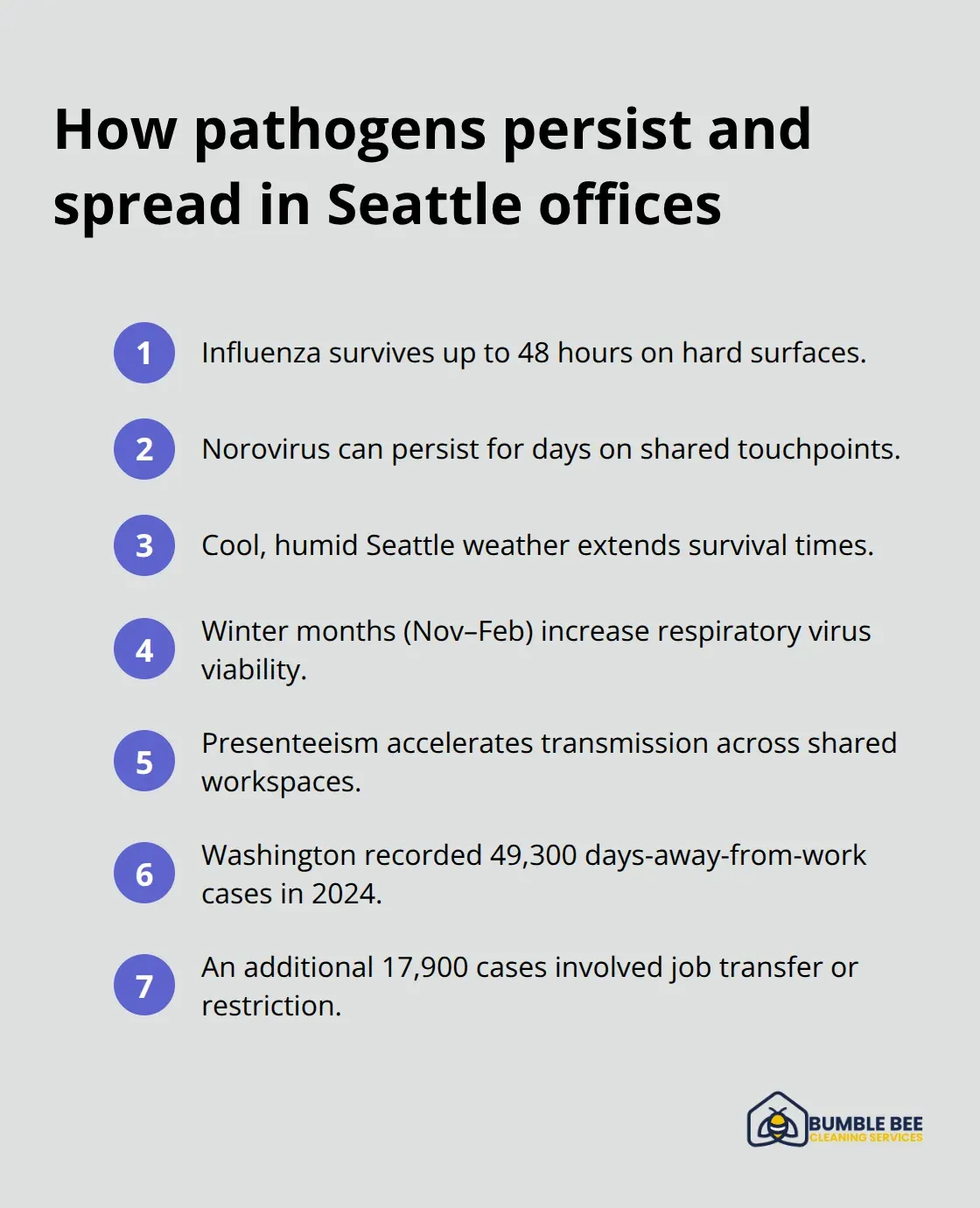
Employees who work through illness (a practice called presenteeism) accelerate transmission across shared workspaces. Washington state reported 49,300 days-away-from-work cases in 2024, with an additional 17,900 cases involving job transfer or restriction. These numbers demonstrate that inadequate surface sanitization directly impacts productivity and operational continuity. The bacteria and viruses accumulate invisibly on frequently touched zones, spreading silently until symptoms appear in multiple team members.
Why Standard Cleaning Falls Short
Regular cleaning removes visible dirt but fails to eliminate pathogens without proper disinfection protocols. Mechanical removal alone leaves behind 60 to 80 percent of microbes on high-touch surfaces. Disinfectants require specific contact times-typically 10 minutes for most commercial products-to kill or inactivate pathogens effectively.
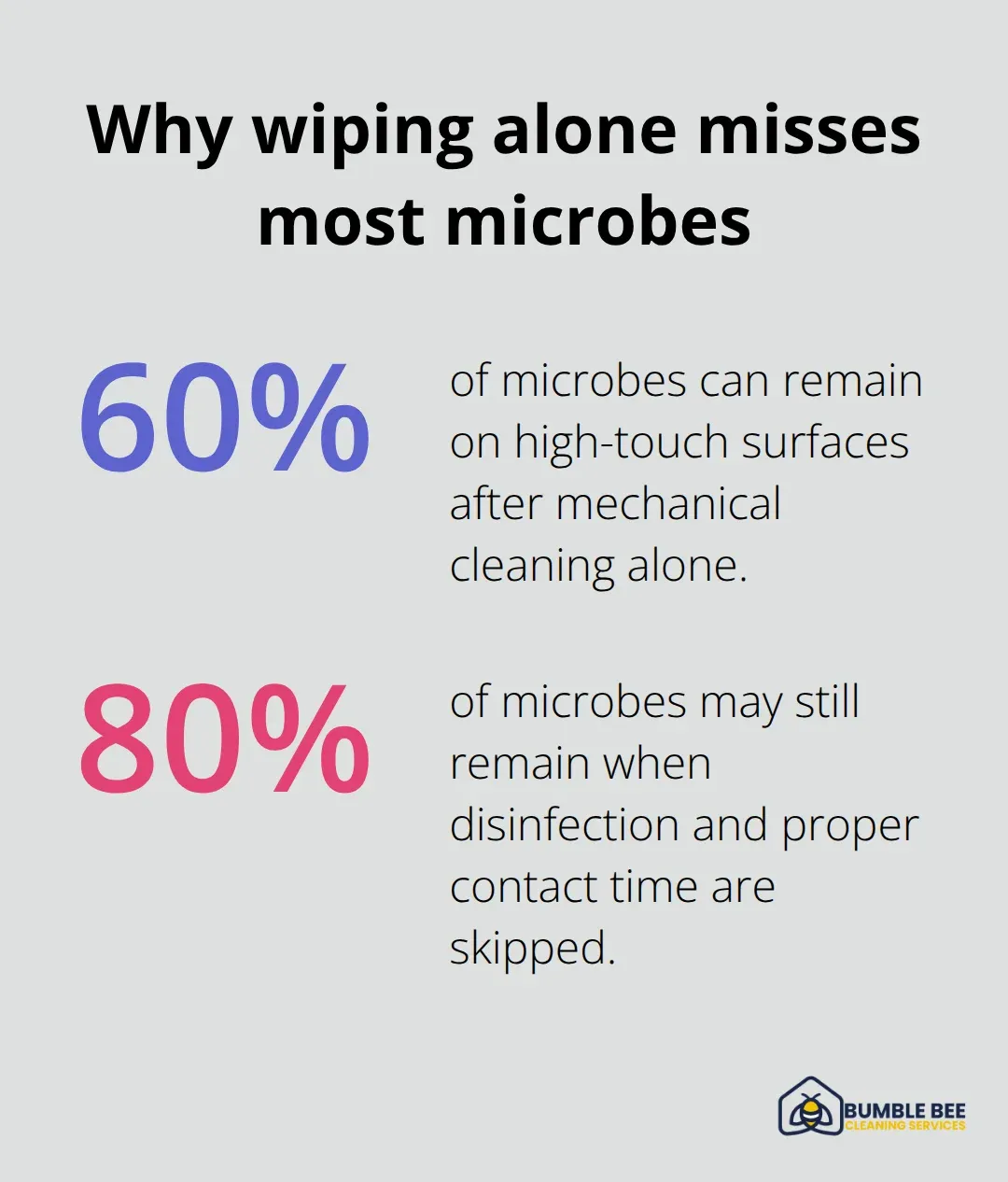
Many offices clean daily but skip the essential step of allowing disinfectants adequate dwell time, rendering the effort largely ineffective. Weekly sanitization programs that prioritize high-touch surfaces with documented contact times outperform sporadic deep cleaning efforts. Seattle offices need sanitization schedules that account for seasonal pathogen surges and the office’s specific traffic patterns. A customized approach targeting your actual high-touch zones produces measurable reductions in illness transmission rates compared to generic cleaning routines.
Understanding how pathogens spread and persist in your specific office environment sets the stage for implementing an effective weekly sanitization strategy. The science behind these schedules reveals exactly why consistency matters more than intensity.
The Science Behind Weekly Sanitization Schedules
Disinfectants kill pathogens only when they maintain contact with contaminated surfaces for a specific duration, typically 10 minutes for most commercial-grade products used in Seattle offices. Weekly sanitization programs succeed because they apply disinfectants to high-touch zones on a predictable schedule, ensuring consistent contact times and complete pathogen elimination. Sporadic deep cleaning fails because it happens unpredictably, leaving gaps where pathogens accumulate between sessions. The U.S. Bureau of Labor Statistics data from Washington state shows mid-sized offices with 50 to 249 employees experience a total recordable case incidence rate of 4.2 per 100 full-time equivalent workers, significantly higher than smaller offices with fewer than 11 employees at 1.0 per 100 FTE. This disparity directly correlates with inconsistent sanitization practices in larger workspaces. Weekly protocols eliminate these gaps through targeting doorknobs, keyboards, conference tables, and light switches on a fixed cadence, preventing pathogen buildup. Many Seattle offices mistakenly believe daily cleaning eliminates the need for dedicated sanitization, but mechanical cleaning removes only visible debris. Disinfection requires a separate step with proper contact time, which weekly programs integrate into their standard protocols. Offices that implement weekly sanitization see measurable reductions in presenteeism and days-away-from-work cases within two to three months.
How Contact Time Determines Disinfection Success
Your disinfectant choice determines whether weekly sanitization actually works. Quaternary ammonium compounds work well on non-porous surfaces like desks and keyboards but require the full contact time specified on the product label. Hypochlorite-based disinfectants work faster on heavily soiled surfaces but can damage certain materials common in modern offices. Seattle offices should verify that products meet EPA approval standards and carry documentation of their kill rates against influenza and norovirus, the primary pathogens affecting Washington workplaces. The product label’s contact time is non-negotiable-if it states 10 minutes, sanitization staff must allow exactly that duration before wiping surfaces. Many offices cut corners through wiping surfaces immediately, rendering the disinfection ineffective. Weekly programs that document contact times for each high-touch surface create accountability and measurable results. Testing your disinfectant’s actual performance on your specific surfaces prevents wasted effort on ineffective products.
Eco-Friendly Products That Maintain Efficacy
Selecting eco-friendly disinfectants certified by third-party organizations like Green Seal maintains efficacy while reducing harmful chemical exposure for your team. These products eliminate pathogens without compromising worker safety or environmental responsibility. Certification standards ensure that eco-friendly options meet the same kill-rate requirements as conventional disinfectants, so your weekly sanitization program loses nothing in effectiveness. Many Seattle offices assume that green products sacrifice performance, but independent testing proves otherwise. Your cleaning team will handle these products safely throughout the week, and your office environment remains healthier for occupants who spend eight hours daily in the space. Eco-friendly disinfectants also reduce liability concerns related to chemical exposure, protecting your organization from potential health claims.
Aligning with Industry Standards and Documentation
The Cleaning Industry Management Standard (CIMS) establishes benchmarks for commercial cleaning that your weekly sanitization program should follow. CIMS emphasizes proactive cleaning with documented protocols, quality inspections, and staff training-all essential for weekly programs to succeed long-term. GBAC STAR Accreditation focuses specifically on biorisk reduction and safe disinfection sequences, providing a framework that Seattle offices can adopt to validate their weekly sanitization efforts. Staff training ensures your cleaning team understands the science behind contact times, product selection, and high-touch surface identification. Untrained staff will skip critical steps, defeating the purpose of weekly protocols. Documentation of your weekly sanitization schedule (including dates, times, products used, and contact times) protects your office legally and demonstrates your commitment to occupant health. Washington state’s higher injury and illness rates compared to national averages make this documentation especially important for liability protection. Establishing these standards now positions your office to meet evolving health and safety expectations while creating the foundation for measuring whether your weekly program actually reduces illness transmission across your workforce.
Building Your Weekly Sanitization Program
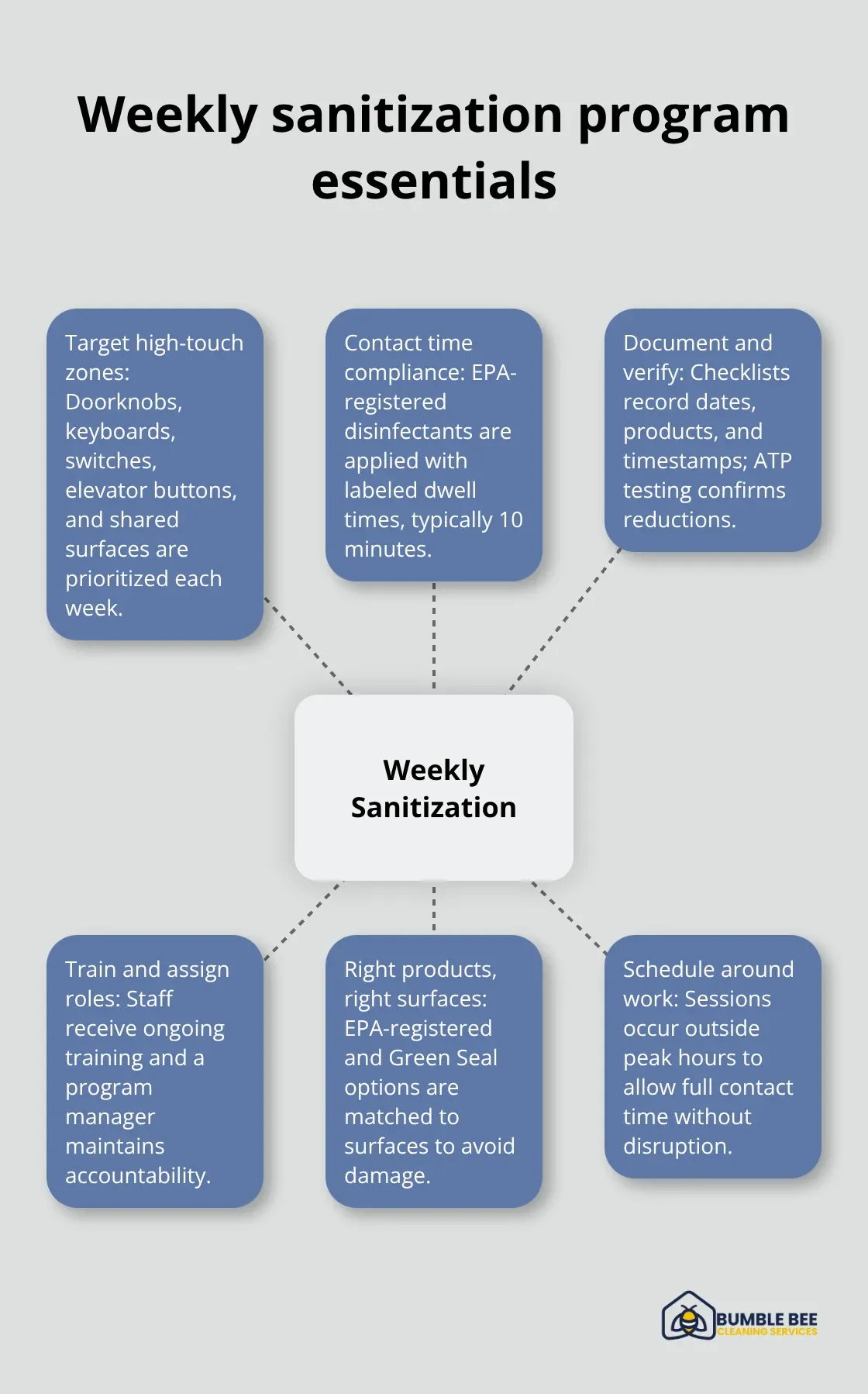
Your Seattle office needs a sanitization schedule that targets actual high-touch zones on a fixed weekly cadence, with documented contact times and staff accountability. Start by mapping your office’s genuine contamination hotspots-not guessing. Doorknobs in conference rooms, elevator buttons, shared keyboards, light switches, and break room surfaces rank highest because your employees touch them dozens of times daily.
Mid-sized offices with 50 to 249 employees should prioritize these zones first, given their 4.2 per 100 full-time equivalent worker injury and illness rate in Washington state.
Identify and Document Your High-Touch Zones
Assign specific staff members to each zone with a written checklist that includes the disinfectant product name, required contact time (typically 10 minutes), and the exact timestamp when sanitization occurred. This documentation protects your organization legally and prevents gaps where pathogens accumulate between sessions. Schedule weekly sanitization outside peak work hours-typically early mornings or late afternoons-to avoid disrupting employee workflow and allow adequate contact time without rushing. Establish a baseline before your program launches using ATP testing kits, which detect organic contamination and provide measurable proof that your weekly protocol actually reduces pathogen loads. Most Seattle offices skip this step and implement sanitization programs blindly, never knowing if their efforts succeed.
Select and Test Your Disinfectant Products
Verify that any disinfectant carries EPA registration and documentation proving efficacy against influenza and norovirus-the pathogens dominating Washington workplaces. Third-party certifications like Green Seal confirm that eco-friendly disinfectants meet performance standards identical to conventional products, eliminating the false choice between safety and effectiveness. Test your chosen product on your actual office surfaces before full implementation, since some disinfectants damage certain materials and contact times vary by surface type. Your sanitization staff must understand that skipping contact time renders the entire effort worthless-wiping surfaces immediately defeats the science behind weekly sanitization.
Train Staff and Maintain Accountability
Conduct quarterly retraining and quarterly ATP surface testing to verify that your program maintains effectiveness over time. Staff turnover in Seattle’s competitive labor market means new team members constantly enter your sanitization rotation-continuous education prevents protocol drift. Assign one person as the sanitization program manager responsible for maintaining records, ordering products, scheduling staff, and reviewing test results. This single point of accountability ensures consistency and catches problems before they undermine your illness prevention efforts.
Final Thoughts
Weekly sanitization prevents illness spread by eliminating pathogens before they accumulate on high-touch surfaces and infect your workforce. Mid-sized Seattle offices with 50 to 249 employees experience injury and illness rates of 4.2 per 100 full-time equivalent workers, significantly higher than smaller offices, and workplace sanitization directly addresses this gap through consistent contact times with EPA-registered disinfectants. Offices that commit to this practice see measurable improvements in productivity within two to three months as presenteeism declines and employees spend less time managing illness symptoms.
Starting your weekly sanitization program requires mapping your actual high-touch zones, selecting EPA-registered disinfectants with third-party certifications, and establishing baseline ATP testing before launch so you can measure whether your program reduces pathogen loads over time. Washington state reported 49,300 days-away-from-work cases in 2024, many preventable through proper surface disinfection, and your team stays healthier when you document sanitization protocols and maintain accountability through staff training. Your operations run smoother and your liability exposure decreases when you treat workplace sanitization as a strategic investment rather than an optional expense.
We at Bumble Bee Cleaning Services design customized weekly protocols that fit your office’s actual contamination patterns and handle the documentation, staff training, and ongoing accountability so your team stays focused on core business operations. Contact us to discuss how we can protect your occupants’ health while your workforce remains productive and protected.
For more information about our cleaning services in Seattle and Atlanta, or to request a cleaning quote, call or text us at 425-786-1360 or email us at info@qbclean.com
