
A clean office isn’t a luxury-it’s a business necessity. Employees working in tidy spaces focus better, take fewer sick days, and stay more engaged with their work.
We at Bumble Bee Cleaning Services have seen firsthand how office cleaning best practices transform workplace environments. The right cleaning strategy cuts through distractions and builds a healthier bottom line.
How a Clean Office Boosts Focus and Health
The Bacteria Problem in Your Workspace
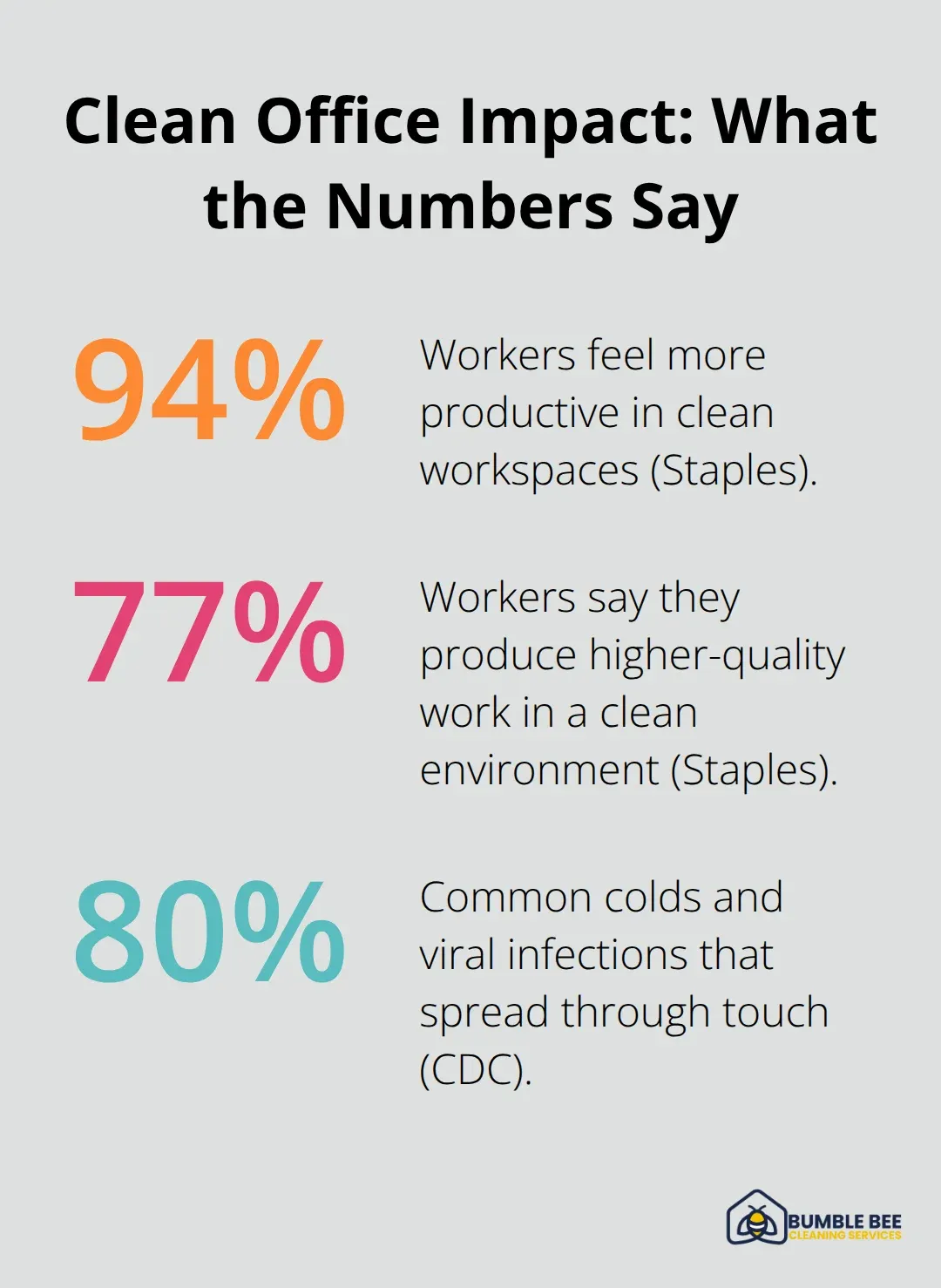
Workspace cleanliness directly affects how your team works. A desk harbors about 400 times more bacteria than a toilet seat. Germs accumulate fast in shared office spaces. When employees sit at contaminated desks, they face roughly 840,000 germs on surfaces every 30 minutes. This bacterial load triggers illness, and illness tanks productivity. The CDC reports that 80% of common colds and viral infections spread through touch, so frequent surface contact in offices creates a major health risk.
Productivity Gains From Clean Workspaces
Staples found that 94% of workers report feeling more productive in clean workspaces, and 77% claim they produce higher quality work in a clean environment. These aren’t small numbers-they reflect real output differences. Clean offices also sharpen concentration.
A disorganized workstation causes mental fatigue and distractions, lowering performance over time, while a tidy environment reduces stress and clears mental clutter. When your team spends less mental energy fighting distraction, they solve problems faster and think more creatively.
The Financial Cost of Illness and Absenteeism
The financial impact of sick days hits hard. Illness-related absences cost U.S. businesses roughly 260 billion dollars annually. The Bureau of Labor Statistics reports that about 2.8 million workdays are lost annually to injuries and illnesses, many preventable through thorough cleaning. Clean offices support better productivity and greater job satisfaction. That improvement compounds fast when multiplied across your entire team.
Employee turnover also matters-costs range from 16% to 213% of salary according to the Center for American Progress. Improving workplace conditions through cleanliness helps retain staff and reduces these substantial expenses.
Daily and Deep Cleaning Strategies
Regular cleaning of high-touch surfaces like doorknobs, conference tables, keyboards, and light switches cuts germ transmission significantly. Daily cleaning should focus on kitchens, restrooms, and shared workspaces to prevent germ buildup. Periodic deep cleaning tackles hard-to-reach areas and hidden bacteria that routine tasks miss. A detailed cleaning schedule covering daily tasks plus scheduled deep-cleaning activities keeps the workplace hygienic and supports consistent performance.
The right cleaning approach protects your team’s health and your bottom line. With these practices in place, you’re ready to build a system that actually works for your office layout and team size.
What Should Your Office Cleaning Schedule Actually Look Like
Daily Attention to High-Touch Surfaces
High-traffic areas demand daily attention, common spaces need weekly deep work, and carpets and upholstery need monthly care to prevent deterioration. A tiered approach targets germs where they accumulate fastest.
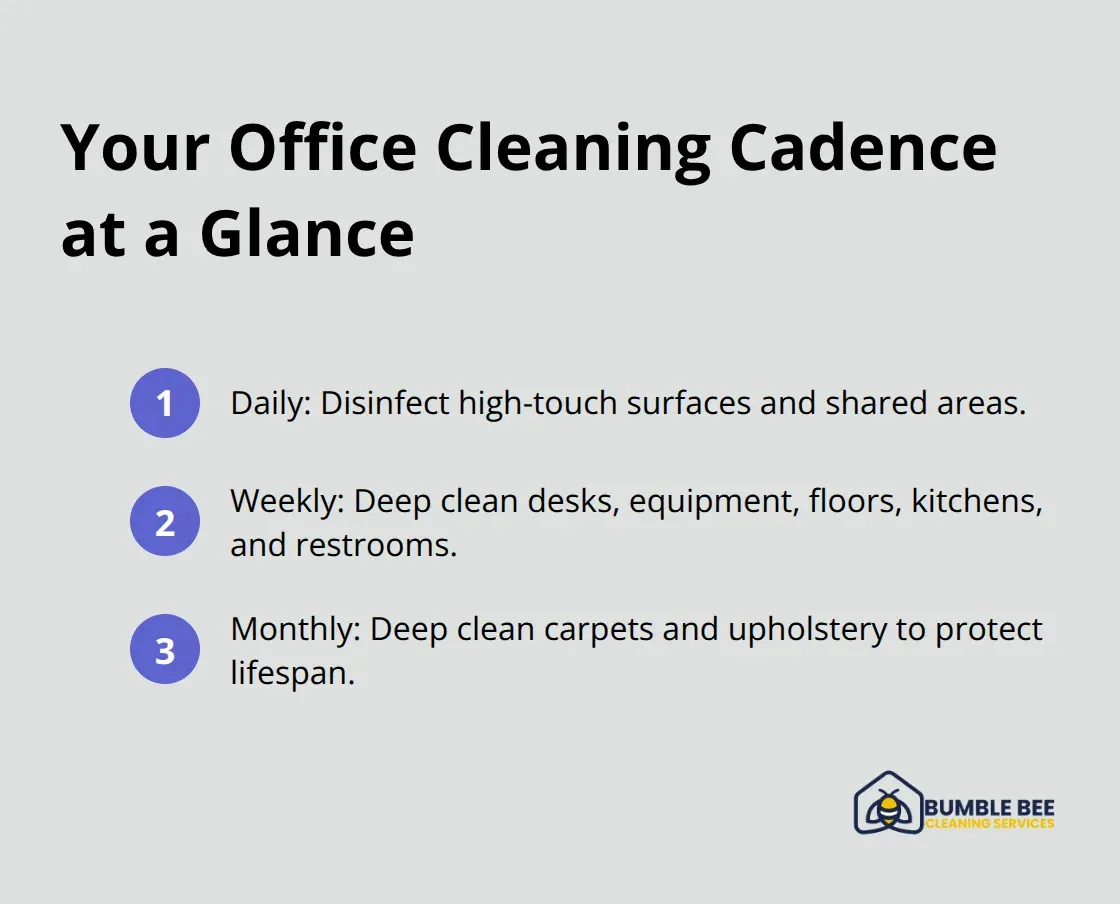
High-touch surfaces like doorknobs, light switches, conference table edges, shared keyboards, elevator buttons, water coolers, and coffee makers require daily disinfection using EPA-registered products. Frequently touched objects are germ hotspots-desktops contain about 400 times more germs than a toilet seat-so focus your daily effort there rather than spreading yourself thin across the entire office. One practical tip: station disinfectant wipes and hand sanitizer at high-traffic zones so employees can quick-clean throughout the day. This reduces the bacterial load your cleaning team faces and reinforces a culture of hygiene.
Weekly Deep Cleaning for Shared Spaces
Weekly deep cleaning targets areas that daily routines miss. Wipe down all desk surfaces, sanitize shared equipment like printers and copiers, clean under furniture where dust accumulates, and refresh break room appliances. Vacuum carpeted areas thoroughly and mop hard floors with appropriate cleaners. Restrooms and kitchens also benefit from weekly attention beyond daily maintenance, since these spaces concentrate germs rapidly and require more intensive sanitization to maintain health standards.
Monthly Carpet and Upholstery Maintenance
Monthly maintenance for carpets and upholstery protects your investment significantly. Soil buildup shortens carpet lifespan, and regular cleaning preserves carpet fibers and extends life substantially-quality carpets can last 10–15 years with proper care. For a 10,000 square foot office, carpeting costs between $30,000 and $50,000, so protecting that investment through monthly deep cleaning makes financial sense. Office chairs typically cost around $200 each, and professional upholstery cleaning prevents degradation and maintains appearance over time.
Building Accountability Into Your Schedule
Establish a documented schedule assigning specific tasks to specific days and rotate responsibilities among staff or assign them to professional cleaners. This accountability system prevents gaps and ensures nothing falls through the cracks as office priorities shift. Whether you handle cleaning in-house or partner with a professional service, the structure itself matters more than who executes it. The next step involves deciding which approach fits your office size, budget, and operational capacity.
Building Your Office Cleaning Plan
Assess Your Office Layout and Priorities
Start with your actual office layout, not a generic template. Walk through your space and measure square footage, count desks, identify high-touch zones, and note problem areas like dark corners or spots where dust settles. A 5,000 square foot office with open floor plans needs different coverage than a 5,000 square foot space with individual offices and multiple restrooms. Once you know your layout, map out priorities. High-traffic hallways, restrooms, and break rooms demand daily attention. Quieter storage areas or rarely-used conference rooms can stretch to weekly or monthly schedules. This assessment prevents overspending on unnecessary cleaning while protecting the areas that actually harbor germs and impact productivity. Write down your findings so you have a baseline to measure against later.
Choose Between In-House and Professional Services
Your next decision matters more than most realize: handle cleaning internally or hire professionals. In-house cleaning keeps costs predictable and gives you direct control, but it pulls employees away from their actual jobs. A full-time cleaner for a mid-size office costs roughly $30,000 to $40,000 annually in salary and benefits, plus supplies and equipment. Professional cleaning services typically run $15 to $30 per hour depending on your region and service level, but they bring trained staff, proper disinfection protocols, and accountability without disrupting your team’s workflow.
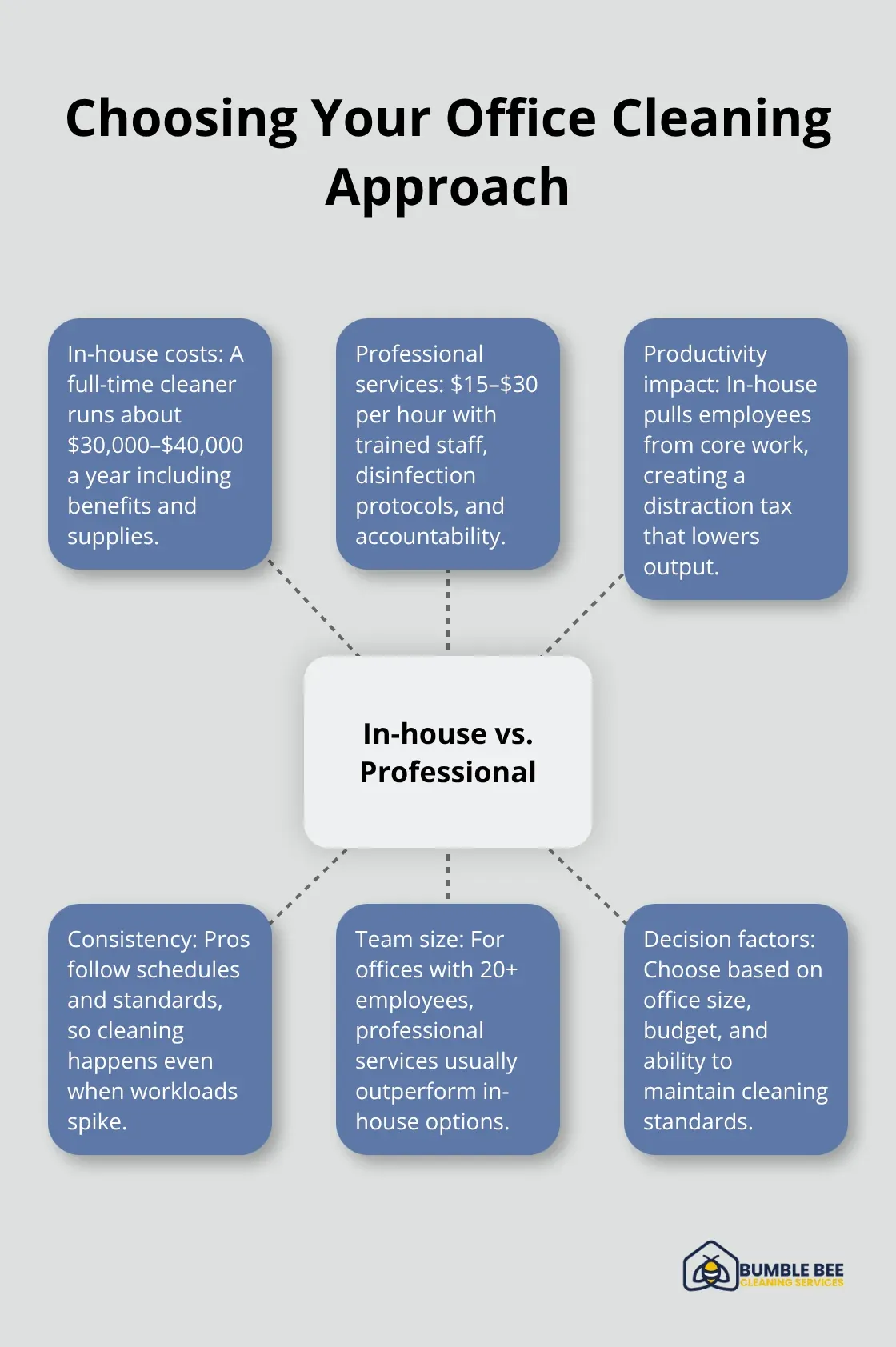
The real advantage of professional cleaning is consistency-your team shows up on time, follows established protocols, and handles the work without exceptions. When employees manage cleaning themselves, standards slip when workload spikes or someone calls in sick. For offices with more than 20 employees, professional services almost always outperform in-house approaches because they eliminate the distraction tax on your workforce. Set your decision based on office size, budget, and whether your team can realistically maintain cleaning standards while handling their primary responsibilities.
Establish Clear Accountability Systems
Accountability matters regardless of who cleans. If staff handle it internally, assign specific people to specific tasks on specific days-not vague requests to keep things tidy. If you hire professionals, require weekly reports documenting what was cleaned, photos of high-touch surfaces, and a clear escalation process for complaints. Track metrics like sick day rates before and after your cleaning program starts so you can prove whether your investment actually works. This data-driven approach transforms cleaning from a cost center into a measurable business investment that directly impacts your bottom line.
Final Thoughts
A clean office directly impacts your bottom line through improved productivity, reduced illness, and extended asset life. Daily attention to doorknobs and keyboards, weekly deep cleaning of shared spaces, and monthly carpet maintenance protect your $30,000 to $50,000 carpet investment while reducing the 2.8 million workdays lost annually to illness and injury. These office cleaning best practices work because they target the real sources of workplace problems: bacterial buildup on high-touch surfaces, mental fatigue from clutter, and the financial drain of preventable sick days.
Your team stays healthier, focuses better, and remains longer when they work in a clean environment. Turnover costs drop when employees feel valued enough that leadership maintains their workspace, and productivity gains of 12% or more translate directly to output and revenue. These measurable results come from consistent cleaning standards applied over time, not from theoretical promises.
We at Bumble Bee Cleaning Services bring experience and professional standards to commercial cleaning across recurring, deep, and post-construction services. Whether you need help building your cleaning system or taking it over entirely, we’re ready to support your office’s health and productivity.
For more information about our cleaning services in Seattle and Atlanta, or to request a cleaning quote, call or text us at 425-786-1360 or email us at info@qbclean.com
