
Your office morale depends on more than just paychecks and benefits. The physical environment where your team spends eight hours a day shapes how they feel, think, and perform.
We at Bumble Bee Cleaning Services have seen firsthand how Seattle businesses transform their workplaces through professional cleaning. A spotless office isn’t a luxury-it’s a competitive advantage that directly impacts your bottom line.
How Cleanliness Shapes Focus and Mental Clarity
Clean Spaces Reduce Cognitive Load
A clean workspace removes friction from your employees’ daily experience. When desks are organized, surfaces are sanitized, and high-touch areas like door handles and conference tables stay maintained, your team’s brain doesn’t waste energy processing visual disorder. Research shows that clean environments reduce stress and increase concentration, which directly tracks to higher productivity and job satisfaction. A Wageningen University study of 120 employees from non-profit organizations found that a clean office positively influenced job satisfaction. Clutter and visible dirt create cognitive load that exhausts your workforce. Employees in disorganized spaces experience higher stress because their minds constantly process environmental chaos. Perceived order and cleanliness convey a sense of control and safety, helping your team maintain a calmer, more focused mindset.
Mental Clarity Translates to Measurable Results
The mental clarity that follows clean workspaces produces tangible outcomes. Employees work faster, make fewer mistakes, and stay longer at your company. A clean environment doesn’t just feel better-it performs better. Your team’s ability to concentrate improves when they’re not fighting against visual and sensory overload. This shift in focus compounds over time, affecting everything from project completion rates to employee retention.
Illness Prevention Protects Your Bottom Line
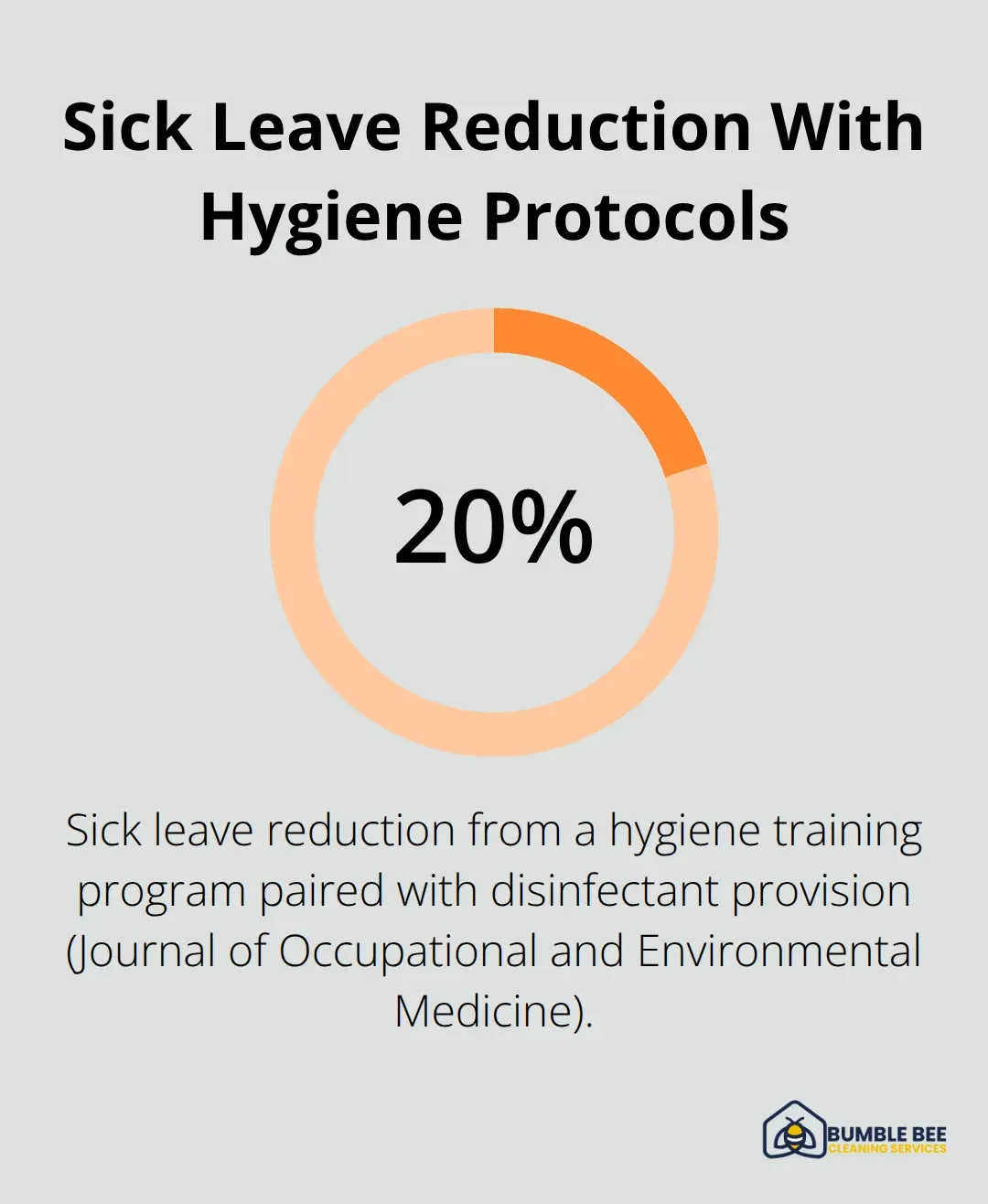
Sick leave and absenteeism reveal the true cost of neglecting workplace hygiene. Across organizations studied, a 1% rise in sick leave correlated with reduced productivity. A hygiene training program paired with disinfectant provision cut avoidable healthcare requests and reduced sick leave by about 20%, according to the Journal of Occupational and Environmental Medicine.
Seattle’s Climate Demands Proactive Cleaning
Seattle’s rainy climate accelerates moisture, mold, and mildew growth-conditions that trigger respiratory issues and allergies in your workforce. Regular cleaning and disinfection using EPA-approved disinfectants directly reduces illness risk and keeps your team present and engaged. High-touch surface sanitization in reception areas, break rooms, and conference rooms minimizes germ transmission where employees cluster. This approach prevents more than just colds; it prevents burnout. Employees who feel their workplace prioritizes their health experience lower stress and higher morale. A spotless, validated cleanliness program demonstrates to your staff that leadership cares about their well-being, not just output. This foundation of trust and care sets the stage for examining the specific strategies that transform Seattle offices into morale-boosting environments.
Building a Cleaning System That Actually Works
Measure Cleanliness Objectively
Your office doesn’t stay clean by accident. It requires a structured approach that separates daily maintenance from deeper interventions, paired with products that protect both your employees and the Seattle environment. The ISSA Clean Standard uses a framework called Clean, Measure, Monitor that objectively assesses cleaning effectiveness through ATP testing combined with traditional audits. This means you stop guessing whether your office is actually clean and start measuring it.
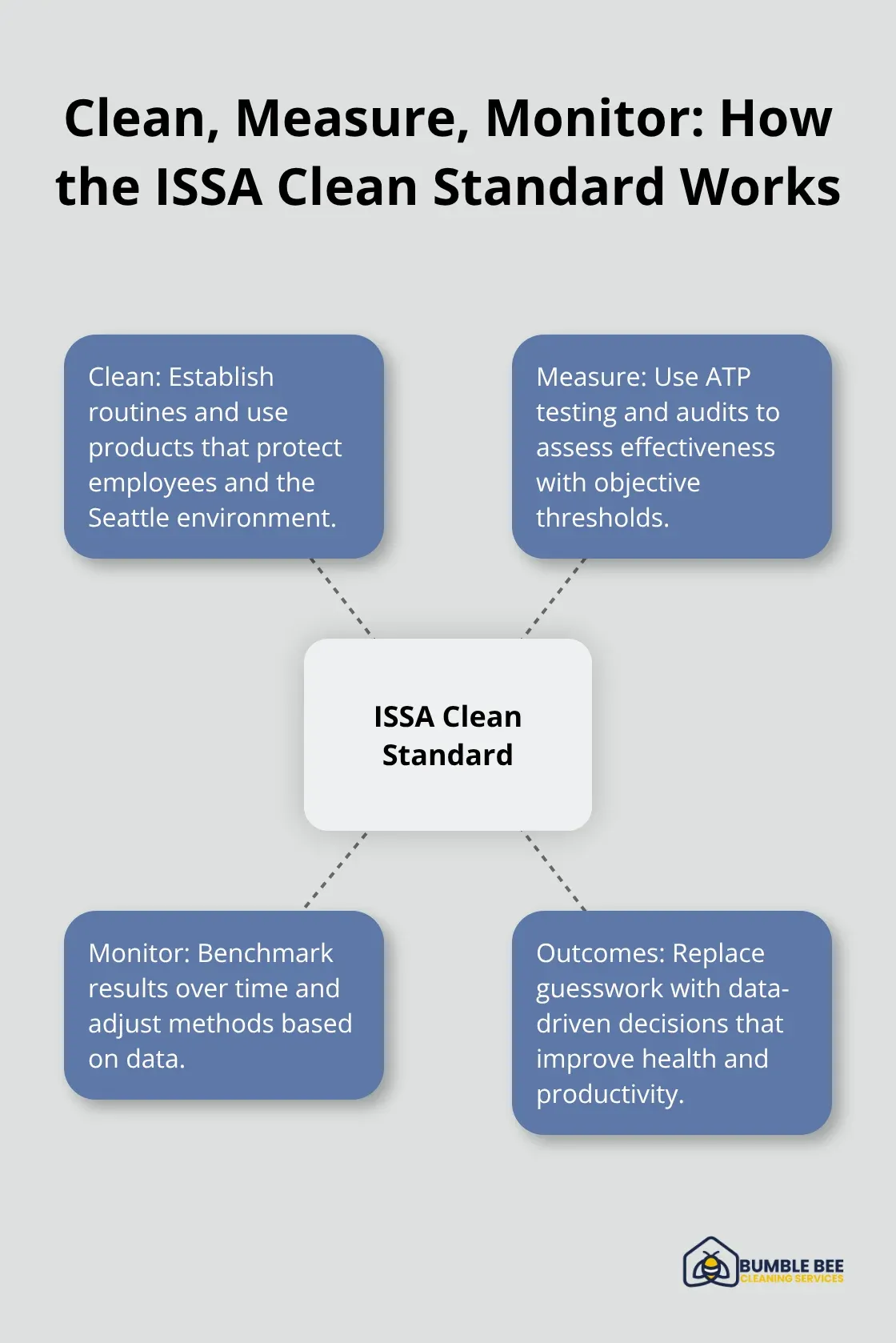
ATP testing provides objective cleanliness ranges that your office can benchmark against, transforming cleaning from guesswork into data-driven decisions.
Target High-Touch Points Daily
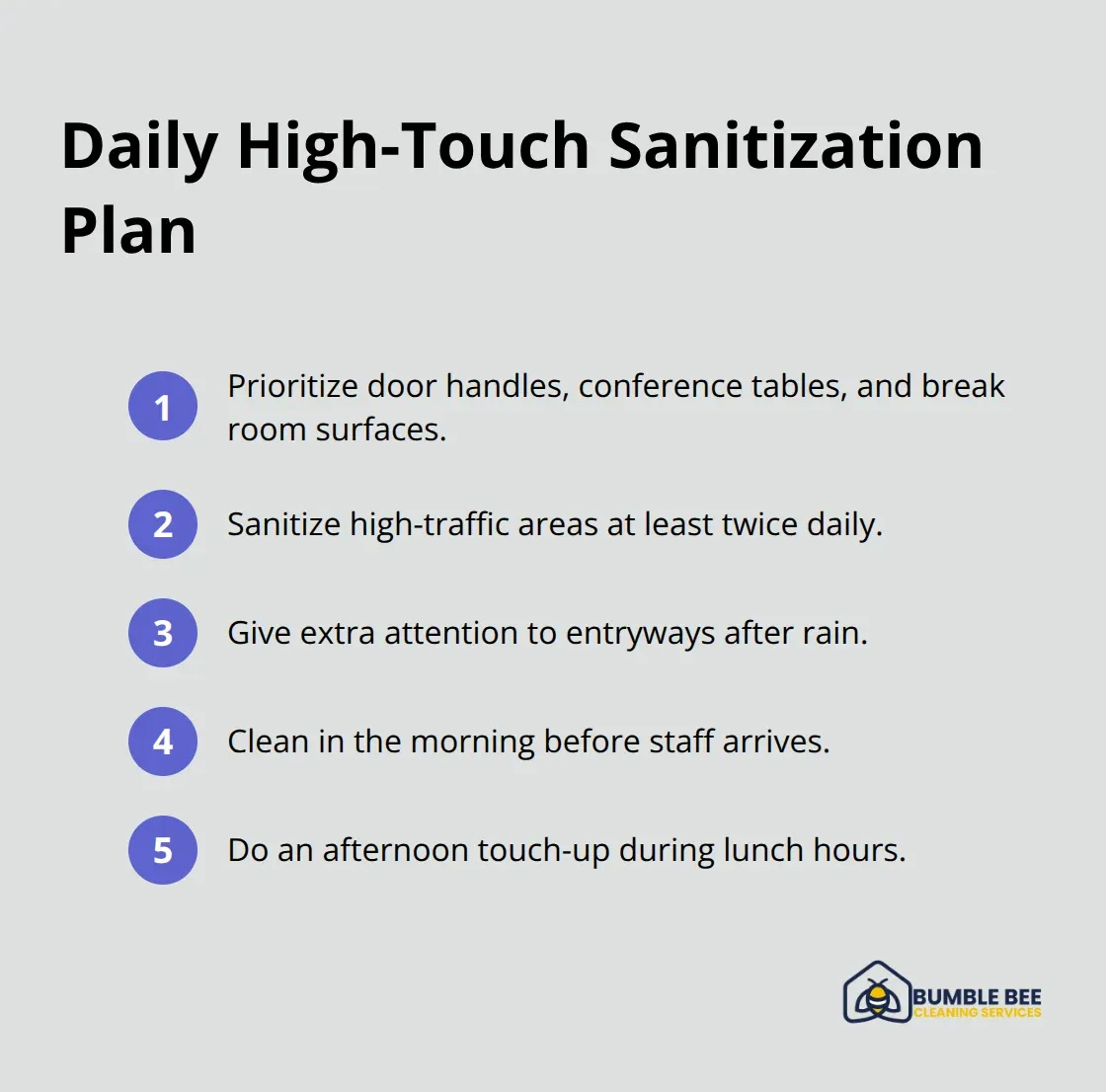
High-touch points like door handles, conference tables, and break room surfaces transmit germs fastest, so they demand priority attention. Your daily cleaning routine must target these zones consistently. Set a schedule where high-traffic areas receive sanitization at least twice daily, especially in reception areas where employees and visitors cluster. For Seattle offices specifically, entryways need attention after rain because moisture and tracked-in dirt create slip hazards and degrade indoor air quality. Morning cleaning before staff arrives prevents the visual and sensory overload that triggers stress. Afternoon touch-ups during lunch hours keep surfaces sanitized without disrupting workflow.
This dual approach costs less than managing illness-related absences and morale problems later.
Schedule Deep Cleaning Strategically
Deep cleaning addresses areas that daily routines miss: baseboards, light fixtures, upholstered furniture, and carpet. These hidden contaminants accumulate and degrade air quality over time, contributing to fatigue and respiratory irritation. Carpet cleaning specifically improves indoor air quality and extends carpet life, protecting your investment while supporting employee comfort. Schedule deep cleaning after hours or during weekends to avoid disrupting work. EPA-approved disinfectants paired with eco-friendly cleaning products maintain air quality while eliminating pathogens effectively. Seattle’s damp climate makes mold prevention critical, so ventilation and moisture control during cleaning prevent long-term structural problems and health risks.
Document Your Cleaning Protocol
Establish a written cleaning protocol that documents which areas receive daily attention, which get deep cleaned monthly, and which need seasonal attention. This documentation creates accountability and prevents gaps when staff changes occur. Your cleaning vendor should provide transparent reporting on what was completed, using tools that track completion and results. This data-driven approach transforms cleaning from a cost center into a measurable investment in employee health and productivity. When your team can see exactly what cleaning happened and when, trust builds between management and staff. Employees recognize that leadership takes their environment seriously, which directly strengthens morale and engagement. With measurement systems in place, you’re ready to examine how professional maintenance combined with daily prevention amplifies these results across Seattle workplaces.
What Do Seattle Offices Actually Gain From Professional Cleaning
Sick Leave Costs Money You Can Recover
Absenteeism costs Seattle businesses real money. Across 1,100 private Belgian companies studied in the Industrial Relations Journal, a 1% rise in sick leave correlated with up to a 0.66% drop in productivity. That translates directly to lost revenue, missed deadlines, and team burnout. When offices implement professional cleaning paired with hygiene protocols, sick days drop measurably. One intervention combining hygiene training with disinfectant provision reduced sick leave by approximately 20%, according to the Journal of Occupational and Environmental Medicine. For a Seattle office with 50 employees, that means recovering roughly 10 days of collective work time annually.
High-Touch Surfaces Transmit Illness Fastest
High-touch surface sanitization in reception areas and break rooms prevents illness transmission where employees cluster most, protecting your workforce during flu season and beyond. Seattle’s rainy climate intensifies illness risk because moisture accelerates mold, mildew, and airborne pathogens that trigger respiratory problems. Professional cleaning using EPA-approved disinfectants specifically counters these environmental hazards, keeping your team present and engaged instead of calling in sick.
Clean Workplaces Retain Better Talent
Employee retention improves when staff feel their workplace prioritizes their health and comfort. Employees who work in visibly clean, well-maintained offices experience lower stress, better focus, and stronger morale-all factors that drive decisions to stay or leave. A clean environment signals that leadership values employee well-being, not just output, which strengthens psychological safety and trust. This matters in Seattle’s competitive job market where skilled workers have options.
Productivity Metrics Show Real Returns
Productivity metrics from offices with professional cleaning services consistently show faster project completion, fewer errors, and higher output per employee. The combination of reduced absenteeism, improved concentration, and stronger morale compounds into measurable business results. When your team works in a spotless office maintained by professionals, they spend mental energy on actual work instead of fighting sensory overload and illness risk. This shift produces tangible returns on investment through retained talent, reduced replacement costs, and accelerated project delivery.
Final Thoughts
A spotless workplace directly shapes how your Seattle team feels, thinks, and performs. Clean offices reduce stress, improve focus, lower sick absences, and strengthen office morale. When employees work in sanitized, organized spaces, they experience better mental clarity and higher job satisfaction, which translates into measurable productivity gains and stronger retention rates.
The financial case proves compelling. Reducing sick leave by 20 percent through professional cleaning and hygiene protocols recovers work hours and retains talent. High-touch surface sanitization prevents illness transmission where employees cluster most, while deep cleaning removes hidden contaminants that degrade air quality over time. Seattle’s rainy climate intensifies the need for proactive cleaning because moisture accelerates mold, mildew, and airborne pathogens that trigger respiratory problems and fatigue.
Audit your current cleaning approach today and identify high-touch areas that need daily sanitization. Schedule deep cleaning monthly to address areas daily routines miss, and document your cleaning protocol so gaps don’t emerge when staff changes occur. Bumble Bee Cleaning Services brings experience maintaining spotless commercial environments across Seattle with transparent reporting and a quality guarantee-your office morale and productivity depend on the environment your team inhabits every day.
For more information about our cleaning services in Seattle and Atlanta, or to request a cleaning quote, call or text us at 425-786-1360 or email us at info@qbclean.com
