
Your restaurant’s grease trap is silently costing you money. When grease trap maintenance gets neglected, you’re looking at health code violations, emergency repairs, and potential closure.
At Bumble Bee Cleaning Services, we’ve seen too many Seattle restaurant owners face five-figure repair bills because they waited too long. Monthly deep cleaning stops these problems before they start.
What Happens When Grease Traps Go Uncleaned
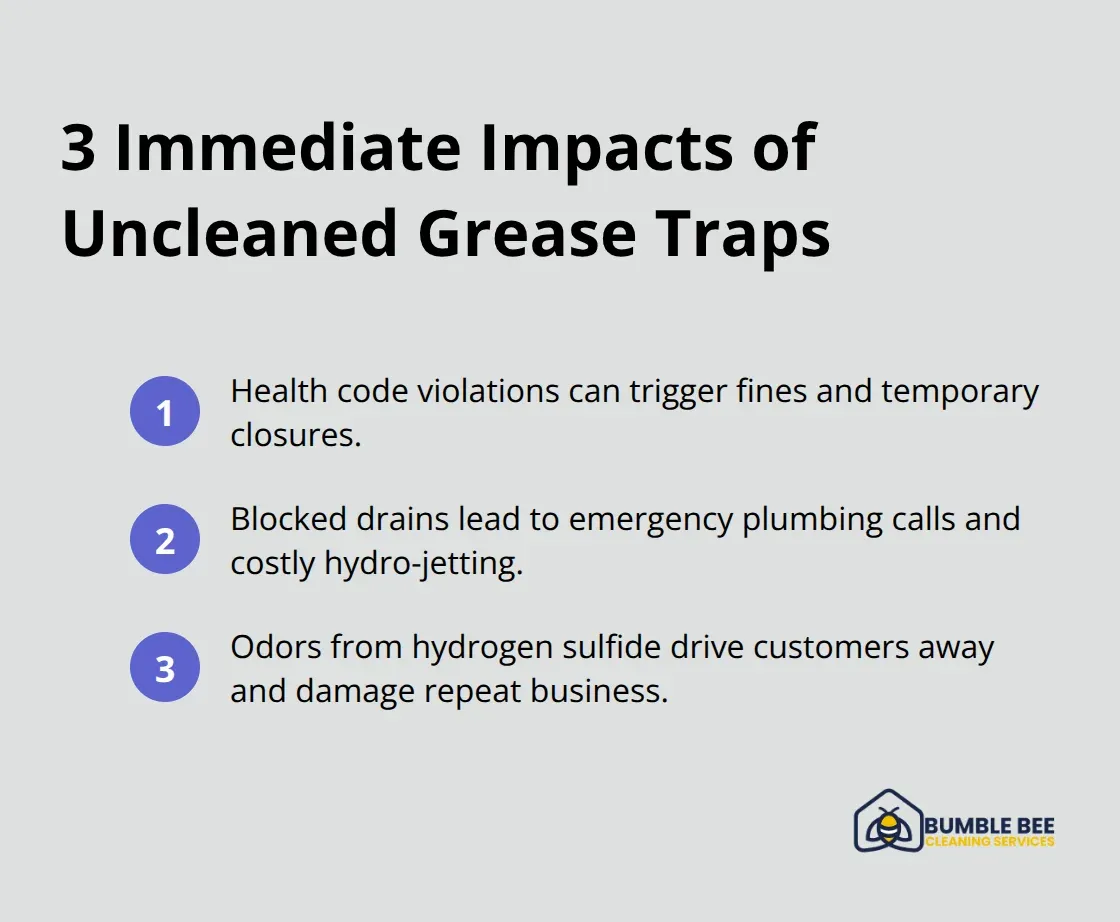
Grease buildup in your trap doesn’t sit there harmlessly. It actively damages your business in three immediate ways.
Health Code Violations Hit Your Bottom Line
Seattle’s health department takes grease violations seriously. Any restaurant or commercial kitchen found out of compliance with Seattle Municipal Code may be subject to fines and enforcement. A single inspection finding negligent maintenance can shut down your kitchen temporarily, forcing you to close during peak service hours. This temporary closure alone costs you thousands in lost revenue before you even address the underlying problem.
Blocked Drains Force Emergency Repairs
Accumulated grease forces water to back up through your sinks, floor drains, and sometimes into your dining area. This isn’t just inconvenient-it’s a health hazard that stops service immediately. Emergency plumbing calls for grease-related backups cost $2,000 to $8,000 depending on how far the blockage extends into municipal sewers. Once grease solidifies in pipes, hydro-jetting becomes necessary, and that expense compounds quickly.
Odors Drive Customers Away
Customers notice the smell before they taste the food. Decomposing grease creates hydrogen sulfide gas, which produces that unmistakable rotten-egg odor that seeps into your dining room and kitchen. Odors affect consumer behavior in restaurants, making this a direct threat to repeat business.
The Real Cost of Waiting Too Long
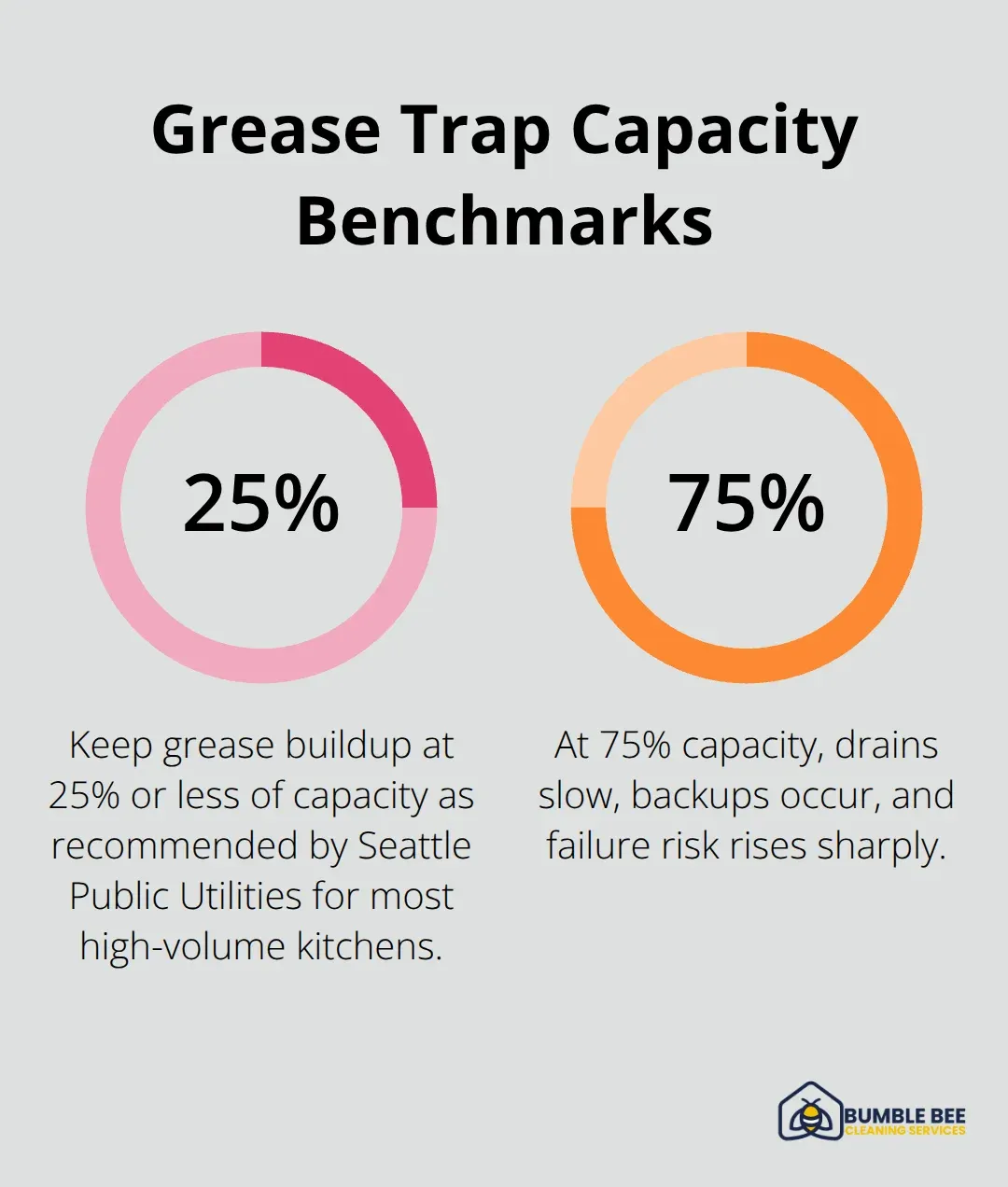
Many restaurant owners think they can stretch cleaning intervals to save money. This calculation fails immediately when you face reality. A grease trap at 75% capacity moves toward complete failure-drains slow down, backups occur, and your insurance may not cover damages from negligence. Seattle Public Utilities recommends keeping grease buildup at 25% or less of capacity, which means monthly cleaning for most high-volume kitchens.
Waiting until you smell problems or see slow drains means you’re already operating with a system near failure. The difference between monthly preventive cleaning (typically $300–$400) and an emergency backup repair ($5,000–$15,000) makes the choice obvious. A closure during dinner service can cost $3,000 to $10,000 in lost revenue depending on your restaurant size. Adding the health department fines, lost customer trust, and potential reputation damage from social media complaints, neglect becomes financially catastrophic.
Professional grease trap maintenance isn’t optional compliance-it’s the most cost-effective insurance your business can buy. Understanding what monthly cleaning actually prevents is the first step toward protecting your operation.
How Monthly Cleaning Protects Your Equipment and Staff
Equipment Lifespan Extends With Consistent Maintenance
Professional grease trap cleaning every month extends your equipment’s operational life significantly. When grease accumulates beyond the 25% capacity threshold recommended by Seattle Public Utilities, the trap’s internal components begin degrading faster. Solid grease hardens against trap walls, creating corrosion that weakens metal components and accelerates rust formation. A trap properly maintained with monthly service typically functions effectively for 10–15 years, while neglected traps fail within 5–7 years. Regular deep cleaning can help to extend the lifespan of your equipment, reducing the need for costly replacements.
Your Kitchen Staff Works More Efficiently
Your staff benefits from consistent maintenance because slow drains and backups force kitchen employees to work around malfunctioning equipment, reducing efficiency and creating frustration. When your trap operates at optimal capacity, your team spends less time troubleshooting drainage problems and more time on food preparation and service.
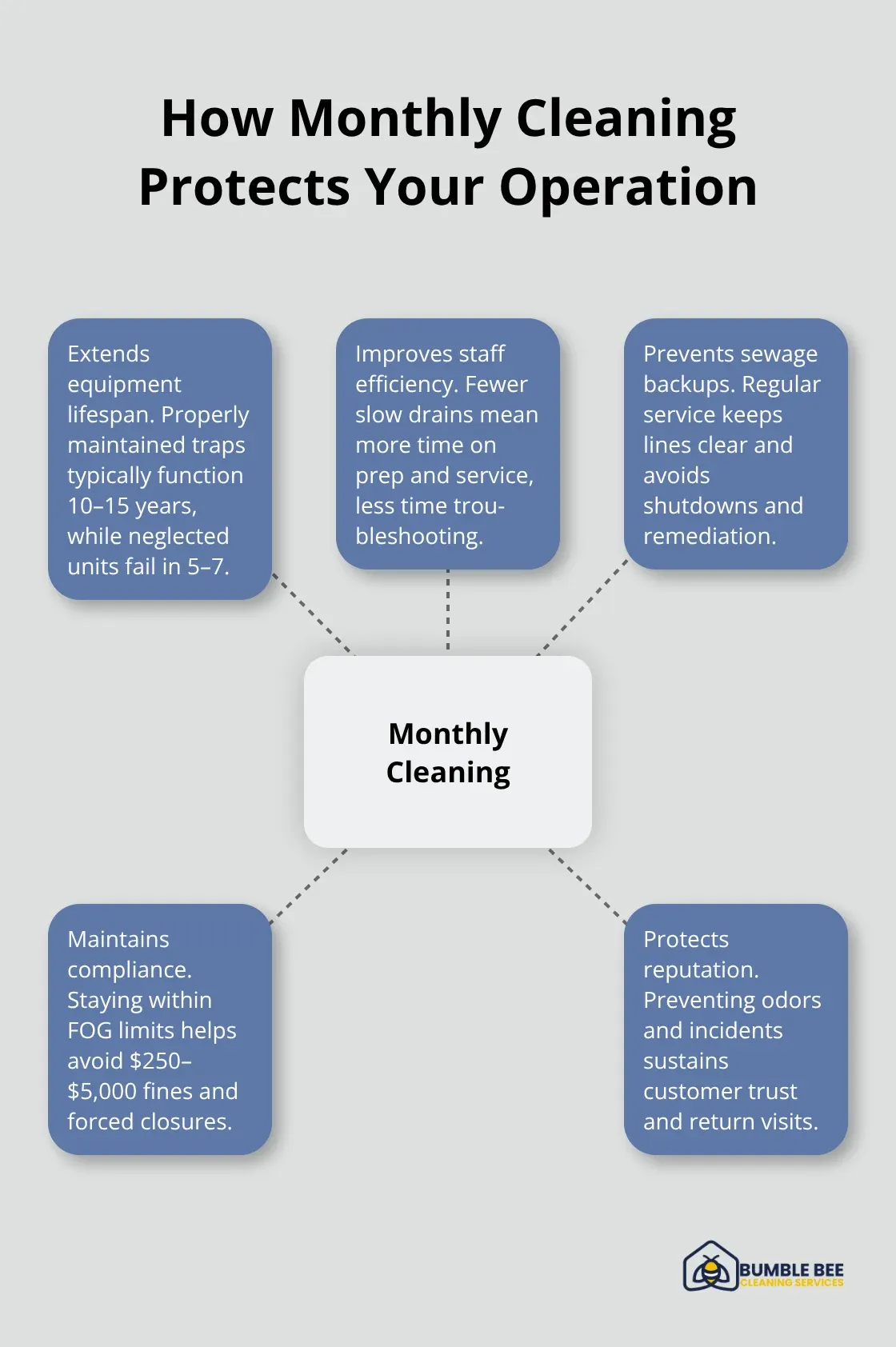
Monthly deep cleaning removes grease buildup that would otherwise accumulate in drain lines leading to your trap, preventing the gradual slowdown that forces staff to compensate with workarounds.
Sewage Backups Become Preventable
Sewage backups represent one of the most expensive operational disasters a restaurant faces, and monthly maintenance eliminates this risk almost entirely. Restaurants operating without regular grease trap maintenance experience backup incidents at significantly higher rates than those with scheduled service. When you maintain grease traps monthly, you prevent backups that can shut down operations and trigger costly emergency remediation.
Regulatory Compliance Protects Your Operating License
Seattle’s municipal code enforces strict FOG limits, and failure to maintain your trap puts you at risk for enforcement actions and fines ranging from $250 to $5,000 per violation. A sewage backup during service hours forces immediate closure and requires emergency remediation that costs $5,000–$15,000 or more. Your staff cannot work in a kitchen with active backup conditions, and customers will not return after experiencing such an incident. Monthly cleaning maintains your trap’s capacity to handle your kitchen’s daily grease output, ensuring water flows freely through drain lines and into municipal systems designed to receive properly treated wastewater.
The financial protection monthly maintenance provides extends beyond equipment and into the operational decisions that separate thriving restaurants from those facing unexpected crises. Understanding the specific warning signs that indicate your trap needs immediate attention helps you stay ahead of problems before they disrupt service.
What Emergency Repairs Actually Cost Your Restaurant
A Single Failure Triggers Multiple Expenses
When a grease trap fails, you don’t face a single bill-you face a cascade of expenses that multiply faster than most restaurant owners anticipate. An emergency backup repair costs between $5,000 and $15,000 depending on whether the blockage extends into municipal sewer lines, but that’s only the beginning. Grease-related sewer backups require hydro-jetting to cut through solidified grease, and that service alone runs $2,000 to $8,000. Meanwhile, your kitchen sits idle.
Lost Revenue From Closure Compounds the Damage
A restaurant closure during dinner service costs $3,000 to $10,000 in lost revenue depending on your operation size and service hours affected. King County Health Department fines for grease violations range from $250 to $5,000 per incident, and multiple violations stack quickly when inspectors find evidence of ongoing neglect. One Seattle restaurant owner faced a $12,000 repair bill after grease backed up into the dining area, plus $5,000 in health department fines, plus three days of closure that cost approximately $18,000 in lost revenue-a total of $35,000 in damage from a single failure.
Monthly Prevention Costs Far Less Than Emergency Response
Monthly preventive cleaning costs $300 to $400 and takes two to three hours, meaning annual maintenance runs $3,600 to $4,800. The math is brutal: one emergency incident costs seven to ten times what annual preventive service would have prevented.
Insurance Won’t Cover Negligent Maintenance
Health code violations create secondary financial damage that extends beyond fines and repairs. Customer trust evaporates when word spreads about a backup incident, and social media amplifies the damage instantly. Insurance policies frequently exclude coverage for damages resulting from negligent maintenance, leaving you personally liable for the full repair cost and lost revenue.
Regulatory Standards Demand Monthly Attention
Seattle Municipal Code Section 21.16.310 requires grease traps be cleaned when grease and food waste exceed 25 percent of capacity-a standard that monthly service maintains automatically. Restaurants that skip this requirement and operate at higher capacity levels aren’t saving money; they’re gambling with five-figure losses. The choice between monthly professional maintenance and catastrophic failure isn’t really a choice at all-it’s a question of whether you’ll pay $3,600 annually to protect your operation or face $35,000 in emergency expenses plus closure and reputation damage.
Final Thoughts
Monthly grease trap maintenance protects your restaurant far more effectively than any corner-cutting strategy ever could. Spending $300 to $400 monthly prevents the $35,000 disasters that strike when you postpone professional service, and your operating license, customer trust, and kitchen staff all depend on a system that functions within Seattle’s regulatory standards. The restaurants that thrive understand that prevention costs less than emergency response, and they treat grease trap maintenance as automatic rather than optional.
Neglecting this responsibility creates a false economy that collapses the moment a backup occurs. One incident erases years of savings, insurance won’t cover negligent maintenance, health inspectors will cite violations, and your reputation suffers damage that takes months to repair. The restaurant owners who face five-figure repair bills consistently report the same regret: they wish they’d invested in preventive service from the start.
We at Bumble Bee Cleaning Services recognize that restaurant owners manage countless operational demands, which is why professional grease trap maintenance should become one decision you never have to reconsider. Your kitchen deserves a maintenance partner that treats your business with the same care you bring to every meal you serve.
For more information about our cleaning services in Seattle and Atlanta, or to request a cleaning quote, call or text us at 425-786-1360 or email us at info@qbclean.com
