
Home renovations transform your space, but construction dust spreads fast and settles everywhere. This fine particulate matter damages your belongings, degrades air quality, and poses real health risks to your family.
We at Bumble Bee Cleaning Services know that dust suppression technology and professional cleanup make all the difference. This guide walks you through dust control methods that work and how to restore your home after renovation ends.
Why Dust Control Matters During Home Renovations
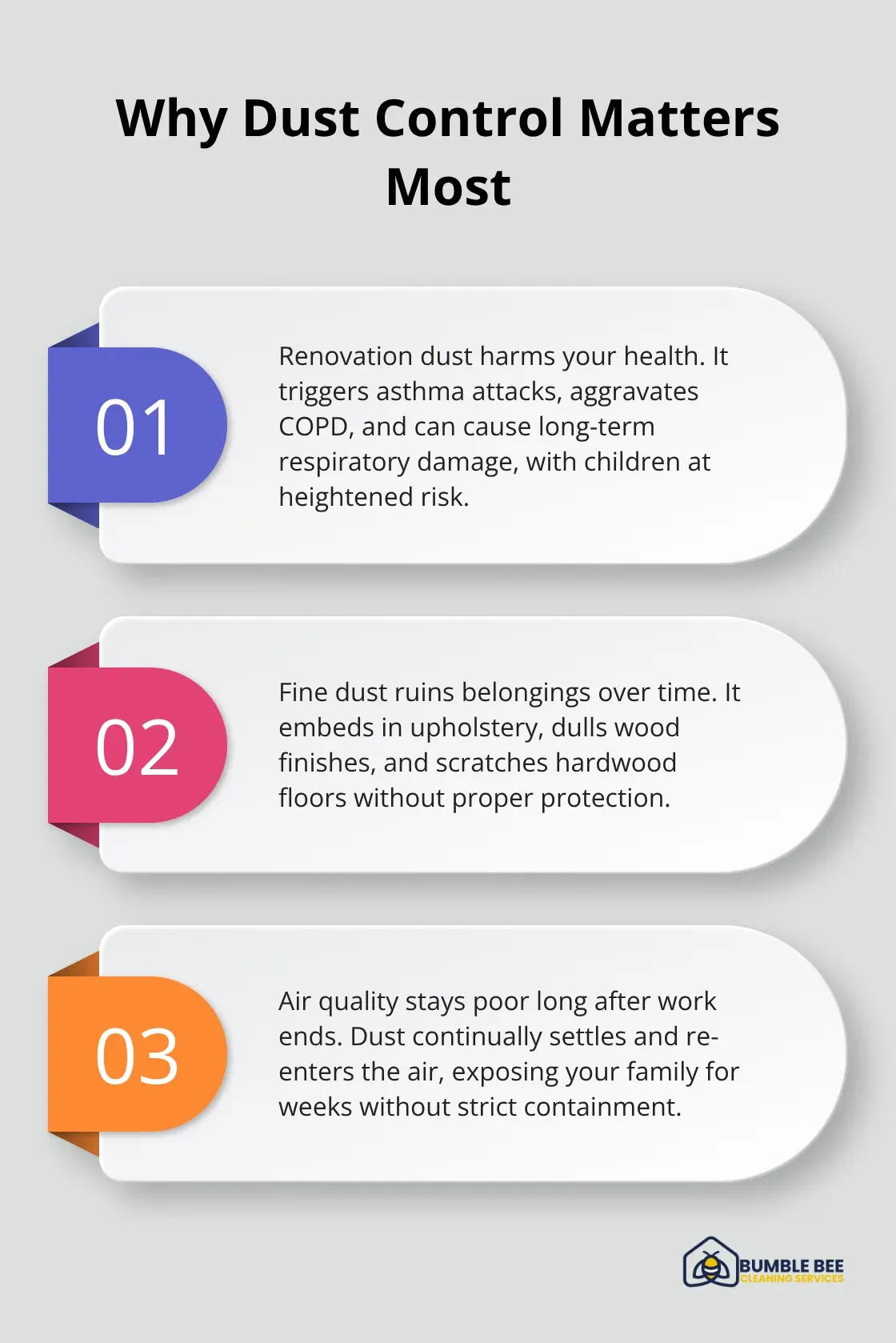
Construction dust isn’t just a nuisance you’ll vacuum up later. The Health and Safety Executive reports that more than 500 workers die each year from silica exposure, and that’s in controlled job sites with safety protocols. Your home lacks those protections. Fine dust particles penetrate deep into your lungs, triggering asthma attacks, aggravating COPD, and causing long-term respiratory damage. Children face especially high vulnerability because their lungs are still developing. A single renovation releases silica dust that settles in your bedroom, kitchen, and every room your family occupies. This isn’t theoretical risk-it’s a direct threat to the people living in your home during and after construction.
How Dust Damages Your Lungs and Respiratory System
Silica dust causes lung cancer, asthma, COPD, and silicosis with regular inhalation. Construction sites generate high dust levels from cutting, grinding, drilling, and demolition work. Your home renovation produces the same hazardous particles without the industrial ventilation systems that protect workers on commercial job sites. Once you inhale fine particles, they lodge in your lungs and cause inflammation that worsens over months and years. Children absorb these particles more readily because they breathe faster and their respiratory systems are still maturing. The damage compounds if multiple family members inhale dust throughout the renovation period.
The Hidden Cost to Your Belongings
Renovation dust coats furniture, electronics, hardwood floors, and fabric in a fine layer that resists complete removal. Construction dust damages hardwood floors permanently if you don’t protect them properly, and furniture absorbs particles that degrade upholstery and wood finishes over time. Your HVAC system becomes a dust distribution network if vents aren’t sealed. Once dust enters your ducts, it circulates continuously, re-contaminating rooms you thought were clean. Even with the best post-renovation cleaning, fine particles settle in places you can’t reach-ceiling fans, light fixtures, cabinet tops, and inside electronics.
Why Air Quality Suffers Long After Construction Ends
The air quality in your home degrades for months after renovation ends if containment wasn’t strict during construction. Fine particles settle and redistribute constantly as you move through your home, according to Larry Zarker, CEO of the Building Performance Institute. This settling and redistribution happens continuously, meaning dust you thought you cleaned up reappears on surfaces and in the air. Your family continues to inhale particles weeks after the contractor leaves. Advanced dust control methods prevent this problem before it starts, which is why understanding containment barriers and suppression techniques matters for protecting both your health and your home’s condition.
What Actually Works for Dust Control During Renovation
HEPA Filtration Captures Airborne Particles at Scale
HEPA filtration systems capture up to 99.97% of airborne particles, making them the gold standard for post-demolition air cleaning. Air scrubbers with HEPA filters run continuously during and after construction work, pulling contaminated air through multiple filtration stages before recirculating it back into your home. Most professionals recommend running these systems for at least 48 hours after all dust-generating work stops, though homes with extensive demolition benefit from three to five days of continuous operation.
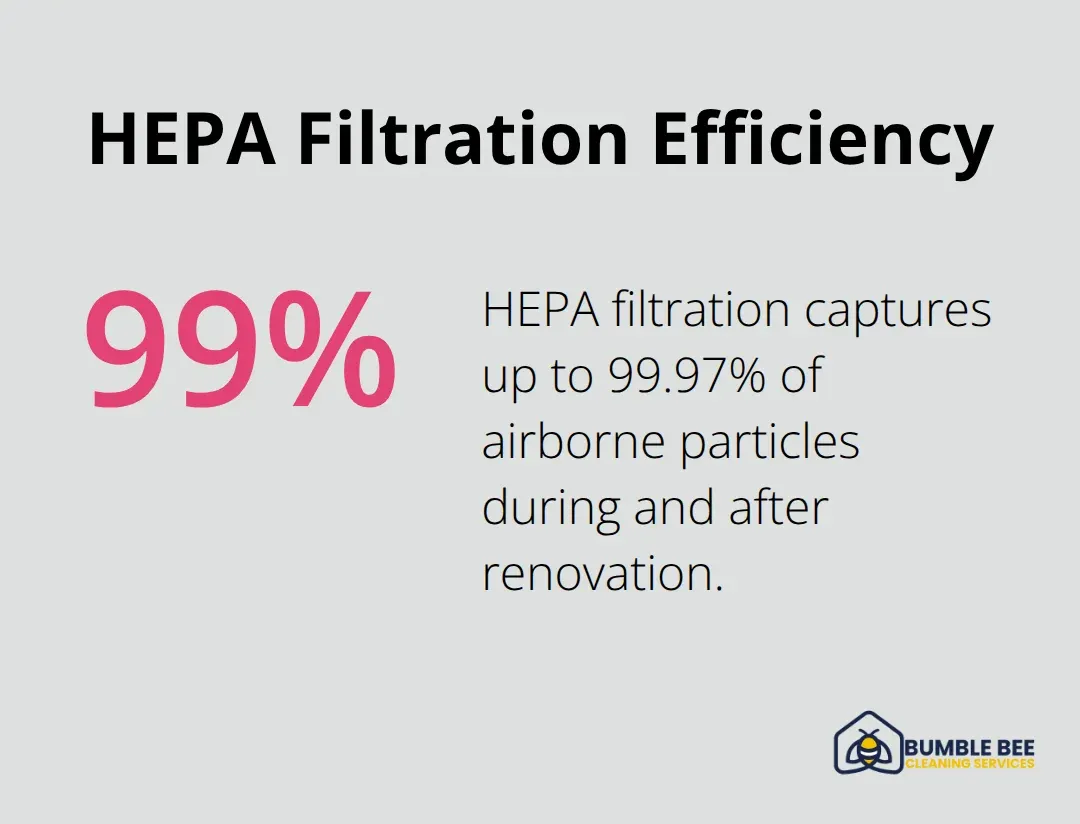
The cost ranges from $300 to $800 for rental units, a fraction of what you’ll spend replacing damaged belongings or addressing respiratory problems later.
Source Control Stops Dust Before It Spreads
Attach your power tools directly to HEPA-filtered vacuums during cutting, grinding, and drilling-this captures dust at the source before it becomes airborne. Tools without on-tool extraction scatter particles that HEPA filters must clean up afterward, an inefficient approach that extends your post-renovation cleanup timeline significantly. Wet cleaning and light misting of surfaces during cutting and demolition suppresses dust before it becomes airborne, reducing the total particulate load you’ll need to clean later.
Physical Barriers and Negative Pressure Contain Dust
Containment barriers paired with negative air pressure systems create sealed zones that prevent dust from migrating into living spaces. Spring-loaded barrier systems like ZipWall press plastic firmly against walls, ceilings, and floors for airtight seals, and they’re reusable across multiple projects. Seal all HVAC supply and return vents in the work area with kraft paper and tape-unsealed ducts become distribution channels that spread dust throughout your entire home. Create negative air pressure by placing a window fan at the far end of the work zone, blowing outward through sealed plastic, which creates a slight vacuum that contains dust within the renovation area.
Professional Post-Renovation Cleanup Removes Fine Dust Completely
Post-renovation deep cleaning requires HEPA vacuuming followed by damp microfiber wiping of all surfaces. This systematic approach removes fine dust from every surface, including places homeowners typically miss during their own cleanup efforts. Professional teams follow IICRC standards for built environment cleaning, ensuring consistent protocols that address dust in ceiling fans, light fixtures, cabinet tops, and inside electronics. The specialized equipment and trained technicians needed for this work make the difference between a partially cleaned home and one truly free of construction dust.
Reclaiming Your Home After Renovation
HEPA Vacuuming and Damp Wiping Remove Fine Dust Completely
Professional post-renovation cleanup demands a systematic approach that goes far beyond standard vacuuming. HEPA vacuums pull fine particles from all surfaces, floors, and hard-to-reach areas like ceiling fans, light fixtures, and inside electronics where dust accumulates after construction ends. This Old House recommends planning for approximately six hours of professional cleaning per contract, with additional time needed for homes with extensive demolition work. Damp microfiber wiping follows vacuuming to capture particles that settle on surfaces during the cleaning process itself-dry wiping simply redistributes dust rather than removing it. Damp cloths trap particles instead of pushing them back into the air, a critical distinction that separates effective cleanup from incomplete efforts.
Daily Cleanup Throughout Renovation Prevents Dust Buildup
Your contractor should establish an end-of-day cleanup routine throughout the renovation, not just a single deep clean at the finish. Daily vacuuming and surface wiping prevent dust buildup that compounds over weeks of construction, reducing the final cleanup timeline significantly. This approach keeps your home more livable during the project and makes the post-renovation deep clean far less intensive. Sealed vents and HVAC systems must receive inspection and cleaning after work stops, since dust enters ductwork even with precautions in place. Kraft paper covering supply and return vents should remain sealed until post-construction cleaning is complete, preventing dust from circulating as you clean other areas.
Air Scrubbers and Specialized Equipment Capture Airborne Particles
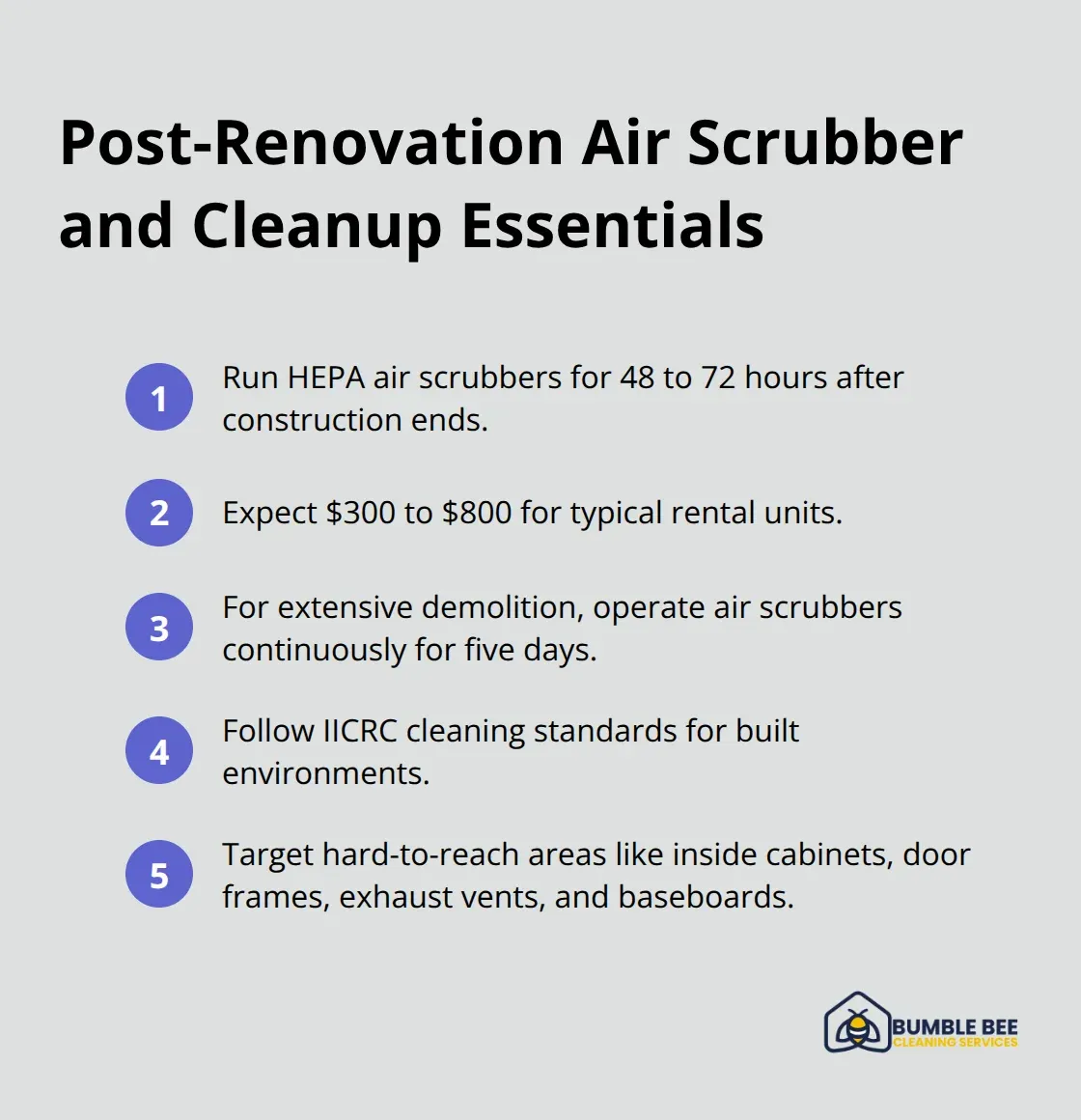
Specialized equipment separates professional cleanup from DIY attempts that leave fine particles behind. HEPA air scrubbers running for 48 to 72 hours after construction ends capture airborne particles continuously, and this rental equipment typically costs $300 to $800 depending on unit size and rental duration. Homes with extensive demolition benefit from five days of continuous air scrubber operation to remove particles that settle gradually over time. Professional teams follow IICRC standards for built environment cleaning, which establish protocols for addressing dust in locations homeowners consistently miss-inside cabinets, on top of door frames, within exhaust vents, and on baseboards.
Post-Renovation Testing Verifies Your Home Meets Safety Standards
Post-renovation dust testing by a certified technician verifies whether your home meets safety standards before you move back into fully renovated areas. This verification step costs between $300 and $600 but provides data-driven assurance that construction dust won’t continue affecting your family’s health after cleanup concludes. Scheduling professional post-construction cleaning within 48 hours of work completion prevents dust from settling permanently into fabrics and finishes, making removal far more difficult and expensive.
Final Thoughts
Advanced dust suppression technology and professional cleanup protect your family’s health and preserve your belongings during Seattle renovations. HEPA filtration, containment barriers, source control, and systematic post-renovation cleaning work together to eliminate construction dust that settles in your home for months after contractors leave. Starting with strict containment during renovation prevents the spread that makes cleanup exponentially harder and more expensive later.
Professional cleanup services handle the specialized work that separates a truly dust-free home from one that merely looks clean. HEPA vacuuming, damp wiping, and air scrubber operation require equipment and expertise most homeowners don’t possess, and post-renovation testing verifies that fine particles no longer threaten your family’s respiratory health. Coordinate dust control from day one with your contractor and schedule professional cleanup within 48 hours of work completion to prevent dust from settling permanently into fabrics and finishes.
Contact Bumble Bee Cleaning Services for post-construction cleaning that meets IICRC standards and removes construction dust from every surface in your Seattle home. Our team handles the systematic approach that addresses dust in ceiling fans, light fixtures, inside cabinets, and baseboards-the places where particles settle and linger. Your family’s health and your investment deserve nothing less than thorough, professional restoration.
For more information about our cleaning services in Seattle and Atlanta, or to request a cleaning quote, call or text us at 425-786-1360 or email us at info@qbclean.com
