
Sealed granite looks stunning in Seattle homes and offices, but it demands different care than unsealed stone. Most people don’t realize that standard cleaning methods can actually damage the protective seal, leading to stains and costly repairs.
We at Bumble Bee Cleaning Services know that sealed surface protection requires specific techniques and products. This guide shows you exactly how to keep your granite pristine without compromising that protective layer.
How Sealed Granite Actually Works
The Protective Barrier and Its Limits
Sealed granite creates a protective barrier that penetrates into the stone’s pores, where it cures and forms a hydrophobic barrier below the surface. The Natural Stone Institute confirms that granite ranks between 6 and 7 on the Mohs hardness scale, making it exceptionally durable for both residential and commercial spaces. However, that seal is not invincible. Water-based sealers work by filling surface pores and creating a hydrophobic layer that lasts anywhere from one to three years depending on traffic and maintenance.
Why Cleaning Method Determines Seal Longevity
The seal’s effectiveness depends entirely on how you clean it. Acidic cleaners like vinegar and citrus-based products react with the minerals in granite, causing a chemical reaction that leads to dull, white spots or marks on the surface. Alkaline cleaners like baking soda and castile soap leave microscopic residue deposits that attract dirt and foster biofilm growth in seams and around sink cutouts, gradually dulling the finish and compromising the seal’s integrity.
Seattle’s Climate Accelerates Seal Degradation
Seattle’s wet climate accelerates seal degradation because moisture constantly challenges the barrier. Frequent exposure to water means the seal endures repeated stress, especially in kitchens and bathrooms where humidity levels remain elevated year-round. Test your surface with water to determine if a reseal is needed: if water beads up after a spill, your granite is well sealed; if it darkens quickly, you need to reseal soon; if it absorbs immediately, reseal right away.
How Improper Cleaning Compounds Damage
Improperly cleaned sealed granite develops cloudy haze from mineral deposits and soap residue buildup, which most people mistake for permanent damage when it’s actually just surface accumulation. Stubborn streaks on black granite reveal water spots and fingerprints easily, making improper cleaning immediately visible. The real danger emerges when homeowners use vinegar-and-baking-soda combinations-the chemical reaction leaves sodium acetate crystals that promote moisture retention and mold in seams. Bleach and ammonia-based products pit the seal surface over repeated use and can react with residual oils to create persistent problems. These mistakes compound because each improper cleaning weakens the seal further, requiring professional restoration that costs significantly more than preventive care.
Understanding what damages your seal sets the stage for learning which products and techniques actually protect it.
The Right Way to Deep Clean Sealed Granite
Choose pH-Neutral Cleaners to Preserve the Seal
Deep cleaning sealed granite requires a completely different approach than surface maintenance. The core principle is simple: pH-neutral cleaners preserve the seal while aggressive products destroy it. Water-based sealers protect granite by filling pores and creating a hydrophobic barrier, but that barrier breaks down when exposed to acidic or alkaline residues. A pH-neutral cleaner sits around 6.5 to 7.5 on the pH scale, which means it won’t chemically react with the granite or leave behind microscopic deposits that attract dirt. Most household cleaners fail this test. Dish soap diluted in warm water works exceptionally well for routine deep cleaning because mild dish soap stays neutral and doesn’t strip the seal.
Apply the Right Technique for Stubborn Buildup
For stubborn buildup, add a small amount of extra soap to your water mixture and use a soft green scrubby pad to gently agitate the surface without scratching. Never use mineral spirits or anything harsher unless cloudiness persists after basic cleaning, and if you do resort to mineral spirits, you must reseal the granite afterward because that solvent compromises the protective layer. Your cleaning technique matters as much as your product choice. After scrubbing with soapy water, rinse the entire surface thoroughly with clean water and immediately dry it with a microfiber cloth to prevent water spots and mineral deposits from forming.
Dry Immediately and Disinfect Properly
Black granite especially demands immediate drying because water marks show up instantly on dark surfaces. For disinfection around food prep areas, use a 50/50 mix of isopropyl alcohol and distilled water, spray the surface, wait three to five minutes, then wipe and dry completely. Microfiber cloths work best because they capture particles without requiring harsh chemicals, and they won’t shed fibers that get trapped in the seal’s pores.
Avoid Abrasive Tools and Uneven Application
Avoid anything abrasive, including natural scrubbers and steel wool, because even gentle abrasives create micro-scratches that become traps for soil and weaken the seal over time. The entire process should feel gentle and deliberate. Work in one direction when wiping to avoid uneven product distribution, and pay special attention to areas around the sink where water buildup and spotting happen fastest. After cleaning near the sink, wipe the surrounding granite to prevent moisture from sitting on the surface. These techniques work for residential kitchens and bathrooms, but commercial spaces with high traffic demand even more vigilance about seal protection and moisture control.
What Actually Damages Sealed Granite
Sealed granite fails not because of the stone itself, but because of what homeowners put on it. Vinegar, citrus cleaners, and bleach destroy seals fastest, yet they remain the most commonly recommended solutions online. Vinegar and citrus-based products contain acids that chemically react with granite minerals, causing white etching and dull spots that people mistake for permanent damage. Bleach and ammonia-based products pit the seal surface over repeated use and can react with residual oils to create persistent staining problems that professional restoration cannot always fix. Alkaline cleaners like baking soda and castile soap seem gentler but they actually cause worse problems in some ways because they leave microscopic residue deposits that attract dirt and foster biofilm growth in seams around sink cutouts.
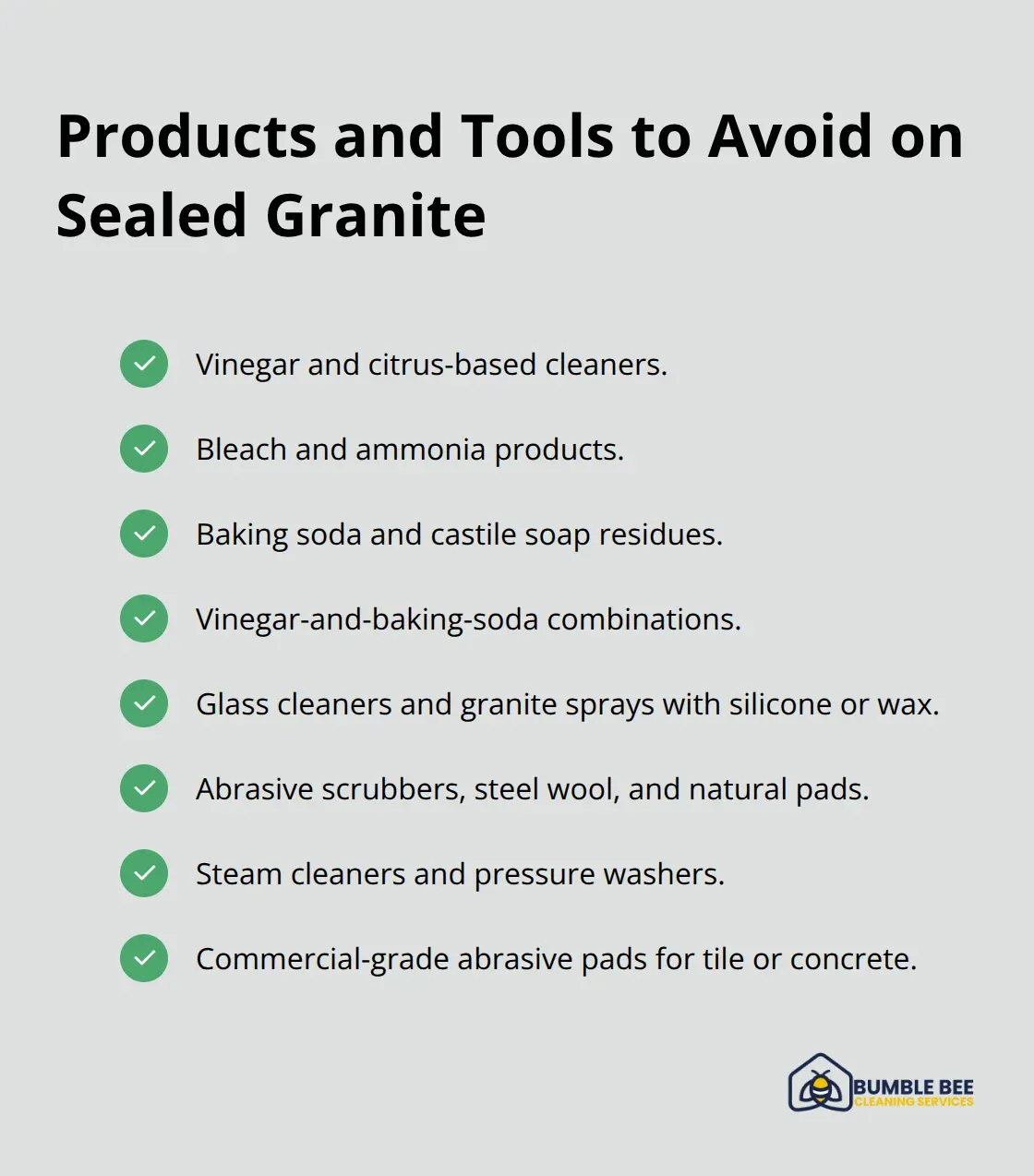
The vinegar-and-baking-soda combination that circulates on social media is particularly destructive: the chemical reaction between acid and base leaves sodium acetate crystals that promote moisture retention and mold growth where you cannot see it. Glass cleaners and commercial granite sprays often contain silicone or wax that builds up over time, creating a cloudy layer that requires professional removal.
Abrasive Tools Create Permanent Micro-Scratches
Abrasive scrubbers, steel wool, and even natural cleaning pads scratch sealed granite and create micro-traps where soil accumulates and the seal weakens faster. Many people assume that scrubbing harder will clean better, but sealed granite requires the opposite approach. A soft green scrubby pad with neutral cleaner works for stubborn buildup, but anything harder than that causes permanent micro-scratches that compound with each cleaning cycle. The damage from abrasive tools is cumulative and irreversible, which means one aggressive scrubbing session can necessitate professional restoration that costs far more than using the right tools from the start. Steam cleaners and pressure washers are equally problematic because they overheat the seal and trap moisture in subsurface pores, risking thermal stress and biofilm formation under seams. Commercial-grade abrasive pads designed for tile or concrete will destroy sealed granite in minutes, so verify that any cleaning tool you use is specifically approved for natural stone surfaces.
Household Products That Seem Safe But Aren’t
Castile soap sounds natural and gentle, but its alkaline pH saponifies surface oils and dulls the finish, increasing reflectivity loss that makes granite look aged and neglected. Essential oil sprays offer almost no EPA-registered antimicrobial benefit on hard surfaces and can oxidize to produce discoloration on light-toned stone over time, wasting money on a product that does not work. Hydrogen peroxide is not recommended for talc-rich granite surfaces according to EPA Safer Choice guidance, and diluted bleach can pit magnesium silicate surfaces over repeated use. Hard water from tap sources leaves mineral deposits that hazily coat the seal, which is why using distilled or filtered water for final rinses extends seal life noticeably. Properly maintained sealed surfaces resist water damage and staining that would otherwise shorten their lifespan. The most dangerous habit is mixing products to create stronger cleaners, which produces unpredictable chemical reactions that damage granite far worse than any single product alone.
Final Thoughts
Sealed granite demands a fundamentally different approach than unsealed stone, and the stakes are real. One aggressive cleaning session with the wrong product compromises years of protection, forcing you to choose between costly professional restoration or living with permanent damage. pH-neutral cleaners, soft tools, immediate drying, and distilled water for final rinses preserve your seal and keep your granite looking pristine for years.
Professional deep cleaning becomes necessary when buildup accumulates beyond what routine maintenance can handle, and sealed surface protection truly matters at that point. Cloudiness, stubborn streaks, and mineral deposits require techniques that remove buildup without weakening the seal-expertise that most homeowners lack. We at Bumble Bee Cleaning Services understand exactly how to clean sealed granite without compromising its protective barrier, and our team applies pH-neutral products specifically chosen for natural stone while respecting the seal’s integrity.
When you need professional deep cleaning that actually protects your sealed granite, contact Bumble Bee Cleaning Services for results backed by our quality service guarantee. Your sealed granite surfaces deserve care from people who understand what they’re protecting.
For more information about our cleaning services in Seattle and Atlanta, or to request a cleaning quote, call or text us at 425-786-1360 or email us at info@qbclean.com
