
Home renovations transform your space, but they also release dust, chemicals, and moisture into the air you breathe every day. We at Bumble Bee Cleaning Services know that most Seattle homeowners don’t realize how contaminated their indoor air becomes during construction.
Air quality testing reveals problems you can’t see or smell until they affect your family’s health. This guide shows you what happens during renovation, how to spot air quality issues, and what steps to take next.
What Actually Happens to Your Air During Renovation
Construction dust from concrete cutting, drilling, and grinding releases silica particles that linger in your home long after workers leave. The Occupational Safety and Health Administration recognizes silica dust as a serious respiratory hazard, and these fine particles penetrate deep into your lungs where they cause silicosis and increase lung cancer risk over time. Paint, adhesives, and sealants release volatile organic compounds (VOCs) for weeks or months after application, especially in poorly ventilated spaces. New carpet, flooring, and insulation also emit formaldehyde and other chemicals that accumulate indoors without adequate airflow. Water exposure during renovation creates the perfect environment for mold growth, with moisture trapped behind walls, under flooring, or in HVAC systems where you cannot see it developing.
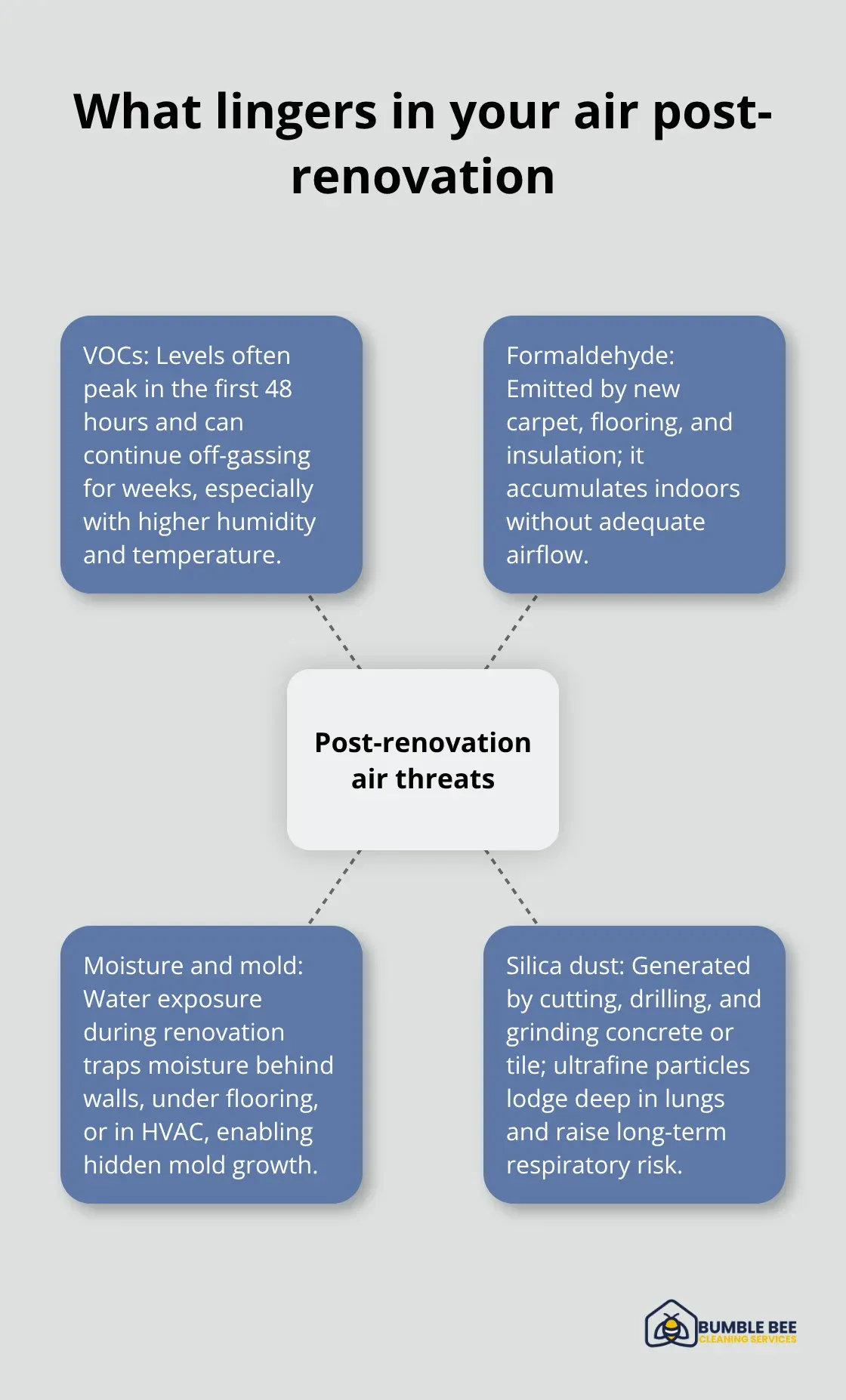
Mold spores then circulate through your home’s air, triggering allergic reactions, asthma attacks, and respiratory infections in family members and pets.
Silica Dust Poses the Biggest Health Threat
Silica particles from concrete and tile work are smaller and more dangerous than general construction dust. These particles bypass your body’s natural defenses and embed themselves in lung tissue, causing permanent scarring that worsens over years. Workers and homeowners who spend extended time in renovation areas face the highest risk, but secondary exposure affects everyone in the household. Post-renovation dust-lead testing required EPA regulations homes built before 1978 confirms whether renovation work left hazardous particles at levels exceeding action limits. A certified inspector must collect these samples using wipe testing methods to measure dust on surfaces where children play and eat.
Off-Gassing Chemicals Linger Longer Than You Think
VOCs from new materials peak within the first 48 hours but continue releasing for weeks, especially when humidity and temperature stay high. Inadequate ventilation during and after renovation traps these chemicals indoors, concentrating them to levels that cause headaches, dizziness, and respiratory irritation. Opening windows helps, but it does not clear the air completely. Professional air quality testing identifies specific VOC levels and guides whether additional ventilation or air purification is necessary before your family fully occupies the renovated space. These tests reveal hidden contamination that visual inspection cannot detect, making them essential for understanding what your family actually breathes.
How to Spot Air Quality Problems in Your Seattle Home
Dust Accumulation Reveals Hidden Contamination
Dust settling on surfaces weeks after renovation ends signals that air quality remains compromised. This dust contains silica particles, lead (in homes built before 1978), and other construction debris that circulate through your home’s air long after visible cleanup finishes. Wipe a damp cloth across window sills, ceiling fans, or shelves and you’ll see gray or white residue that wasn’t there before the work started.
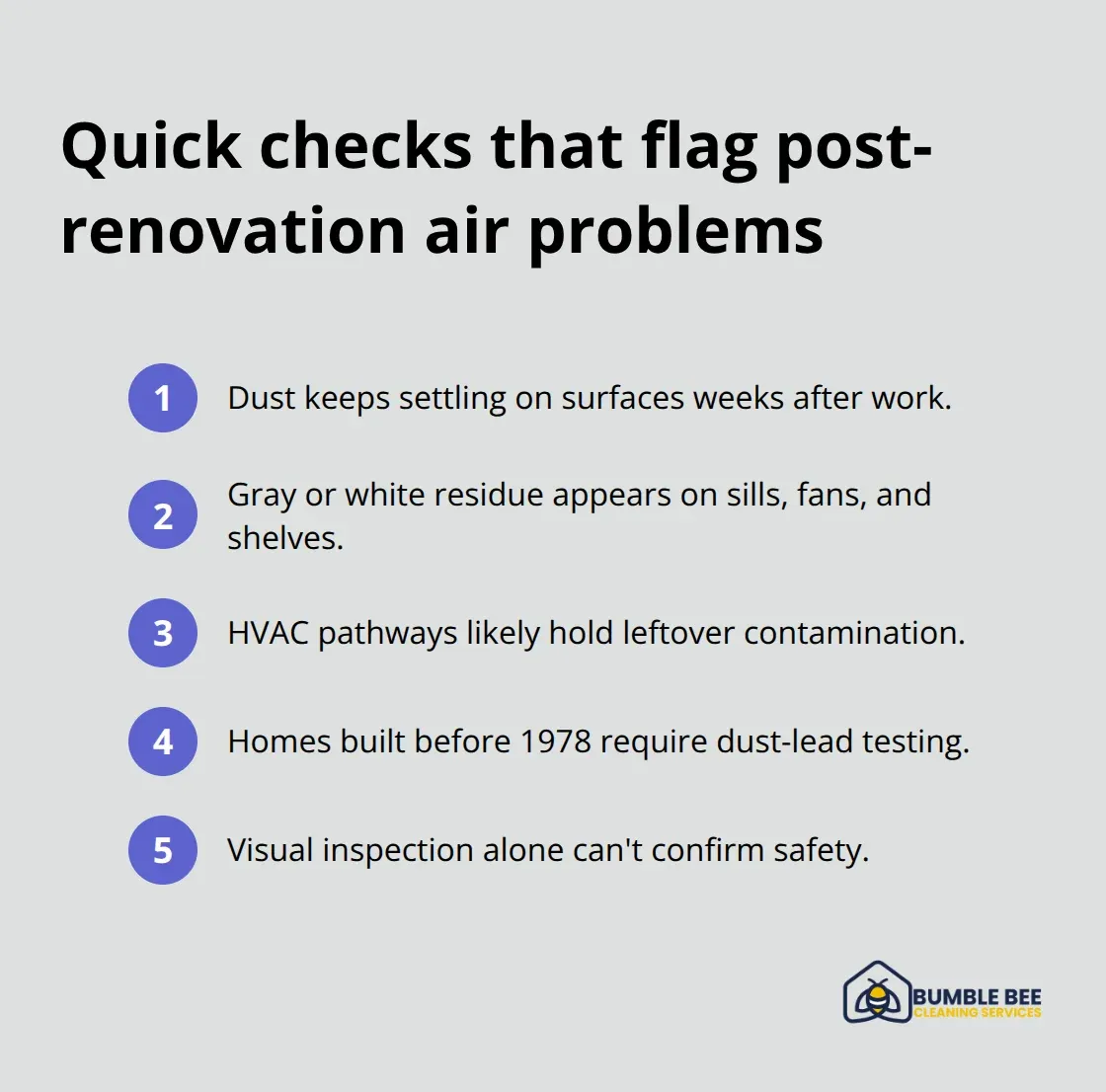
This accumulation indicates your HVAC system and air pathways still hold contamination.
The EPA requires post-renovation dust-lead testing in homes built before 1978 to confirm whether dust levels fall below action limits. Visual inspection alone cannot tell you if your air is actually safe for your family. A certified inspector must collect samples using wipe testing methods to measure dust on surfaces where children play and eat.
Odors Point to Active Moisture and Chemical Problems
Musty odors appearing days or weeks after renovation point to hidden moisture problems developing inside walls, crawlspaces, or ductwork where mold thrives out of sight. Chemical smells from paint, adhesives, and sealants that linger beyond two weeks signal inadequate ventilation and high VOC concentrations continuing to affect air quality. These odors are not just unpleasant-they indicate active off-gassing that your lungs absorb with every breath.
Health Symptoms Demand Professional Testing
Health symptoms like persistent coughing, throat irritation, headaches, or asthma flare-ups in family members correlate directly with post-renovation air contamination. Children and elderly residents show symptoms first because their respiratory systems are more vulnerable to dust and chemical exposure. If symptoms appeared during or immediately after renovation and haven’t resolved within a few weeks, professional air quality testing becomes essential rather than optional.
Testing identifies whether silica, VOCs, mold spores, or formaldehyde are actually present at levels requiring remediation, rather than guessing based on symptoms alone. This data guides whether you need increased ventilation, air purification, deep cleaning to remove renovation residue, or professional remediation before your family fully reoccupies the space. Once you understand what contaminants remain in your home, the next step involves choosing the right testing methods and remediation strategies to restore safe air quality.
Restoring Safe Air After Renovation
Professional Testing Identifies Hidden Contaminants
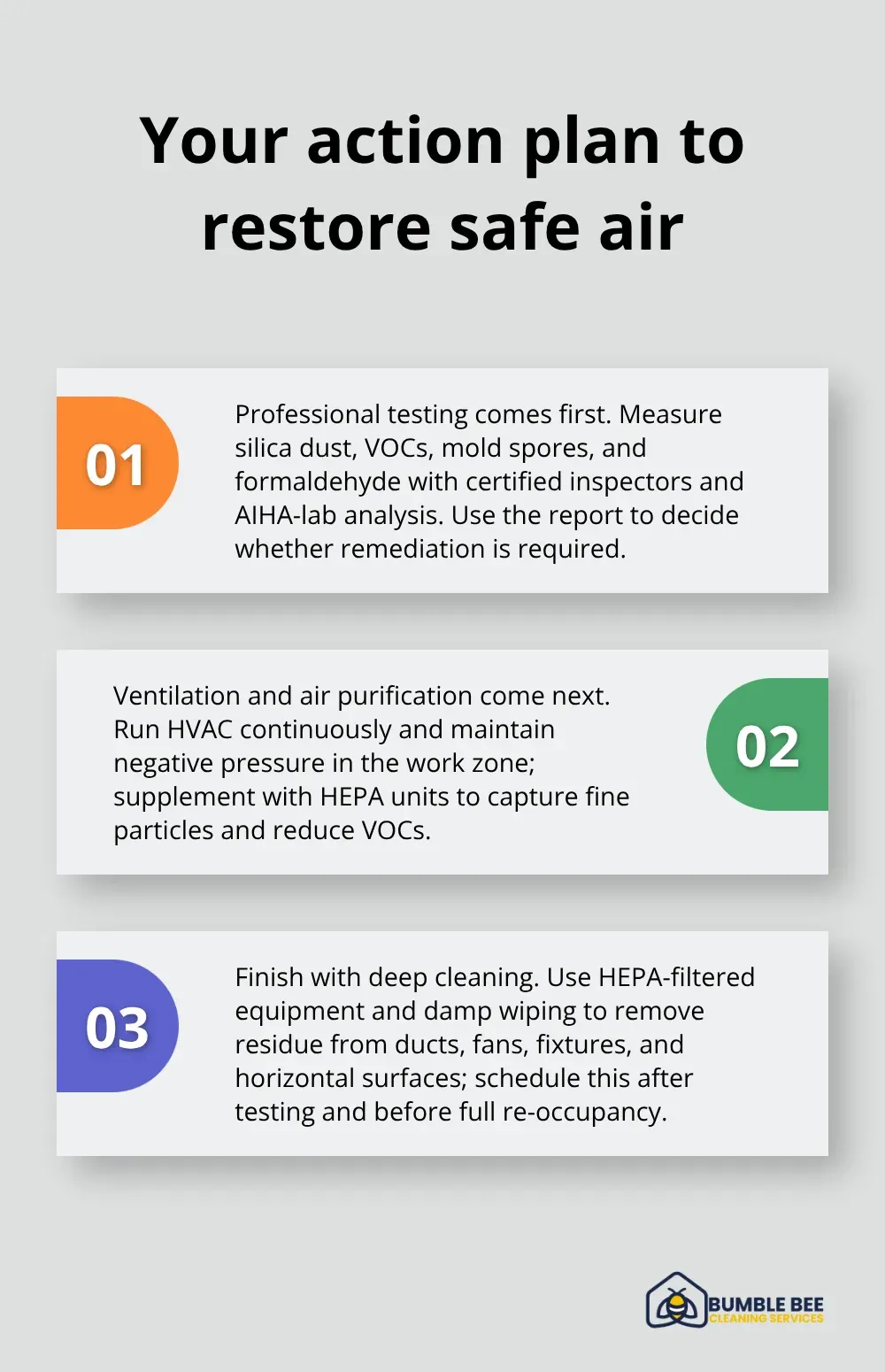
Professional air quality testing reveals contamination that your eyes and nose miss. Testing measures silica dust, VOCs, mold spores, and formaldehyde at specific concentrations to determine whether your home falls below EPA action levels or requires remediation. A certified inspector collects air and surface samples using wipe testing methods on areas where children play and eat, then sends samples to an AIHA-certified laboratory for analysis. Results arrive in a detailed report that explains exactly what contaminants remain, at what levels, and what remediation steps matter most.
Testing costs between $300 and $800 depending on your home’s size and the number of problem areas inspected, but this investment prevents costly health problems and guides your next actions with certainty rather than guesswork. Homes built before 1978 require post-renovation dust-lead testing to comply with EPA regulations, making professional testing non-negotiable for older Seattle properties. Schedule testing at least two weeks after renovation ends, once construction dust has settled but before your family fully reoccupies the space.
Ventilation and Air Purification Remove Airborne Particles
Ventilation during and after renovation removes VOCs and dust far more effectively than opening windows alone. Running HVAC systems continuously while maintaining negative pressure in the renovation zone pushes contaminated air outside rather than spreading it through your home. Air purification units with HEPA filters capture fine silica particles and mold spores, though these work best as a supplement to ventilation rather than a replacement.
Deep Cleaning Eliminates Renovation Residue
Deep cleaning addresses what ventilation and air purification cannot eliminate. Post-renovation deep cleaning targets HVAC ductwork, ceiling fans, light fixtures, and all horizontal surfaces where silica and construction debris accumulate. Standard vacuuming spreads particles back into the air, so HEPA-filtered equipment and damp wiping methods remove contamination without resuspension. This deep cleaning should happen before your family moves back into renovated areas and after testing confirms air quality levels.
Combining professional testing with targeted ventilation, air purification, and thorough deep cleaning restores your home to a safe breathing environment.
Final Thoughts
Air quality testing after renovation reveals exactly what contaminants linger in your home and at what concentrations, giving you certainty instead of guesswork about whether remediation is necessary. Silica dust, VOCs, and mold spores remain invisible threats long after construction crews leave, and symptoms like persistent coughing or asthma flare-ups signal that contamination actively affects your health. Your post-renovation action plan should follow this sequence: schedule professional air quality testing at least two weeks after work ends, review the certified laboratory results to understand what contaminants remain, then address findings through targeted ventilation, air purification, and deep cleaning.
Homes built before 1978 must comply with EPA post-renovation dust-lead testing requirements, making professional assessment non-negotiable for older Seattle properties. Even newer homes benefit from testing because construction dust and chemical off-gassing affect air quality regardless of when your home was built. Deep cleaning specifically designed for post-renovation conditions removes silica particles and construction debris that standard vacuuming spreads back into the air.
We at Bumble Bee Cleaning Services specialize in post-construction cleaning using HEPA-filtered equipment and damp wiping methods that eliminate renovation residue without resuspension. Our team understands the specific contamination patterns that renovation creates and targets those problem areas with precision. Combining professional air quality testing with expert deep cleaning restores your home to a safe breathing environment before your family fully reoccupies renovated spaces.
For more information about our cleaning services in Seattle and Atlanta, or to request a cleaning quote, call or text us at 425-786-1360 or email us at info@qbclean.com
