
Seattle’s humid climate creates the perfect breeding ground for dust mites, and they’re thriving in most homes across the region. These microscopic pests trigger allergies and respiratory issues for countless families, making allergen control a real health priority.
We at Bumble Bee Cleaning Services know that standard cleaning routines simply don’t cut it when it comes to eliminating dust mites. Professional deep cleaning reaches the hidden spaces where these allergens accumulate, offering families a genuine solution.
Why Dust Mites Thrive in Seattle Homes
Dust mites are microscopic arachnids measuring roughly 0.25 millimeters, making them invisible to the naked eye. They don’t bite or carry disease, but they feed on dead skin cells that humans shed constantly. The real problem isn’t the mites themselves-it’s the proteins in their feces that trigger allergic reactions in an estimated 20 million Americans. These allergens accumulate in bedding, upholstery, and carpets, and they’re detected in 84 percent of homes nationwide.
Seattle’s climate creates perfect mite conditions
Seattle families face a particularly acute challenge because the Pacific Northwest’s coastal climate creates near-perfect conditions for dust mite populations. Warm indoor temperatures combined with the region’s high humidity accelerate mite reproduction rapidly.
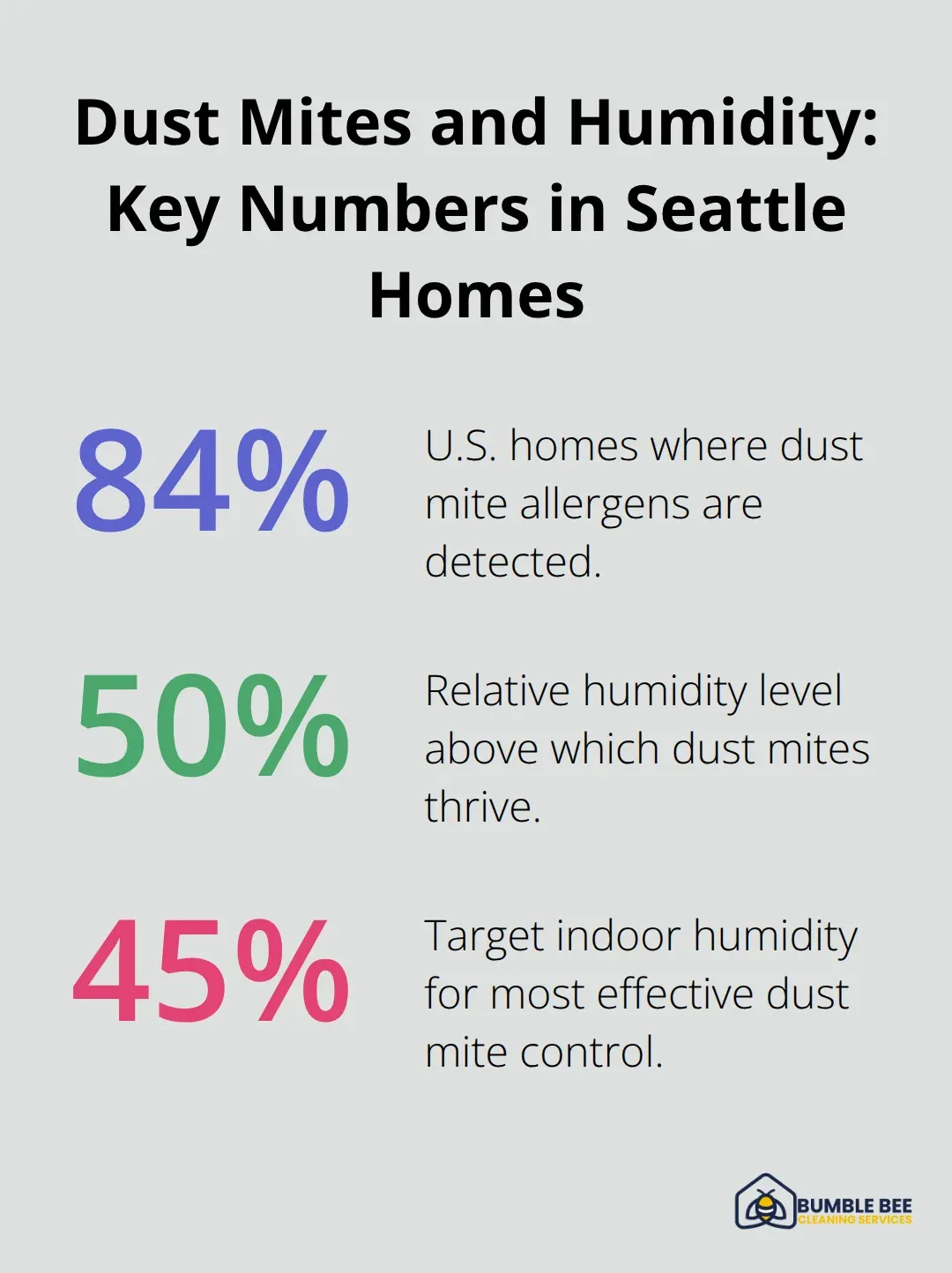
Dust mites thrive when humidity levels stay above 50 percent, and Seattle’s damp climate makes maintaining low indoor humidity difficult without active intervention. The ideal humidity range for minimizing mite activity sits between 30 and 50 percent, with 45 percent or lower being most effective for dust mite control.
Sleep spaces concentrate allergen exposure
Dust mite allergies cause year-round symptoms including runny nose, sneezing, itchy eyes, coughing, and sinus pressure that disrupts sleep quality. Adults spend roughly one-third of their time indoors and children spend about half their bedroom time in sleep spaces, making bedding the primary exposure zone. Most people don’t realize dust mite allergies stem from fecal proteins rather than the mites themselves, which means standard surface cleaning provides minimal relief. The allergens accumulate fastest in mattresses, pillows, and duvets because these environments remain warm, humid, and undisturbed. For families with asthma, dust mite exposure worsens respiratory symptoms and increases medication dependence, making allergen reduction a genuine health intervention rather than a convenience.
Indoor time amplifies mite exposure
People spend approximately 90 percent of their time indoors, making indoor biological contaminants-including dust mites-a major exposure source for Seattle families. Dust mites prefer temperatures between 71 and 89 degrees Fahrenheit, which indoor heating easily maintains throughout Seattle winters. This combination of stable warmth and persistent moisture means Seattle homes accumulate dust mite populations faster than homes in arid climates. Once established, these populations become self-sustaining unless professional intervention removes the allergen reservoirs and environmental controls reduce humidity levels simultaneously.
Professional deep cleaning reaches the hidden spaces where these allergens accumulate most heavily, offering families a pathway to meaningful allergen reduction.
How Professional Deep Cleaning Removes Dust Mite Allergens
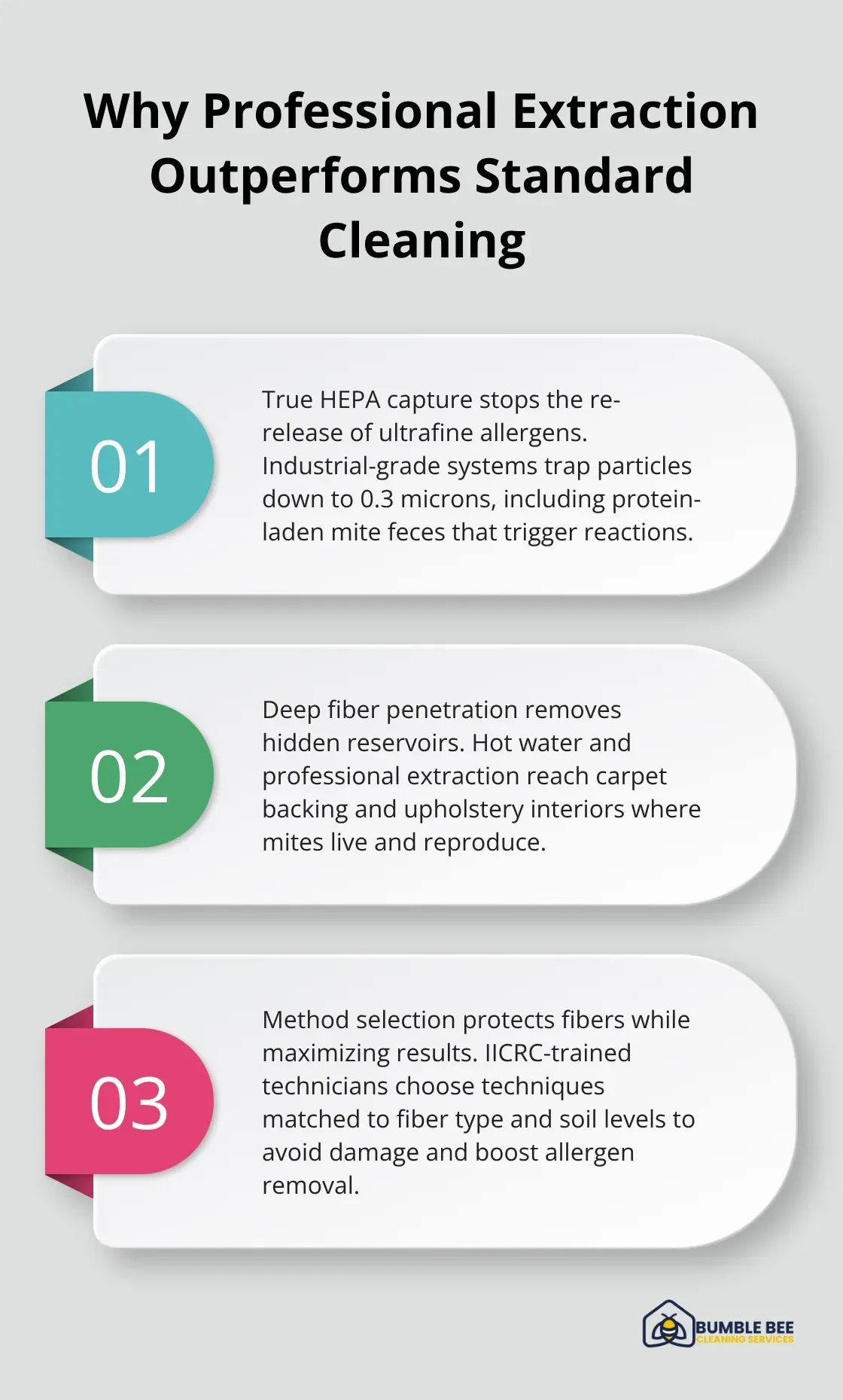
Standard household vacuuming misses the majority of dust mite allergens because regular vacuum filters don’t capture the finest particles where mite feces accumulate. Most home vacuums lack HEPA filtration, which means they actually release ultrafine dust and allergens back into the air during cleaning. Professional deep cleaning uses industrial-grade equipment with true HEPA filters that trap particles as small as 0.3 microns, capturing the protein-laden fecal matter that triggers allergic reactions. The difference is substantial: a standard vacuum removes surface dust, but professional extraction methods reach deep into carpet fibers and upholstery where dust mites actually live and reproduce.
What makes professional extraction superior
Professional carpet extraction applies hot water and cleaning solutions at pressures that penetrate carpet backing and subfloors where dust mites thrive. This method removes the dead skin cells that mites feed on, disrupting their food source and population cycle. Standard vacuuming leaves allergens undisturbed in carpet pile and mattress interiors. Professional technicians trained in IICRC standards understand how to select extraction methods based on carpet fiber type and soil levels, preventing damage while maximizing allergen removal. For Seattle homes with wall-to-wall carpeting, this extraction approach represents the most effective single intervention available short of complete carpet replacement.
Eco-friendly products that work against dust mites
Professional-grade cleaning solutions formulated for allergen reduction break down the organic matter that supports mite populations without relying on harsh chemicals that linger in your home. These products target the proteins in dust mite feces directly rather than simply masking odors or creating surface shine. Enzyme-based cleaners dissolve the very food sources mites depend on, making treated areas inhospitable to reproduction for weeks after cleaning. Families concerned about chemical exposure benefit from this approach because the solutions break down into harmless byproducts once they dry, leaving no toxic residue on carpets or furniture where children and pets spend time.
Environmental controls multiply cleaning effectiveness
Professional deep cleaning alone provides temporary relief unless humidity levels drop below 50 percent afterward. Dust mites recolonize cleaned spaces within weeks if moisture remains high, making humidity control essential for sustained results. Professional cleaners understand this connection and recommend dehumidifiers or HVAC adjustments as part of comprehensive allergen management. A single deep clean without humidity reduction wastes the investment because mite populations rebuild quickly in Seattle’s naturally damp environment. The most effective approach combines professional extraction with your commitment to maintaining indoor humidity between 30 and 50 percent year-round, setting the stage for the maintenance strategies that keep your home allergen-reduced long after the cleaning crew leaves.
What Happens After Professional Deep Cleaning Stops
Professional deep cleaning removes dust mite allergens, but Seattle’s damp climate means mites recolonize quickly without ongoing maintenance. The window of relief lasts only a few weeks unless you implement humidity control and targeted cleaning routines that prevent mite populations from rebuilding. Deep cleaning every three to six months works best for families with confirmed dust mite allergies, rather than waiting until symptoms return. This frequency prevents allergen accumulation from reaching levels that trigger symptoms again, creating a sustainable cycle of allergen reduction. For households without allergies but concerned about prevention, annual deep cleaning combined with humidity management keeps mite populations low enough to avoid future problems. The investment in recurring professional cleaning pays dividends because it costs far less than managing chronic allergy symptoms or replacing carpets damaged by moisture and mold that thrives alongside dust mites.
Humidity Control Between Cleanings
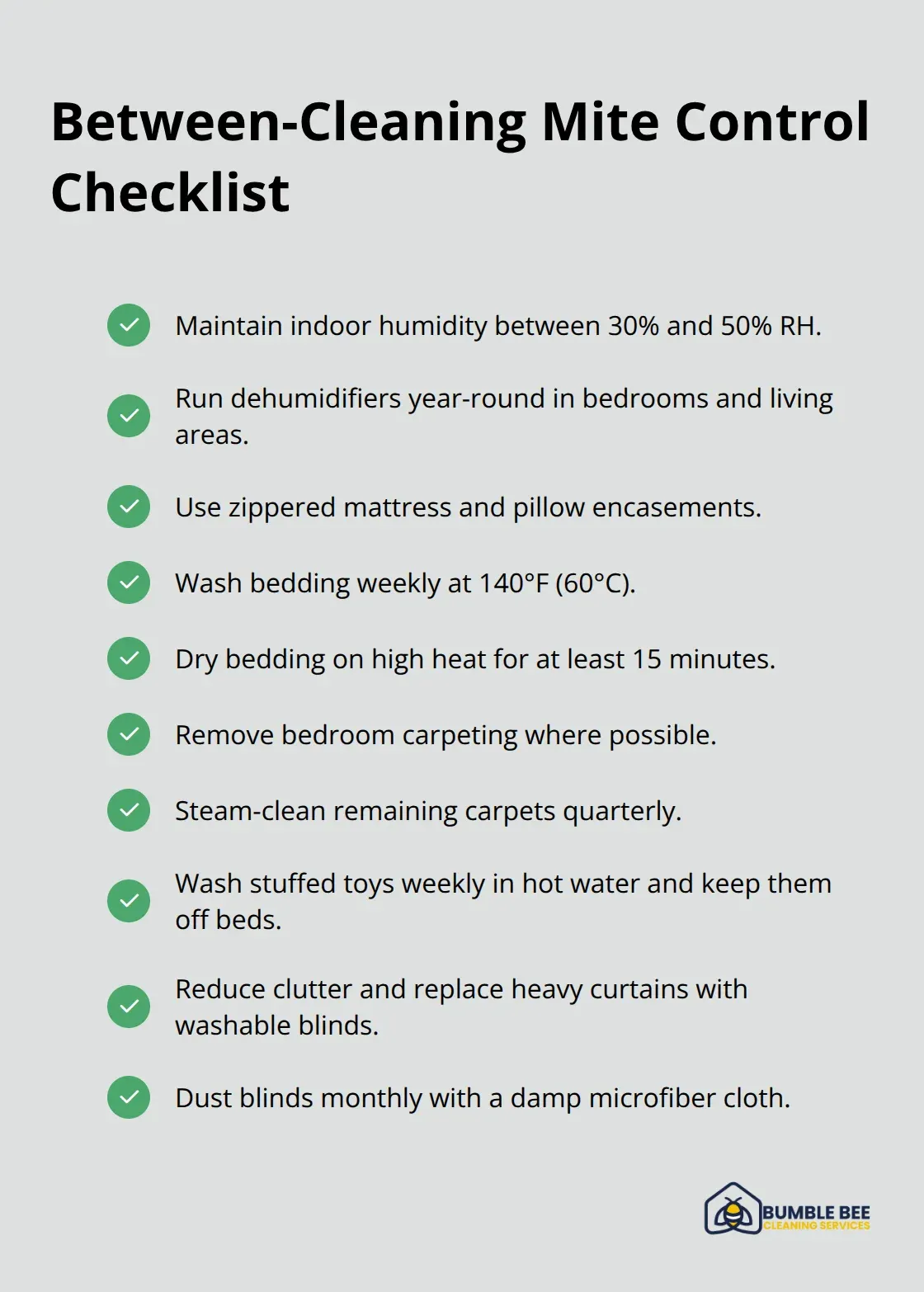
Humidity control becomes your most powerful tool between professional cleanings because humidity control below 45% RH dehydrates mites and halts egg development. Seattle’s coastal air naturally carries moisture, so you’ll need a dehumidifier running in bedrooms and living areas year-round, not just during wet months. Try for 30 to 50 percent humidity measured with an inexpensive hygrometer, and run exhaust fans for one hour after showers to vent moisture outdoors immediately. This single intervention stops mite reproduction in its tracks, making it the foundation of all other allergen-reduction strategies.
Bedding and Protective Encasements
Hot water washing at 60°C (140°F) does kill live dust mites, though it cannot eliminate all the allergenic waste they’ve already produced. Wash bedding weekly and dry on high heat for fifteen minutes minimum, then use mattress and pillow encasements with tightly woven fabric to block mite access during sleep when allergen exposure peaks. These protective barriers create a hostile environment for mites in the spaces where you spend one-third of your life, and these covers wash easily every few months.
Flooring and Furniture Strategies
Remove carpeting from bedrooms if possible since hard flooring like wood or vinyl eliminates the largest dust mite habitat in your home, and if you keep carpet elsewhere, steam-clean it quarterly to remove accumulated allergens and skin cells. Stuffed animals and soft toys harbor significant mite populations, so wash them weekly in hot water and keep them off beds entirely. Minimize clutter and heavy curtains that collect dust, replacing them with washable blinds you can wipe down monthly with damp microfiber cloths that capture particles rather than dispersing them. This combination of humidity management, frequent bedding washing, protective encasements, and strategic removal of mite habitats sustains the allergen reduction achieved through professional deep cleaning, protecting your family’s health long after the cleaning crew departs.
Final Thoughts
Professional deep cleaning removes dust mite allergens from the spaces where your family spends the most time, and this single intervention produces measurable health improvements within weeks. Families report better sleep quality as nighttime allergen exposure drops, reduced daytime sneezing and congestion, and fewer asthma flare-ups triggered by dust mite proteins. Children breathe easier during the night, and adults wake without sinus pressure that disrupts morning routines.
Long-term allergen control extends far beyond temporary symptom relief when you combine professional extraction with humidity management and protective bedding measures. Your family spends roughly 90 percent of their time indoors, making this investment in allergen control a genuine health priority rather than a luxury service. Reduced allergen exposure means lower medication dependence, fewer doctor visits for allergy-related issues, and the ability to enjoy your home without constant discomfort.
We at Bumble Bee Cleaning Services understand that Seattle families need professional allergen control tailored to the Pacific Northwest’s unique climate challenges. Our team applies deep cleaning methods specifically designed to remove dust mite allergens while protecting your carpet fibers and home surfaces. Contact Bumble Bee Cleaning Services to schedule your professional deep cleaning and take the first step toward a healthier home for your family.
For more information about our cleaning services in Seattle and Atlanta, or to request a cleaning quote, call or text us at 425-786-1360 or email us at info@qbclean.com
