
Construction projects leave behind more than just dust and debris. Window frames often bear the brunt of this mess, collecting everything from paint splatters to adhesive residue.
At Bumble Bee Cleaning Services, we see firsthand how neglected window frames can create serious problems for new occupants. Proper cleaning protects both your health and your investment.
Why Construction Debris Accumulates on Window Frames
Construction sites generate massive amounts of airborne particles that target window frames through multiple pathways. Drywall dust, concrete powder, and metal shavings become electrostatically charged during cutting and sanding operations. These particles cling to window surfaces like magnets.

Paint overspray from spray guns travels up to 50 feet from application points, while adhesive vapors from flooring and trim installation create sticky surfaces that trap additional debris.
How Materials Bond to Frame Surfaces
Construction materials bond to window frames through chemical and physical processes that make simple wiping ineffective. Silicone-based sealants create strong bonds with glass surfaces and require proper cleaning methods for removal. Concrete dust contains calcium hydroxide that creates alkaline deposits requiring pH-balanced cleaners for safe removal. Temperature fluctuations during construction cause frame materials to expand and contract, creating microscopic gaps where debris embeds permanently.
Weather Creates Perfect Storm Conditions
Rain during construction phases transforms harmless dust into corrosive slurries that penetrate deep into frame joints and weatherstripping. Morning dew reactivates dried concrete particles, causing them to re-bond to surfaces each day until professional cleaning removes them completely. Wind patterns around construction sites create updrafts that deposit fine particles in window tracks and corners where moisture accumulates.
Time Makes Removal More Difficult
Post-construction cleaning must happen within two weeks of project completion before contaminants become impossible to remove without damaging expensive window systems. Each day of delay allows debris to bond more permanently to surfaces. Weather exposure during this critical window (particularly rain and humidity) accelerates the chemical bonding process between construction materials and window frames.
These contamination patterns create serious health risks that extend far beyond aesthetic concerns.
Health and Safety Risks of Dirty Window Frames
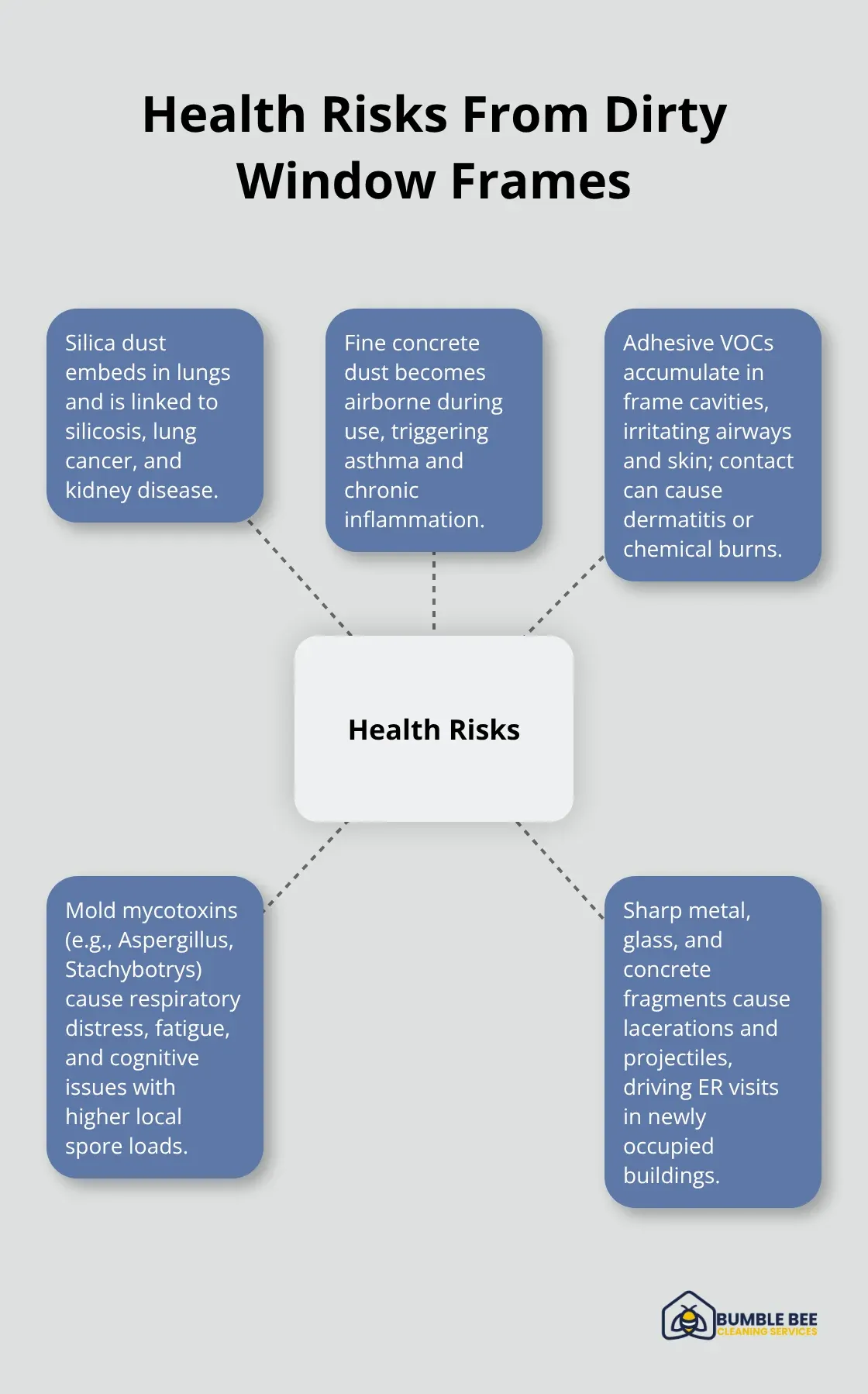
Window frames contaminated with construction debris pose immediate health threats to building occupants. Construction dust trapped in frame crevices contains silica particles that penetrate deep into lung tissue when people disturb them. The Occupational Safety and Health Administration reports that prolonged silica exposure causes silicosis, lung cancer, and kidney disease. Metal shavings and glass fragments embed in weatherstripping and track systems, creating injury hazards when windows operate. Paint chips that contain lead pose severe neurological risks, particularly for children under six years old.
Respiratory Hazards From Trapped Particles
Airborne contaminants settle into window frame joints and create long-term health risks. Fine concrete dust becomes airborne each time someone opens or closes contaminated windows. These particles trigger asthma attacks and cause chronic respiratory inflammation in sensitive individuals. Construction adhesives release volatile organic compounds (VOCs) that accumulate in poorly ventilated frame cavities. Workers who handle contaminated frames without proper protection develop contact dermatitis and chemical burns from exposure to alkaline construction materials.
Mold Colonies Establish Permanent Footholds
Moisture combines with organic debris to create perfect mold conditions within 48 hours of exposure. The Environmental Protection Agency provides guidance about mold that grows on construction materials lodged in window frames. Aspergillus and Stachybotrys species release mycotoxins that cause respiratory distress, chronic fatigue, and cognitive impairment. Frame joints retain moisture for weeks after rain exposure, allowing mold colonies to establish permanent homes. Professional testing reveals mold spore concentrations 10 times higher near contaminated window frames compared to clean areas.
Sharp Debris Creates Immediate Injury Risks
Construction sites leave metal fragments, glass shards, and concrete chips embedded in window tracks and frame corners. These materials cause cuts that require medical attention when occupants attempt window operation or basic maintenance. Aluminum and steel shavings become razor-sharp projectiles when people disturb them during normal window use. Emergency room visits spike significantly in newly occupied buildings where post-construction window cleaning was skipped.
Professional cleaning techniques address these health hazards through specialized methods that standard maintenance cannot match.
Professional Cleaning Techniques for Window Frames
Professional window frame cleanup demands specialized equipment that standard household products cannot match. Construction debris removers break down alkaline concrete residue without damage to frame finishes. Water-fed pole systems with pure water technology eliminate mineral spots while crews stay safely on ground level. Microfiber cloths capture fine particles that cotton rags push around surfaces, and plastic scrapers remove hardened materials without scratches to delicate frames.
Eco-Friendly Products That Deliver Results
Biodegradable degreasers dissolve adhesive residues that water-based cleaners leave behind. pH-neutral formulations protect vinyl frames from chemical damage while they remove stubborn paint overspray. Professional teams avoid ammonia-based products that create toxic fumes in enclosed spaces and can permanently cloud glass surfaces.
Professional-grade citrus-based solvents break down construction sealants without release of volatile organic compounds that harm indoor air quality.
Safety Protocols Prevent Accidents
High-rise window cleanup follows Occupational Safety and Health Administration fall protection standards that require harness systems rated for 5,000 pounds minimum strength. Commercial properties demand confined space protocols when crews clean windows near HVAC equipment or electrical systems. Professional teams test all products on hidden frame sections first to prevent finish damage that costs thousands in replacement expenses. Ground crews establish safety perimeters to protect pedestrians from debris during exterior operations.
Step-by-Step Frame Restoration Process
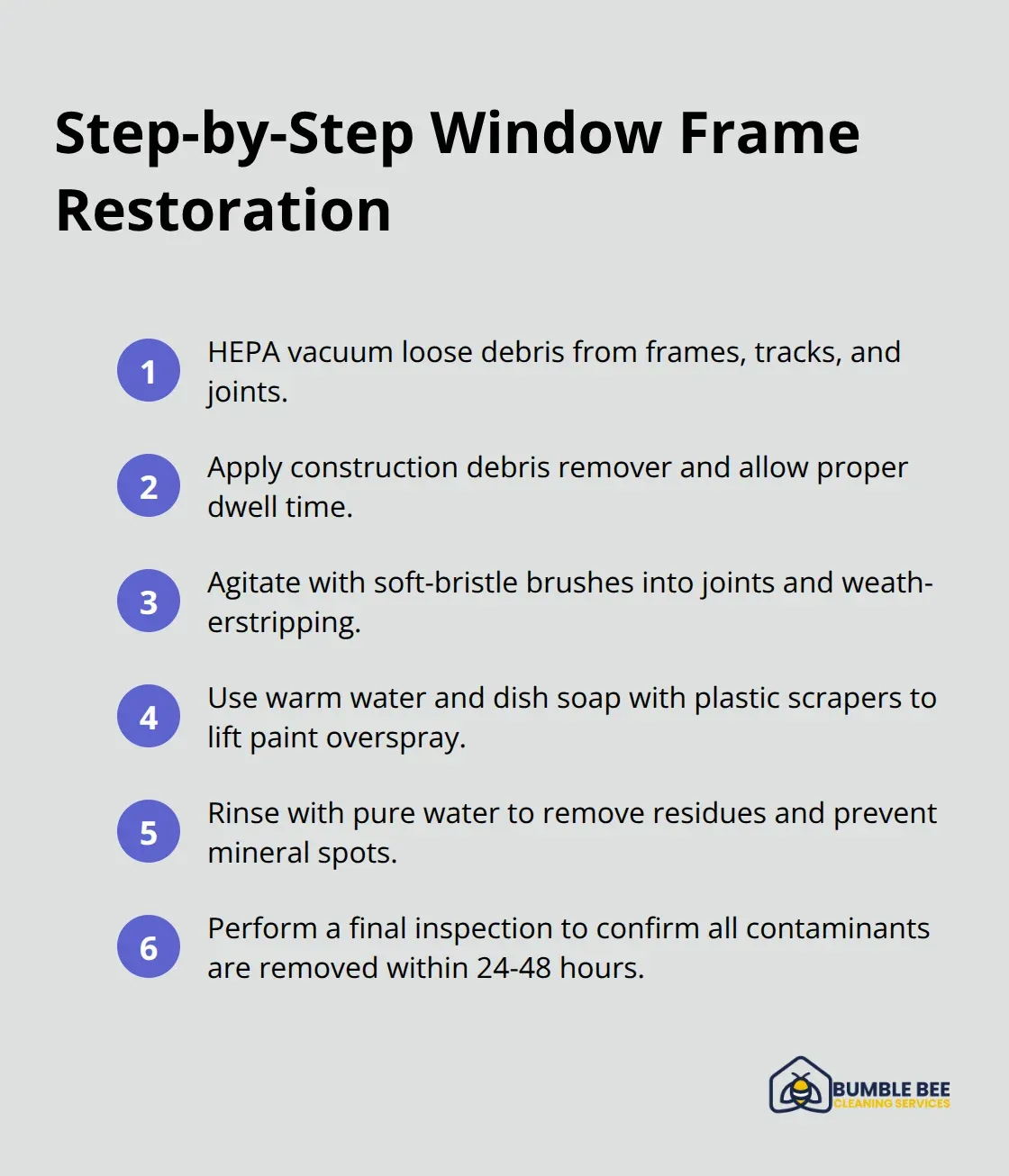
Professional crews start with dry removal of loose debris through specialized vacuum systems with HEPA filtration. Teams apply construction debris removers to dissolve bonded materials and allow proper dwell time for chemical action. Soft-bristle brushes work the solution into frame joints and weatherstripping without surface damage. Warm water and dish soap mixtures with plastic scrapers remove paint overspray while they minimize surface damage risks. Pure water rinse systems remove all chemical residues and prevent mineral deposits. Final inspection confirms complete removal of all construction contaminants before project completion (typically within 24-48 hours).
Final Thoughts
Professional window frame cleanup after construction delivers measurable returns that compound over time. Property owners who invest in proper cleanup see 15-20% lower maintenance costs during the first five years compared to those who skip this step. Clean window frames prevent moisture infiltration that causes rot, warping, and seal failure in expensive window systems. Regular maintenance becomes simpler when construction debris gets removed completely rather than builds up over months.
The financial benefits extend beyond maintenance savings. Properties with professionally cleaned windows command higher rental rates and sell faster in competitive markets. Insurance claims for water damage drop significantly when window frames function properly without debris that blocks drainage systems (preventing permanent staining that requires costly frame replacement or refinishing).
We at Bumble Bee Cleaning Services understand that post-construction cleanup represents a significant investment in your property’s future. Our team uses specialized equipment and eco-friendly products to remove construction contaminants safely. Bumble Bee Cleaning Services protects your investment through thorough post-construction cleanup that prevents long-term damage and maintains optimal window performance for years ahead.
