
Construction projects in Seattle leave behind more than just dust and debris. Chemical residue from adhesives, sealants, and building materials can linger on surfaces for months after work is complete.
We at Bumble Bee Cleaning Services see this problem daily in newly constructed and renovated properties. Standard cleaning methods simply can’t tackle these stubborn chemical deposits that pose health risks to occupants.
What Chemical Residue Lurks After Construction
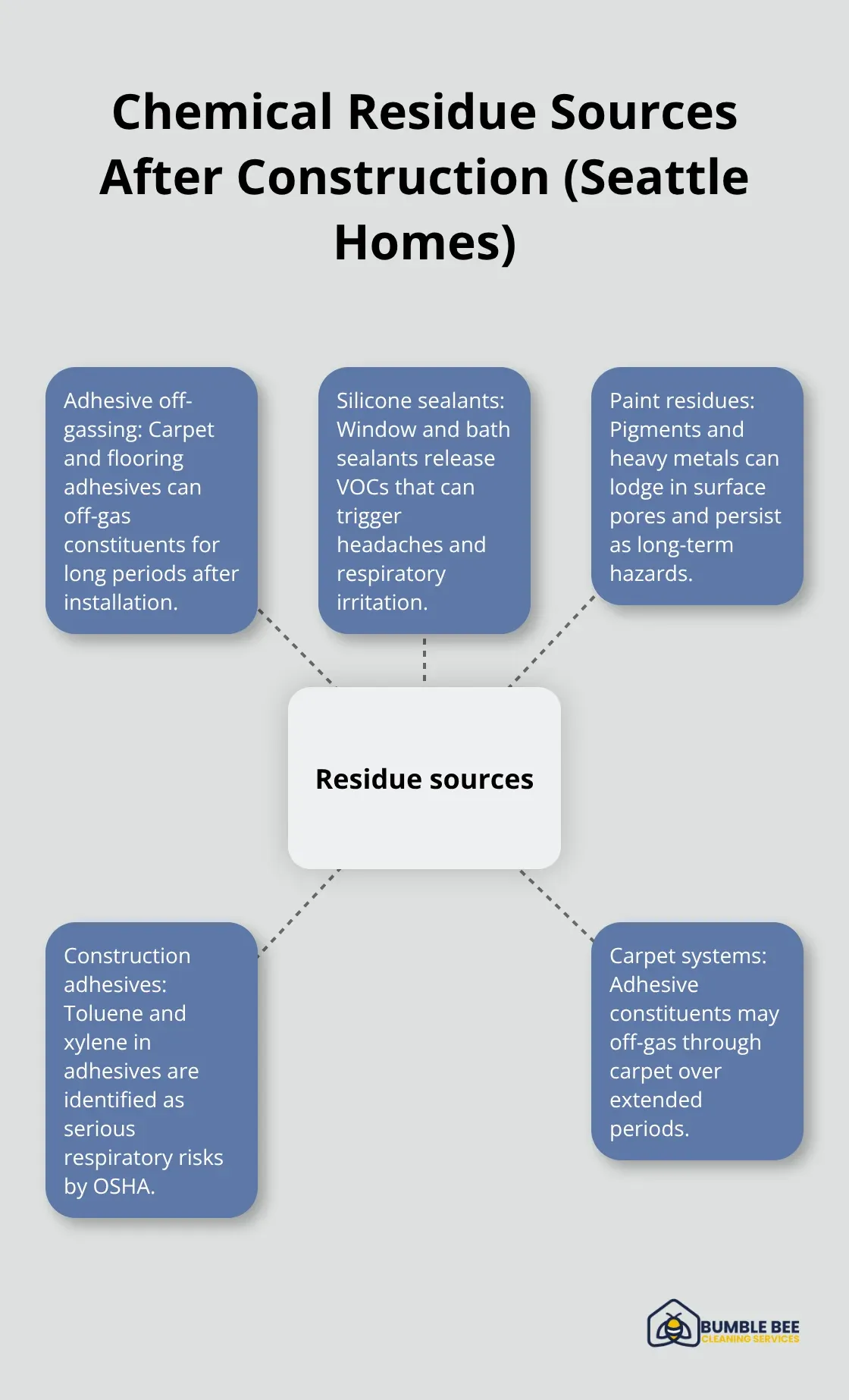
Construction projects in Seattle leave behind a toxic cocktail of chemical residue that most property owners don’t even know exists. Carpet systems which utilize adhesives may off-gas adhesive constituents through the carpet for extended periods of time. Silicone-based sealants around windows and bathrooms release volatile organic compounds that cause headaches and respiratory irritation. Paint residues contain heavy metals like lead and mercury that settle into microscopic surface pores and create long-term health hazards. Construction adhesives used for tile and carpet installations contain toluene and xylene, chemicals that the Occupational Safety and Health Administration identifies as serious respiratory hazards.
Health Impacts You Can’t Ignore
Chemical residue exposure causes immediate symptoms like eye irritation, dizziness, and throat pain within hours of occupancy. Indoor concentrations of some pollutants have increased in recent decades due to such factors as energy-efficient building construction. Long-term exposure leads to chronic respiratory problems, with the Centers for Disease Control and Prevention that links formaldehyde exposure to increased asthma rates in children. Workers exposed to construction chemicals show higher rates of skin sensitization compared to the general population (a statistic that affects homeowners too).
Why Regular Methods Fail Completely
Standard household cleaners can’t penetrate chemical bonds that construction adhesives and sealants form. Regular mops and cloths spread residue around rather than remove it, which creates a thin film that continues to off-gas harmful vapors. Water-based cleaners prove useless against oil-based construction chemicals, while harsh solvents can damage newly installed surfaces. Professional-grade equipment like HEPA filters and specialized chemical neutralizers break down these stubborn compounds effectively (something most homeowners lack access to).
The complexity of chemical residue removal requires a systematic approach that addresses each type of contamination with specific techniques and products.
How Do You Safely Remove Chemical Residue
Start With Proper Protection
Chemical residue removal demands serious safety measures that most property owners skip. You need a half-face respirator with organic vapor cartridges, not just a dust mask, because construction chemicals penetrate standard filters. Nitrile gloves resist chemical penetration better than latex, while safety goggles prevent eye contact with solvents. The Environmental Protection Agency recommends using green cleaning whenever possible during chemical cleanup to prevent vapor buildup. Open all windows and run exhaust fans for at least 30 minutes before you start work.
Identify Residue Types Through Visual Inspection
Adhesive residue appears as clear or amber sticky patches that feel tacky to touch, typically found where floors meet walls. Paint overspray creates rough, raised spots with different textures than the original surface. Sealant residue forms waxy films around windows, doors, and bathroom fixtures that repel water.
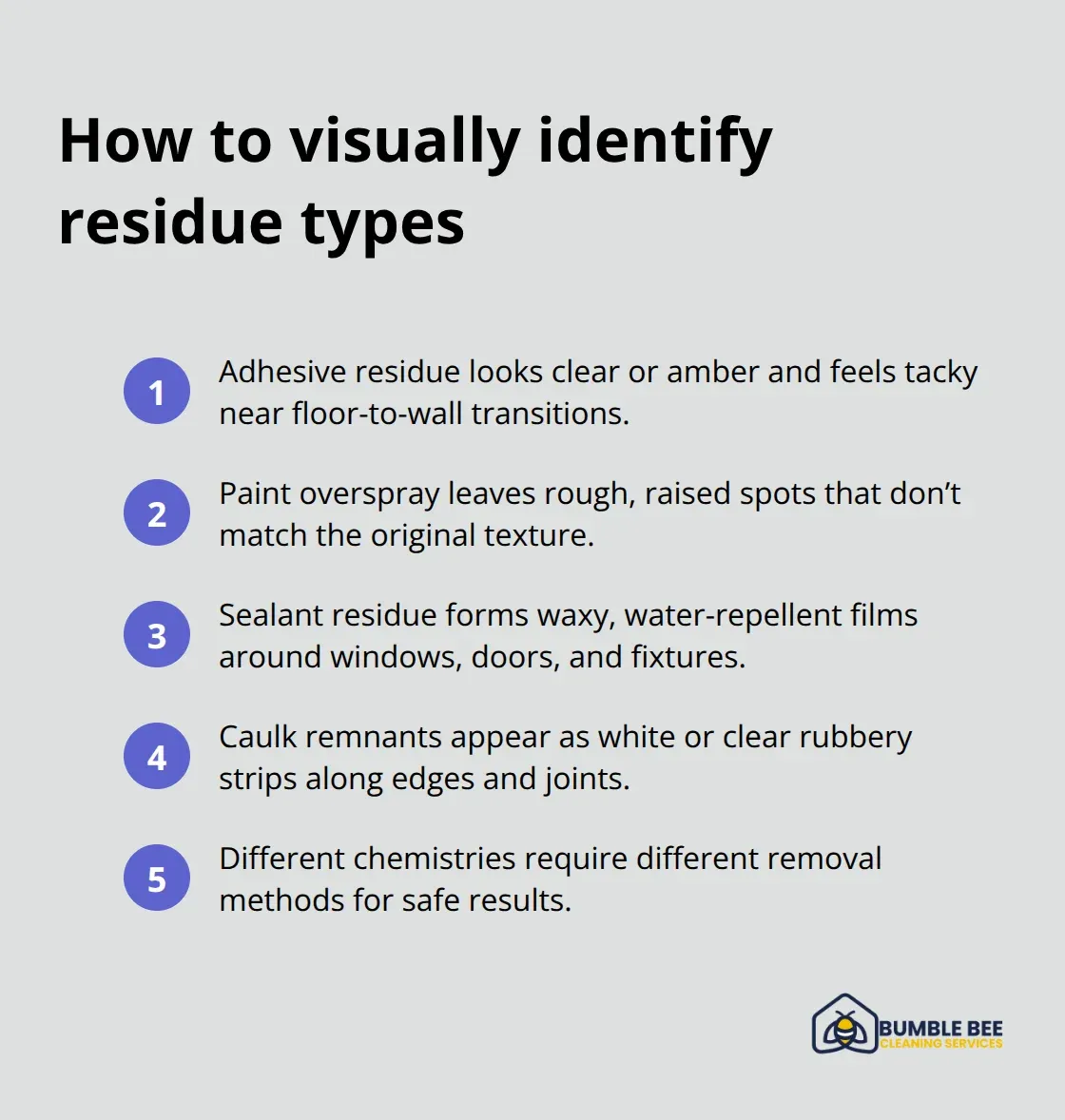
Caulk remnants leave white or clear rubbery strips along edges and joints. Each type requires different removal approaches because their chemical compositions vary significantly.
Target Each Residue With Specific Solutions
Adhesive removal requires mineral spirits applied with plastic scrapers, where you work in small sections to prevent surface damage. Paint overspray responds to warm soapy water for fresh spots, but dried paint needs careful scraping with plastic tools followed by denatured alcohol. Sealant residue dissolves with specialized silicone removers that contain acetone (applied for 10 minutes before gentle scrubbing). Construction dust mixed with chemical residue needs HEPA vacuums first, then damp microfiber cloth treatment with pH-neutral cleaners.
Professional Equipment Makes the Difference
Professional-grade equipment removes particles more effectively than household tools, while standard cleaning methods achieve limited results. Industrial air scrubbers capture airborne chemicals that standard fans miss completely. Specialized chemical neutralizers break down molecular bonds that household cleaners cannot touch (something most homeowners lack access to). The complexity of these removal processes often overwhelms property owners who attempt DIY approaches, which leads many to consider professional cleaning services for thorough chemical residue elimination.
Should You DIY or Hire Professionals for Chemical Residue Removal
Professional Equipment Delivers Superior Results
Professional services possess industrial-grade air scrubbers with 3-stage filtration systems for advanced air purification, while consumer equipment captures significantly less particles. These companies use specialized chemical neutralizers that contain enzymes and break down molecular bonds in construction adhesives (something household products cannot achieve). Professional HEPA vacuums generate 200+ CFM airflow compared to 50-80 CFM in consumer models, which means three times faster particle removal. Commercial-grade solvent extractors inject heated solutions at 200°F and immediately extract residue, which prevents surface damage that occurs with manual methods.
Time and Cost Reality Check
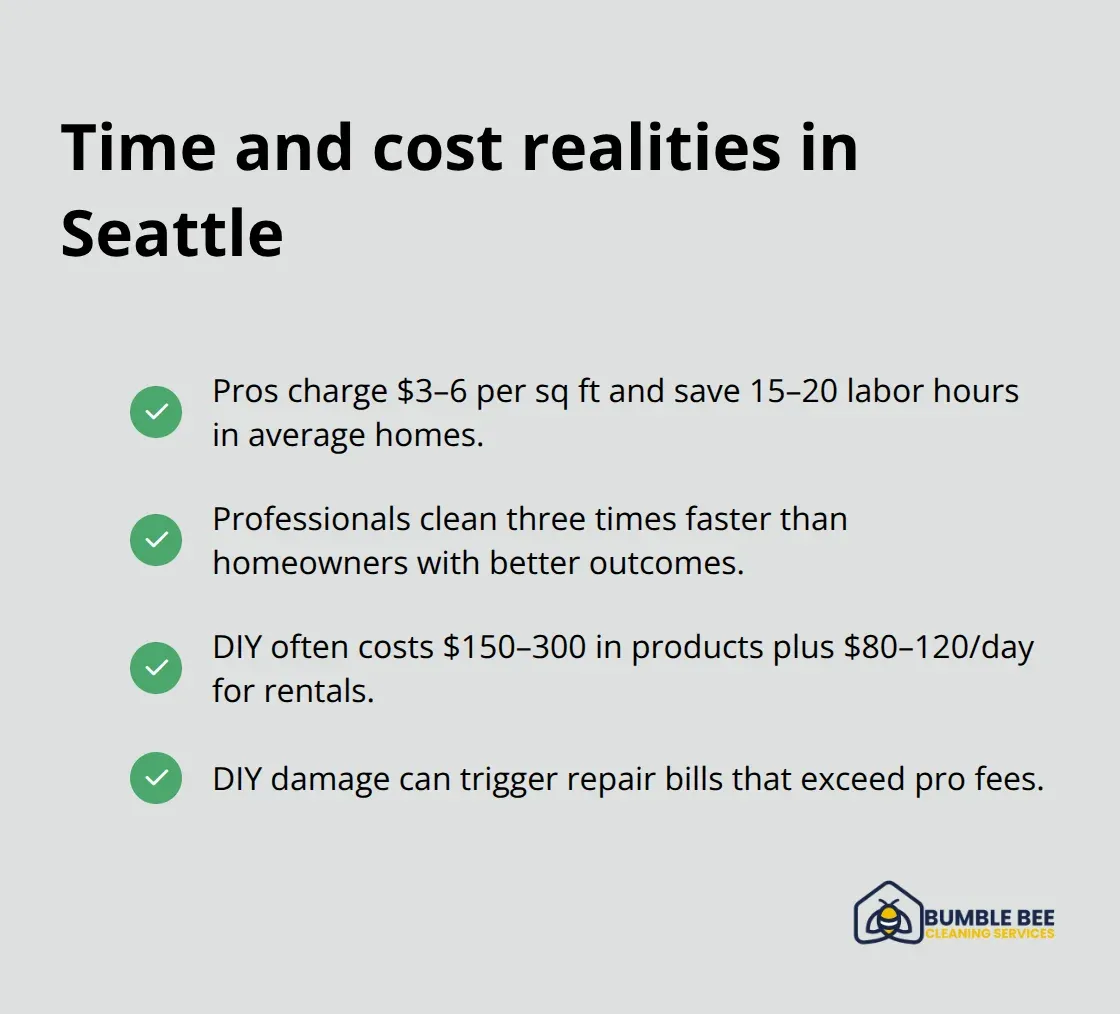
Professional chemical residue removal costs $3-6 per square foot in Seattle but saves 15-20 hours of labor for average homes. The American Cleaning Institute reports that professionals clean three times faster than homeowners while they achieve superior results. DIY attempts often require multiple product purchases that total $150-300, plus equipment rental fees of $80-120 daily for proper air scrubbers and extractors. Property owners frequently damage newly installed surfaces during amateur removal attempts, which leads to repair costs that exceed professional fees.
When Professional Help Becomes Necessary
You should call professionals immediately when chemical residue covers more than 500 square feet or involves lead-based materials that require EPA-certified protocols. Homes with children under six need professional treatment because the Centers for Disease Control and Prevention links improper chemical cleanup to increased childhood asthma rates. Properties with HVAC contamination require duct equipment and expertise that only licensed professionals possess, since DIY attempts spread chemicals throughout ventilation systems.
Professional Services Complete Jobs Faster
Professional teams complete whole-house chemical residue removal in 6-8 hours versus 3-4 days for inexperienced homeowners. These services have access to multiple specialized tools simultaneously, while homeowners must rent equipment piece by piece. Professional cleaners know which products work on specific residue types without trial and error (which saves both time and money). The expertise gap becomes apparent when homeowners face complex chemical combinations that require different treatment approaches.
Final Thoughts
Chemical residue removal after construction projects protects your family’s health and preserves your property investment. The Environmental Protection Agency reports that indoor air pollutants can be 2-5 times higher than outdoor levels, which makes thorough cleanup essential for safe occupancy. Professional post-construction services deliver results that DIY methods simply cannot match.
We at Bumble Bee Cleaning Services use specialized equipment and EPA-approved techniques to eliminate chemical residue completely. Our team removes construction chemicals that standard methods leave behind (something most homeowners cannot achieve with household products). Seattle property owners should schedule professional chemical residue removal within 48 hours of construction completion.
Professional services cost $3-6 per square foot but prevent health issues that could cost thousands in medical bills. Don’t risk your family’s safety with incomplete chemical cleanup. Bumble Bee Cleaning Services offers comprehensive post-construction services with eco-friendly products that make us Seattle’s trusted choice for chemical residue removal.
